

Siding Replacement Willard, MO
Willard sits in northwest Greene County, about 12 miles from Springfield, where open terrain and active hail seasons take a real toll on residential siding. Many homes here were built in the 1990s and early 2000s with vinyl siding that is now hitting the end of its useful life. When patching is no longer enough, Teague Roofing Plus handles full siding replacement in Willard and across northwest Greene County.
Call 417-883-7663 for a free siding inspection.
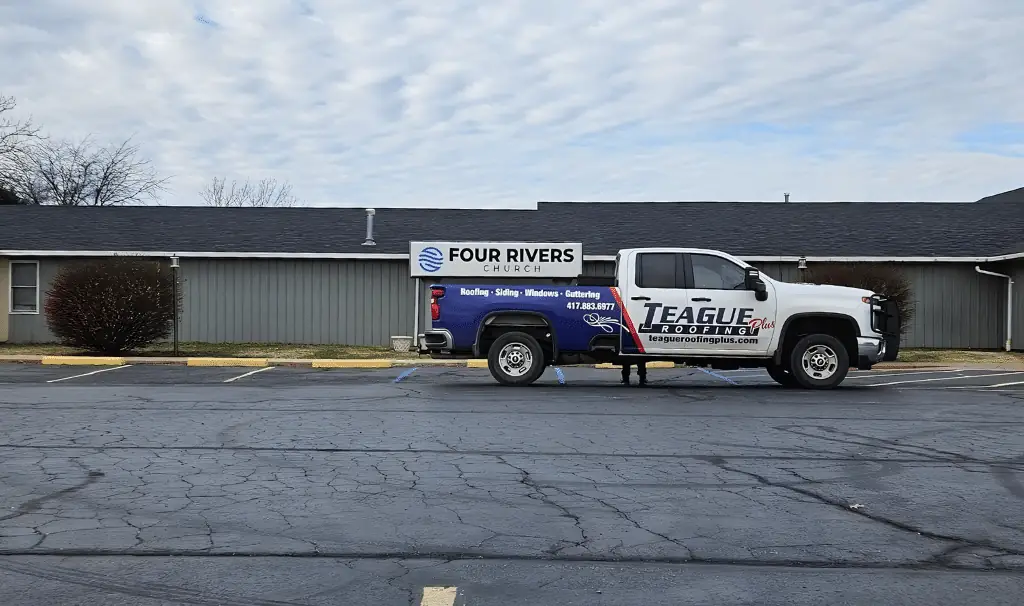
Willard's Siding Replacement Specialists Since 1971
Teague Roofing Plus has been protecting southwest Missouri homes from the outside in since the company was founded in Springfield in 1971. Today, owner Josh Tessmer leads every project. We are based at 6149 US-60 in Springfield, and our crews work across Greene County every week, including Willard and the surrounding northwest corridor.
Willard’s climate is hard on siding. The area sits in open northwest Greene County with fewer natural windbreaks than neighborhoods closer to Springfield’s city core. According to the NWS Springfield office, April and May bring the heaviest hail of the year across this region. Freeze-thaw cycles repeat every winter, and vinyl siding takes the worst of it. Once panels crack, buckle, or pull away from the wall, moisture reaches the sheathing and framing underneath. That is when a cosmetic problem becomes a structural one.
We have replaced siding on older farmhouses, 1990s ranch-style homes, and newer subdivisions throughout Willard. We know what these homes face, and we know how to protect them. Call 417-883-7663 to schedule a free inspection with no pressure and no obligation.
Willard Siding Replacement Done Right Since 1971
Teague Roofing Plus is not a franchise. We are not an out-of-state crew that shows up after a storm and disappears when the work gets complicated. Josh Tessmer lives here, works here, and has been completing exterior projects across southwest Missouri since before most of our customers bought their first home.
We are an Owens Corning Platinum Preferred Contractor, a designation fewer than one percent of contractors nationally earn. We are also BBB A+ rated and accredited since December 2019, members of the Home Builders Association of Springfield, and a Nextdoor Neighborhood Favorite in both 2022 and 2024. We are MO-licensed and carry full liability and workers’ compensation insurance.
When you call 417-883-7663, you reach people who live and work in the Ozarks. Not a call center. Not a sales team in another state. That matters when you are trusting someone to strip your home down to the sheathing and rebuild it the right way.
- Siding replacement experts since 1971
- Owens Corning Platinum Preferred
- BBB A+ rated since 2019

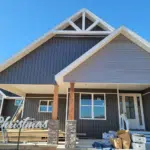














Why Willard Homes Need Siding Replacement
How Willard's Weather Destroys Siding
Willard’s position in northwest Greene County means homes here get direct exposure to storms rolling in from the west and northwest. There are fewer trees and natural barriers to slow hail and wind before they reach your siding. According to NWS severe weather climatology data, April and May are the peak hail months for this region, with a secondary spike in September. Hail cracks vinyl panels, chips fiber cement edges, and drives moisture behind every elevation it hits.
If your siding took a hit in a recent storm, your homeowners insurance may cover the replacement. Hail and wind damage qualify as sudden and accidental loss under most Missouri policies. The faster you document the damage, the stronger your claim. We inspect your siding at no charge and help you navigate storm damage repair from the first call through the final inspection.
- Free siding inspections after every storm event
- We meet your insurance adjuster on site at no charge
- Over 50 years of storm damage experience in Greene County
Does Your Willard Insurance Cover Siding Replacement?
Most Willard homeowners deal with a siding insurance claim once or twice in a lifetime. We handle them every week. After a storm, we inspect your siding for free, photograph every damaged panel, and document everything before you file. Then our team meets your adjuster on site and walks the home with them to make sure nothing gets missed.
We frame it simply: we document the damage, meet your adjuster, and make sure nothing gets overlooked. According to the Missouri Department of Commerce and Insurance, hail and wind damage is covered under most standard homeowners policies as a sudden and accidental loss. Wear, age, and neglect are not covered. Missouri law also prohibits contractors from paying your deductible. Any contractor who offers to cover your deductible is breaking state law. For a full walkthrough of what to expect, our blog post on how to file a storm damage insurance claim covers every step in plain language.
- Full photo documentation of every damaged panel
- Written damage report you can share with your insurer
- Honest recommendation on repair vs. full replacement
Fiber Cement, LP SmartSide, and Vinyl for Willard Homes
Not every siding material holds up equally in Willard’s climate. Freeze-thaw cycles, direct hail exposure, and humid Missouri summers all affect how long your siding lasts and how well it protects your home. Choosing the right material at replacement time is one of the most important decisions you will make for your home’s long-term performance.
We install fiber cement, engineered wood, and vinyl siding. We will walk you through the differences honestly, based on your home’s exposure, your budget, and how long you plan to stay in the house. Siding replacement in SW Missouri is not a one-size-fits-all decision, and we never treat it that way. Willard’s open terrain makes material durability especially important.
- Honest material recommendations based on your home's exposure
- All three major siding materials installed
- Guidance on durability, maintenance, and long-term performance
James Hardie Fiber Cement for Willard Homes
Fiber cement, specifically James Hardie products, is our first recommendation for most Willard homeowners. It handles hail impact better than vinyl or wood. It does not crack in freeze-thaw cycles. It is fire-resistant, and it carries a 30-year non-prorated warranty with a lifespan of 30 to 50 or more years when properly installed and maintained.
Willard’s hail history and open northwest exposure make fiber cement worth the investment. Vinyl siding that cracks during a May hailstorm may need full replacement within a few years. Fiber cement absorbs that same impact and keeps protecting your home. If you want to replace your siding once and not revisit it for decades, fiber cement is the right call for most Willard homeowners.
- Best hail resistance of any residential siding material
- Stable through Willard's repeated freeze-thaw cycles
- 30-year non-prorated warranty from James Hardie
LP SmartSide Engineered Wood for Willard, MO
LP SmartSide is our second recommendation for Willard homes. It gives you the look of natural wood with better moisture resistance and better hail performance than vinyl. The engineered wood core is treated to resist fungal decay, which matters in Missouri’s humid summers. LP SmartSide typically lasts 15 to 25 or more years and installs with fewer seams than many fiber cement profiles.
For Willard homeowners who want a warm, wood-look aesthetic without the maintenance demands of real wood, LP SmartSide is a strong choice. It outperforms vinyl on impact and durability, especially on homes with open west and south elevations that take the brunt of incoming storms. It is a solid upgrade over original vinyl on 1990s and early 2000s construction.
- Wood aesthetic with better durability than vinyl
- Treated core resists fungal decay in humid conditions
- Fewer seams and a cleaner installed appearance
Vinyl Siding in Willard: What You Need to Know
Vinyl siding is the lowest upfront investment of the three materials we install. For Willard homeowners with budget constraints, it can be an appropriate choice in certain situations. But we are honest with every customer: vinyl has real limitations in this climate.
Vinyl becomes brittle in freeze-thaw cycles and cracks more easily under hail impact than fiber cement or LP SmartSide. Willard homes sit on open terrain with direct storm exposure. If your home has a history of hail damage or faces west or northwest without significant tree cover, vinyl may cost you more over time than starting with a more durable material. We will tell you that honestly before you decide. Siding repair on cracked vinyl panels after hailstorms is common in Willard neighborhoods, and repeated repairs add up fast.
- Lower upfront investment for budget-sensitive projects
- Honest context on freeze-thaw and hail performance limitations
- Available when fiber cement or LP SmartSide are not the right fit
Comparing Siding Materials for Willard, MO Homes
The table below compares the three siding materials we install. Willard’s climate puts specific demands on exterior siding. Freeze-thaw performance and hail resistance are the two factors that matter most here, especially on homes in open northwest Greene County. Use this comparison to start your decision, then call us for a free inspection and material walkthrough specific to your home.
| Material | Lifespan | Hail Performance | Freeze-Thaw Performance | Best For | |-|-|-|-|-| | Fiber Cement (James Hardie) | 30 to 50+ years | Excellent | Excellent | Most Willard homes | | LP SmartSide | 15 to 25+ years | Good | Good | Wood aesthetic with durability | | Vinyl | 10 to 20 years | Fair | Fair | Budget-sensitive projects only |Fiber cement is the right call for most Willard homeowners who want to replace their siding once and move on. LP SmartSide is a strong second choice. Vinyl is available but carries honest trade-offs in this climate, particularly for homes with open storm exposure.
- Fiber cement handles hail and freeze-thaw cycles best
- LP SmartSide offers wood look with better durability
- Vinyl available for budget-conscious projects only
Warning Signs Willard Homeowners Should Not Ignore
Siding damage is not always obvious from the street. Willard’s hail storms can crack vinyl panels on one or two elevations while the rest of the house looks fine. Freeze-thaw cycles can buckle panels slowly over several winters without a single visible crack from the ground. By the time you notice peeling paint or a soft spot near a corner, moisture may already be behind the wall.
A free exterior inspection is the most reliable way to know where your siding stands. We look at every elevation, check transitions around windows and doors, and photograph anything that warrants attention. You get a clear answer with no pressure to act on it that day. For Willard homes built in the 1990s, that inspection often turns up more than the homeowner expected.
- Hail dents and cracks visible on panels after storms
- Buckled or warped panels that no longer lie flat
- Moisture or soft spots behind panels near the base
Warning Signs
Signs Your Willard Home Needs New Siding
What are the signs my Willard home needs full siding replacement instead of repair?
Isolated damage to one or two panels typically points toward siding repair rather than full replacement. But certain conditions make full replacement the more sensible call.
If your siding is 20 or more years old and showing hail dents, cracks across multiple elevations, buckled panels, or repeated paint failure, replacement is usually the right move. Many Willard homes built in the 1990s and early 2000s are now at exactly that threshold. If moisture has gotten behind the panels and damaged the sheathing underneath, you are looking at replacement regardless of the siding’s age. Patchwork sections that no longer match the rest of the home are another sign that a full replacement will serve you better than continued repairs.
A free inspection gives you a clear answer. We will tell you honestly whether a repair or a full replacement makes sense for your specific home. Siding replacement in SW Missouri is a building envelope decision, not just a cosmetic one.
Does siding replacement require a permit in Willard, MO?
Yes. Full siding replacement in Willard requires a building permit through Greene County. Willard falls within unincorporated Greene County for most residential properties, and the county uses 2012 building codes with a permit office at 940 N Boonville Ave, Room 305 in Springfield. Siding work falls under building envelope requirements, and permits are required for full tear-off and replacement.
If your home is within Willard city limits, you may need to check with the City of Willard directly, as municipal requirements can differ from county permit offices. The nearest reference point is the City of Springfield’s Building Permits and Codes office, which handles Springfield proper.
Teague Roofing Plus handles all permit coordination on every job. You never have to deal with the building department. That is part of the service, at no extra charge to you.
What is the best siding material for homes in Willard, MO?
Fiber cement, specifically James Hardie products, is our first recommendation for most Willard homeowners. It handles freeze-thaw cycles without cracking, absorbs hail impact rather than fracturing, and carries a 30-year non-prorated warranty with a lifespan of 30 to 50 or more years. For homes on open terrain in northwest Greene County, that durability matters more than in more sheltered locations.
LP SmartSide is a strong second choice for homeowners who want a wood aesthetic with better durability than vinyl. It outperforms vinyl on hail resistance and holds up well through Missouri’s humid summers.
Vinyl is available as a lower upfront investment, but it becomes brittle in freeze-thaw conditions and cracks more easily under hail impact. Willard’s active severe weather history makes material choice an important decision, not just a budget line. We walk every Willard homeowner through the options with honest trade-offs before any work begins.
Will my homeowners insurance cover siding replacement in Willard?
Hail and wind damage to siding is covered under most Missouri homeowners policies as sudden and accidental loss. Wear, age, and general deterioration are not covered. The Missouri Department of Commerce and Insurance provides guidance on what standard policies include.
After a storm hits Willard, we inspect your siding for free, document every damaged panel with photos, and meet your adjuster on site. We make sure nothing gets missed before your claim is finalized. Missouri law prohibits contractors from paying your deductible. Any contractor who offers that is breaking state law.
Our insurance claim assistance is included at no charge. We document the damage, meet your adjuster, and make sure nothing gets overlooked. If the storm also hit your roof, we can assess both at the same visit.
How long does siding replacement take in Willard?
For most Willard homes, active installation takes 7 to 14 days. The total timeline from your first call to project completion is typically 2 to 6 weeks, depending on material availability, permit processing, and scheduling.
We start with a free inspection and material consultation. Once you choose your material, we pull the permit, schedule removal, inspect the sheathing, and begin installation. If we find moisture damage in the sheathing during removal, we repair it before new siding goes on. Skipping that step causes new siding to fail early for the same reason the old material did. This is especially common in Willard homes where original vinyl has been holding moisture against the sheathing for years.
For homes with storm damage going through an insurance claim, timing depends on how quickly the adjuster processes the claim. Our team can help you navigate the insurance process so the project moves as quickly as possible.
Trusted by Willard Homeowners Since 1971.
Posted on Google RSJ8 days ago
Trustindex verifies that the original source of the review is Google.
Wow!!! Joel Adams made needing a roof that much easier by going above and beyond. Got us moved into the lineup in 2 days since we were under a time crunch!!! Saved us money on top of it. The crew was respectful and did a fantastic job from start to finish! Thank you very much!!!!Posted on GoogleNancy Hoagland17 days agoJoel was great to work with! Very knowledgeable. The crew did a very good job!Posted on GoogleMary Pearson18 days agoI want to give a huge shout out to Joel. My granddaughter and her family are staying at our home while my husband and I are out on an extended vacation. The day we left a huge wind and rain storm hit. My granddaughter called and said we had a ceiling light that was leaking in the spare bedroom. I immediately contacted Teague Roofing, let them know the issue and that we were out of town. This was late on a Sunday. Joel said he would add us to his schedule for the next day. He arrived at our house around 10:00, looked at the situation in the bedroom, went on the roof and found the problem right away. He fixed the problem and now my husband and I can continue our vacation knowing that our roof is in good shape and my granddaughter and her family can enjoy their stay while we enjoy our time away. Their customer service is top notch and a rare find these days. We will definitely recommend them to others and should we ever have a roof issue we will definitely be calling Teague Roofing!!! I couldn't be happier!!!+1Posted on GoogleCody Davis28 days agoThe best roofing company in the 417! Give them a call for a free consultation!Posted on GoogleJeremy Hill49 days agoI had a great experience. Honest, helpful, and Jason is not only a great representative of this company; but a great man as well. Will always recommend these guys.Posted on GoogleCarolyn Hoskins78 days agoPosted on GoogleNathan English99 days agoShowed up early for the inspection, found the leak and repaired it quickly. They were great at communicating what the problem was and how they fixed it. Incredible customer service. Would recommend to anyone.Posted on GoogleRick Shortt135 days agoI just want to take a moment to tell you how impressed I was by sal from teague roofing Plus today. After the hail storm people are going door to door trying to get you to replace your roof because it benefits them to do so. You hear lots of stories about companies telling you your roof needs replaced when it really doesn't. Sal came by today and did a free inspection and gave me the great news that we don't need a new roof and that our roof is in fine shape. He gave me lots of details and suggestions for when we do need a new roof. His honesty has won my business whem eventually we will need a roof. If you're looking for somebody to give you an honest inspection and estimate on your roof, this is the place to do it.Verified by TrustindexTrustindex verified badge is the Universal Symbol of Trust. Only the greatest companies can get the verified badge who has a review score above 4.5, based on customer reviews over the past 12 months. Read more

Need a Siding Inspection in Willard, MO?
Your siding protects everything behind it. When it starts to fail, moisture gets in, and that becomes a much bigger problem than the siding itself. Willard homes built in the 1990s are at the age where that process is already underway on many properties, whether the homeowner knows it or not. If your home is aging out or took a hit from a recent storm, we will come take a look at no cost to you. No pressure. No obligation. Just an honest assessment from a team that has been replacing siding across northwest Greene County and all of SW Missouri for over 50 years. Call 417-883-7663 or tap the button below to schedule a free siding inspection. Teague also handles roofing, gutters, and windows across SW Missouri.