

Emergency Roof Repair Ozark, MO
When a severe storm tears through Christian County and shingles go flying or a tree drops onto your Ozark home, every hour your roof stays open makes the damage worse. Teague Roofing Plus responds to roof emergencies across Ozark and the surrounding area fast. We tarp exposed areas, stop active water intrusion, and get your permanent repair on the schedule. Call 417-883-7663 right now if water is entering your home.
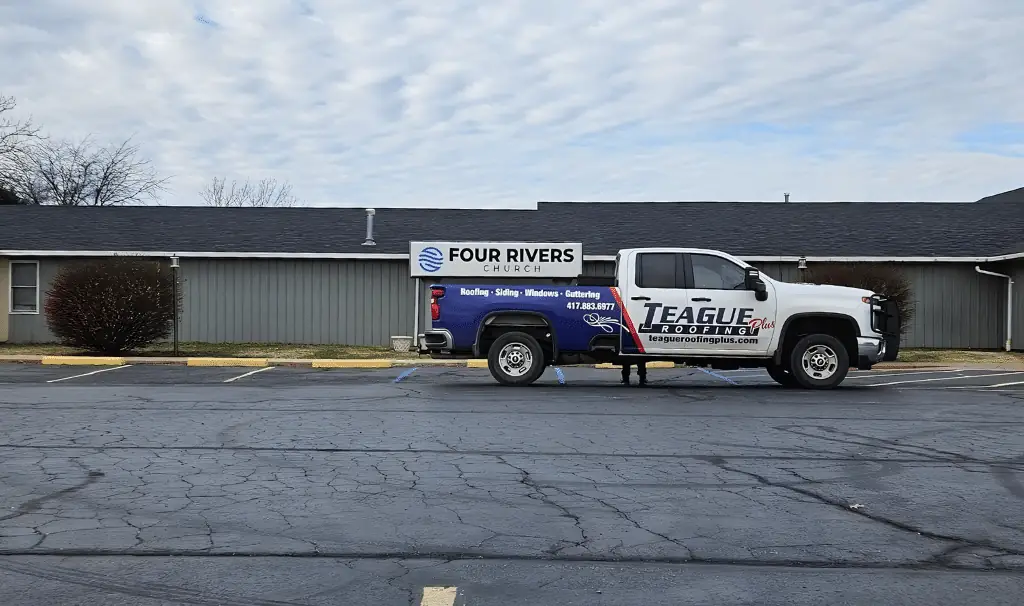
Fast Emergency Response For Ozark, MO Homeowners
Teague Roofing Plus has been protecting SW Missouri homes since the company was founded in Springfield in 1971. Our office sits at 6149 US-60 in Springfield, putting us close to Ozark and Christian County. When you call with a roof emergency, you reach a real person who can get a crew moving fast. Owner Josh Tessmer is hands-on with every job.
Ozark sits in Christian County, and the Bull Creek corridor has a documented history of tornado watches and warnings during spring storm season. The NWS Springfield office tracks severe weather events across this region year-round. April and May are peak hail months, with a secondary surge in September. Straight-line winds regularly exceed 60 mph during thunderstorm events, and the Finley Farms area and newer subdivisions along Highway 14 take real hits when storms move through.
We have completed thousands of roofs across SW Missouri. We know what Christian County storms do to a roof, and we know how to stop the damage before it gets worse. Call 417-883-7663 the moment you suspect active water intrusion.
Local Crew. Real Answers. Here When Ozark Needs Us
After a major storm, out-of-state storm chasers flood Christian County neighborhoods. They work door to door, pressure homeowners to sign contracts before the debris has even dried, and disappear six months later when something goes wrong. Read our breakdown of storm chasers vs. local roofers before you let anyone on your roof.
Teague Roofing Plus is not that company. Josh Tessmer lives here. Our crews live here. We are an Owens Corning Platinum Preferred Contractor, a designation fewer than 1% of roofers nationally earn. We are BBB A+ rated since December 2019, a member of the Home Builders Association of Springfield, and a Nextdoor Neighborhood Favorite in 2022 and 2024. We carry full liability and workers’ compensation insurance.
When you call 417-883-7663 after a storm hits Ozark, you reach people who will still be here after the job is finished. That matters most when the emergency is real.
- Same-day emergency response available
- Owens Corning Platinum Preferred Contractor
- BBB A+ rated since December 2019
- Free emergency inspections and damage documentation
- MO-Licensed and Insured
- Nextdoor Neighborhood Favorite
















Emergency Roof Repair Done Right in Ozark, MO
Is This a True Emergency?
What Counts as an Emergency Roof Situation in Ozark
Not every storm hit requires an emergency call. But some situations cannot wait. If any of the following are happening at your Ozark home right now, call 417-883-7663 immediately and do not wait until morning.
Active water entering the home, large sections of shingles blown off, a tree or debris through the roof structure, a sagging or bulging ceiling with trapped water, or water near electrical fixtures or your breaker panel , these are true emergencies. Every hour of exposure can mean structural rot, mold growth, damaged insulation, and escalating interior damage. Learn what to do during an emergency roof repair before help arrives.
- Call immediately for active leaks or structural breaches
- Same-day tarping to stop water intrusion fast
- We respond to Ozark emergencies before standard repair calls
Emergency vs. Standard Damage
How to Tell the Difference in Ozark
Not all storm damage in Ozark is a same-hour emergency. Granule loss, minor hail bruising, one or two missing shingles with no active leak, and cosmetic dents are real damage worth addressing. But those situations can typically be scheduled within a few days. A hail damage roof inspection is the right next step for those cases.
A true emergency is defined by active risk: water entering your home right now, a structural breach, or an opening exposing your interior to the elements. Ozark’s mix of newer subdivisions and older homes along Highway 14 means damage can look minor on the surface while hiding a serious breach underneath. If you are not sure which category your damage falls into, call us. We can often assess the situation over the phone and tell you exactly what to do before our crew arrives.
- We help you determine emergency vs. standard damage over the phone
- No charge to assess whether your situation needs immediate response
- Honest guidance even if the answer is "schedule it this week, not tonight"
What To Do Before We Arrive
Steps Ozark Homeowners Should Take Right Now
Do not go on the roof. During or right after a storm, structural stability is unknown, and wet surfaces are dangerous. Instead, take photos of visible damage from the ground or safely from inside your attic if it is accessible. Those photos are what make an insurance claim viable. Document first, then call.
Place buckets under active drips. Move valuables, furniture, and electronics away from wet areas. Note where water is entering the home, whether at the ceiling, a wall, or near a fixture, because that detail helps us locate the breach faster when we arrive. If a tree has landed on your roof, do not attempt removal. The structural impact is unknown until a professional assesses it. This applies especially in Ozark, where mature trees near homes in older neighborhoods can cause significant hidden damage when they fall.
- Stay off the roof and document from the ground
- Photos taken before any work starts protect your insurance claim
- Note all interior water entry points to speed up our assessment
What Teague Does When We Arrive
Emergency Response Steps for Ozark Homes
Our crew starts with a rapid safety assessment before anyone goes on the roof. We identify structural risks first. Then we locate all active water entry points. Water travels, so where your ceiling is staining and where the roof is actually breached are often two different spots. This is especially common in Ozark homes with steeper pitches or multiple roof planes common in newer Christian County subdivisions.
Once we understand the full scope, we move to immediate stabilization. That means professional tarping, emergency shingle repair, or temporary flashing fixes, whichever stops water intrusion fastest for your specific situation. We photograph all damage with timestamps for your insurance company. Before we leave, we give you a plain-English explanation of what happened, what we did, and what permanent repair or replacement looks like. If your claim applies, we document everything in a format your carrier can use and schedule an adjuster meeting at no charge to you.
- Safety assessment before any crew member goes on the roof
- Timestamped photo documentation completed on site for insurance
- Plain-English explanation of damage and next steps before we leave
Emergency Tarping in Ozark
Professional Tarping When Repairs Cannot Happen Immediately
When a major section of roofing is missing or when weather prevents safe permanent repair right away, professional tarping is the right first move. We install heavy-duty waterproof tarps secured against further wind damage to stop water intrusion while permanent repairs are scheduled.
Tarping is a temporary measure, not a finished repair. Before our crew leaves, we give you a clear timeline for permanent work. Ozark’s spring storm season means repair schedules fill quickly after major events along the Bull Creek corridor and across Christian County. Emergency calls go to the front of the line. Storm damage roof repair typically follows within days of the initial emergency stabilization.
- Heavy-duty tarps secured against wind displacement
- Temporary protection while permanent repair is scheduled
- Emergency tarping is the first line of defense, not the final repair
When Emergency Repair Reveals Bigger Problems
Could Your Ozark Roof Need Full Replacement?
Sometimes an emergency call reveals a roof that cannot be adequately patched. In Ozark, this happens most often on homes in older neighborhoods near the downtown square and along Highway 14, where roofs may be 20 or more years old and have been quietly deteriorating between storm seasons.
Indicators that replacement may be the honest answer include structural decking damage, multiple failure points across the roof, a roof 15 or more years old with widespread wear, or prior repairs that masked deeper problems. Newer homes in Finley Farms and other Ozark developments may still be within warranty windows, making a full and accurate assessment even more important. Teague gives a straight assessment on site. If repair is the right answer, we say so. If your roof has reached the end of its life and a storm has made that clear, we walk you through roof replacement in SW Missouri and what to expect from the insurance process.
- Honest on-site assessment, no pressure to upgrade if repair is adequate
- Structural decking damage and multiple failure points indicate replacement
- We walk you through the insurance process when replacement is needed
Emergency Repairs and Ozark Permits
Do Emergency Roof Repairs Require a Permit in Ozark?
Minor emergency repairs typically do not require a permit. Patching, tarping, replacing a few shingles, and fixing flashing are generally below the permit threshold. The City of Ozark follows 2018 ICC codes and the 2017 NEC for residential construction. When repairs affect more than 25% of the roof surface, or when structural damage is involved, a permit is required.
If your home is outside Ozark city limits in unincorporated Christian County, different local rules may apply. Teague handles all permit coordination on every job that requires it. You do not have to deal with city offices or figure out which code applies to your property. That is part of what we do on every permitted scope of work. For reference, Springfield Building Development Services provides useful context on permit thresholds for the region.
- Teague handles all permit coordination on permitted repairs
- Minor emergency repairs typically do not need a permit
- Repairs over 25% of the roof surface require an Ozark city permit
Insurance Coverage for Emergency Roof Repairs
What Ozark Homeowners Need to Know About Claims
Storm-caused emergency repairs are covered under most Missouri homeowners insurance policies as sudden and accidental damage. The key is documentation. Take photos from the ground before any work begins. Those images are the foundation of a successful claim. Read our full guide on how to file a roof insurance claim for step-by-step guidance.
Teague documents damage with timestamped photos, puts together a written damage report your carrier can use, and meets the adjuster on your roof at no charge. We make sure nothing gets missed. Missouri law protects homeowners from unfair claim handling. We help you understand your rights and your timeline. Note that Missouri law prohibits contractors from paying your deductible. Any contractor who offers to cover it is breaking the law.
- We document damage and meet your adjuster on site at no charge
- Timestamped photos completed before any repair work begins
- Missouri law protects homeowners from unfair insurance claim handling
Common Questions
Emergency Roof Repair FAQs for Ozark Homeowners
When your Ozark roof is damaged and water is coming in, you need fast answers. Here are the questionA true roof emergency means active risk right now. Call immediately if water is entering your home, a large section of shingles has been blown off, a tree or debris has gone through the roof structure, your ceiling is sagging or bulging with trapped water, or water is near electrical fixtures or your breaker panel.
Granule loss, minor hail bruising, and one or two missing shingles with no active leak are real storm damage, but they are not same-hour emergencies. Those situations call for roof repair scheduled within a few days. Not sure where your situation falls? Call us. We can often assess over the phone and tell you what to do before our crew arrives in Ozark.
Emergency calls go to the front of the line. Same-day stabilization is the goal for accessible damage. That means tarping and temporary repairs to stop water intrusion while permanent work is scheduled. Response time depends on storm volume across the area, but Ozark emergencies get priority over standard repair calls.
After a widespread severe weather event along the Bull Creek corridor or through Christian County, multiple crews may deploy at the same time. Emergency roof repair across SW Missouri is a core part of what we do, and we staff accordingly during and after major storm events. Call 417-883-7663 and tell us water is actively entering your home. That puts you at the top of the list.
Minor emergency repairs, including tarping, patching, flashing fixes, and replacing a handful of shingles, typically do not require a permit. The City of Ozark follows 2018 ICC codes. When repairs affect more than 25% of the roof surface or involve structural damage, a permit is required. Structural repairs always require permits regardless of scope.
If your home is in unincorporated Christian County rather than Ozark city limits, separate county rules may apply. Teague handles all permit coordination on every job that requires it. You do not have to navigate city or county permit offices on your own. That is part of what we do on every permitted scope of work. For general context on regional permit requirements, Springfield Building Development Services outlines the thresholds used across SW Missouri jurisdictions.
Yes, in most cases. Storm-caused emergency damage is covered under most Missouri homeowners policies as sudden and accidental loss. The most important thing you can do before any work begins is document the damage with photos. Those images are the foundation of your claim.
Teague puts together a complete damage report, meets your insurance adjuster on site, and walks every damaged area to make sure nothing gets overlooked. Our insurance claim assistance is provided at no charge. Missouri law prohibits contractors from paying or waiving your deductible. Any contractor who offers to do that is breaking the law. We follow all Missouri rules and help you understand your rights throughout the claim process.
Stay off the roof. Wet surfaces and storm-weakened structures make the roof dangerous before a professional has assessed it. From the ground, photograph all visible damage. If you can safely enter the attic, photograph damage there too. Those images taken before any work begins are what support your insurance claim.
Inside the home, place buckets under active drips and move valuables, furniture, and electronics away from wet areas. Note exactly where water is entering, at the ceiling, a wall, or near a fixture. That detail helps our crew locate the breach faster when we arrive in Ozark. If a tree has come down on your roof, do not attempt removal. Structural stability is unknown until a professional checks it. Read our full guide on what to do during an emergency roof repair for more steps you can take right now.
Could My Emergency Call Turn Into a Full Roof Replacement?
Posted on Google Cody Davis7 days ago
Trustindex verifies that the original source of the review is Google.
The best roofing company in the 417! Give them a call for a free consultation!Posted on GoogleJeremy Hill28 days agoI had a great experience. Honest, helpful, and Jason is not only a great representative of this company; but a great man as well. Will always recommend these guys.Posted on GoogleCarolyn Hoskins57 days agoPosted on GoogleNathan English78 days agoShowed up early for the inspection, found the leak and repaired it quickly. They were great at communicating what the problem was and how they fixed it. Incredible customer service. Would recommend to anyone.Posted on GoogleRick Shortt114 days agoI just want to take a moment to tell you how impressed I was by sal from teague roofing Plus today. After the hail storm people are going door to door trying to get you to replace your roof because it benefits them to do so. You hear lots of stories about companies telling you your roof needs replaced when it really doesn't. Sal came by today and did a free inspection and gave me the great news that we don't need a new roof and that our roof is in fine shape. He gave me lots of details and suggestions for when we do need a new roof. His honesty has won my business whem eventually we will need a roof. If you're looking for somebody to give you an honest inspection and estimate on your roof, this is the place to do it.Posted on GoogleDeann Daniel126 days agoWe were under contract to sell our mom's house when the hail storm hit. Joel Adams at Teague Roofing was absolutely the best to work with. By the time the insurance claim had been approved we only had 8 days to complete the work before closing. Joel made it happen! Highly recommend!Posted on GoogleBenjamin Cloud142 days agoJoel is great! We have used him 2 different times for our roof. He comes quick, if it’s easy it’s cheap.. He always responds fast!! He is honest and reasonable…. My wife called him after a bad storm and he worked us in w zero complaints. My father-in-law also used him and loved him!Posted on Googletom mitchell151 days agoJust had my roof and gutters replaced by Teague and I worked with Joel Adams throughout the entire process. Joel and the Teague team made this a very stress-free process, were quick to respond to my many questions with this being my first insurance claim, and did a great job getting everything done very quickly. Couldn’t be happier with my decision to go with Teague after obtaining 4-5 quotes, as they seemed to be the most professional and quickest to respond and their quality and clean up far exceeded my expectations. Tom MitchellPosted on GoogleAmanda Hancock152 days agoI had a great experience with Teague Roofing last Friday. After explaining I had a leak, Joel arrived promptly to take a look. He was polite, professional and very knowledgeable. I recommend Teague Roofing.Posted on GoogleMax Westerman160 days agoHad a great experience with Teague Roofing Plus! Lane came out quickly, was super friendly and knowledgeable, and diagnosed the issue fast. Really appreciated the professionalism and expertise — will definitely be calling them again for any future roofing needs - highly recommend!Posted on Googlesteve thurman170 days agoJoel inspected the roof and found no need for replacement, probably good for another 4-5 years. He did make minor repairs around a couple of vents and a couple of loose shingles. Very friendly service and knowledgeable. Highly recommend for up front honest evaluation.Posted on GoogleMarsha Turner178 days agoExcellent response time from contact to response for a roof assessment. Thank you Dana for recommending Alan. We found Alan to be very dependable and willing to go the extra-mile. Keenly attentive to customer concerns- bright, enthusiastic, willing, concerned, good attitude, present, supportive, knowledgable, motivated and dedicated to roofing services. Obviously confident, experienced and relatable roof jargon -good communications exchanged. We feel we received a sincere and accurate roof inspection because of the real-time hands-on and boots- on -the roof ,eyeball assessment done by Alan. The after mass of a tornado and/or wind storm damage will not stand a chance with Teague Roofing Plus on the sceen. Reputable and reliable. Exceeded our expectations. Extremely reliable and highly attuned to customers' concerns. We highly recommend this business and particularly this employee for most any roofing/gutter job. Excellent service. We thank you! Grateful for the informative and excellent roof inspection. God bless!Posted on GoogleMike Butcher182 days agoAlan with Teague roofing came out the same day to look at some problem areas on my roof. He was professional taking pictures of the areas. Alan fixed the spots that he could the same day. I know the roof needs replaced, but this isn't the time and Alan did not pressure, he offered suggestions to help. I will call Alan and have Teague roofing put on my new roof when the time is right.Posted on GoogleDanielle Bode183 days agoJoel was a huge help! He was very communicative and fit me into the schedule when I found a spot on my ceiling that I thought could be a leak. Quick, friendly, and great at his job!Posted on GoogleJacob Fehring186 days agoI had a small drip coming through my roof that I was concerned about. I called Teague Roofing as I had experience with them in the past. They sent out Allen, who wonderfully went above and beyond for us. He called me while I was at work and got some information and asked to stop by while he was local. He diagnosed the exact problem I had ON THE PHONE. He hadn't even seen it. Now thats some experience. It wasnt even a roofing issue in the slightest, it was some caulk that had finally dried out on my hvac vent. Yet Allen knew this all prior to showing up, went up and recaulked the stove pipe and went on. I waited less than a day for contact, appointment, and resolution all without having to take off from work. I appreciate Allen's work and will be using and recommending Teague for the rest of my days.Posted on GoogleSusan Shiloh192 days agoGreat customer service. Lane arrived on time and was very professional - he not only identified where the leak in my roof was coming from, he also identified several other minor issues which he took care of on the spot. Can't say enough good things about this company - highly recommend them!Posted on GoogleMitchell Weiss196 days agoThey are great to work with. I called and had a response right away. Excellent service and a great price. Teague is who I will call with any of my siding or roofing needs.Posted on GoogleTrent Lierheimer198 days agoA very honest team that was very transparent and concise with their pricing and their services.Posted on GoogleDavid Sawyers211 days agoI bought a new home that had some minor leaks and my realtor recommended Joel from Teague roofing and I'm glad she did. Joel was prompt, professional, personable, and most importantly, VERY knowledgeable. He quickly found my leak like it was his favorite pastime. Teague has been a local fixture in the community for several decades which tells me they are hitting all of the marks. Teague will certainly be my first call for my roofing needs in the future.Posted on GoogleRyan Vanbuskirk211 days agoWe had a wonderful experience with this general contractor. The team was professional, punctual, and very detail-oriented. They kept us informed throughout the entire project and delivered high-quality results on time. The craftsmanship is impressive, and our renovation turned out beautifully. I would confidently recommend their services to anyone.Posted on GoogleDebbie Brown214 days agoIf you have roofing problems don’t hesitate to call Teague Roofing. I called Joel in the morning, he was out same day. He gave me his honest opinion and fixed the problem. Great communication as well. I will definitely use them for any of my other properties.Posted on GoogleCathy Lowe220 days agoFast, kind, professional, cleaned up all debris well. Would recommend this company to other friends in need of a new roof!Posted on GoogleGene Croy276 days agoPosted on GoogleEvan Marshall296 days agoThey did a fantastic job with our roof and gutters. And they stand by their work. After the major storms that have come through Joel has stopped by to check on the roof and make sure everything is good. It is next level to check on the needs of your customers like that. I have very much appreciated how considerate and helpful they have been.Posted on GoogleSamantha Vaughan296 days agoCalled Teague roofing after we got hit by a bad hail storm. They came out within a day or two. Worked with Joel at that time. He was very professional and straight forward and treated our home as if it were his own! He assisted with choosing the right shingle for our home and made sure all my questions were answered. Roofing day came and the workers were very polite and proficient at their job. Got it done within a day. Lane was the guy in charge of the job and he was also very polite and professional. Really enjoyed working with him! They came back and inspected after the job was done and answered all my questions. Highly recommend this company!Posted on GoogleDavid Rutledge310 days agoI'm sure Joel is a great person to work with, but Brian deserves some kudos as well. From the day he came to give us an initial estimate to when the last length of gutter was installed he took good care of us. There were some hiccups along the way, all of which were resolved quickly and to our satisfaction. We would highly recommend Teague Roofing if the need ever arisesPosted on GoogleRyan Wilson323 days agoJoel Adams (Field Supervisor) was amazing!!! He was super knowledgeable, explained everything in detail and showed up when he said he would. I would highly recommend Teague Roofing.Posted on GoogleMark Stewart325 days agoI can’t say enough good things about this roofing company! They always go above and beyond to deliver excellent service. Working with Joel has been such a pleasure. he’s responsive, professional, and always makes time for my calls. He jumps on bids quickly, especially when we’re working with time-sensitive clients. Joel is truly the best and my first call every time. Highly recommend this team!Posted on GoogleJan Rund339 days agoWe had a house and shed recently re-shingled. You'd never know they'd even been there when they were done. They did a great job and I would highly recommend this company.Posted on GoogleBecky Hollis339 days agoWe had hail damage. Teague Roofing was recommended by a family member. Joel was great. He even met with our insurance adjuster, to go over the roof damage. Joel answered all our questions and concerns, and he made sure that the job was completed to our satisfaction. I would recommend Teague Roofing Plus!Posted on GoogleJennifer Sade (Aunt Jennifer)339 days agoI'm truly grateful I took the time to read the reviews before hiring Teague Roofing. Joel Adams, who came highly recommended by my realtor and reviews, really went above and beyond. Since I’m in a duplex, he had to do multiple bids, taking the time to talk with the other owners alongside me so we could get the entire roof done smoothly. He was incredibly patient, explaining everything twice and reviewing all the pricing carefully, which meant a lot during a stressful process. Lane was in charge of all the guys on site, ensuring everything was done correctly and with care. He's an absolute gem—honest and compassionate in every interaction. When the team uncovered more damage than expected after removing the two layers of shingles, Lane took the time to go over everything with me and even spoke with the neighbors to explain what was happening. His excellent communication and genuine concern helped ease the worries I had. Next week, we’re getting new gutters, and Joel kindly helped me choose options that would look beautiful and be high quality, including the best gutter guards. A quick side note—I want to mention Marbin, the main roofer. Not only did he do a fantastic job, but he also brought a cheerful spirit( eye candy) that made the whole experience more pleasant.Posted on GoogleKim Shook357 days agoThis is a top-knotch company. They stand behind their work. They put a new roof on for us and have also been out to inspect the roof and gutters after storms. We highly recommend.Posted on GoogleBig House364 days agoJoel came by and did and inspection and quote for my new roof. He answered all my questions and gave me all the information I needed. We scheduled my new roof the next day. The roofers did a good job and worked two days to complete my roof. The communication between Joel and I was good and always timely. I’m glad I went with TeaguePosted on GooglePokémon Collector372 days agoCame to give me an estimate. Instead he fixed the problem for free. It was a small issue. Good people great customer service! Thank youPosted on GoogleLyndel Link387 days agoTeague roofing did an amazing roof and gutter job for me there crew was professional and to top that off the shingles up the valley and on the ridges are super straight how many times have you seen houses where that is always crooked! The clean up afterwards was perfect nothing damaged during the whole job!! And Lane the supervisior is incredible show up early stayed until job was done and made sure we were happy with the job before he left!! He walked us through the whole process with the insurance adjuster and the insurance company!! Trust me Teague roofing is amazing! LyndelPosted on GoogleRobin Pepper392 days agoHad the best experience with Teague roofing Joel Adams was very prompt and took care of are situation would recommend Teague roofing and all their staff to anyone. Thank you Joel for all your fast and quick service.Posted on GooglePhil Rowe407 days agoOur experience today with Teague Roofing was friendly, professional and good service. Joel showed up on time and was efficient and courteous. I was impressed with his professionalism. Highly recommend Joel and Teague Roofing!! A+Posted on GoogleAndy Bond420 days agoLet me tell you these guys know there stuff & are real professionals with up front estimates that are true to final cost paid in my experience... Quality roof replacement with people who really care about the final product!+1Posted on GoogleKelsey Elliott422 days agoPosted on GoogleMadison Vodicka437 days agoJoel was a huge help getting our roof leak fixed! Time will tell but his excellent service will leave me calling back should I need further help! The honesty of this salesman deserves 5 STARS!Posted on Googleel moon443 days agoJoel was absolutely wonderful! I went up on the roof with him and he educated me about hail damage and what to look for with future water leaks. He was a referral from a neighbor and I'm so glad I took his info. I'll be saving his number because all future business will be done though him!!Posted on GoogleChad Estes445 days agoGreat customer service! He came for an estimate. Instead fixed the problem free of charge. Very great experience. Highly recommend!Posted on GoogleCheryl Osborne470 days agoJoel Adams did a great job! Thank you.Posted on GoogleTiffany Tarvestad481 days agoWe had a small leak in our roof and when we reached out to Teague roofing, they responded really quickly. The service tech identified the problem, it needing just a simple fix, he did it for no charge. I would highly recommend Teague roofing, they’re definitely who I would call again for my roofing needs.Posted on GoogleLaurel Miller498 days agoHail damage totaled our roof. Joel assessed the damage and sent his crew to replace it. The crew was fast and very professional. Joel just came by to check our beautiful new roof complete with new gutters. We highly recommend Teague Roofing Plus.Posted on GoogleCristy Meadows499 days agoWe've had Teague Roofing out to our house a couple of times. They repaired a couple of loose shingles the first time and then examined our roof for hail damage the second time. This company is honest, which is not always the case in roofers. He could have convinced us easily there was hail damage, but instead said the roof is good for at least 10 to 20 more years (unless there's storm damage). I would definitely recommend them if you're looking for an honest inspection.Posted on GoogleBrian Newton501 days agoMy wife and I hired Teague Roofing Plus to install a new roof and gutters on our home. Both roofing and gutter crews did a great job and everything looks fantastic. Make sure to ask for Joel Adams - very nice, friendly guy who is easy to work with and definitely knows his stuff.Posted on GoogleGigi Bebus515 days agoTeague Roofing was recommended to us by our realtor after some minor wind damage from last storm. Joel was fantastic, he showed up promptly, knowledgeable and thorough in his inspection. He explained things very clearly and was a joy working with throughout this experience. The work was done quickly and smoothly. Thank you so much him and all the crew. :)Posted on GoogleTonya S518 days agoJoel came out for a couple of leaks I was dealing with. He found the issue quickly! This company is amazing and has been in the community for decades. I will use them again and recommend to anyone. Thank you, Joel!Posted on GoogleCindy Clark519 days agoJoel with Teague Roofing Plus has been wonderful to work with and helpful working through all of the insurance issue. If there has been anything come up during the time that the work is being done all I've had to do is just let Joel know and he works to make it right.Posted on GoogleKurt Tessler521 days agoAlan from Teague Roofing came out to take a look at my roof and was professional, knowledgeable, and honest. His craftsmanship and attention to detail really stood out. There aren’t many like him left—highly recommend Teague Roofing if you want the job done right!Posted on GoogleJosh Arnold536 days agoAustin Carson with Teague Roofing Plus is awesome. Great man to work with. Honest, reliable, and dependable. I would recommend this company to anyone. If you go anywhere else you're probably over paying.Posted on GoogleNicole G549 days agoJoel and the Teague Roofing team did a great job! Highly recommend! We had a full roof replacement and are very happy.Posted on GoogleAmber Taylor559 days agoWe had a leak in our roof. Joel came out and patched it up for us, was very knowledgeable and able to help us figure out a game plan to work on some other issues we have with our house. We look forward to working with him in the near future!Posted on GoogleSheila Johnson561 days agoTeague roofing is an amazing business. I’m a real estate agent and have worked with them dozens of times. As an investor they have done multiple roofs for my properties. They are trustworthy, reasonably priced and do quality work.Posted on GoogleNancy Jones602 days agoExcellent experience! I had a small issue and I live 25 miles from Springfield. It’s often difficult to get repairs done in my area. Alan S fixed me up!!!!! Thanks soooo much!!! 😃😃😃😃😅Posted on GoogleSamantha Salinas615 days agoThey do great work.Posted on GoogleJoanne Eide618 days agoJoel at Teague Roofing did a excellent job of helping me through the process of installing a new roof. Always quick to answer my text messages. Joel is very knowledgeable and professional. I highly recommend Teague Roofing PlusPosted on GoogleMiranda Amyx648 days agoTeague Roofing put new siding on our house. Everyone involved was professional, prompt, and highly responsive. They did a great job and I will definitely use them again!Posted on GoogleJoey Baker667 days agoPleasant experience. I needed repairs done before I could put my house on the market. They got the job done quickly, and the end results looked great. In the future, I will be using them for any roofing needs. Thanks Joel.Posted on Googleallison scott669 days agoJoel at Teague roofing has been great. When I purchased a home last year, he came out and looked at the roof for me and did some patchwork that I contracted with Teague to do then to address a few small issues . He also did patchwork on my dad‘s house recently, and I had him come to my house this year a second time to look at the roof conditions since I had another door-to-door sales rep for a different roofing company tell me I needed to replace my roof. I trusted teague to be honest about it I needed replacement. I called Teague Roofing again after the door to door rep and Joel came out within a day to inspect it for me and let me know the general condition of it, and that he did not feel that it was needing to be replaced at this time . Very honest company.Posted on GoogleBill Evans672 days agoI was a lot overwhelmed by the whole process of replacing the roof and gutters. Joel walked me through the entire process and explained every step along the way. He is excepttionally knowledgeable of your product, what to expect and the insurance procedure. Joel completely took all the mystery out of the equation. Highly recommend your company, Joel and your installation crew. Thank you for an outstanding job! Could not be more pleased!Posted on Googleclara lewis679 days agoI had a sudden roof leak I needed looked at and decided to reach out to Teague Roofing Plus. Joel responded to my request quickly. My appointment was scheduled in a timely manner and completed with ease. He was very knowledgeable and professional. I am glad to have connected with this company and would highly recommend them to others!Posted on GoogleCandace Jarrette680 days agoI contacted this company from the recommendation of a friend. I needed to have an inspection to find the source of a leak on a roof that isn't 1 year old. There aren't words to describe my disappointment and dismay at having to catch water dripping from a new roof! My call was answered by Joel. He was very kind and showed great empathy to my situation. He put my mind at ease by saying that on a new roof, it would be easier to find the leak. He arrived on time and began his investigation. He answered all of my questions and taught me along the way about roof structure and how he was assessing the job that had been done. Joel has a keen eye and explained what needed to be done and how to go about it. Many thanks to Joel! I would definitely recommend him to other people, including having him come check on an existing roof to ensure that all is well. I trust him! Joel helped ensure that I was equipped with the information I needed. THANK YOU TEAGUE ROOFING PLUS!Posted on GoogleTiffany McKenna680 days agoOur experience with Teague Roofing exceeded all of our expectations. When we look at our home now that it’s finished, we can’t believe it’s ours! Grateful is the first word that comes to mind! When we got hit with the hail storm in May, we had massive damage to our home & we were devastated - then I met Joel from Teague Roofing… Joel’s knowledge and Integrity was apparent immediately - He walked us through everything 100% thoroughly - answered every single question we had -took his time & made us feel absolutely confident we had chosen the best people to represent all the work we needed to have done. Joel was with us from the very beginning, to the very end & every moment in between. This type of customer service seems extremely rare nowadays, but that is what this company is all about. Knowledge, professionalism, expertise, and incredible customer service! Because of that storm, our roof needed to be replaced, our gutters replaced, all of our siding, and 10 windows at the back of our home. It was a massive job. The Teague roofers were an awesome, hard-working & exceptional group of guys - They wouldn’t settle for anything other than perfection. The guys that did the gutters were incredibly talented, fast, and boy! did they do a great job. Rob and his team that did the windows and the siding were with us the longest (as that was the biggest job) So we got to know them a bit… Rob is one of the nicest & most personable guys I’ve met- But more than that, he’s a fabulously talented perfectionist - He’s not happy unless you’re happy & His team of guys were wonderful as well. We thoroughly enjoyed having them around & they absolutely exceeded all of our expectations. Josh (the owner) And Alan Also made sure that everything was perfect, and we were in the best hands. We felt extremely lucky to have the best team around, take excellent care of us -Every single person I came in contact with at Teague made us 100% sure we had chosen the best company in Missouri Every single person at Teague A++++ They gave us the most beautiful home, We will be forever grateful! My husband and I stand by this review 100% Sincerely, Tiffany and Monty McKenna+2Posted on GoogleBill Scott680 days agoAfter the last Ice storm quite a few homes in our area needed and were getting roofs. I had heard so much about door nockkers and non professional roofers that I was a bit reluctant about choosing a roofing company, looked at a few lawn signs for a well advertised roofing company and gave them a call for an evaluation. I was told on the phone that it would be a couple of weeks to get out to see my roof. I waited patiently thinking that they would be the best to serve our needs. After a week and a half one of their reps showed up, spent lest then 5 minutes and told me that it was somewhat serviceable and they would save my job to when they had time. Needless to say I was quite taken aback and then I asked a very good and trusted friend who he used and he recommended Teague Roofing Plus with a glowing review and told how well satisfied he was. I gave a call and the very next morning at the time quoted a professional representative Joel Adam showed up, spent at least 35 minutes on my roof and another ten walking around looking at our gutter system. We called our insurance agent and they sent an adjuster and as promised Joel was there to walk the roof and gutter system with the adjuster. His follow through was much appreciated and really more then anticipated. We received our adjustment from our carrier and gave the go ahead. Only a few weeks past and we had a crew doing our roof, they were very clean and respectful of our property and did all that was expected and more. The gutter system followed in a couple of weeks and we went with a system that Joel had recommended. Joel came out to inspect the roof and gutters and he found 3 very minor problems that he said were fine but not up to his standards and we had a crew out and they fixed all and Joel was out again to inspect. He gave it a two thumbs up and to be quite frank we trust him. His professionalism and knowledge along with his office staff made this actually a stress free job and I would highly recommend Teague Roofing Plus, and will use them if any future repairs are needed. To finish, this company and their Representative Joel Adam respected our time, property and money. If I could give 10 stars I wouldPosted on Googledanny nunn681 days agoJoel came the same day I called. Found the problem and fixed it in no time. Teague has put three roofs on for us been happy with all. Any problem they come right back.Posted on GoogleDeena Ankrom681 days agoThey have done great work for clients in the past and great work for me today! Temporary fix for now and a full bid and explanation...would definitely recommendPosted on GoogleCeestar Ceestar688 days agoHighly recommend. Teague was wonderful to work with and my new roof looks amazing.Posted on GoogleDarlene Meredith689 days agoTeague Roofing replaced my roof and gutters after hail damage.. Worked with Josh and Joel and both were great to work with.very professional and made sure I was happy with the results.. Very professional and reasonablePosted on GoogleJessica Nienhaus716 days agoThank you teague! Love my metal roof!Posted on GoogleMolly Gray729 days agoJoel with Teague Roofing is the BEST! He made the whole process so easy. He worked with us to understand the insurance claim and reimbursement process and was great to work with. I would recommend Teague Roofing and Joel Adam’s to everyone!Posted on GoogleAmy Lenze753 days agoThe absolute best! I had an inspection coming up and the original contractor kept flaking until I was sitting there the day before trying to get someone out to repair siding and soffit. Teague Roofing was a pleasure to deal with from the time the office answered the phone. They came out and gave me a super fair price, completed it same day. Professionalism and quality of work far exceeded my expectation. We recommend and will use them again!, 5 star for sure.Posted on GoogleCindi Jones756 days agoI highly recommend Teague Roofing! Joel Adams was my salesman, he was so professional, he always answered my calls and my questions right away. He's knowledgeable in this field and was so helpful in helping me make decisions about my roof. I couldn't be more happy with him and this company.Posted on Googlekaren stough763 days agoThank you, Teague roofing for being so awesome to work with. Quality work, and very professional!Posted on GoogleBecky Sellers766 days agoJoel with Teague Roofing is fantastic to work with! Always willing to do what's best for the customer and great customer service and communication! I recommend him to all of my real estate clients knowing they will be treated right! 5 Stars!Posted on GoogleAlyssa Obrien767 days agoPosted on GoogleCharlotte Gustin770 days agoThey did a wonderful job on my mom’s roof and gutters! Joel Adams is the best!Posted on GoogleJames Stevens784 days agoThey did a great job installing a new roof for us a couple of years ago! They also were fantastic to work with today when I had them come out and take a look at a situation on my roof. Would highly recommend. Quick, responsive, and great customer service!Posted on GoogleMarsha Damme786 days agoWe could have picked from many roofers out there. We did our homework and decided to go with Josh Tessmer owner of “Teague Roofing Plus,” for our roof, gutter, and siding damage from hail and wind. Josh and his crews have done an exceptional job using extreme care with their new Pole Slider cover unit. Marvin and his crew worked tirelessly on the hottest day of the month to get the job completed. Very Impressive!!! Josh, the owner used only high-quality 35-40 year shingles on our roof. Josh even put an ice barrier to ensure no ice would get under the shingles.” Free of Charge “ We found Josh and his crew to be reliable, cautious, professional, fair, thorough, easy to communicate with, and worked well with our insurance. Also, Miach in the office is a delightful young man with excellent customer service skills and is always willing to help get your questions answered. We do not hesitate to refer Josh at Teague Roofing Plus to anyone with roofing needs. A Five Star Company !!!!!Posted on GoogleNicole Kiruki788 days agoI cannot say enough good things about this company! We called and they were able to come out in a very timely manner. Very friendly and very affordable!! Would highly recommend to everyone!!!Posted on GoogleSandra Ingram809 days agoThis company is all about a quality, honest experience. Joel Adams represents the company with integrity and provides great follow through.Posted on GoogleBill R814 days agoThis company is wonderful! Joel Adams is a great guy and he has a great team. The roofers came and started work at 7AM and finished at 7pm. The reason it took so long is because I had double shingles on the roof and when you have double shingles it takes a little longer to remove both doubled layer shingles. They will soon begin working on replacing a portion of my siding which was damaged during a bad hail storm and they will also be replacing my gutters. I have no doubt that they will continue their great work on the other two projects before them in the next few weeks. Other than that, Teague Roofing Plus is a superb company that I would recommend!Posted on GoogleErica Britain837 days agoTrustindex verifies that the original source of the review is Google.
They did a good job. Had a couple of concerns, i called Joel and he had them addressed quickly.Posted on GoogleSteve Myers840 days agoPosted on GoogleJennifer Brown843 days agoTeague Roofing is amazing. They were kind and quick to respond after realizing I had a leak! Thank you Joel especially for being so knowledgeable and for helping me find a fast solution!Posted on GoogleDawn Blake-Howard851 days agoVery happy with the work. The roof looks good.Everyone was very nice. Would definitely recommend. Thanks so muchPosted on GoogleBonnie Hawkins870 days agoJoel gave great service!!!! I highly recommend Teague! Fixed two leaks in my roofing and checked the roof for damage.Posted on GoogleLorna Cassil927 days agoIntegrity. Very hard to find these days, but it is how I would describe Teague roofing. They do things right and fix things without even having to be asked because it is the right thing to do. If you want to work with a company like this, I highly recommend Teague roofing.Posted on GoogleIris Bounds959 days agoFrom start to finish, from the initial estimate to the crew who installed the roof, the company was professional, courteous & helpful in answering all our questions. Logan Crain followed up & made certain we were pleased with the final job. We highly recommend!Posted on GoogleRebecca Furtak963 days agoUpdate 2024: Recently, with all the crazy winter weather we've had, a few water spots showed up. We called Teague Roofing and, once again, received amazing customer service. They were quick to come out, identify some problem spots and fixed them! Thank you, Teague Roofing, for the exceptional customer service! Amazing customer service! We recently had shingles delivered to our house on accident by another company. Even though they had nothing to do with the mishap Teague Roofing helped us get it figured out within minutes. Once the other company picked back up the shingles we contacted Teague Roofing for an inspection. They were quick to come out and let us know the status of our roof. We were very pleased with them and would recommend them to anyone! Thank you for the above and beyond customer service!Posted on GoogleSusan Welch983 days agoThis is the roofing contractor to choose!! Joel & Josh are very knowledgeable about shingles & their warranties, they saved us money on our new roof. Would definitely use them again!Posted on GoogleChris Vandergrift1025 days agoExcellent knowledge, reputable and honest. Joel was a class act.Posted on GoogleTCdents1025 days agoPrompt service, fair pricing, and good workmanship. I am a happy customer!Posted on GoogleGary Vandergrift1026 days agoJoel came out to check our roof for hail damage. He is great very knowledgeable, helpful and I would recommend him and Teague Roofing 5 +++Posted on GoogleKori Adams1051 days agoWould give 10 stars if I could.Posted on GooglePat Sivadon1064 days agoIt looks good because Joe and his crew came out and did a good job on the house and it got done all in onePosted on GoogleJoe Herman1071 days agoOur experience with Teague Roofing has been excellent. This is the third time they have replaced my roof. My satisfaction includes promptness in removing the existing roof in one day and replacing it in the same day. The supplies were delivered on time and clean up was outstanding. No left over shingles, tar paper or other debris.Posted on GoogleJoyce Farris1072 days agoI am a Realtor who has a lot of clients that will often come to me for a friend or a relative that needs a referral to a great roofing company who’s fairly priced without compromising on quality.. Teague Roofing is who I recommend! Teague has helped a lot of my clients where a new roof was necessary on the home they were buying in order to close on time, with just a weeks notice that we need a new roof before closing Joel with Teague has never let me down. I can not say enough good things about Joel who’s is the estimator for Teague, he has really went out of his way each and every time for my clients and I to get things done with quality!Posted on GoogleJennifer Hickey1074 days agoI couldn’t recommend Joel at Teague Roofing enough! I called to have someone out to look at a possible roof leak and they were very quick and responsive. Joel was very knowledgeable and explained exactly what could be going on and solutions to get it fixed. I was very impressed with Joel and will be recommending him and Teague roofing to all my friends!Posted on GoogleJanelle Holman1079 days agoEverything turned out great with my roof. Joel Adams did exactly what he said he would and was very professional!Posted on GoogleMarcie Cloud1079 days agoJoel came and fixed our roof (had a small leak). He knew exactly what needed to be done, he was quick, polite and great to work with. We would use him again any time! I highly recommend…. I should also mention that he knew it would rain soon and made it a point to not only fix the leak before the rain, but he also followed up after the rain to make sure the repair worked.Posted on GoogleSteven Nemeyer1093 days agoHad Joel come out to inspect my roof and get a quote on siding damage. He was very professional and I plan on using this company anytime going forward due to the experience.Posted on GoogleCarolyn McFarland1094 days agoJoel arrived at our home on time, extremely polite and professional. He found the issue almost immediately. If I ever need my roof replaced I will be calling Joel to have it installed by Teague. They have an invaluable employee with Joel.Posted on GoogleELVI VASQUEZ1096 days agoPosted on GoogleDave S1103 days agoTeague roofing did a phenomenal job on our roof and gutters. Joel answered all my questions and made the whole process easy and stress free. Would highly recommend!Posted on GoogleAdam Johnson1106 days agoLogan Crain was my salesman and was very friendly, thorough and knowledgeable. Logan did everything he said he was going to do and kept me up to date on the whole process of my roof, siding and gutters.Posted on GoogleJennifer Krtek1116 days agoTeague Roofing was phenomenal on both the house we sold and our new home. We had a new roof put on our last house. They were punctual, professional, and respectful. We called them for a leak in the roof of our new home (they did not do this roof). They fixed the leak quickly and saved us from a much bigger disaster. Joel was extremely professional and even followed up several times after he repaired the leak because we had several days of torrential rains. Highly recommend.Posted on GoogleCindy Jenkins-McKean1116 days agoI am very impressed with Teague Roofing Plus. Very professional, courteous, knowledgeable. The guys that replaced our roof, worked extremely hard even in the horrific hot weather. It was very impressive! You will not be sorry if you hire this company.Posted on GoogleDonald P.1128 days agoJoel Teague is very nice. His work is impeccable. Also he is interested in your concerns. I would hire him again.Posted on GoogleTerri H1129 days agoWe had such a great experience with Teague Roofing. Joel helped us from start to finish and he made us feel confident that we had chosen the right company. Thanks Joel for all your help and patience with my questions! Will definitely recommend this company to friends.Posted on GoogleMackenzie Helin1149 days agoI use and refer Joel with Teague roofing often and he does a fantastic job. I hired them to replace gutters on my personal home and I was very pleased!Posted on GoogleChristy Serrano1149 days agoJoel with Teague Roofing is fantastic to work with! I am a real estate agent and require bids frequently. He is easy to get ahold of and prompt to get out to the house to provide a bid.Posted on GoogleTom Emberton1156 days agoJoel & the crew at Teague Roofing Plus are awesome. When I had him do an inspection of my roof, he immediately had me call my insurance company. After the insurance adjuster came & looked, I shared Teague's estimate with him. He found the estimate to be lower than his assessment. Local rains delayed them a bit, however, as soon as good weather got here, the roofers were here early one morning & left in late afternoon; roof finished & very well done. The Architectural roof color is called driftwood.+0Posted on GoogleDwayne Long1157 days agoJoel was informative and helpful with the job and insurance reporting.Posted on GoogleCaleb St.Clair1157 days agoIf you’re looking for a roofing company, then look no further. Teague Roofing is who you want to go with. I highly recommend this company. A trusted friend recommended them to us and they didn’t disappoint. If you’re wanting an individual and company that truly cares, call Ian Woody at Teague Roofing. This man walked us through the entire process and would answer all of our questions.Posted on GoogleMisty Harris1162 days agoAlan came out to give me a estimate for a roof leak. I was thinking it would be a major repair and take several days. He had it fixed and my worries put to rest in under an hr. Great company to do business with.Posted on GoogleKaren Bartlett1165 days agoI very highly recommend Teague Roofing Plus! After a recent heavy downpour, we discovered a water spot on our kitchen ceiling. At the recommendation of a trusted friend, I contacted Teague Roofing Plus through their website, since the office was closed for the weekend. I received a call back early on Monday morning from Joel to schedule a convenient time to inspect our roof. He arrived promptly at the time agreed upon and was very polite, knowledgeable, and communicative. He checked our roof thoroughly for damage and quickly discovered the cause of the leak. He efficiently repaired it and also made sure that we didn't have any other damage. I really appreciated the fact that he also took the time to explain the problem to me instead of just rushing through to get to another job! Joel made me feel like my family and I are valued customers, and we will certainly call Teague Roofing Plus from now on with all of our roofing needs! Thank you very much for such awesome service!Posted on GoogleDarren Wienberg1169 days agoI highly recommend Teague Roofing. Joel Adams was a pleasure to work with, was quick to respond to questions, and the work crews did a great job with the roofing and gutter jobs, especially the clean-up afterward. My neighbors (in a rental property next door) were quick to snap a picture of the Teague Roofing sign in the yard so they would have it if/when they buy a property.Posted on GoogleShawna Page1169 days agoI highly recommend Teague Roofing. Joel was there to answer all my questions, and great to work with. This is a great company, that does the job right!!Posted on Googlejayson kim1170 days agoGreat experience getting the roof done for the first time. They help you through the process and I would highly recommend this company to anyone, especially if you get to work with “Joel” he was a great helper couldn’t ask for more. Thanks again guys.Posted on GoogleJanette Frank1178 days agoTeague roofing gave us great advice on our roof and installed new gutters at a great price. And they did it quickly!Posted on GoogleLane Waggoner1179 days agoAlan responded quickly to my initial service request, and kept in contact with me as needed. He explained the ongoing issues, and recommended future plans, all while personally fixing my most obvious issues. Teague Roofing definitely has my business now and in the future. Alan, you're the man! Thanks!Posted on GoogleMichael Kelley1180 days agoEverything went well.Posted on GoogleDori Meyer1180 days agoI would highly recommend Teague Roofing. From Logan the estimator, to the gentleman that came out to do the repairs, this crew is top notch. They were here withing a week of my call and less than a week later were here to make repairs. Thought we would need a new roof only to find out we had very minor damage.Posted on GoogleSherrill Cochran1184 days agoAlan was very professional and attentive to customer needs. Will definitely use Teague Roofing again. Thanks for a job well done!Posted on GoogleStephnie St Pierre1201 days agoPosted on GoogleRichard Aiken1212 days agoTeague Roofing is the best roofing company in the Springfield region in my opinion. We had roof leaks that four other roofing companies could not fix. Teague, specifically Logan Crain, was able to localize, document with audio/ video analysis exactly the problem. Very haute professional and most pleasant personnel. 5/5 recommended.Posted on Googlerae hall1213 days agoThey are very nice people, do a fantastic job, they care about the customers! Highly recommend!!Posted on GoogleDianna Hill1257 days agoLove the company and employees! They go above and beyond the duty. Would use again anytime! Thank u for all your hard work!Posted on GooglePam1318 days agoI had Teague replace the siding on my house. They did an excellent job and were extremely competitive with their prices. The workers on the job were good to tell me anything that wasn’t going just right. I couldn’t be happier with the workmanship and would definitely recommend the company.Posted on GoogleRebecca Kennedy1352 days agoJoel is amazing! He responds quickly no matter the day or time and is good people! I had damage from a hail storm. They replaced my roof, gutters, and siding. They used quality materials and I am very happy with the finished work!Posted on GoogleMariah Archer1403 days agoThis company and Jeol were a god send when we were looking for someone to fix our roof. He is very attentive and makes sure the customer is happy. This was for an insurance claim which I've never done before and he has been very patient and very good at explaining the steps ( even the steps in my insurances side lol.Posted on GoogleShawn Cox1422 days agoJoel came out and looked at our roof and was very professional. He immediately found an issue and we discussed numerous options and solutions. He explained all steps and I'll definitely use them with any and all roofing needs.Posted on GoogleAndy Johnson1422 days agoJoel came out and worked on a couple issues with our roof that I was concerned about and fixed one more that would’ve cost us hundreds if left untreated! Will definitely be using Teague again in the future!Posted on GoogleMichelle Ray1422 days agoJoel from Teague has been amazing both times we've needed them to look at our roof after leaks have popped up. He looked our roof over thoroughly and found the cause of our leak each time. We've really appreciated having a company come that can do repairs instead of just a quote to replace the whole roof.Posted on GoogleKatherine & Stephen S&K Imagery1430 days agoJoel with Teague's Roofing was very thorough in his inspection. The detailed email that he sent showed all the areas on the roof that needs to be fixed. Joel was very informative and knowledgeable in the next steps we need to take with our roof.Posted on GoogleJohn Havel1431 days agoI thought I needed a new roof. Joel inspected, giving me a fair assessment and reassured me that the roof did not yet need to be replaced. He pointed out areas that may need minor repairs in the future.Posted on GoogleStacey Bartholomew1438 days agoTeague Roofing has great communication & got out for a roof inspection on short notice. Joel was responsive, showed up on time, & provided all reports quickly.Posted on GoogleGreg Casey1453 days agoJoel Adams did a great job with our new roof. Always available when I called and roof installation was quick and professional Greg CaseyPosted on GoogleTERESA MEAD1460 days agoI would not hesitate to recommend Teague Roofing. From the initial estimate from Tony until the project was completed, we received nothing but the most professional and efficient service. Tony was extremely helpful in showing us what the problem was with our roof; he helped us pick out the shingles; and he stayed in contact with us throughout the process. The shingles arrived and the roof was completed in a very timely manner - actually much sooner than we expected. The roofing crew were courteous and completed the job in record time. Tony did a final inspection to be sure the work was satisfactory and all the clean up was completed. He checked every detail. We are extremely pleased with Teague Roofing, and our new roof looks great! Thank you for a job well done.Posted on Googlestewart rogers1460 days agoJoel Adams came out and inspected my roof. He was extremely informative and professional, explained industry terms and communicated effectively when answering all my questions. I felt a trust factor and credibility coming from Joel as he educated me on his findings. When I'm ready to do something Teague would definitely be at top of my listPosted on GoogleJana Maruszak1472 days agoWas recommended by a friend and they quickly responded. Field supervisor Joel Adams took care of each step of replacing our roof and installing our gutter screens. He made the process easy and convenient with his outstanding help and service. Would highly recommend you give them a call for their 5 Star company and service for all your roofing needs!Posted on Googlelevi britain1473 days agoJoel was great to work with. He always answered his phone and his communication was top-notch. Will use this company going forward for all my roofing needs.Posted on GoogleKimberly Kendall1473 days agoWe are in the process of selling our home. The roof is 14 years old and we wanted to make sure there were no major issues with it for our potential buyers. Joel came out to our house the SAME day he was called to do an inspection and he even sealed our exposed nails for us at no extra charge! I am so impressed with the generosity! If I have any future roofing needs, or my friends/family do I know who my first call will be! :)Posted on GoogleJordan Lewis1480 days agoWe worked with Joel to get a quote and setup our roof replacement. He was extremely responsive, helpful, and expedited our roof repairs because we had some leaks. Highly recommend this company, our roof looks amazing now!Posted on GoogleAmanda Kahler1481 days agoWe hired Teague Roofing Plus to replace our roof a couple summers ago. Best choice of roofing company we could have ever made! They did great work, cleaned up very well, very competitively priced and the absolute best customer service of not only a roofing company but any company I have used! Shout out to Teague Roofing Plus!!Posted on GoogleAngela Whyte1484 days agoI will definitely use this company again and continue to refer to them. Joel had great communication, he showed up on time and did a great job repairing my clients roof.Posted on GoogleMichaela Moore1485 days agoJoel is an amazing and responsive employee with this company! Not only was he willing to do a roof inspection short notice, he also helped make minor repairs as necessary. Thank you for representing local businesses in such a positive light! Would recommend this company and I definitely will be working with Joel on any future needs. 10/10 would recommend!Posted on GoogleAnthony Mann1492 days agoCalled Teague Roofing for a small roof leak and they came out in a timely manner. Joel found the leak and did a great job with repair and also did a thorough roof inspection. He was very pleasant, informative, and answered all my questions. Highly recommend Joel and Teague Roofing.Posted on GoogleLatisha Creson1493 days agoCannot say enough about Joel with Teague Roofing. We weren’t sure if we had any hail damage to our roof and called Teague. Joel came out the same day and was professional, timely, polite, and helpful. He could have told us we needed things done we didn’t and charged us an arm and a leg, but he didn’t. We will definitely be using them if we have any needs in the future. ~Tish and Patrick FlorencePosted on GoogleLillee's Catering1494 days agoWorked well w/ insurance company. Took care of our roof in a timely manner. Never found any debris in my yard whatsoever :) Love our beautiful new roof! Trustworthy Dependable Quality CompanyPosted on GoogleJulia Novakowski1505 days agoJoel of Teague Roofing was timely, professional, and clear about the scope of the work. I highly recommend Teague Roofing and Joel.Posted on GoogleRavin1549 days agoJoel was great gave me a easy estimate told me the the condition of my roof and even advised that my roof is great for many more years!!!! Joel and Teague are looking out for all of us not trying to scam and get money out of everyone I very highly recommend them!!!!Posted on GoogleDoug Craig (Mizzoumonster69)1565 days agoPosted on GoogleLARRY SEPP1582 days agoJoel Adams at Teague was very responsive to my request for a roof inspection and then he went over all the details with me very promptly after he finished the roof and gutter inspection. I was very happy with his service and will use Teague Roofing for my future roof and gutter needs!Posted on GoogleZack Kram1582 days agoJoel and his crew are great to work with. Great customer service, affordable pricing, and good communication.Posted on GoogleLeeAnn Schiffbauer1584 days agoWe had the most wonderful experience with Teague Roofing Plus. Joel Adams made the intimidating task easy and affordable. He handled all the details of signing the contract, sending out the roofing crew, inspecting the roof to ensure it was done correctly, communicating the schedule of the roof installation and contacting our insurance company to let them know the repairs had been done. It was our first experience with replacing a roof, but with Joel handling all the details, it was a fast and easy process. Thank you, Joel and Teague Roofing Plus!Posted on GoogleSonia Nkulu1590 days agoContacted Joel for a client's roof inspection. Joel was quick to respond and completed the inspection sooner than anticipated. I highly recommend Joel and Teague Roofing Plus services.Posted on GoogleMegan Moore1592 days agoAbsolutely great folks and great service! They were thorough, professional, and great about explaining things. Time, money, and a solution were of utmost importance to us and they checked all those boxes and then some. Would refer them to others in a heartbeat and will use them again ourselves.Posted on GoogleChristine Cutrell1605 days agoI am very happy with my overall experience working with Joel & Teauge Roofing! Joel was super helpful throughout the entire process! From quickly coming to give me a free estimate about replacing my roof, to working with my insurance, and even helping me when I was indecisive about picking out the shingle color. He was very quick to respond and answer any questions I had. The roofers were very fast and efficent. They arrived at 7am and were done by 5pm! They cleaned everything up when they were finished I realised they even cleaned out my gutters for me, which were veryy dirty. So that was unexpected since they didnt remove the gutters when installing the roof! Needless to say I was pleasantly suprised, and it goes to show the lengths they go to take care of their customers! I'm very happy with the results! I'm still shocked at how much of a difference the roof made to my home's overall curb appeal. It definietely gives me more pride as a home owner to now have a beautiful roof. I've gotten a lot of compliments on it! Needless to say, I'm a very happy customer! This company and its workers have left me nothing short of satisfied and impressed. I will recommend them any chance I get! You should definitely choose them to work with! Their pricing is reasonable, and quality of work and customer service is remarkable! Thanks again Teauge Roofing! 🙂 Picture included for referrence Shingle color: Black Sable+0Posted on GoogleJosh ders1606 days agoGreat company!! Ask for Joel Adams!! He will take care of you and go above and beyond. Very professional and he explained every detail along the way to ensure we understood our options. Did not feel pressure to make any on the spot choices. highly recommend him and the company!!Posted on GoogleJan Hunt1609 days agoJust had my roof replaced by Teague and it was a totally pleasant experience. From the reasonable price to the fast and friendly work of the crew (one day) to the complete clean up. Joel, the salesman, answered all questions and was responsive to all my calls. I would highly recommend this company!Posted on GoogleEileen Hartley1619 days agoI called them because my neighbor was So pleased with his new roof. .Ian came out and inspected and told me my roof was fine. I appreciate the honesty. I will call when I do need a roof.Posted on GoogleMichelle Brady1632 days agoJoel Adams went way above expectations—- Went back out a second time to meet with the insurance adjuster— was able to get insurance to cover the roof due to hail damage— which was previously denied—- and was able to explain everything every step of the way—- As a real estate professional I appreciate the honesty and the quick responsiveness that Teague Roofing has provided—- thank you!!!Posted on GoogleAllison Wyatt1681 days agoJoel Adams came out and looked at my roof for some leak issues. He was very helpful and stayed in contact even afterward to make sure the leak was fixed. Will definitely be using them in the future for anything on my roof!!Posted on GoogleChylesa Chase1753 days agoJoel was professional and very knowledgeable. I appreciate his honesty as well and will refer friends and family !Posted on GoogleDavid Turpin1780 days agoThese folks were VERY helpful. They showed up when they said they would. They answered all questions.Posted on GoogleBrad Peterson1785 days agoTeague is always my first call and first-recommended roofing company. Joel explains everything that needs to be done and why. Above and beyond service! Couldn’t ask for anything more.Posted on Googleshy guy1788 days agoJoel was very responsive and prompt to set up an appointment. He provided excellent communication before and during his inspection and has followed up with us. I would highly recommend Joel and Teague Roofing for all your roofing needs!Posted on GoogleRyan McKinley1788 days agoJoel made the process extremely easy!Posted on GoogleM C1795 days agoWhen I contacted Teague Roofing Joel helped us and was great to partner with. Joel was very responsive, the quote I felt was fair and reasonable and I was guided through the process. Joel was honest and accurate in setting expectations related to process and timing. I will also add that Joel was really helpful in picking the right color of roofing tiles for our home and he went above and beyond. The roofers showed up on time and completed the work in 1 day. They did a great job also. I went into the shop to drop off a check and they were incredibly friendly there also. I would highly recommend Teague Roofing. A massive thank you to the crew that worked on our home as well as Joel and the support team!Posted on GoogleSteve Jones1800 days agoJoel and his crew did an OUTSTANDING JOB on putting a new roof and new gutters on our house. I have not seen such Excellent Customer service in my Life. Joel Even Came out on a Sunday morning to put a tarp on our roof leak to get us by until they got the roof shingles put on. They have worked with us until we got our insurance check. THANK YOU SO MUCH FOR EVERYTHING!!Posted on GoogleLindsay Varble1814 days agoPosted on GoogleRene Micka1831 days agoWe have had great experiences with Teague Roofing. As a Realtor and Property Management Company owner, I appreciate being able to depend on this company when I need work to be done.Posted on GoogleLindsay Hannaford1850 days agoI emailed Teague Roofing Plus early on a Monday morning. They responded within a few hours and physically came to inspect damage within 24 hours. Joel Adams was professional and very informative about possible damage and leak. Though I had contacted other companies regarding this issue, Teague Roofing Plus were the fastest response and the most personable. Going forward, they are the ones I will contact with any roofing issues on future properties.Posted on GoogleJanine Ingram1852 days agoJoel was very professional and informative, great customer service!Posted on GoogleJ S1853 days agoJoel with Teague Roofing has provided amazing customer service. I really appreciate his quick and helpful responses to all of my questions and ability to meet to discuss my needs at times convenient to me. He really goes above and beyond and I truly appreciate such service. The quality of work is top notch and I absolutely recommend Teague Roofing for any roofing needs.Posted on GoogleSandra Adams1857 days agoPosted on Googlededra Routon1857 days agoThis company did a great job installing our new roof! They were very professional and timely from start to finish! Very happy with the finished product!Posted on GoogleM Teel1857 days agoJoel came out inspected our home after a severe storm, he made notes and estimates, worked with insurance company. He kept tabs on the repairs all the way thru even followed up when job was finished. I would highly recommend Joel at teague roofing. I would give them a even higher rating if the system allowed.Posted on GoogleAmy Griffin1858 days agoJoel with Teague Roofing Plus was excellent to work with. He kept me updated on the process of getting my roof replaced. They did the roof in a timely manner and cleaned up everything.+1Posted on GooglePayton Spence1870 days agoGreat Service. Joel was responsive, extremely knowledgeable, and friendly.Posted on GoogleBruce Lowry1891 days agoVery hard workers. Best ever.Posted on GoogleDanell Fountain1896 days agoIan was great to work with. From the time he came out for our estimate to the final inspection he answered every question we had and explained everything so well. Marvin and his crew we awesome as well. They were all very friendly and worked hard even though it was so hot. We definitely recommend them! We would use them again if the need ever arises. Thanks for everything you guys didPosted on GoogleBrooke Evans1906 days agoPosted on GoogleKathryn Grier1906 days agoWe had a totally positive experience with Teague Roofing Plus. Logan, our salesperson, exhibited honesty and integrity throughout the process. He came out the same day we called and gave us a very fair bid. Both the roofing installation team led by Marvin and the gutter installation team led by Jessie were extremely thorough, proficient, and clearly cared about doing their best work. We have several roofs on our property that needed replacement. Our new roofs and all the guttering look wonderful and perform efficiently! There are far more roofing companies than we ever imagined in the Springfield area and we are so thankful we found Teague Roofing Plus in our search for roofers. We're glad we chose to "go local."Posted on GoogleJeff Cuendet1907 days agoWe couldn’t ask for better workmanship and service during the replacement of our roofs on the house separate 2 car garage and well house then Teague Roofing delivered! Logan was super to work with, keeping in touch with the process and personally coming out to inspect the work and make sure we were happy! We’ve already recommended him to our family and friends! We will DEFINITELY use TEAGUE Roofing again and again if needed! Jeff & Glenda CuendetPosted on GoogleTiffani Claussen1921 days agoLogan was able to provide a quote the same day I contacted them. Materials were delivered promptly and the work was done quickly. The team was respectful and courteous. They did an excellent job cleaning up and I have a beautiful new roof!Posted on GoogleJoni Copeland1925 days agoJosh (our salesman) was extremely professional and friendly! The roof was completed in a timely manner, he came back and inspected it after the work was complete. The install crew cleaned up all around the house, it was spotless when they finished, you would never have known they were there! Great company, fair pricing, would HIGHLY recommend them!Posted on GoogleJohn Stockstill1931 days agoI contacted this company to get a bid on my elderly parents house. Joel responded promptly and led us through the whole process. The workers were consummate professionals and I highly recommend this company.Posted on Googlep s1932 days agoTotally awesomePosted on GoogleCheryl Raybuck1935 days agoI believe Teague Roofing did an exceptional job from start to finish. Our new roof is beautifully installed and beautiful to see as I drive down our lane. Ian Woody was very knowledgeable about all aspects of the roof and gutter replacement. He took the time to explain what was needed and why. No one looks forward to having a roof replacement. However, I now know without a doubt, who to call if I need a roof repair or replacement. I definitely will recommend Teague Roofing to any friends, family or acquaintances.Posted on GoogleTaylor Wolford1942 days agoTeague repair came out after a bad experience with another company. After new siding had already fallen off Teague came out and repaired quickly. We couldn’t be happier with the help we received. We will be in contact with future work.Posted on GoogleScott Deckard1946 days agoI worked with Joel Adams from Teague. I received several bids on roof shingle removal and re roof after the 15 year shingles had run their course and received hail and wind damage, but no one else came close to the price Joel offered me from Teague. The company was incredibly easy to work with, Joel answered all of my questions, to include insurance questions - and the job was completed prior to many other companies even responding to my inquiry for a bid. The crew worked for 13 straight hours, into the dark - and finished the job. 100% of all debris was picked up and taken away. No trash, nails, or shingle scraps... I was referred to Teague by other homeowners, and I have and will continue to refer them to others. Thank you Teague, and in particular Joel Adams!Posted on GoogleDustin Kelso1949 days agoJoel is hands down the best I've ever worked with. Got my job done quickly and efficiently. He made a recommendation of getting black gutters, which I was apprehensive about, but was I wrong. Joel's selection makes my house look like the best on the block!Posted on Googleterri deckard1953 days agoMy neighbor recommended this company after they did his roof. I would recommend them just based on the responsiveness of Joel who went above and beyond to inspect my property and give an honest assessment. He was so polite and very helpful and explained everything! Courtesy, honesty and good priceing.... no better factors when looking for service! I will always use this company and will recommend them to others!Posted on Googlestephanie white1953 days agoIf I could give 10 stars I would! I'm a Realtor and often request roof inspections/quotes for clients on a tight timeline for closing. Joel is always super responsive and never hesitates to accommodate the time crunch! They are always honest and affordable too, which is just an added bonus for my clients.Posted on GoogleJohn Carr1954 days agoTeague bid quite a bit lower then the other folks I got bids from. I was a little concerned about this when I decided to go with them. However, my concerns were completely unfounded. All of Teague's personnel we very professional. Very timely in responding to my questions. And, the crew that did the roofing job was fantastic. The gutter crew also did a great job. It looks wonderful! We had a closing that required the work be done quickly and they bent over backwards to meet our very tight schedule. Thanks Joshua, Logan and all of the Teague crew members!Posted on GooglePaul Branham1954 days agoOur house is very small, so we had a hard time finding a company that was willing to take the job. Teague was very fair with us and the customer service was great! On top of great service and price, the crew worked quickly and efficiently! They were in and out much faster than expected, and the roof looks fantastic! Joel was great and made sure we were happy with the job! Very happy with our experience with Teague Roofing!Posted on GoogleMaria Monier1960 days agoAlan and his crew did an excellent job on our house which included a new roof, gutters, and siding. Alan explained our options in detail and made sure we were satisfied with the completed work. We were very impressed with everything!Posted on GooglePLL Branson West1962 days agoHe was prompt, friendly and went above and beyond in helping us. Will definitely use them again! Thank you so much for your help.Posted on GoogleKate Robinson1967 days agoJoel has gone above and beyond to help me with any questions and concerns during the repair process. He even went by and fixed some caulking issues no questions asked. I would highly recommend them especially working with Joel!Posted on GoogleTeej League1969 days agoI would highly recommend Joel and his company Teague Roofing to anyone who is seeking high standards, quality practices, and excellent follow through. Joel is one of the most upstanding workers I've ever known. He is an extremely hard worker and he is excellent at managing his roofing team. Teague Roofing also does a superb job on various other kinds of handiwork like siding. Most importantly of all, Joel's integrity is of the best you will find in any business. His honesty and the quality of his work is simply outstanding. Teague Roofing is an excellent company that makes sure the job is done beautifully and they did a marvelous job repairing my home and shed after severe hail damage.Posted on GoogleCody Hansen1974 days agoJoel was awesome to communicate with and made the entire inspection, roof replacement, and gutter installation process feel easy. He was very knowledgeable, helpful with my many questions, and responded quickly. I highly recommend calling Joel with Teague Roofing for any roofing or gutter needs.Posted on GoogleCourteney Hall1974 days agoWe had some hail damage during a recent storm. I contacted Teague Roofing to get an estimate to get our roof reroofed. Joel contacted me right away. He came out the next day to do the estimate. Everything was done so timely and professionally. He explained our different options and helped us pick out the shingles to match our house. The crew did a wonderful job as well. They did great work and didn't leave any trash behind. We will for sure use them again!Posted on GoogleMoka Asuka1977 days agoLogan has been great to work with. He always answers his phone when I call. He worked with my insurance adjuster to make sure all damage was revealed, and his has sealed one of the roofs on a rental property at no cost. He is very good at explaining the procedure of filing an insurance claim. I had Teague come to my house to give me a quote for gutter guards and ended up getting an entire new roof.Posted on GoogleCharlesaLynn Velasquez1977 days agoIf you're looking for a roofing contractor, do yourself a favor and call these guys!! I could not be happier with the roof replacement they did on my home. They are everything you could want in a contractor. Friendly, Professional, quality work, super fast, and safe! I recommend to everyone for their roofing needs!Posted on GoogleKristi Pezzani1989 days agoJoel was prompt in completing the roof repair. He communicated every step of the way. I would highly recommend Joel and his company!Posted on GoogleAnn Tummons2009 days agoWhen we contacted Teague Roofing they sent Joel out the next day to inspect our roof. Joel was professional and explained what we needed and worked with our insurance adjuster to get the settlement we deserved. They began the job within a couple of weeks and had it completed in a very timely manner. They followed up to make sure everything was cleaned up and that we didn’t have any issues. We give them a 5 star rating and have already recommended them to others. Thank you Joel Adams and Teague Roofing Plus.Posted on GoogleHaley Coughlin2013 days agoJoel came out and inspected our roof after I noticed a spot on the ceiling. This is a super honest company and they don’t try to sell you something you don’t need. Thankfully our roof was fine. We’ve used them twice in the past when we needed a new roof and my mom also used them recently and was extremely happy!Posted on GoogleTommy Harrison2013 days agoI called Joel with Teague Roofing as I had a leak, he came out inspected the problem and repaired the roof in the same day. Excellent servicePosted on GoogleJim Bogle2035 days agoI was amazed how quick the roof wars completed. The crew started early in the morning and completed the job just before dark. I have used other roofers in the past and would recommend Teague Roofing Plus to anyone. Joel came by after the installation and checked on the work and even helped me locate a garage door company. I have recommended Teague Roofing Plus to friends and family, and their roof look amazing.Posted on GoogleEdna C2047 days agoJoel and his team did a wonderful job on my roof! In addition to the job well done, he caters to the interests of his customers well by giving them great value for their services. I highly recommend Teague to do your roofing.Posted on GoogleKristi2052 days agoJoel was very professional and on timely matter. Easy to work with and fixed our roof in a professional manner. I would highly recommend Joel with your roof needs!!!Posted on GoogleLarry Wright2145 days agoPosted on GoogleSafePlay Investments2145 days agoTeague Roofing are the guys you want to trust with your roof! They were extremely professional and always communicated with me about what the next steps were. Amazing work for an amazing price, highly recommended!Posted on GoogleHarleigh Souza2145 days agoTeague is my #1 roofing vendor they provide great service and very friendly, they have done multiple properties always doing a excellent job!Posted on GoogleAmy Fleming2152 days agoJoel was polite and professional! He quickly found our leak and thoroughly explained the repair process. He was quick to come out and check out my issue between rain storms! I appreciate his time and professionalism! He is my roof guy!Posted on GoogleJustin Eskina2157 days agoThe communication is what set this company aside from the other contractors I contacted. They were very prompt and showed up when they said, unlike the other companies. The gentleman they sent I believe his name was Joel, he was very professional and offered no BS. He was honest from beginning to end. I did not need any work done on my house after he had completed his inspection. Unlike the other companies that wanted thousands of dollars to repair things that were not damaged. I know when I have another issue I will definitely be using Teague Roofing!!!Posted on GoogleKylie Harris2157 days agoPosted on GoogleColton Phoenix2164 days agoPosted on GoogleJimmy Thomason2187 days agoMet Service Rep, Mr. Woody. Mr. Woody was prompt for the appointment we had previously set. Actually, phoned ahead to confirm his arrival. Once on site, he inspected both the roof to my home and shop-office. He advised in detail the extent of damages and how the repairs would be accomplished. Further, he performed a temporary repair to reduce potential of rain damage until the permanent repairs could be accomplished. Found his cost estimate to be detailed and very fair. Strongly recommend Mr. Woody and Teaque Plus Roofing for roofing needsPosted on GoogleKel'Deb Tuck2191 days agoExcellent communication, showed up when they said they would and made the necessary repairs at a very fair and reasonable price. Joel was very professional and explained our issue thoroughly. Fantastic experience!!Posted on Googlejohn medvec2215 days agoPrior to having the roof replaced and repaired, we had 2 weeks until we closed on the house. Teague Roofing had it completed a few days prior and done in one day. Fast, friendly and amazing service. The job sight we clean and the work is amazing.Posted on GoogleKellie Revoir2215 days agoTeagues did a fantastic job replacing the roof on time, great quality, stellar communication and at a reasonable price! Its hard to find good quality roofers and they exceeded my expectations! I tell everyone about them!Posted on GoogleJR2216 days agoOne of the most trustworthy contractors I have come in contact with.Posted on GoogleTammy S Fisher2287 days agoGreat people. Great job. Professional all the way.Posted on GoogleAmy Putnam2292 days agoThis amazing man (I think his name was Alan) came out to my house and fixed a piece of siding that had slide down. He also retacked down a piece of fascia. If you need a new roof or sidding this is the company to callPosted on GoogleLauren Plute2315 days agoLove Teague! They are quick and HONEST. I feel like if I call and ask them to come and give me a quote, they are not going to try and take advantage of the opportunity.Posted on GoogleAndrea Panda2358 days agoFast and easy inspection. No charge. Will go to bat for you with insurance adjuster!Posted on GoogleSean W. Saunders2403 days agoI heard their ad on a Christian radio station and thought I would have them give us a quote on a small fix near our chimney that was leaking. Another roofing company came out and bid $1,600 to fix what they thought was the issue. Josh from Teague Roofing Plus came out and patched it up with quality stuff that he thought was 90% causing the leak. It took him 5 minutes and no charge. This is an honest Christian run business. I will be referring and using them in the future.Posted on GoogleJonathan Groves2605 days agoWe had our roof replaced by Teague's Roofing. They did a beautiful job, and cleaned everything up nicely afterwards. I would recommend them!Posted on GoogleShari Jones2643 days agoGREAT company and works hard and honestly for my clients!Posted on Googleteresa mccoy2706 days agoKenny was referred to me by my realtor. I had wind damage. He came out the same day. Fixed my wind damage. Then I had him replace my roof due to hail damage. He pretty much did the job in one day. No mess. My roof was upgraded to a product better than I had. He and his team are wonderful and professional. And he his pricing was more than fair! I trust Kenny! And would recommend to my family and friends. Thank you Kenny!Posted on GoogleKathy Carrico2748 days agoFriendly, fast and fair. I was very impressed with their work.Posted on GoogleJ & P M3389 days agoTeague's Roofing was quick and reasonable. They had to tear off two layers of old shingles and then re-roof. They did it all in one day. They cleaned up everything so well that I could not see any trace of debris left behind. I can definitely recommend them!Posted on GoogleMike Williams3665 days agoKenneth came out and fixed a very hard to find leak on my roof the very first time. Very professional, trustworthy and a fair price. I would use him with no reservation again.Posted on GoogleCaretaker, Lanikai Studios4591 days agoVery professional and do a great job.Verified by TrustindexTrustindex verified badge is the Universal Symbol of Trust. Only the greatest companies can get the verified badge who has a review score above 4.5, based on customer reviews over the past 12 months. Read more


Need Emergency Roof Repair in Ozark, MO?
If water is coming into your Ozark home, the clock is running. A small active leak can lead to structural rot, mold, and ceiling damage within 24 to 72 hours. Teague Roofing Plus responds fast, with same-day stabilization, professional tarping, and full insurance documentation. We have been protecting SW Missouri homes since 1971, and the same crew that tarps your roof on an emergency call is the team that comes back to finish the job right. No pressure. No obligation. Just fast, honest help from a local team with thousands of roofs completed across the region. Call 417-883-7663 right now or reach out online. Teague also handles a free roof inspection after the emergency is resolved to make sure nothing was missed. Check our 2026 storm season roof prep guide so your Ozark home is ready before the next storm arrives.