
Every spring, Southwest Missouri goes through the same cycle: severe thunderstorm watches stack up across the forecast, hail reports come in from Republic, Nixa, and the surrounding area, and homeowners who were not thinking about their roof in February suddenly are. This guide gives you a practical, checklist-based plan for getting your roof and exterior ready before storm season hits, so you are making decisions calmly now instead of scrambling after the damage is done.
TLDR: Storm season in Southwest Missouri peaks from April through June, with hail, tornadoes, and damaging winds all posing real risks to roofs, gutters, siding, and windows. The best thing you can do before each season is complete a simple exterior checklist, trim trees near the roofline, clean gutters, and schedule a professional inspection if anything looks questionable. Teague Roofing Plus offers free inspections so you know exactly where your roof stands before the first major storm.
You cannot stop the next hailstorm, but you can decide how ready your home is when it hits. A roof that goes into spring with loose flashing, clogged gutters, and overhanging branches is a different thing than a roof that has been inspected, cleaned, and prepared. The difference between those two homes after a significant storm often shows up clearly in the size of the repair bill.
You want to go into storm season feeling prepared, not just hoping you get lucky this year. That feeling comes from actually walking the perimeter, calling for an inspection if something looks off, and taking care of the small things that prevent larger problems.
This guide covers the main steps for storm-season exterior prep in Springfield and the surrounding area, with clear guidance on what you can safely do yourself and what is worth calling Teague Roofing Plus to handle.
When Storm Season Hits Springfield and Southwest Missouri
Southwest Missouri has some of the most consistent severe weather activity in the country. According to NWS Springfield severe weather climatology, April is the peak month for tornadoes and significant hail events in the NWS Springfield County Warning Area. The main severe weather season runs roughly from April through June, with a secondary period of activity in the fall. But as Greene County Emergency Management notes, tornadoes and severe storms can occur in any month. A storm in March catches just as many unprepared roofs as one in May.
The practical message is straightforward: start your prep in late winter or early March, before the active season begins. Walking the perimeter, scheduling an inspection, and cleaning gutters in March is far more useful than doing it in late April when storms are already in the weekly forecast.
Communities from Willard and Battlefield to Branson and Aurora all sit in the same storm corridor. That reality does not change year to year, which means storm prep is not a one-time project. It is an annual habit worth building.
| Month | Main Threats | Prep Focus |
|---|---|---|
| March | Late-season storms beginning; hail events possible | Inspect roof and gutters; clean gutters; trim overhanging branches |
| April | Peak month for tornadoes and hail in SW Missouri | Full inspection complete; gutters clear; yard secured |
| May | High storm frequency; continued hail and wind | Monitor roof after each event; recheck gutters if heavy debris |
| June | Active severe weather; straight-line winds | Post-storm checks after any significant event; insurance documentation if needed |
| Fall secondary season | Second uptick in tornado and severe storm activity | Re-inspect after summer; clean gutters before winter |
Starting in March puts you ahead of the curve. Waiting until May means you are preparing while storms are already arriving.
The Parts of Your Home Storms Hit First
Not every part of your home takes storm damage equally. IBHS Thunderstorm Ready guidance identifies the roof as the primary vulnerability in a severe storm event, followed by garage doors and large openings that can admit wind pressure into the structure. Understanding where a storm hits first helps you prioritize your prep time and know what to check after any event.
The roof takes hail directly, absorbs wind pressure across its full surface, and is the primary barrier against water entering the home. Gutters and downspouts channel the water that runs off the roof, and when they fail or overflow, that water reaches siding, fascia, and the foundation. Siding and trim cover the walls and protect the sheathing and framing beneath. Windows and doors are pressure points where wind-driven rain finds gaps and joints. The yard contributes to storm damage in a different way: loose furniture, branches, and equipment become projectiles in high-wind events.
Our roof replacement and storm damage repair teams address all of these areas as part of a complete exterior assessment.
| Area | Storm Threat | What Can Go Wrong |
|---|---|---|
| Roof | Hail impact, wind pressure, wind-driven rain | Cracked or missing shingles, lifted flashing, granule loss, leaks |
| Gutters | Debris blockage, hail denting, wind-driven overflow | Overflow onto siding and foundation, fascia damage |
| Siding | Hail impact, wind-driven rain, debris contact | Cracked or dented panels, moisture intrusion through gaps |
| Windows | Wind pressure, hail impact, failed caulk | Cracked glass, failed seals, water entry at frames |
| Garage door | Wind pressure on large surface area | Structural failure under high wind, frame separation |
| Yard | High winds converting loose items to debris | Impact damage to siding, windows, and vehicles |
Pre-Season Roof and Gutter Checklist
The roof and gutter check is the most important part of spring prep. Most of what you need to assess is visible from the ground with a slow perimeter walk and a look from the attic.
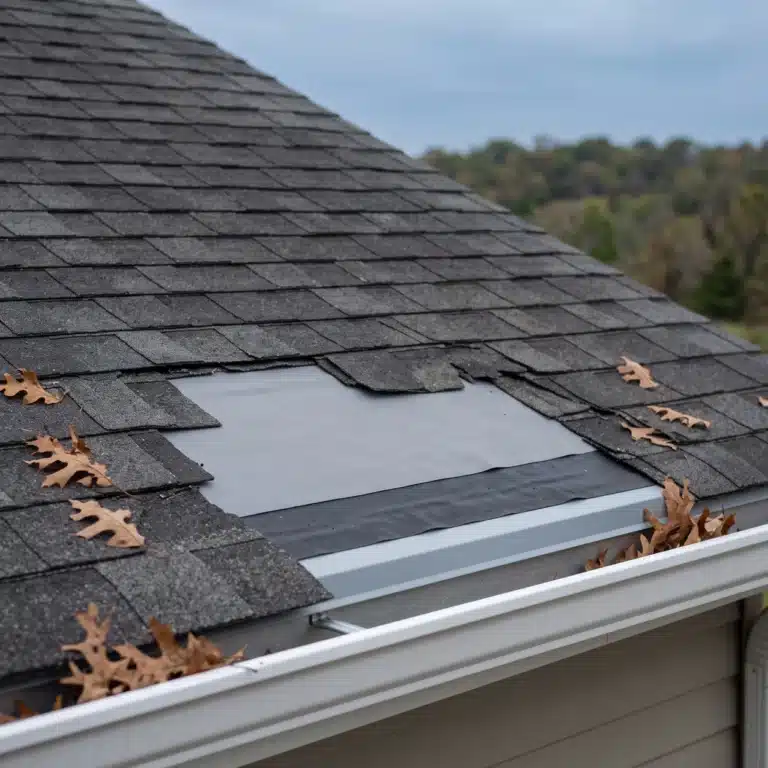
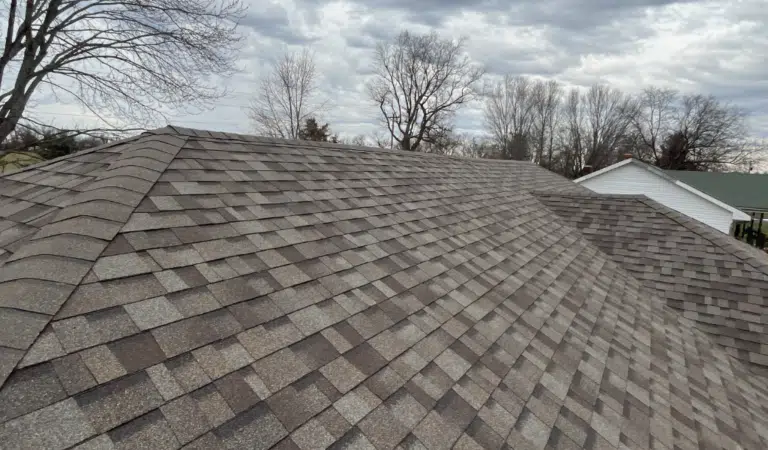
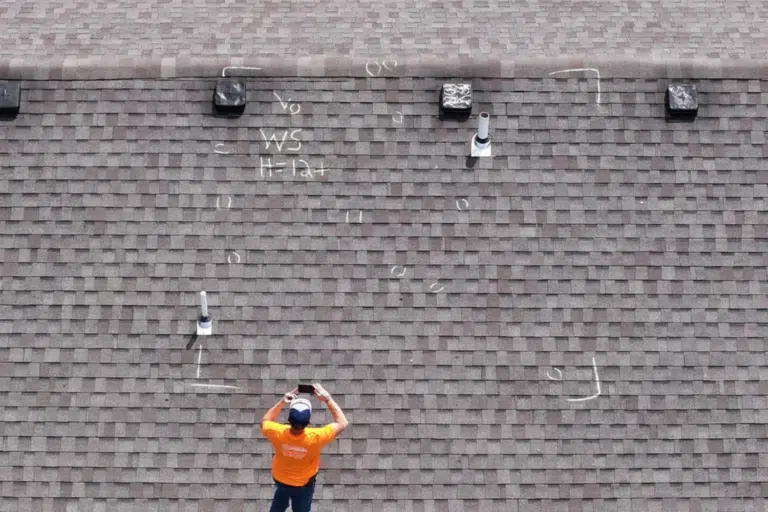
On the roof surface, look for missing or cracked shingles, sections that look uneven or have sagging lines, and any areas where the surface color or texture looks different from the surrounding material, which can indicate granule loss or a prior repair. Check flashing around chimneys, vents, and any roof penetrations from the ground using binoculars if needed. Lifted or rusted flashing is one of the most common sources of leaks after a storm.
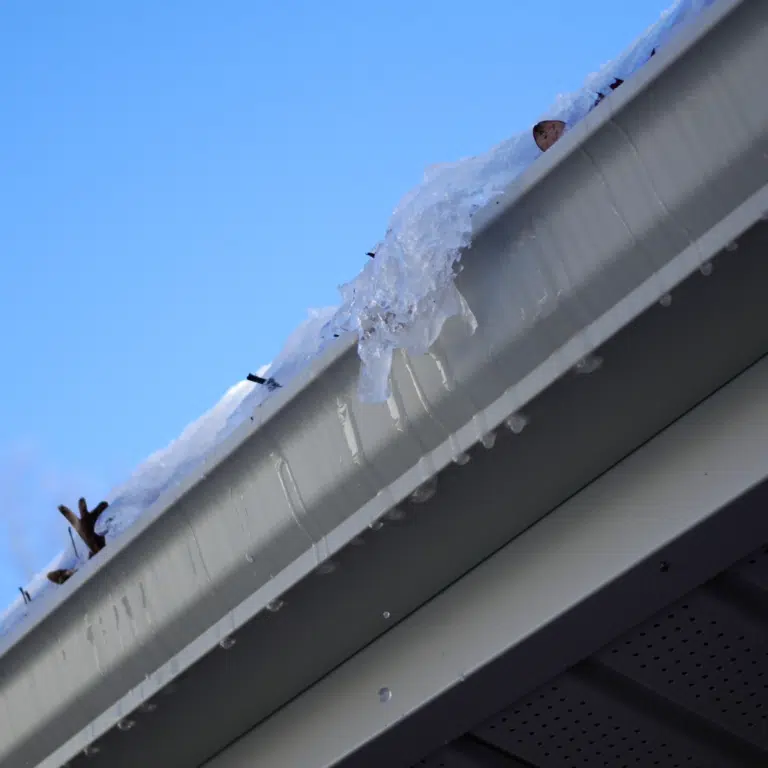
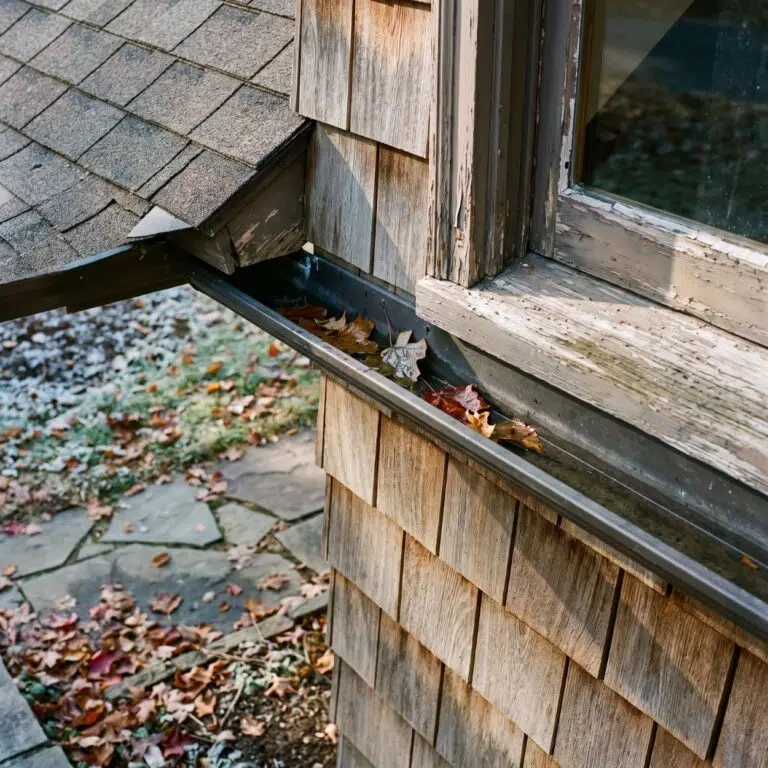
At the gutters, look for sections that sag or have pulled away from the fascia, visible holes or rust spots, and debris blockages at outlets and downspout tops. After any gutter cleaning, flush the system with a hose to confirm downspouts flow freely. Make sure each downspout terminates several feet from the foundation. IBHS Thunderstorm Ready research identifies clearing gutters and downspouts as one of the highest-impact actions homeowners can take before storm season.
If anything on this walk-around concerns you, schedule a free roof inspection before the active season starts. Our roof repair services team handles any issues the inspection identifies. For gutters specifically, our gutter repair team addresses everything from loose sections to full replacements.
| Task | How To Do It Safely | When To Call a Pro |
|---|---|---|
| Visual roof check | Walk the full perimeter slowly; use binoculars from the ground | If you see missing sections, lifted flashing, or uneven surface lines |
| Gutter cleaning | From a stable ladder with stabilizers, or hire a service | If gutters are separating from the fascia or showing rust damage |
| Downspout extension check | On dry ground, trace each downspout to its discharge point | If water pools within several feet of the foundation after rain |
| Flashing concerns | Look from the ground or from attic during daylight | If any flashing appears lifted, rusted through, or separated |
Siding, Windows, and Doors: Sealing Up the Weak Spots
Wind-driven rain during a severe thunderstorm does not need a large gap to cause damage. A failed caulk joint around a window frame, a cracked siding panel, or a gap at a door threshold can admit water into the wall cavity during a single significant event.
Before storm season, walk every exterior wall and look at the caulk lines around window frames. If you can see daylight through a gap, feel air movement around a closed window or door, or see caulk that has shrunk, cracked, or separated from the surface, those are openings that need to be sealed. IBHS Thunderstorm Ready guidance specifically calls out sealing exterior cracks and gaps as one of the foundational home-hardening steps before storm season.
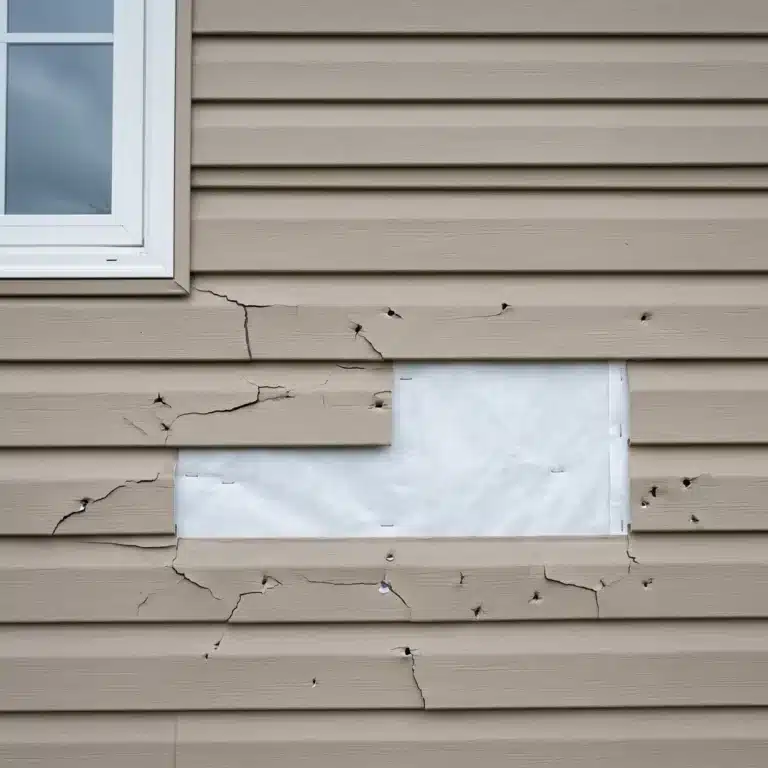
Check every siding panel for cracks, holes, or sections that feel loose when you push lightly. Look at the trim around windows and doors for soft spots, peeling paint, or any wood that has darkened with moisture. Pay particular attention to the lower courses of siding near the ground, where gutter overflow and splash can cause chronic moisture damage.
Our siding repair team handles pre-season siding work as part of broader exterior prep, and storm damage repair covers anything that gets through when a storm does hit.
| Area | What To Check | Why It Matters |
|---|---|---|
| Siding joints and panels | Cracks, holes, loose sections, gaps at trim edges | Any opening admits wind-driven rain during a storm |
| Window frames and caulk | Cracked or missing caulk; gaps between frame and wall | Water enters the wall cavity and reaches insulation and framing |
| Door frames and thresholds | Light visible at door edges; threshold gaps | Wind-driven rain finds these entry points in every significant storm |
| Utility penetrations | Cable, pipe, and conduit entry points through exterior walls | Often overlooked; gaps here can admit surprising amounts of water |
Trees, Yard Items, and Outdoor Equipment
Two of the most consistent sources of storm damage in SW Missouri are tree branches and loose yard items, and both are things homeowners can address before storm season begins.
IBHS Thunderstorm Ready guidance lists trimming trees and branches away from the roof and windows as one of the highest-priority pre-season actions. A large limb that hangs over a roofline or near a window is a liability in any high-wind event. Branches do not have to be obviously unhealthy to cause damage in a severe storm. Distance from the structure is the key consideration.
Securing yard items is equally straightforward. Patio furniture, grills, trampolines, lawn decorations, and trash cans all become projectiles in winds above 60 miles per hour, which occur regularly in SW Missouri’s severe storms. Have a plan for where these items go when storms are in the forecast. For items you cannot easily move, look into securing them with straps or anchors.
For outdoor HVAC units, IBHS recommends using protective screens or covers during hail events. Hail dents HVAC fins and can damage the unit’s efficiency even when the roof comes through a storm without major issues.
Our full range of exterior services covers everything from roofing and gutters to siding and windows. When your yard prep reveals a home exterior that needs attention before storm season, we can address it as part of the same project.
| Item | What To Do | When To Do It |
|---|---|---|
| Overhanging tree branches | Trim branches more than a few feet back from roofline and windows | Late February to early March, before storm season begins |
| Patio furniture and grills | Move to garage or tie down when storms are in the forecast | Any time a severe storm watch is issued |
| Trash cans and lawn decor | Bring inside or secure when storms are approaching | When severe thunderstorm warnings are in the forecast |
| Trampolines | Anchor or disassemble before and during storm season | At the start of each spring season |
| Outdoor HVAC units | Use hail screens or protective covers if available | Before April; in place throughout storm season |
Storm Season Roof Upgrades to Consider Ahead of Time
If your roof is approaching replacement age or if you have been dealing with repeated storm repairs, the period before storm season is also a good time to think about upgrades that improve performance in future storms.
Impact-resistant Class 4 shingles are the highest hail-resistance rating available for asphalt roofing. They use a reinforced mat and improved granule adhesion that allows them to resist cracking and granule loss under the kind of hail impacts SW Missouri regularly sees. Choosing Class 4 shingles on a replacement does not eliminate hail damage, but it meaningfully reduces how much functional damage a given storm event produces.
Better underlayment and sealed roof deck details improve wind-driven rain resistance. The gap between a standard and premium underlayment becomes relevant in the kind of sideways rain that accompanies severe thunderstorms in Springfield, Marshfield, and communities across the region.
Upgraded gutters sized correctly for the roof area they serve, along with well-attached downspouts and extended discharge points, reduce how much storm water contacts the siding, fascia, and foundation after each event.
IBHS Roofing Roadmaps research consistently identifies these types of system-level improvements as the most cost-effective ways to reduce storm-related losses on residential properties.
Our roof replacement team discusses upgrade options during every consultation, and our gutter installation team handles sizing and placement for new gutter systems.
| Upgrade | What It Helps With | When To Plan It |
|---|---|---|
| Impact-resistant Class 4 shingles | Reduces functional hail damage per storm event | At the time of any planned roof replacement |
| Better underlayment and deck sealing | Improves resistance to wind-driven rain under the shingles | During replacement or major reroofing project |
| Stronger flashing and edge metal | Reduces wind uplift and edge peeling at perimeter | During replacement; worth adding during any major repair scope |
| Larger or better-attached gutters | Handles heavier spring rain volumes without overflow | When replacing an aging system or addressing chronic overflow |
Your Family Storm Plan: Roof and Safety Together
Getting the exterior ready is one part of storm season preparation. Having a clear family safety plan is the other part, and the two work together.
NWS Springfield and NWS disaster preparedness resources recommend having multiple ways to receive weather warnings, including a NOAA weather radio, phone alerts through Wireless Emergency Alerts, and access to local broadcast media. Do not rely on any single source. In a fast-moving severe thunderstorm, some sources deliver warnings faster than others.
Missouri holds a Severe Weather Preparedness Week and annual tornado drills coordinated through NWS and state emergency management. These exercises are a practical way to confirm that every member of the household knows where to go and what to do when a tornado warning is issued.
Teague’s role is to keep the exterior strong before the season starts and to respond quickly when damage happens. Greene County OEM guidance and state emergency management resources address the safety and shelter side. Together, those two pieces give your household a complete preparation plan.
As an established Springfield roofing company since 1971, we have been part of storm seasons in this region for over 50 years. The exterior preparation Teague handles and the safety plan your family follows are both important parts of coming through storm season well.
| Area | What To Do | Who Helps |
|---|---|---|
| Roof and exterior | Annual inspection, gutter cleaning, tree trimming, sealing | Teague Roofing Plus free inspection and repair services |
| Warning systems | Install weather radio; confirm phone alerts are enabled | NWS Springfield and wireless carrier alert systems |
| Safe room | Identify interior room or basement ahead of time | Greene County OEM and Missouri emergency management |
| Emergency kit | Water, medications, important documents, flashlights | Missouri emergency management and FEMA household kit guidance |
What To Do Right Before and Right After a Big Storm
When a significant storm is in the day’s forecast, a few quick actions reduce your exposure before the event even starts.
Move vehicles into the garage if space allows. Bring in or tie down any loose yard items, including furniture, planters, decorations, and anything that could move in high wind. Close and latch every window and door securely. If you have storm shutters or impact-resistant panels for windows, this is the time to deploy them.
After the storm, start with a slow walk around the full perimeter from the ground. Look for shingles on the ground or in the yard, dents on gutters and the A/C unit, and any siding pieces that have come loose. Look at the roofline from multiple angles for any obvious sections that look different. Then check inside: new ceiling stains, any active drips, and a flashlight check of the attic if accessible.
Take photos before anything is moved or cleaned. If the roof is actively leaking or if you can see obvious exposed decking or a large section of missing shingles, call for emergency roof repair right away. Our team is available 24/7. For damage that is not actively creating a leak but warrants a documented inspection, schedule a free roof inspection as soon as conditions allow.
| Time | Actions Outside | Actions Inside |
|---|---|---|
| Day before a major storm | Move vehicles to garage; identify yard items to bring in | Confirm safe room location; check that weather alerts are active |
| Hours before the storm | Bring in or tie down loose items; close and latch all openings | Move valuables away from windows; keep phone charged |
| Right after the storm | Walk the perimeter from ground; photograph any visible damage | Check ceilings and attic for new stains or drips |
| Next few days | Call Teague if damage found; avoid roof until professionally assessed | Document interior damage for insurance; keep moisture from spreading |
Illustrative Storm-Season Prep Scenarios from Southwest Missouri
Illustrative scenario: A Springfield family follows a simple annual routine each March. They walk the perimeter together, clean the gutters, check the attic for any winter-related moisture, and schedule a Teague spring inspection. When a significant hailstorm hits in late April, the roof is in good condition coming in. The post-storm inspection finds minor granule loss on the west slope and two cracked ridge cap pieces. The repair is quick, the family documents it, and the season continues without a major claim.
Illustrative scenario: A homeowner in Republic noticed a large oak branch had grown to within a few feet of the roofline over the past two years. After trimming it back before the previous spring, the property came through a series of high-wind events in May without any branch contact damage. In past years, that same branch had scraped shingles and knocked granules off the ridge cap with every significant wind event.
Illustrative scenario: A homeowner in Nixa replaced her roof the previous fall and chose impact-resistant Class 4 shingles at her contractor’s suggestion. When a significant hail event moved through her neighborhood the following April, her neighbors with standard architectural shingles filed claims for widespread granule loss and several cracked panels. Her inspection found minimal functional damage. She documented the storm for her records, had the gutters cleaned, and closed the season without a claim.
Frequently Asked Questions: Storm Season Roof Prep in Springfield, MO
When should I start getting my roof ready for storm season in Springfield?
Start in late February or early March, before the active season begins. Walking the perimeter, cleaning gutters, and scheduling a professional inspection in March gives you time to address anything that needs repair before April’s storm activity picks up. Waiting until you see a severe storm in the forecast means you are reacting rather than preparing. Starting early also gives Teague’s schedule flexibility to fit you in before the spring rush of post-storm calls begins.
What are the most important things to check on my roof before spring storms?
Start with the gutters and make sure they are clear and draining freely. Then walk the full perimeter and look at the roof surface from the ground for missing shingles, visible cracking, or any sections that look uneven. Check the flashing condition at chimneys and vents using binoculars if needed. Look at the attic for any staining or soft insulation from winter. If anything looks questionable, a free professional inspection is the right next step rather than waiting to see if it causes a problem in the first storm.
How often should I clean my gutters during storm season?
At minimum, once in early spring before the active season and once in fall after leaf drop. In SW Missouri, where spring storms can deposit significant debris on the roof and in the gutters, a mid-season cleaning in June or July is worth adding if you have heavy tree cover near the home. After any storm that drops significant debris on the roof, a quick downspout check the next day confirms the system is still flowing freely.
Do impact-resistant shingles really help with hail?
Yes, meaningfully. Class 4 impact-resistant shingles use a reinforced mat and stronger granule adhesion that allows them to absorb hail impacts with less cracking and granule loss than standard shingles. They do not make a roof indestructible, and very large hail can cause damage to any shingle product. But in SW Missouri’s hail environment, where multiple significant events occur over a roof’s lifespan, the difference between standard and Class 4 shingles shows up clearly in inspection findings after storms.
What can I do to protect my home from falling branches during storms?
The most effective action is trimming branches back from the roofline and windows before storm season begins. Any branch that could reach the roof or a window if it falls in high wind is worth removing or cutting back. This is ideally done in late winter or early spring when the tree is dormant. Large branches near a roofline should be handled by a qualified arborist, not a DIY project. Once branches are trimmed, the storm itself has far less material to work with.
How do I know if a storm caused new roof damage?
Walk the perimeter after any significant storm and look for shingles in the yard, dents on the gutters and A/C unit, and any siding sections that moved or cracked. These are the easiest ground-level indicators of a significant impact event. If you see any of these, or if you find new ceiling stains or attic moisture after the storm, schedule a professional inspection right away. In SW Missouri’s high-hail region, connecting the inspection date to the storm event is important for any insurance documentation.
Should I call a roofer or my insurance company first after a major storm?
Call the roofer first. A professional inspection gives you an independent, documented baseline before the adjuster arrives. That documentation protects your claim and ensures the full scope of damage is on the record before any scope of loss is negotiated. Teague attends the adjuster meeting on your behalf and supports the full claims process at no extra charge. Starting with the inspection is the right sequence.
What does a storm-season inspection from Teague Roofing Plus include?
Our storm-season inspection covers the full roof surface slope by slope, checking shingle condition, flashing at every penetration, ridge cap and valley condition, and edge metal. We check gutters and downspouts for function and storm damage, look at the attic if accessible, and note any siding or exterior condition concerns. We walk you through the findings with photos and give you a clear recommendation on any repairs, upgrades, or monitoring that makes sense before the active season. The inspection is free and there is no obligation attached to it.
How do local weather alerts and tornado drills fit into my storm prep plan?
They are the human side of the same preparation your home needs. NWS Springfield and Missouri emergency management coordinate tornado drills and Severe Weather Preparedness Week to help households practice responding to warnings before a real event. Having NOAA weather radio or phone alerts enabled means you receive warnings faster than relying on sirens alone. Knowing your safe room location before the season starts means you are not making that decision under a tornado warning. Your roof preparation and your family safety plan work together, and both deserve attention before April.
Key Takeaways for Springfield Homeowners
- Storm season starts earlier than most homeowners plan for. April is the peak month in SW Missouri. Start prep in March, not May.
- The roof and gutters are your first line of defense. Clean gutters and a sound roof heading into storm season dramatically reduce post-storm repair scope.
- Seal the small gaps before storms open them wider. Failed caulk at windows, loose siding panels, and door frame gaps all admit wind-driven rain in the same storm that hits the roof.
- Trees and loose yard items cause more damage than most homeowners expect. Trim branches before the season and have a plan for securing outdoor furniture when storms approach.
- Upgrades pay off over a roof’s lifespan. Impact-resistant shingles, better underlayment, and properly sized gutters reduce how often storm events become insurance claims.
- A free inspection before the season gives you a clear starting point. You cannot prepare what you cannot see. Know your roof’s current condition before the first severe storm of the year.
- Your exterior prep and your family safety plan work together. Teague handles the roof and exterior side. NWS Springfield and Greene County OEM guide the safety and shelter side. Both matter.
Want Your Roof Ready Before the Next Springfield Storm Season?
If you have not had a professional inspection since last storm season, or if your roof has been on your mind after recent winters, now is the right time to schedule one. Teague Roofing Plus offers free storm-season roof and exterior inspections so you know exactly where your home stands before the active weather arrives.
Teague has been preparing and repairing roofs across Springfield, Nixa, Ozark, Republic, Strafford, Aurora, and communities throughout Southwest Missouri since 1971. We have been through every storm season this region has produced, and we know what preparation prevents and what damage looks like when it gets through. Josh and the team will walk the full exterior, show you the photos of what they find, and give you a clear, no-pressure plan for any repairs, upgrades, or simple DIY steps that make a difference.
Call 417-883-7663 or contact us online to schedule your storm-season inspection before the April weather arrives. The earlier you call, the more flexibility we have to fit you in before storm season gets underway.
Teague Roofing Plus | Roofing, Siding, Windows, Gutters, and More. Serving Southwest Missouri Since 1971.