

Gutter Installation Strafford, MO
Strafford sits along the I-44 corridor in eastern Greene County, and it gets the same punishing spring storms that move through all of SW Missouri. The region averages 44 inches of rain each year, and individual storms can drop 2 to 4 inches in just a few hours. Without a properly sized gutter system, that water pools against your foundation, soaks your fascia boards, and carves channels through your landscaping.
Teague Roofing Plus installs seamless aluminum gutter systems sized for your home and for Ozarks rainfall. We have been serving eastern Greene County homeowners since 1971.
Call 417-883-7663 for a free gutter estimate.
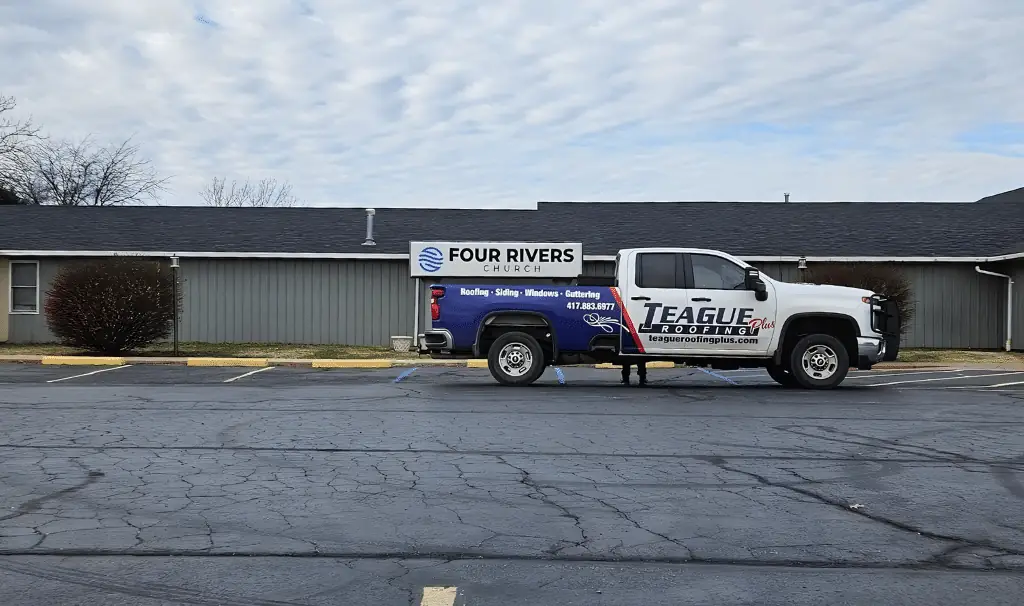
Seamless Gutters Built For Strafford's Storms Since 1971
Teague Roofing Plus has been protecting SW Missouri homes since the company was founded in Springfield in 1971. Today, owner Josh Tessmer runs every job with that same standard. We are based at 6149 US-60 in Springfield, and our crews work throughout Greene County every week, including Strafford and the surrounding eastern corridor.
The NWS Springfield office confirms that SW Missouri sees heavy storm activity from April through June, with events capable of dropping several inches of rain within hours. Gutters that are undersized, poorly pitched, or clogged with debris simply cannot keep up. The result is overflow, and overflow causes real damage to foundations, fascia, and siding.
Strafford has a mix of older farmhouses and newer subdivision builds. That mix means varied rooflines, different drainage needs, and gutter systems at different stages of their useful life. We assess every home individually and design the right system for that specific property. Call 417-883-7663 to schedule your free estimate.
Follow us
Strafford's Gutter Installer Trusted Across Greene County
Teague Roofing Plus is not a franchise or a storm-chasing crew that blows through after a big weather event and vanishes. Josh Tessmer lives in this region, and his team has worked in communities like Strafford for decades. We are your neighbors, not a name from an out-of-state ad. Read about the difference it makes to hire storm chasers vs. local contractors before you sign anything.
We are an Owens Corning Platinum Preferred Contractor, a designation fewer than 1% of roofers in the country earn. We are also BBB A+ rated since December 2019, members of the Home Builders Association of Springfield, and a Nextdoor Neighborhood Favorite in 2022 and 2024. We are MO-licensed, insured, and carry full liability and workers’ compensation coverage.
When you call 417-883-7663, you reach real people who work in the Ozarks every day. Not a national call center. Not a high-pressure sales team. Just an experienced local crew that shows up and does the job right.
- Seamless gutters formed on site
- Free estimates, no obligation
- BBB A+ rated since 2019
- Right-size recommendation every time
- MO-licensed and fully insured
- Nextdoor Neighborhood Favorite
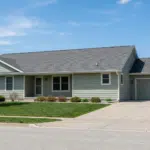















Why Strafford Homes Need a Properly Sized Gutter System
What Holds Up in Strafford's Climate
Not every gutter system performs the same way in SW Missouri. Seamless aluminum gutters are custom-cut on site from a single continuous aluminum run. Seams exist only at corners and downspouts, typically 4 to 8 joints on a standard home. Fewer joints mean fewer places for leaks to develop and fewer spots where debris catches and causes clogs.
Sectional gutters use pre-cut lengths connected with hardware, which creates a seam every 10 to 12 feet. Each seam is a future failure point. Strafford sits in eastern Greene County along the I-44 storm track, where freeze-thaw cycles hit every winter. Those temperature swings cause sectional seams to expand and contract repeatedly until they separate. If you want a system that holds through Missouri winters and spring storm season, seamless aluminum is the right call. Our 2026 storm season prep guide explains what SW Missouri weather does to exterior systems year after year.
- Seamless gutters custom-formed on your property
- Fewer joints means fewer leaks over time
- Sectional systems fail faster in freeze-thaw cycles
What Size Does Your Strafford Home Actually Need?
Gutter size matters more than most homeowners realize. A 6-inch gutter carries meaningfully more water than a 5-inch. The right size depends on roof area, pitch, local rainfall, and downspout count. For a home with a large roof area, steep pitch, long valleys, or a history of overflow during storms, that difference is significant.
SW Missouri’s spring storms regularly dump 2 to 4 inches of rain in a single event. An undersized gutter overflows during exactly the storms when you need it most. Strafford’s housing stock ranges from older homes with low-pitch rooflines to newer builds with steeper profiles. Teague assesses your specific roof size, pitch, and drainage layout before making any recommendation. We do not default to one size for every job. Start with a free exterior inspection and get a clear sizing recommendation before anything else.
- Roof size and pitch assessed before any recommendation
- 6-inch available for large roofs and steep pitches
- No upselling to a larger size when 5-inch is adequate
What Happens When Gutters Fail in Strafford, MO
Gutter failure is not a cosmetic problem. When gutters overflow or drain improperly, water pools at the base of your home instead of flowing away from it. Greene County’s clay-heavy soil does not absorb water quickly. That pooling creates hydrostatic pressure against your basement walls and foundation footings. Over time, that pressure causes cracks.
Overflow also runs down the fascia board, which is the front-facing wood at your roofline where the gutter attaches. Wet wood rots. Rotted fascia means replacing not just the gutter but the wood behind it. Failed gutters also cause siding moisture intrusion, soil erosion around landscaping, and ice dams at the roofline during winter freeze-thaw cycles. In a seamless aluminum system, thermal expansion is manageable. In a sectional system, it pulls joints apart season after season. If a storm caused your gutter damage, our storm damage repair team can assess the full scope and help you document it properly.
- Foundation and basement protection from overflow
- Fascia rot prevention with proper drainage
- Ice dam risk reduced with correctly installed gutters
Gutter Guards for Strafford Homes With Tree Coverage
Strafford is a commuter community with a mix of wooded lots and open terrain. Homes with significant tree coverage see a heavier debris load in gutters each fall and spring. If you are cleaning your gutters more than twice a year, guards are worth the conversation.
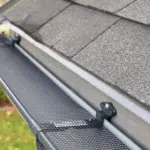
Micro-mesh gutter screens are the best-performing type. They keep out fine debris including shingle grit while still allowing water to flow through freely. Guards reduce cleaning frequency and prevent debris-weight buildup that can pull gutters loose from the fascia over time. They also extend gutter lifespan by keeping standing water from sitting in the channel.
We will give you an honest recommendation based on your specific property. No guard system eliminates maintenance entirely, and we will tell you that upfront. If your tree coverage is light, guards may not be worth the added investment. If you are surrounded by mature trees, they often pay for themselves in avoided maintenance and damage prevention. Ask us when we assess your system.
- Micro-mesh screens keep out fine debris and shingle grit
- Guards extend gutter lifespan by reducing debris weight
- Honest recommendation based on your tree coverage
Does Strafford Hail Damage Your Gutters? Here's What to Check
After a hailstorm along the I-44 corridor, most Strafford homeowners focus on the roof. Gutters and downspouts often get overlooked, but they take a direct hit during large hail events. Visible denting on the face of your gutters and downspouts is one of the clearest ground-level signs of a significant hail event. You do not need a ladder to spot it.
Hail-damaged gutters are covered under most Missouri homeowners policies as sudden and accidental loss. We document gutter damage during every post-storm inspection and include that scope in your claim file. Our team meets your adjuster on site and makes sure gutter damage does not get left out of the settlement. You can review NOAA’s Missouri storm loss history to see how frequently significant hail affects our region. For step-by-step guidance on the process, read our guide on how to file a storm damage insurance claim. Missouri law prohibits contractors from paying deductibles, and we will never promise to do that.
- Ground-level denting visible on gutters after hail
- Gutter damage documented and included in your claim
- Adjuster meetings at your home at no charge
Full Gutter Installation Process in Strafford, MO
Every gutter installation starts with a free estimate and system design. We look at your roofline, measure the runs, evaluate the pitch, and identify the right drainage points for your property. With SW Missouri averaging 44 inches of rain annually, undersized or poorly routed systems overflow during the storms that matter most.
Once the design is complete, we bring our gutter machine to your Strafford home and form your seamless gutters on site. Each run is cut to the exact length of your roofline. No mid-run joints. No gaps. We attach gutters with hidden hangers for a clean look and a secure hold that holds up through Missouri winters. Downspouts carry water from the gutter channel to ground level. Extensions and splash blocks route that water at least four feet from your foundation walls. After installation, we run water through the full system to confirm everything flows correctly before we leave. We also confirm permit requirements for every job so you never have to call the building department yourself. For standard residential gutter work, permits are typically not required in Greene County communities like Strafford.
- Gutters formed on site to your exact roofline dimensions
- Hidden hangers for secure hold through Missouri winters
- Downspout extensions route water 4 feet from foundation
Gutter Installation Permits in Strafford, MO
In most cases, gutter installation and replacement does not require a building permit in Strafford for standard residential work. Exceptions include homes in historic districts, properties in designated flood zones, and some HOA-governed communities that have their own approval processes. Strafford’s growth in recent years has added new subdivisions with HOA rules that vary, so it is worth confirming before any work begins.
Teague Roofing Plus confirms permit requirements for every job before work starts. You never have to call the building department or sort through local codes on your own. If a permit is needed, we handle it. If it is not required, we document that and move forward. That is one less thing on your plate. For more on how we manage the full process, see how our gutter installation in SW Missouri works from start to finish.
- Permit requirements confirmed before every job
- Historic districts and flood zones handled correctly
- Homeowners never have to research local codes
Why Strafford Homeowners Choose Teague Roofing Plus for Gutters
Josh Tessmer personally oversees gutter installations, walks job sites, and stays reachable. When you hire Teague Roofing Plus, you are not handed off to a subcontractor you have never met. That is how this company has operated since 1971, and Josh carries that same standard today. For context on what that means versus hiring a traveling crew, read about how we compare to storm chasers and out-of-state contractors.
We have completed thousands of exterior projects across SW Missouri. We know what eastern Greene County weather does to gutters, fascia, and foundations because we see it every season. Our gutter recommendations come from assessing your specific roof, not a default package. We bring the gutter machine to your property and form seamless aluminum runs on site. No pre-cut material from a warehouse. No seams where they do not belong.
Illustrative scenario: A homeowner in Strafford purchased a 1970s home with no gutters. Over the decades, the foundation grading had shifted and water was pooling at two corners of the house after every significant rain. Teague installed 6-inch seamless aluminum gutters with extended downspouts that redirected water at least four feet from the foundation walls. No permit was required for this standard residential install. The job was completed in one day, and the corner pooling cleared up after the next storm.
- Thousands of exterior projects completed in SW Missouri
- Josh Tessmer personally oversees every gutter installation
- Seamless gutters formed on site, not shipped pre-cut
Common Questions
FAQ's About Gutter Installation in Strafford
Do I need a permit for gutter installation in Strafford, MO?
In most cases, no. Gutter installation and replacement is exempt from permit requirements in the majority of Missouri municipalities for standard residential work, including most Strafford addresses. Exceptions include properties in designated historic districts, homes in mapped flood zones, and some HOA-governed communities that require prior approval. Strafford’s newer subdivisions may have HOA requirements, so this is always worth confirming.
Teague Roofing Plus verifies permit requirements for every job before work starts. You never need to contact the building department on your own. If a permit is required, we handle it. If it is not, we confirm that and move forward. Learn more about how we manage the full project by reviewing our gutter installation process across SW Missouri. Homeowners never have to deal with the building department on our jobs.
What is the difference between seamless and sectional gutters?
Seamless gutters are custom-cut from a single aluminum run on site. Seams exist only at corners and downspouts, typically 4 to 8 joints on a standard home. Fewer joints mean fewer leak points, fewer clog points, and better performance through Strafford’s freeze-thaw cycles along the I-44 corridor.
Sectional gutters come in pre-cut lengths joined with connectors, which creates a seam every 10 to 12 feet. Each seam is a future leak point. Missouri’s temperature swings cause those seams to expand and contract repeatedly until they fail. Sectional gutters represent a lower upfront investment, but they require more maintenance and typically have a shorter lifespan in our climate. For most Strafford homes, seamless aluminum is the right call. Get a free exterior inspection to get a clear recommendation for your specific property.
Should I get 5-inch or 6-inch gutters for my Strafford home?
It depends on your roof size, pitch, and how water flows off the home. A 6-inch gutter carries meaningfully more water than a 5-inch. The right size depends on roof area, pitch, local rainfall, and downspout count. For larger homes, steep roofs, long uninterrupted runs, or homes with a history of overflow, 6-inch is typically the stronger choice.
SW Missouri’s spring storms regularly drop 2 to 4 inches in a single event, according to the NWS Springfield office. An undersized gutter overflows during exactly those storms. Strafford’s housing mix includes both older lower-pitch homes and newer builds with steeper profiles, so sizing is not a one-size decision. Teague assesses your specific roof and recommends accordingly. We do not default to 6-inch across the board or push an upgrade where 5-inch is adequate.
Are gutter guards worth it in Strafford?
For homes with significant tree coverage, yes. Strafford lots vary from open terrain to wooded properties with established oak and hickory canopies that drop debris into gutters every fall and spring. If you are cleaning gutters more than twice a year, guards are worth the conversation.
Micro-mesh screens are the best-performing type. They keep out fine debris including shingle grit while allowing water to flow through. Guards reduce cleaning frequency and help prevent the debris-weight buildup that pulls gutters loose over time. No guard system eliminates maintenance entirely, and we will tell you that upfront. If your property has light tree coverage, we may recommend skipping guards altogether. For homes surrounded by mature trees, guards often pay for themselves in avoided maintenance and damage costs. Our team is happy to assess your specific situation at no charge during your estimate visit.
Does homeowners insurance cover gutter damage from hail in Strafford?
Hail and wind damage to gutters is covered under most Missouri homeowners policies as sudden and accidental loss. After a significant hail event along the I-44 corridor, visible denting on gutters and downspouts is one of the clearest ground-level signs of impact damage. Granule accumulation in gutters also signals shingle wear from hail.
Teague documents gutter damage during every post-storm inspection and includes that scope in your claim file. Our team meets your adjuster on site and makes sure gutter damage does not get left out of the settlement. We handle documentation and adjuster coordination at no charge to you. For more on navigating the process, read our guide on how to file a storm damage insurance claim. You can also review how our insurance claim assistance works. Missouri law prohibits contractors from paying deductibles, and we will never promise to do that.
Trusted by Strafford Homeowners. Backed by Over 50 Years of Results.
Posted on Google RSJ7 days ago
Trustindex verifies that the original source of the review is Google.
Wow!!! Joel Adams made needing a roof that much easier by going above and beyond. Got us moved into the lineup in 2 days since we were under a time crunch!!! Saved us money on top of it. The crew was respectful and did a fantastic job from start to finish! Thank you very much!!!!Posted on GoogleNancy Hoagland16 days agoJoel was great to work with! Very knowledgeable. The crew did a very good job!Posted on GoogleMary Pearson17 days agoI want to give a huge shout out to Joel. My granddaughter and her family are staying at our home while my husband and I are out on an extended vacation. The day we left a huge wind and rain storm hit. My granddaughter called and said we had a ceiling light that was leaking in the spare bedroom. I immediately contacted Teague Roofing, let them know the issue and that we were out of town. This was late on a Sunday. Joel said he would add us to his schedule for the next day. He arrived at our house around 10:00, looked at the situation in the bedroom, went on the roof and found the problem right away. He fixed the problem and now my husband and I can continue our vacation knowing that our roof is in good shape and my granddaughter and her family can enjoy their stay while we enjoy our time away. Their customer service is top notch and a rare find these days. We will definitely recommend them to others and should we ever have a roof issue we will definitely be calling Teague Roofing!!! I couldn't be happier!!!+1Posted on GoogleCody Davis27 days agoThe best roofing company in the 417! Give them a call for a free consultation!Posted on GoogleJeremy Hill48 days agoI had a great experience. Honest, helpful, and Jason is not only a great representative of this company; but a great man as well. Will always recommend these guys.Posted on GoogleCarolyn Hoskins77 days agoPosted on GoogleNathan English98 days agoShowed up early for the inspection, found the leak and repaired it quickly. They were great at communicating what the problem was and how they fixed it. Incredible customer service. Would recommend to anyone.Posted on GoogleRick Shortt134 days agoI just want to take a moment to tell you how impressed I was by sal from teague roofing Plus today. After the hail storm people are going door to door trying to get you to replace your roof because it benefits them to do so. You hear lots of stories about companies telling you your roof needs replaced when it really doesn't. Sal came by today and did a free inspection and gave me the great news that we don't need a new roof and that our roof is in fine shape. He gave me lots of details and suggestions for when we do need a new roof. His honesty has won my business whem eventually we will need a roof. If you're looking for somebody to give you an honest inspection and estimate on your roof, this is the place to do it.Verified by TrustindexTrustindex verified badge is the Universal Symbol of Trust. Only the greatest companies can get the verified badge who has a review score above 4.5, based on customer reviews over the past 12 months. Read more

Need a Gutter Inspection in Strafford, MO?
Your gutters protect your foundation, your fascia, your landscaping, and your basement. If they are overflowing, pulling away from the roofline, or showing signs of hail damage, we will come take a look at no cost to you. No pressure. No obligation. Just an honest assessment from a local team that has been protecting SW Missouri homes since 1971. Reach out at teagueroofingplus.com/contact-us or call 417-883-7663 today. Teague also handles roof replacement, siding, and windows across SW Missouri.