

Storm Damage Repair Hollister, MO
Hollister sits just south of Branson in Taney County, where vacation rentals, short-term properties, and year-round homes share the same storm exposure. When hail or high winds move through the area, your roof takes the hit first. Teague Roofing Plus inspects, documents, and repairs storm damage for Hollister property owners, and handles the insurance process from start to finish.
Call 417-883-7663 for a free storm damage inspection.
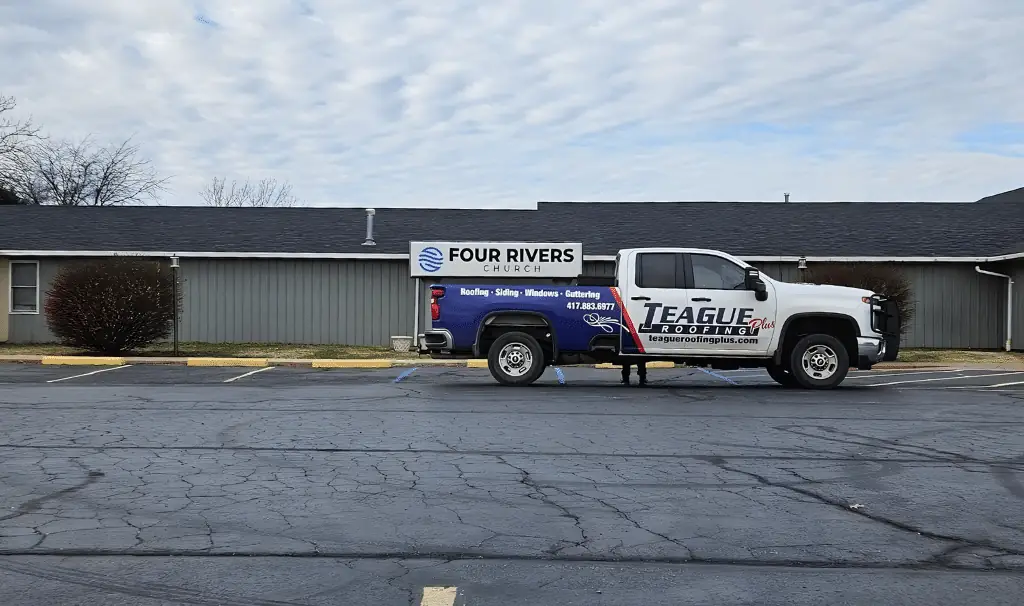
Storm Damage Repair Serving Hollister, MO Property Owners
Hollister’s proximity to Branson creates a unique storm damage situation. Many properties here are short-term rentals listed on platforms like Airbnb and VRBO. A damaged roof is not just a safety issue. It shows up in guest photos, triggers bad reviews, and can pause bookings while repairs drag on. Fast, accurate documentation and repair matters more here than almost anywhere we work.
Taney County sits within SW Missouri’s active severe weather corridor, and Hollister’s hill-and-lake terrain channels wind in ways that flat terrain does not. Storms moving up from Lake Taneycomo and Table Rock Lake can intensify as they funnel through low areas. Most homeowners and property owners have no idea their roof took a hit until they see water stains or a guest complaint.
Teague Roofing Plus handles the full process: free inspection, damage documentation, insurance claim assistance, adjuster meeting, and repair. One call to 417-883-7663 starts everything at no cost to you until the work begins.
Follow us
Local Storm Damage Experts Hollister's Trusted Roofing Company Since 1971
Teague Roofing Plus is not an out-of-state crew that rolled into Taney County after the last hailstorm. We are the roofing company in Springfield that has been serving SW Missouri for over 50 years. This company was founded in Springfield in 1971. Josh Tessmer owns and runs it today, and he shows up on job sites personally.
We are an Owens Corning Platinum Preferred Contractor, a designation fewer than 1% of roofers nationally earn. We are BBB A+ rated and have been accredited since December 2019. We are members of the Home Builders Association of Springfield and were voted a Nextdoor Neighborhood Favorite in 2022 and 2024. We are MO-licensed and carry full liability and workers’ compensation insurance.
When you call 417-883-7663, you reach a local team that knows Taney County. Not a national call center. Not a contractor who disappears after the check clears. Thousands of completed roofs across SW Missouri backs that up.
- Over 50 years of storm repair experience
- Owens Corning Platinum Preferred Contractor
- BBB A+ rated since December 2019
- Free storm damage inspections, no obligation
- MO-Licensed and Insured
- Nextdoor Neighborhood Favorite
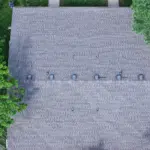
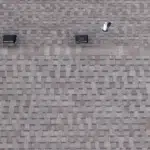
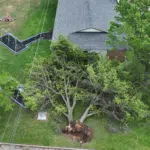
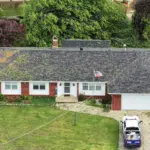
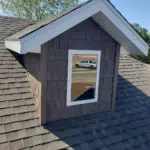
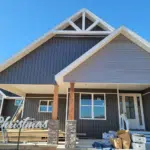














What Storm Damage Looks Like in Hollister, MO
Storm Damage Repair in Hollister, MO
Hollister sits in a part of SW Missouri where hill-and-lake terrain creates its own wind behavior. Storm systems moving up from Table Rock Lake and Lake Taneycomo do not travel in straight lines. They shift and intensify as they push through valleys and ridgelines. April and May bring the highest concentration of hail events across the region, with a secondary peak in September, according to NWS Springfield severe weather climatology data.
Hail damage on asphalt shingles shows up as dark circular spots where granules have been knocked off the surface. On metal flashing, pipe boots, and vents, it leaves visible dents. Most of this damage is completely invisible from the ground or a driveway. If your Hollister property went through a storm in the past two years, a free roof inspection tells you exactly what happened before you decide whether to file a claim.
- Free storm damage inspections within 48 hours
- We meet your insurance adjuster on your roof
- Over 50 years of hail and wind repair in SW Missouri
What a Free Storm Damage Inspection Covers in Hollister
Our free storm damage inspection starts on your roof, not on your driveway. We check every roof plane, every piece of flashing (the metal strips that seal roof edges and openings), every vent, pipe boot, ridge cap, and gutter. We photograph every damaged area with timestamped photos. You get a written report you can share with your insurance company.
For Hollister vacation rental owners, this report matters beyond the insurance claim. It documents the condition of your property before and after a storm, which protects you if a guest later reports a roof-related issue. Our roof inspection checklist covers every item a thorough inspection should include, and ours hits every one. No pressure. No sales pitch. Just a clear, honest answer about your roof.
- Timestamped photos of every damaged area
- Written report ready to share with your insurer
- Honest findings, even if your roof is undamaged
Storm Damage Insurance Claim Help in Hollister, MO
Most Hollister property owners file a storm damage claim once or twice in their lives. Our team handles them every week. After a storm, we inspect your roof at no charge, document every piece of damage in a format insurance carriers accept, and schedule time to meet your adjuster on site. We walk the roof together and make sure nothing gets missed.
Adjusters handle dozens of claims after a major Taney County storm. They move fast, and damage on back slopes or low-visibility areas gets overlooked more often than you would expect. Having a trained contractor present when they walk your roof helps make sure your claim reflects the full scope of what your property needs. We do this at no extra charge. Read our full guide on how to file a roof insurance claim before your adjuster visits, and see our insurance claim assistance page for the full breakdown.
- On-site adjuster meetings at no extra charge
- Complete photo documentation for your claim file
- Guidance on Missouri's storm damage claim deadlines
What Hail Does to a Roof in Hollister, MO
Hail damage on architectural shingles, the heavier, dimensional shingles we install, shows up as circular dark spots where granules have been knocked loose. On metal flashing and pipe boots, it leaves visible dents. In gutters, you may notice an unusual buildup of granules near downspouts after a storm. These are signs the storm left a mark, even if nothing is leaking yet.
Non-leaking damage is still serious. It shortens your roof’s lifespan and creates vulnerability that grows with each new storm season. Our hail damage roof inspection process is designed to find what you cannot see from the ground before it becomes a bigger and more expensive problem. If damage covers 25% or more of your roof surface, replacement is often the more cost-effective call over repair. We walk you through that decision honestly. Our post on roof repair vs. replacement explains how that threshold works in plain terms so you can make an informed choice.
- Granule loss shortens your roof's lifespan significantly
- Hail bruising is almost never visible from the ground
- We inspect every plane, vent, and flashing seam
What Wind Damage Looks Like on Hollister Roofs
Hollister’s terrain makes wind damage a particular concern. Storm systems that push through the lake valleys and up the ridgelines produce wind behavior that flat communities do not experience the same way. Severe thunderstorm warnings across Taney County regularly include gusts above 60 mph. At those speeds, wind lifts ridge caps (the shingles running along the peak of your roof), separates valley flashing (the metal that seals where two roof slopes meet), and pulls shingles loose at exposed edges.
Wind damage often looks minor from the street. A displaced ridge cap or a lifted shingle edge may not be obvious until water finds its way underneath. For vacation rental owners, that water entry can mean a guest complaint, a bad review, or a pause in bookings before you even realize something is wrong. Our team checks every seam, every edge, and every transition point where wind works hardest. If you suspect wind damage after a storm, a professional roof repair assessment is the right first step before filing anything with your carrier.
- Ridge cap, valley flashing, and shingle edge checks
- Wind damage documentation ready for your adjuster
- Free assessment with written findings and photos
Is Your Hollister Roof an Emergency or Storm Damage?
There is an important difference between a storm damage situation and a roofing emergency. If water is actively entering your home or rental right now, through the ceiling, through a wall, or through a visible breach in the roof deck, that is an emergency roof repair situation. We respond 24/7 for active leaks and can place emergency tarping to stop water entry while permanent repairs are scheduled. Our post on what to do when your roof starts leaking covers the immediate steps to take.
Storm damage repair covers confirmed damage from a hail or wind event where no active water entry is happening right now. The roof is compromised, but it is not actively leaking today. This is where the insurance process applies: inspection, documentation, claim filing, adjuster meeting, and scheduled repair. For Hollister vacation rental owners, catching this early, before a guest notices, is critical. Not sure which situation applies to your property? Call 417-883-7663 and we will help you figure it out quickly.
- 24/7 emergency response for active water entry
- Storm damage repair covers non-emergency documented damage
- We help you identify which situation applies to your roof
RCV vs. ACV: What Hollister Property Owners Need to Know
Before you file a storm damage claim in Hollister, you need to know what type of insurance policy you have. An RCV policy, Replacement Cost Value, pays the full cost to repair or replace damaged material. An ACV policy, Actual Cash Value, subtracts depreciation before paying out.
The Missouri Department of Commerce and Insurance warns that ACV policies may pay as little as 20% of replacement cost on an aging roof. Wind and hail deductibles are often separate from your standard deductible and may be calculated as a percentage of your home’s insured value, not a flat dollar amount. Some Missouri carriers exclude wind and hail coverage entirely on roofs over 25 years old. Vacation rental policies may also carry different terms than standard homeowner policies. Check your policy before the adjuster arrives, and call us if you need help reading it. The Missouri DCI roof coverage tool is also a helpful starting point.
- Know your policy type before the adjuster arrives
- ACV depreciation can cut your payout dramatically
- We help you understand what your policy actually covers
What Missouri Law Says About Deductible Offers in Hollister
After a storm in Taney County, out-of-state contractors move fast. Some will offer to cover, waive, or discount your insurance deductible as an incentive to sign a contract quickly. In Missouri, that is illegal. Missouri RSMo § 407.725 prohibits any contractor from paying, rebating, or offering anything of monetary value in exchange for signing a roofing or exterior repair contract. This applies to gifts, credits, referral fees, and discounts tied to a deductible. Violation is a Merchandising Practices Act offense, and it puts the homeowner or property owner at risk too.
Hollister and Branson attract storm chasers specifically because of the density of vacation rental properties in the area. These contractors know property owners want fast repairs to protect bookings, and they use that urgency to pressure quick signatures. Teague Roofing Plus does not participate in deductible schemes. We follow Missouri law, and we expect every job we take to hold up to scrutiny. Our post on storm chasers vs. local roofers explains exactly what to watch for after a Taney County storm.
- We follow Missouri law on deductible handling, always
- No deductible rebates, no schemes, no exceptions
- Clear explanation of your actual out-of-pocket costs
Common Questions
FAQ About Storm Damage in Hollister
What does storm damage repair cover in Hollister, MO?
Storm damage repair covers exterior damage caused by a specific weather event: hail, wind, or severe storms. That includes damage to roof shingles, flashing, pipe boots, ridge caps, gutters, siding, fascia, and soffit. The key distinction is that the damage must be tied to a storm event, not general aging or wear. Most Missouri homeowners insurance policies cover storm damage as sudden and accidental loss.
Storm damage repair is also different from emergency repair. If water is actively entering your home or rental property right now, that is a different call entirely. You can read more about the difference at our emergency roof repair page. If the damage is confirmed but not actively leaking, the insurance documentation process applies. Our team handles storm damage repair across SW Missouri from inspection through final repair, at no charge until work begins.
How do I know if my Hollister property has storm damage?
Most hail damage is not visible from the ground. On asphalt shingles, it appears as dark circular spots where granules have been knocked off the surface, exposing the mat underneath. You may also notice granule buildup near downspouts, dented gutters or vents, or missing shingles after a wind event. Ceiling stains inside can also point to storm-related damage, though by the time those appear, the damage has usually been there a while.
For Hollister vacation rental owners, the first sign is sometimes a guest photo or a complaint about a stain or draft. Do not wait for that to happen. The most reliable way to know for certain is a professional inspection. Our team climbs the roof, checks every plane, and photographs what we find. You get a written report with clear photos, the same documentation your insurance company uses to evaluate a claim. Our hail damage roof inspection guide walks through exactly what inspectors look for. The inspection is free and comes with no obligation to proceed.
How long do I have to file a storm damage claim in Hollister, MO?
Missouri homeowners typically have up to two years from a storm event to file a property damage claim. However, some individual policies require action within one year. The longer you wait, the harder it becomes to tie damage to a specific storm. Taney County sees multiple hail and wind events per season, and older damage becomes difficult to isolate and prove when several storms have since passed.
Filing sooner puts you in a stronger position. Our team documents the damage, prepares your claim in the format your carrier accepts, and meets your adjuster on site at no extra charge. For a step-by-step walkthrough, see our guide on how to file a roof insurance claim. The Missouri Department of Commerce and Insurance also provides a roof coverage tool to help you understand what your policy covers before you file.
Does Teague Roofing Plus help with insurance claims in Hollister?
Yes. Insurance claim assistance is a core part of what we do on every storm damage job. We inspect your roof at no charge, document all damage with timestamped photos, help you prepare the claim in a format your carrier accepts, and meet your adjuster on site when they come out.
Adjusters handle many claims after a large Taney County storm. They move quickly, and damage on back slopes or in hard-to-reach areas gets missed more often than homeowners realize. Having a trained contractor present when they walk your roof helps make sure nothing gets overlooked or undervalued. There is no extra charge for any of this. We also help you submit for recoverable depreciation on RCV policies after the work is complete, a step many property owners miss entirely. If you want to understand the process before calling, our roof inspection checklist is a helpful place to start.
What if my storm damage claim gets denied in Hollister?
Claim denials happen, most often because of insufficient documentation or ACV policy limitations. If your claim is denied, you have the right to dispute the decision and request a re-inspection. Missouri law also gives homeowners and property owners five business days to cancel a signed contractor agreement if a claim is partially or fully denied.
Illustrative scenario: An insurance adjuster visited a Hollister vacation rental without a contractor present and denied the claim as cosmetic damage only. The property owner called Teague for a second inspection. We found functional damage, including flashing failure and lifted valley sections the adjuster had not flagged. The owner re-opened the claim with our documentation, and a partial claim was approved for the flashing and valley work. Teague Roofing Plus provides complete photo documentation that can support a dispute. The Missouri DCI’s guide on roof coverage explains homeowner rights in plain language. If damage is extensive, we also walk you through whether roof replacement makes more sense than a partial repair claim.
Trusted in Hollister. Proven Across SW Missouri.
Posted on Google RSJ24 days ago
Trustindex verifies that the original source of the review is Google.
Wow!!! Joel Adams made needing a roof that much easier by going above and beyond. Got us moved into the lineup in 2 days since we were under a time crunch!!! Saved us money on top of it. The crew was respectful and did a fantastic job from start to finish! Thank you very much!!!!Posted on GoogleNancy Hoagland33 days agoJoel was great to work with! Very knowledgeable. The crew did a very good job!Posted on GoogleMary Pearson34 days agoI want to give a huge shout out to Joel. My granddaughter and her family are staying at our home while my husband and I are out on an extended vacation. The day we left a huge wind and rain storm hit. My granddaughter called and said we had a ceiling light that was leaking in the spare bedroom. I immediately contacted Teague Roofing, let them know the issue and that we were out of town. This was late on a Sunday. Joel said he would add us to his schedule for the next day. He arrived at our house around 10:00, looked at the situation in the bedroom, went on the roof and found the problem right away. He fixed the problem and now my husband and I can continue our vacation knowing that our roof is in good shape and my granddaughter and her family can enjoy their stay while we enjoy our time away. Their customer service is top notch and a rare find these days. We will definitely recommend them to others and should we ever have a roof issue we will definitely be calling Teague Roofing!!! I couldn't be happier!!!+1Posted on GoogleCody Davis44 days agoThe best roofing company in the 417! Give them a call for a free consultation!Posted on GoogleJeremy Hill65 days agoI had a great experience. Honest, helpful, and Jason is not only a great representative of this company; but a great man as well. Will always recommend these guys.Posted on GoogleCarolyn Hoskins94 days agoPosted on GoogleNathan English115 days agoShowed up early for the inspection, found the leak and repaired it quickly. They were great at communicating what the problem was and how they fixed it. Incredible customer service. Would recommend to anyone.Posted on GoogleRick Shortt151 days agoI just want to take a moment to tell you how impressed I was by sal from teague roofing Plus today. After the hail storm people are going door to door trying to get you to replace your roof because it benefits them to do so. You hear lots of stories about companies telling you your roof needs replaced when it really doesn't. Sal came by today and did a free inspection and gave me the great news that we don't need a new roof and that our roof is in fine shape. He gave me lots of details and suggestions for when we do need a new roof. His honesty has won my business whem eventually we will need a roof. If you're looking for somebody to give you an honest inspection and estimate on your roof, this is the place to do it.Verified by TrustindexTrustindex verified badge is the Universal Symbol of Trust. Only the greatest companies can get the verified badge who has a review score above 4.5, based on customer reviews over the past 12 months. Read more

Storm Damage in Hollister, MO? We Can Help.
If your Hollister home or rental property took a hit from hail or high winds, do not wait to find out what happened. The damage may not be visible from your yard, but it can shorten your roof’s lifespan by years and create problems that show up in guest reviews before they show up in your ceiling. Teague Roofing Plus will come out, inspect every inch of your roof at no charge, and give you an honest answer about what we find.
Get ahead of next season by reviewing our 2026 storm season roof prep guide and finding out where your roof stands today. Call 417-883-7663 or tap below to schedule your free inspection. Teague Roofing Plus also handles emergency roof repair, roof replacement, and free inspections across SW Missouri.