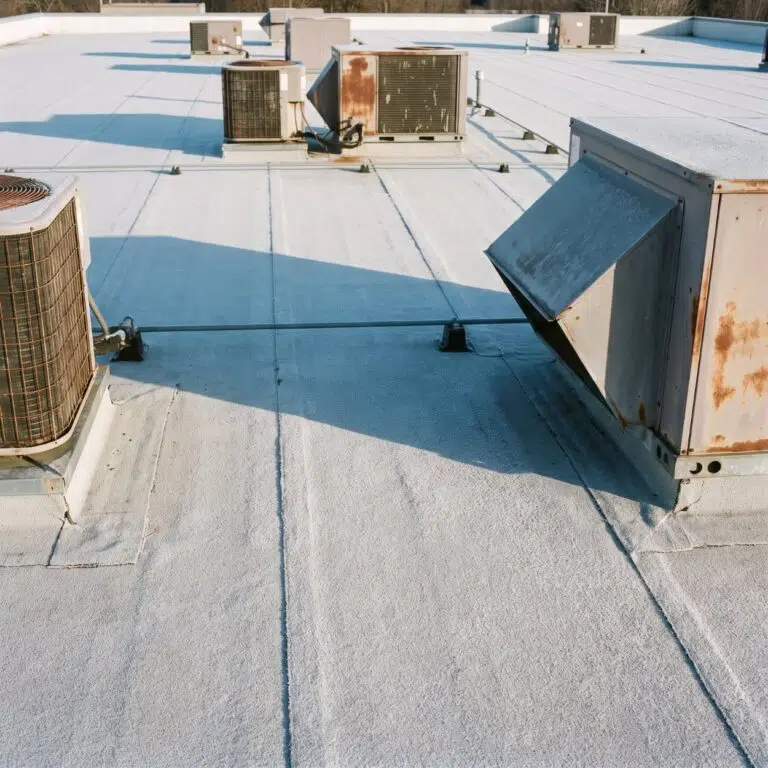

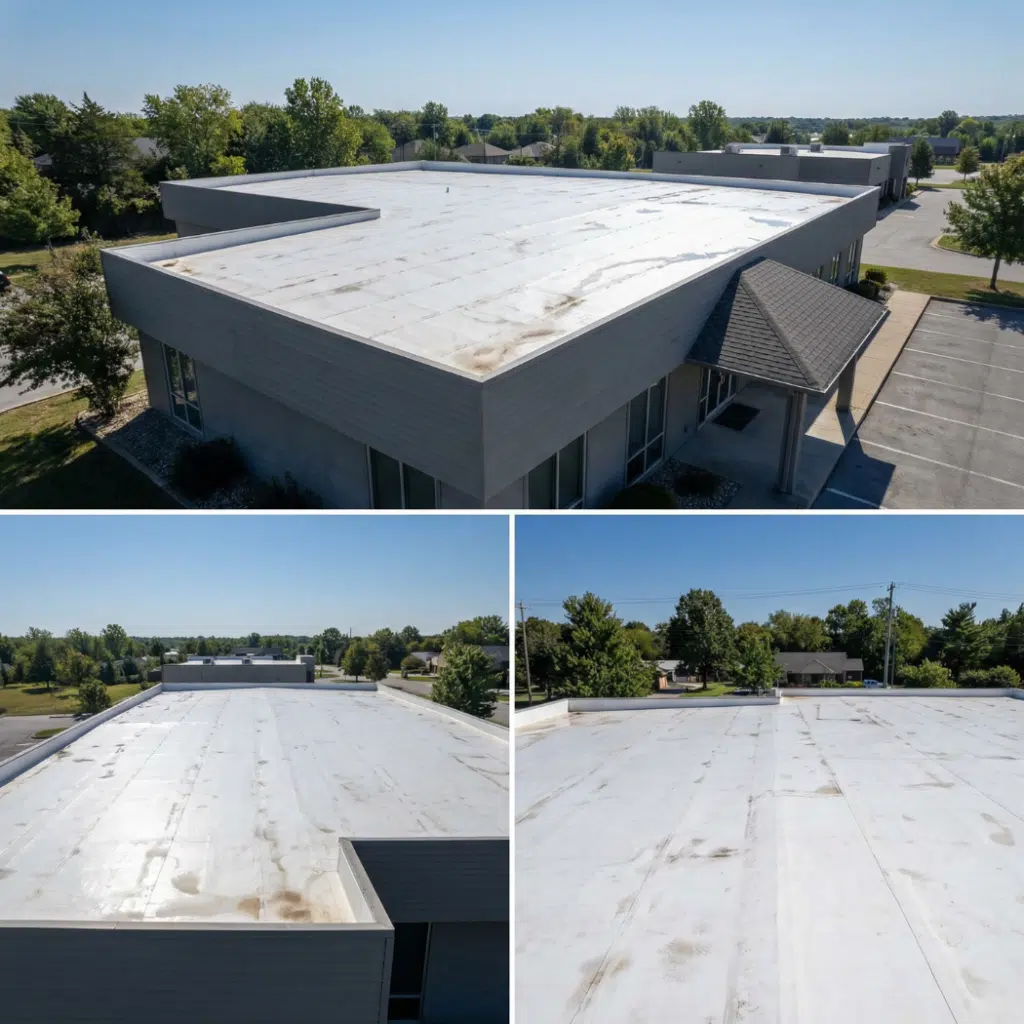
A leaking flat roof does not just cost money. It shuts down operations, damages inventory, and creates an urgent situation that demands a clear answer fast. But between the jargon, the options, and the pressure of keeping your business running, it is hard to know where to start. This guide explains commercial and flat roofing in plain language: the main system types, the warning signs, how Southwest Missouri storms affect these roofs, and how Teague Roofing Plus helps building owners and managers make smart decisions about repair, coating, or full replacement.
TLDR: Commercial and flat roofs in Springfield and Southwest Missouri face repeated hail, high winds, and heavy rain that stress membranes, seams, and edge metal throughout their service lives. The right response depends on roof age, system type, damage extent, and building use. Teague Roofing Plus evaluates all of these factors and gives building owners a straight recommendation on repair, restoration, or replacement, backed by over 50 years of commercial roofing experience in this region.
You are tired of dragging buckets out every time it rains. The stains on the ceiling tiles keep growing and the patches on the membrane keep multiplying. You have been managing this problem one storm at a time and you are ready for a real solution instead of another temporary fix.
Or maybe your roof looks okay from the outside but you are not sure what condition it is actually in. You know it is getting older and you want to understand your options before a leak becomes a crisis.
Either way, this guide gives you what you need to have a more informed conversation with your roofing contractor and make a decision you will not regret.
What Counts as a Commercial or Flat Roof?
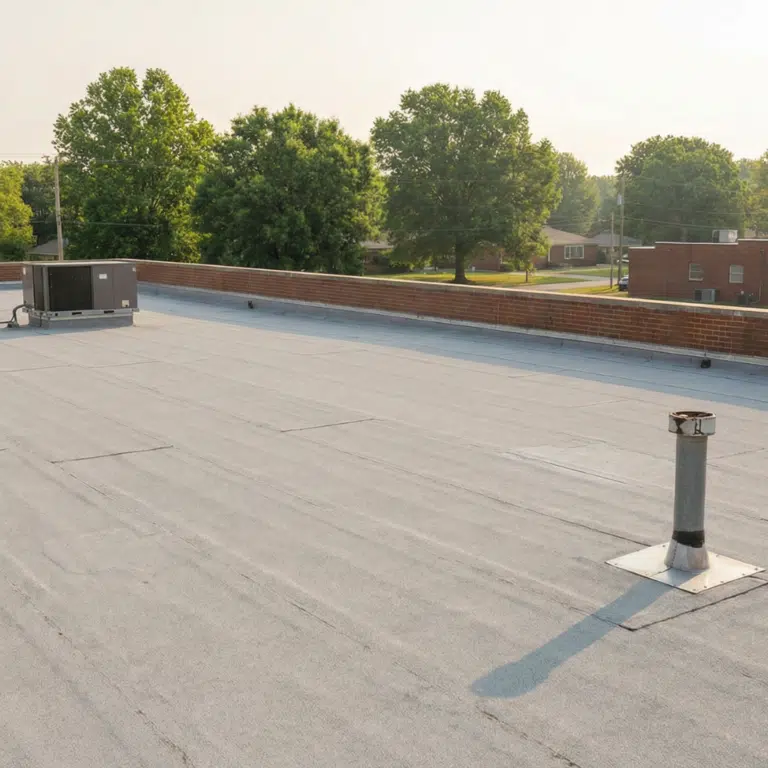
The term “flat roof” is a little misleading. Most commercial roofs have at least a slight pitch, typically between a quarter inch and a few inches of rise per horizontal foot, just enough for water to drain toward scuppers or internal roof drains. The National Roofing Contractors Association defines low-slope roofs as systems installed on slopes of 3-in-12 or less. That covers the vast majority of commercial and industrial buildings in SW Missouri.
Walk through any commercial corridor in Springfield, Republic, or Nixa and you will see these roofs on nearly every building. Retail strip centers, warehouses, churches, office buildings, and standalone shops all commonly use low-slope roofing systems. The materials and installation methods differ significantly from steep-slope residential shingles, which is why commercial roofing is its own specialty.
Teague Roofing Plus services both truly flat and low-slope commercial roofs across the full service area, from small retail buildings in Willard and Battlefield to larger commercial facilities in Springfield and surrounding counties.
| Building Type | Typical Roof Style | Common Materials |
|---|---|---|
| Retail and strip centers | Low-slope with internal drains or scuppers | TPO, EPDM, or modified bitumen |
| Warehouses and industrial | Mostly flat with large roof area | TPO, EPDM, coated metal, or built-up |
| Churches | Varies, often low-slope main sanctuary with pitched features | Modified bitumen, TPO, or metal |
| Office buildings | Low-slope with equipment penetrations | TPO, EPDM, or modified bitumen |
| Small shops and outbuildings | Low to nearly flat | Metal, TPO, or modified bitumen |
The Main Types of Commercial and Flat Roof Systems (In Plain English)
Commercial roofing options fall into a few main categories. Each has a different installation method, performance profile, and typical application. Understanding the basics helps you ask the right questions and evaluate what a contractor recommends.
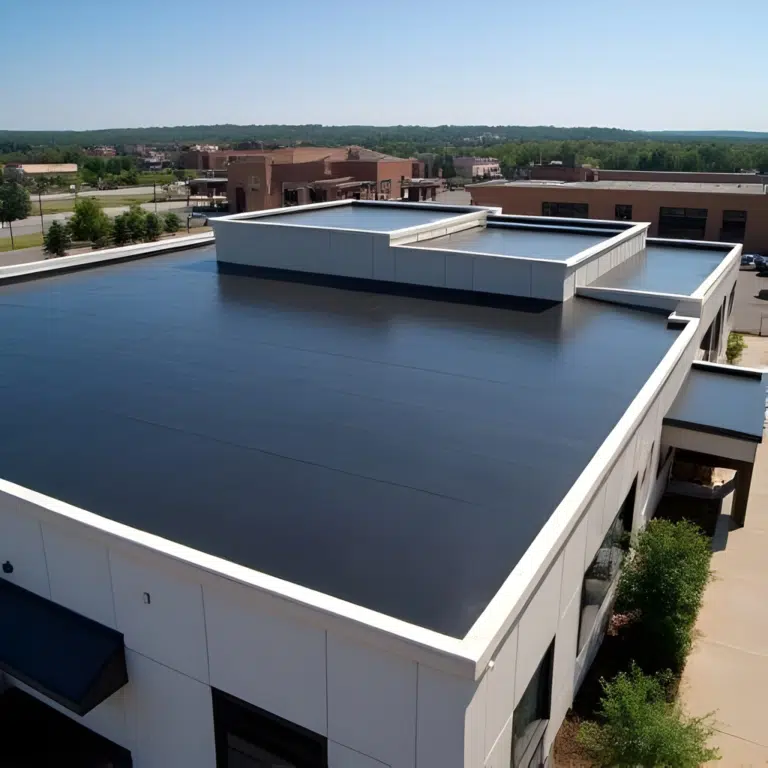
TPO, which stands for thermoplastic polyolefin, is one of the most common single-ply membranes in use today. It comes in large rolls that are heat-welded at the seams to create a continuous waterproof layer. TPO is white or light-colored, which reflects solar heat and can reduce cooling loads on buildings with large roof surfaces. You see it on retail centers, newer warehouse buildings, and office spaces across Springfield and Ozark.
EPDM, short for ethylene propylene diene monomer, is a synthetic rubber membrane that has been in commercial use for decades. It installs as a large single sheet or in seamed sections and is typically black, which absorbs heat rather than reflecting it. EPDM is durable and flexible through temperature swings, which makes it a reliable choice in climates that see both hot summers and cold winters.
Modified bitumen systems use asphalt-based material reinforced with polyester or fiberglass and applied in multiple layers. They have been common in SW Missouri for decades and still appear on many older buildings in the area. Modified bitumen repairs and overlays are well-understood and straightforward to execute.
Metal roofing appears on commercial and agricultural buildings throughout the region, often in a low-slope standing seam configuration. Coated and restoration systems apply a liquid coating over an existing sound roof membrane, adding a reflective or protective layer that extends service life without full tear-off. These work best on roofs with a solid substrate, good adhesion, and proper slope.
Our commercial roofing team installs and repairs all of these system types across the Springfield service area.
| System | What It Is | Where It Works Well |
|---|---|---|
| TPO | White single-ply membrane, heat-welded seams | Retail, office, and warehouse buildings where heat reflection is a priority |
| EPDM | Black rubber membrane, fully adhered or ballasted | Buildings needing flexibility through temperature extremes |
| Modified bitumen | Multi-layer asphalt membrane with reinforcement | Mid-slope commercial roofs, reroof applications over existing systems |
| Metal (low-slope) | Steel or aluminum panels with sealed seams | Agricultural, light commercial, and industrial applications |
| Coated or restored roof | Liquid coating over existing sound membrane | Roofs with a sound substrate and proper drainage that need life extension |
How Hail, Wind, and Ponding Water Damage Commercial Roofs
Southwest Missouri commercial roofs face three consistent threats: hail, wind, and water that does not drain.
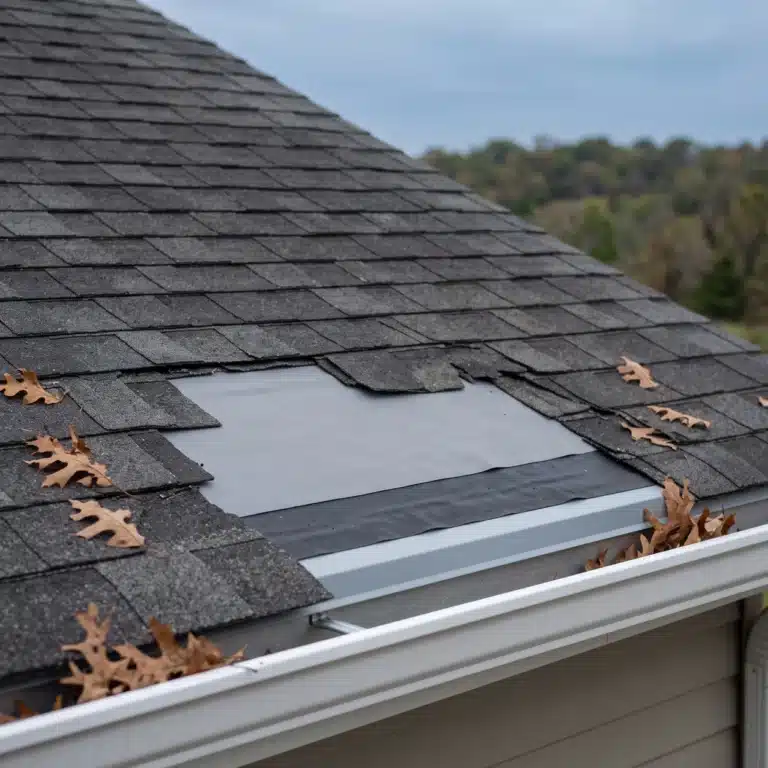
Hail is a direct physical threat to membrane integrity. IBHS commercial roof best practices documents how hail bruises and punctures membrane surfaces, with damage severity scaling with hail size and the membrane’s impact resistance rating. EPDM and TPO membranes each have different vulnerability profiles, and both can be compromised by large hail, particularly on aging material that has become less flexible. Rooftop equipment, including HVAC units, vents, and conduit, also takes direct hits that can displace them and open gaps in the membrane seal around their bases.
Wind creates uplift forces that concentrate at the edges and corners of flat roofs. IBHS hail and wind research confirms that commercial roofs experience the highest stress at perimeter edges, where wind pressure underneath a membrane or edge metal can lift and peel sections that were adequately attached for normal conditions but not for peak storm wind. According to NWS Springfield, SW Missouri sees repeated severe thunderstorm events with straight-line winds that regularly exceed the design assumptions of older roof installations.
Ponding water, standing water that remains on the roof more than 48 hours after a rain event, stresses seams and accelerates membrane aging. It adds structural weight and creates a sustained source of moisture that finds every small gap and works it open over time. Clogged drains and scuppers, which occur regularly after storms drop debris on large roof surfaces, are the most common cause of ponding on otherwise functional commercial roofs.
Our storm damage repair team handles the full range of storm-related damage on commercial roofs, from emergency membrane repair to full edge metal replacement.
| Problem | What Causes It | Why It Matters |
|---|---|---|
| Membrane punctures | Hail impact or windborne debris | Direct water entry into the building below |
| Edge lifting | Wind uplift at perimeter and corners | Progressive seam and membrane failure in subsequent storms |
| Ponding water | Clogged drains, inadequate slope, or drain failure | Structural loading, seam stress, and accelerated membrane aging |
| Clogged drains and scuppers | Storm debris accumulation | Ponding that compounds every other failure mode |
Commercial Roof Warning Signs Building Owners Should Watch For
Most commercial roof problems announce themselves through interior symptoms before they become visible on the roof surface. Staying alert to both lets you get ahead of the damage before it reaches critical mass.
Inside the building, look for water stains on ceiling tiles or structural members, active drips after any rain or snow event, and musty odors in specific areas of the building. Water stains that reappear after you replace tiles, or that are growing in size or number, indicate active intrusion that has not been addressed. A musty smell that concentrates near certain walls or ceiling areas often signals moisture in the insulation above, even when no active drip is visible.
On the roof surface, look for water that ponds and stays beyond 48 hours after rain. Walk carefully and look for blisters, bubbles, or wrinkles in the membrane, which indicate moisture is trapped beneath the surface. Exposed seams, open lap joints, or membrane sections that have pulled back from edge metal are active entry points. Check the sealant around every roof penetration, including pipes, curbs, HVAC units, and drains, for cracks, shrinkage, or separation.
At the building perimeter, check that drains and scuppers are clear and that downspouts flow freely. Overflowing downspouts during moderate rain indicate the roof drainage is not functioning at capacity.
Schedule a free roof inspection with Teague Roofing Plus any time you notice these signs or after any storm that produced significant hail or high winds in your area.
| Sign | Where You See It | Likely Issue |
|---|---|---|
| Water stains on ceiling tiles | Interior ceiling near exterior walls or below roof field | Active leak through membrane or failed penetration seal |
| Ponding water lasting more than 48 hours | On the roof surface after rain | Drainage failure, inadequate slope, or clogged drain |
| Blisters or bubbles in membrane | Roof surface, often in field areas | Moisture trapped beneath membrane; risk of rupture |
| Loose or missing edge metal | Roof perimeter and corners | Wind uplift damage; membrane exposed to further peeling |
Repair, Coat, or Replace? How Teague Evaluates Commercial Roofs
The decision between repairing, coating, and replacing a commercial roof depends on what the inspection actually finds, not on a one-size-fits-all answer. Teague evaluates five factors before making a recommendation.
Roof age and system type establish the starting point. A 10-year-old TPO roof with localized damage has a very different trajectory than a 25-year-old modified bitumen roof with widespread blistering. Extent and pattern of current damage tells us whether the problems are isolated or represent systemic surface failure. Insulation and deck condition determines whether the substrate can support a repair or coating, or whether moisture has already compromised the layers beneath the membrane. Drainage and ponding patterns reveal whether the roof’s slope and drain capacity are adequate or whether structural issues contribute to the problem. Building use and interior sensitivity shapes how aggressive the repair timeline needs to be. A building housing sensitive equipment or inventory has a lower tolerance for a “watch and wait” approach than an empty warehouse.
NRCA reroofing guidelines consistently emphasize evaluating the full roof assembly, not just the surface layer, before recommending a repair path. That is exactly how Teague approaches every commercial roof assessment.
Our roof repair services team handles targeted commercial repairs, and our roof replacement team manages full commercial tear-offs and new system installations. The commercial roofing page outlines the full range of services we provide.
| Situation | Repair | Coat / Restore | Replace |
|---|---|---|---|
| Few localized leaks on sound younger roof | Yes | Possible if base is solid | Not yet |
| Widespread blistering and repeated patch failures | No | Only if substrate is dry and bonded | Yes |
| Severe ponding across large roof area | Possible for drain work | No, slope issue persists | Often the right call |
| Very old roof with many past repairs | No | Not recommended | Yes |
Maintenance Plans and Why They Matter for Flat Roofs
A flat or low-slope commercial roof without a regular maintenance plan ages faster and costs more over its lifespan than one that receives consistent attention. IBHS commercial roofing best practices and NRCA guidance both identify documented maintenance as one of the most cost-effective practices in commercial facility management.
A basic maintenance plan for a commercial roof in SW Missouri includes spring and fall inspections, drain cleaning before and after storm season, seam and flashing checks after any significant hail or wind event, debris removal from the roof surface, and a condition report after each visit. That documentation creates a history that supports insurance claims, helps plan capital budgets, and catches the small issues that become large ones if ignored through one more storm season.
Teague offers commercial maintenance services for clients in Springfield, Rogersville, Marshfield, Aurora, and across the service area. We document every visit with photos so building owners and property managers have a running record of roof condition over time.
Our full range of exterior services includes maintenance programs that keep commercial roofs performing between major repair or replacement events.
| Task | How Often | Why It Matters |
|---|---|---|
| Drain and scupper cleaning | At least twice per year and after major storms | Prevents ponding that stresses the entire membrane system |
| Seam and lap joint inspection | Annually and post-storm | Catches open seams before they become active leaks |
| Flashing inspection at all penetrations | Annually | Penetrations are the most common failure points on flat roofs |
| Debris removal from roof field | Seasonally and after storms | Prevents drainage blockage and abrasion damage to membrane |
| Written condition report | After each visit | Supports insurance claims and capital planning decisions |
Storm Hardening Options for Commercial Roofs in Southwest Missouri
Building owners who want to reduce how often storms turn into roof emergencies have specific options worth considering during any repair or replacement project.
Edge metal securement is one of the highest-return upgrades available. IBHS research confirms that commercial roof losses in severe thunderstorms concentrate at perimeters and corners, where wind uplift forces peak. Upgrading to heavier-gauge edge metal with improved attachment and continuous cleat systems reduces the likelihood of progressive edge failure in a high-wind event. This is especially worth addressing during any reroofing project, since the edge system is accessible and relatively low in cost compared to a post-storm emergency repair.
Hail-resistant membrane selection matters for buildings in Springfield, Nixa, Strafford, and other communities in SW Missouri’s active hail zone. IBHS hail guidance recommends hail-resistant roof covers for commercial applications in high-frequency hail regions. When selecting a replacement system, choosing a membrane with a higher impact resistance rating reduces the frequency and severity of post-storm membrane damage.
Improved drainage design and penetration detailing are the other high-value targets. A roof that drains correctly after any storm is a roof that accumulates far less stress on seams and substrate. Tight, properly detailed flashing around every penetration eliminates the entry points that account for a disproportionate share of commercial leak calls.
The IBHS FORTIFIED program provides technical guidance on construction practices that improve resilience against wind and hail at the building system level. While full FORTIFIED certification is designed for residential construction, the underlying principles of stronger edge securement, sealed decks, and impact-tested cover materials apply directly to commercial roof upgrades.
| Upgrade | What It Improves | When to Consider It |
|---|---|---|
| Stronger edge metal and securement | Reduces wind-driven edge peeling at perimeter and corners | During any reroofing or major repair project |
| Hail-resistant membrane selection | Reduces puncture and bruise damage in hail events | When specifying a replacement system |
| Improved drainage and additional drains | Reduces ponding load and seam stress after heavy rain | When ponding is a recurring problem |
| Better penetration flashings and detailing | Eliminates the most common commercial roof leak sources | During reroofing or when current flashings show wear |
Our storm damage repair team and commercial roofing specialists can incorporate resilience upgrades into any repair or replacement scope.
Insurance, Documentation, and Downtime Concerns for Businesses
A commercial roof problem is not just a roofing issue. It is a business continuity issue. Water reaching inventory, equipment, or office space has immediate operational and financial consequences, and managing the insurance process under that pressure requires clear documentation from the start.
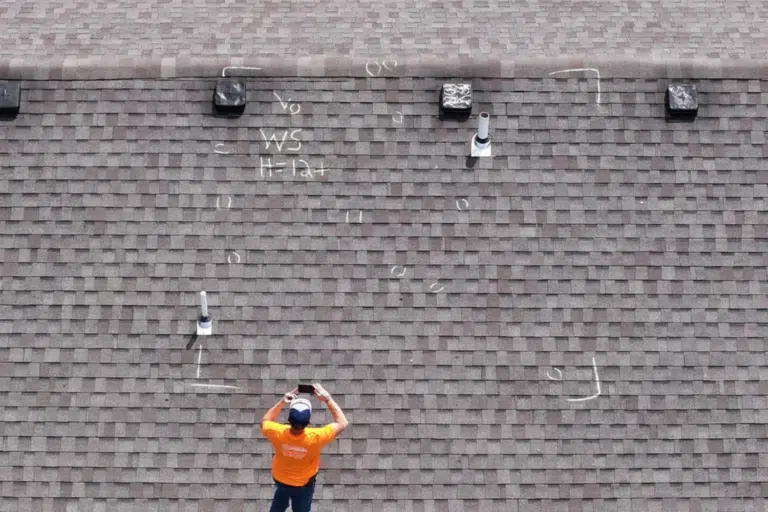
Photograph the interior damage and the roof surface as soon as conditions allow after any storm. Note the date, document which areas of the building are affected, and keep those photos in a file separate from your general maintenance records. A claim tied to a specific storm event requires evidence that connects the damage to that event, and a photo taken two weeks later tells a less clear story than one taken the morning after.
Building owners in Missouri with questions about commercial property insurance coverage, policy terms, or insurer obligations can contact the Missouri Department of Commerce and Insurance for consumer guidance.
Teague provides full insurance claim assistance for commercial clients at no extra charge. We document damage, prepare written scopes of repair or replacement, and meet adjusters on site. We also work around business operations where scheduling allows, minimizing disruption to tenants, employees, and customers during roof work.
| Item | Why It Matters | Who Uses It |
|---|---|---|
| Maintenance logs with dates and findings | Demonstrates regular care and documents pre-storm condition | Insurer, building owner, and future contractors |
| Leak history with dates and repair records | Shows pattern and scale of past water events | Insurer adjuster and replacement planning |
| Photos of roof and interior damage | Ties specific damage to specific storm events | Insurance claim and adjuster meeting |
| Professional inspection reports | Provides independent documentation of current condition | Insurer, board, and capital planning |
Illustrative Commercial Roof Scenarios Around Springfield
Illustrative scenario: A warehouse owner in Springfield had dealt with recurring leaks near two interior drains for several seasons. Patches had been applied around both areas more than once, but the leaks returned after every significant rain. Teague’s inspection found that the drains had sunk slightly below the surrounding membrane level, creating ponding that stressed the membrane edges around the drain collar. The team cleared and re-set both drains, replaced the membrane in the affected areas with full adhesion, and installed a maintenance schedule that included drain checks before each storm season. The leaks stopped.
Illustrative scenario: A retail center in Nixa had a single-ply membrane roof approaching 20 years of age. The roof showed widespread blistering across the main field, numerous patches from prior repairs, and edge metal that had separated from the fascia at two corners. Teague’s assessment found moisture in the insulation in several locations and confirmed the membrane had lost its adhesion in large sections. A coating system was not viable given the trapped moisture and adhesion failure. Teague installed a new TPO system with upgraded edge metal and improved drainage at two low points, resolving both the chronic leak issues and the perimeter vulnerability.
Illustrative scenario: After a major thunderstorm moved through Republic, the facility manager of a local church found that edge metal had lifted at two corners of the sanctuary roof and that the membrane had pulled back from the perimeter in those areas. Water entered both corners during the storm. Teague responded with emergency repairs that same week, re-securing the edge metal, re-adhering the membrane at both corners, and applying reinforced flashing at the perimeter. At a follow-up meeting, the team presented a five-year maintenance and replacement plan that fit the congregation’s budget planning cycle.
Frequently Asked Questions: Commercial and Flat Roofing in Springfield, MO
How long should a commercial flat roof last in Southwest Missouri?
Lifespan varies significantly by system type, installation quality, and maintenance history. Well-maintained TPO and EPDM single-ply membranes typically last 15 to 25 years in SW Missouri’s climate. Modified bitumen systems installed correctly often reach 15 to 20 years. Metal roofing can last considerably longer with appropriate coatings and maintenance. In a region with repeated hail and high-wind events, roofs that receive regular professional maintenance consistently outlast those that are inspected only when a problem appears.
What is the most common commercial roofing system in Springfield?
Single-ply membranes, particularly TPO, are among the most common systems installed on newer commercial buildings in the Springfield area. Modified bitumen systems appear widely on buildings constructed between the 1980s and early 2000s. Many older buildings still have built-up roofing, sometimes with layers added over multiple reroof cycles. When Teague begins a commercial assessment, identifying the current system type is the first step, because repair and replacement options differ by system.
How do I know if my commercial roof can be coated instead of replaced?
A coating or restoration system works on roofs that have a sound, dry, well-adhered membrane, proper drainage slope, and no significant trapped moisture in the insulation or deck. Roofs with widespread blistering, delamination, or moisture infiltration into the substrate are generally not good candidates for coating, because the coating applies over a failing base and will not address the underlying problem. Teague evaluates adhesion, moisture content, slope, and drain function before recommending a coating option.
What are the signs that my flat roof is failing?
The clearest signs are recurring leaks in the same areas despite repeated repairs, ponding water that stays more than 48 hours after rain, widespread blistering or wrinkling across the membrane field, and edge metal that has separated or lifted. Interior signs include persistent staining on ceiling tiles, musty odors in specific building areas, and drips that appear during rain events. Any combination of these signals warrants a professional inspection rather than another patch.
How often should I have my commercial roof inspected?
At minimum, twice per year: once in spring before storm season and once in fall before winter. Add a professional inspection following any significant storm that produced hail or sustained high winds in your area. Buildings with older roofs, a history of leaks, or high interior sensitivity should consider quarterly inspections or a formal maintenance program with documented condition reports after each visit. Early detection consistently produces lower repair costs and longer roof service life.
How do hail and wind affect commercial roofs differently than house roofs?
Commercial roofs cover larger surface areas with fewer penetrations per square foot, which means hail damage can affect very large membrane sections in a single event. The flat or low-slope geometry also means wind uplift acts differently, with sustained pressure on large horizontal surfaces rather than the angled forces on a steep-slope roof. Edge and corner areas on commercial roofs are the most vulnerable, and the failure of a single edge metal section can begin a progressive peel that extends across a long perimeter run during the same storm.
Can Teague Roofing Plus work around my business hours to reduce downtime?
Yes, where scheduling allows. Teague works with building owners and managers to plan commercial roofing projects around operating hours, tenant schedules, and inventory considerations. Some work, particularly emergency repairs and drain clearing, can be completed during off-hours or over weekends. Full replacements require more continuous access to the roof, but sequencing the work by section can minimize how much of the building is affected at any one time. This is part of the conversation we have before any commercial project begins.
What information should I have ready when I call about a commercial roof problem?
Have the building address, an approximate roof size if known, the type of roofing system if you know it, and a description of where leaks or damage appear inside and outside. If you have previous inspection reports or repair records, those help significantly. If the damage followed a specific storm, note the approximate date. The more context you can provide, the more efficiently Teague can prepare for the site visit and bring the right equipment and materials.
Does Teague help with insurance claims for commercial properties?
Yes. Teague documents damage, prepares written repair and replacement scopes, and attends adjuster meetings on site for commercial clients. We do not promise specific claim outcomes, but we make sure the full scope of storm damage is accurately documented and clearly presented to the adjuster. Missouri commercial building owners with questions about their policy or insurer obligations can also contact the Missouri DCI at insurance.mo.gov.
Key Takeaways for Building Owners and Managers
- Flat and low-slope roofs are a specialized system. They differ fundamentally from steep-slope residential roofing in materials, failure modes, and maintenance requirements.
- SW Missouri storms are hard on commercial roofs. Repeated hail and high-wind events stress membranes, seams, and edge metal throughout the roof’s service life.
- Ponding water is both a symptom and a cause. A roof that does not drain correctly will fail earlier and produce more leaks regardless of how good the membrane is.
- Repair, coating, and replacement each have the right conditions. The decision depends on what a professional inspection actually finds, not on assumptions based on roof age alone.
- Maintenance documentation protects your investment. A record of inspections and repairs supports insurance claims and informs capital planning before a crisis forces the conversation.
- Edge metal and drainage deserve specific attention. These two components account for a disproportionate share of commercial roof failures in severe storm events in this region.
- A professional inspection gives you a clear starting point. Teague evaluates the full roof assembly, not just the surface, before making a repair or replacement recommendation.
Need a Commercial Roof Inspection or Second Opinion in Springfield?
If your building has recurring leaks, ponding water after every storm, or a roof that has been patched more times than you can count, a professional inspection from Teague Roofing Plus gives you a clear picture of where you stand and what your options actually are. We look at the full assembly, not just the surface, and we tell you honestly whether repair, coating, or replacement makes the most sense for your building.
Teague has been installing, repairing, and maintaining commercial roofs in Springfield, Nixa, Ozark, Republic, and across Southwest Missouri since 1971. We have worked on warehouses, retail centers, churches, office buildings, and light industrial properties throughout the region. Josh and the team will inspect the roof, show you photos of the findings, explain your options in plain language, and work around your schedule to minimize disruption to your operations.
Call 417-883-7663 or contact us online to schedule your commercial roof inspection. You can also learn more about our full range of exterior services for commercial and residential properties across SW Missouri. As an established Springfield roofing company with over 50 years of local history, we are here when you need us and we back our work long after the job closes. For emergency roof repair when a storm has already created an active leak, our team is available 24/7.
Teague Roofing Plus | Roofing, Siding, Windows, Gutters, and More. Serving Southwest Missouri Since 1971.