

Monett, MO Commercial Roofing
Teague Roofing Plus provides commercial roofing services to Monett business owners, property managers, and building owners across Barry and Lawrence County. We install and repair TPO, EPDM, modified bitumen, and standing seam metal systems on warehouses, manufacturing facilities, retail buildings, and more.
A failing commercial roof does not just cost you repair money. It costs you business continuity. Monett’s industrial corridor and older commercial stock face real pressure from Southwest Missouri’s hail season and hard freeze-thaw winters. The right membrane and the right contractor matter more than most property owners realize.
Call 417-883-7663 for a free commercial roof assessment in Monett.
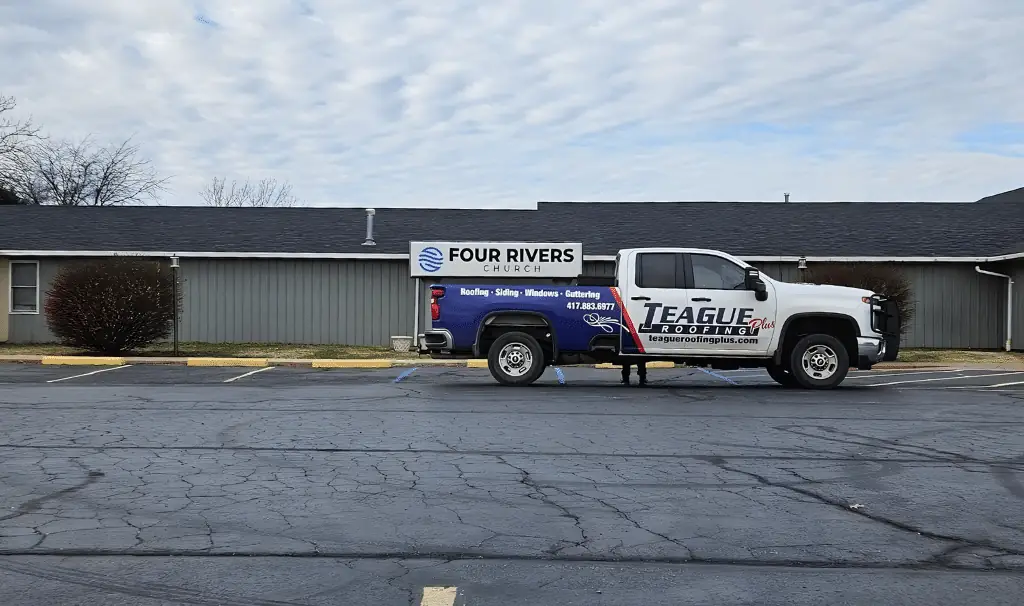
Commercial Roofing Contractor Serving Monett Businesses Since 1971
Teague Roofing Plus has been protecting commercial properties across Southwest Missouri for over 50 years. Owner Josh Tessmer is personally involved in every commercial project. We are based at 6149 US-60 in Springfield and our crews serve Monett and the surrounding Barry and Lawrence County area regularly.
Southwest Missouri’s weather is hard on commercial roofs. Monett’s BNSF railroad industrial corridor is home to older manufacturing and warehouse buildings, many carrying aging flat roof systems that have seen decades of hail, wind, and freeze-thaw stress. Flat and low-slope membranes cannot shed water the way a sloped residential roof can. Every rain event tests what is left of the membrane and every hail storm adds new puncture risk. A commercial roof failure in a working warehouse or manufacturing plant means interior water damage, inventory loss, and production downtime that compounds by the hour.
We work with warehouses, manufacturing facilities, retail buildings, churches, and commercial properties throughout Monett. From the first free inspection to the final walkthrough, Teague handles the full project. Call 417-883-7663 to get started.
Follow us
Monett's Commercial Roofing Specialist For Over 40 Years
Teague Roofing Plus is not a franchise. We are not an out-of-state crew that shows up after a storm and disappears when the claim gets complicated. Josh Tessmer lives and works in this region, and this company has been roofing Southwest Missouri since 1971. After thousands of completed roofs, we know what SW Missouri weather does to flat and low-slope commercial systems.
We are an Owens Corning Platinum Preferred Contractor, a designation fewer than 1% of roofers nationally earn. We are also BBB A+ rated since December 2019, members of the Home Builders Association of Springfield, and a Nextdoor Neighborhood Favorite in 2022 and 2024. We carry full liability and workers’ compensation coverage on every commercial job.
Commercial property owners and managers need a contractor who shows up on time, communicates clearly, and does not deliver surprise change orders. That is how we operate. When you call 417-883-7663, you reach real people who work in the Ozarks. Not a call center in another state.
- 40-plus years of commercial roofing experience
- Owens Corning Platinum Preferred Contractor
- BBB A+ rated since December 2019
- Free commercial roof assessments, no obligation
- MO-Licensed and Insured
- Nextdoor Neighborhood Favorite













How We Protect Monett Commercial Properties
Commercial Storm Damage Repair in Monett, MO
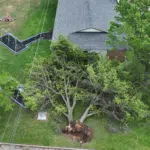
Monett sits inside a severe hail zone, and flat commercial roofs take the hardest hits. Unlike sloped residential surfaces, flat and low-slope membranes cannot shed hail and rainwater between storm events. Every impact tests membrane integrity directly. Any puncture or seam separation becomes a standing water problem, and standing water on a flat roof works its way inside faster than most building owners expect.
Monett’s industrial and warehouse buildings along the BNSF corridor are especially exposed. Large, unobstructed rooftops on working industrial facilities give hail nowhere to go and no slope to shed it. If your commercial property took wind or hail damage, your insurance clock is already running. A documented post-storm inspection is the critical first step. Read more about what to look for in our hail damage roof inspection guide.
- Free commercial storm inspections within 48 hours
- We meet your commercial adjuster on site at no charge
- 40-plus years of storm repair experience in SW Missouri
Free Commercial Roof Inspection in Monett, MO
Every commercial roof inspection starts on the roof, not in a sales pitch. We check the membrane surface, seams, flashing, drains, scuppers, and HVAC penetrations. We photograph everything and give you a written report. The NRCA recommends commercial roof inspections twice per year, spring and fall, plus after any significant weather event. For flat roof systems, quarterly checks are best practice because standing water and membrane damage progress faster than on sloped surfaces. Monett’s older commercial stock makes this especially important. Many of these buildings carry original membranes that have never had a formal inspection. If your roof only needs a targeted repair, we will tell you that honestly. If replacement is the right call, we explain exactly why with photos to back it up.
- Full photo documentation of your commercial roof's condition
- Written report you can share with your insurance carrier
- Honest assessment even when the answer is "your roof is holding up fine"
Commercial Roof Insurance Claim Help in Monett, MO
Commercial property insurance claims are more complex than residential ones. Separate wind and hail deductibles are common on commercial policies. Carriers can deny claims when no maintenance history exists, framing the damage as pre-existing wear rather than storm loss. Business interruption coverage may also apply when an active leak forces operations to slow or stop, which matters significantly for Monett’s manufacturing and warehouse tenants.
Teague documents all storm damage before anything is touched and meets your commercial adjuster on site at no charge. We make sure the full scope of damage is captured in the claim. Our team walks every commercial client through our guide on how to file a roof insurance claim so you understand the process before it starts. Missouri law bars a contractor from advertising or promising to pay or rebate any part of your insurance deductible as an inducement to sell you work. RSMo 407.725 covers residential and commercial property alike. We follow that law without exception. Our full insurance claim assistance is available to every commercial client at no extra charge.
- On-site adjuster meetings at your commercial property
- Complete damage documentation with photos and written reports
- Guidance on Missouri commercial insurance deadlines and protections
TPO, EPDM, and Modified Bitumen for Monett Buildings
Most Monett commercial buildings use flat or low-slope roofing systems. The right membrane depends on the building’s use, roof traffic, HVAC load, and hail exposure. TPO is the most common choice for office, retail, and warehouse buildings across SW Missouri. It is white, ENERGY STAR rated, and heat-welded for seam strength that glued or taped alternatives cannot match. EPDM is a proven synthetic rubber membrane with 20 to 35 years of expected service life and excellent freeze-thaw flexibility, making it a strong fit for Monett’s cold winter exposure. Modified bitumen is the right call for high-traffic roofs with heavy rooftop HVAC equipment or maximum hail exposure. Its layered construction carries a Class 4 impact rating, the highest available for any flat roof system. Teague assesses every building before recommending a system. We do not push one product on every property.
- TPO reduces cooling costs with its white reflective surface
- EPDM handles Monett's freeze-thaw cycles better than most membranes
- Modified bitumen carries the highest hail impact rating available
What Monett Property Owners Can Expect From Start to Finish
Teague starts every commercial project with a free inspection and written assessment. We identify whether the building needs a repair, a targeted section replacement, or a full system installation. After the assessment, we put together a detailed written proposal. You see the full work scope, materials, timeline, and cost before we order a single item or schedule a crew. No vague estimates. No surprise charges.
Commercial roofing falls under the IBC 2018, not the residential IRC. All commercial roofing projects require a permit, and the permitting process covers structural loads, drainage, membrane type, and energy compliance. Teague handles all permit coordination. Building owners and property managers in Monett do not deal with the permitting office directly. We pull the permit, schedule required inspections, and make sure the finished work meets IBC 2018 standards. We schedule installation around your operating hours, keep the job site clean and safe, and stay on timeline. Before any commercial project is called complete, we inspect every seam, penetration, drain, and edge detail. Then we walk the finished roof with you or your property manager so you can see the work firsthand and ask any questions.
- Full permit coordination under IBC 2018, we handle it all
- Work scheduled around your business operating hours
- Free written assessment before any work is committed
Targeted Flat Roof Repair for Monett Commercial Properties
Not every commercial roofing problem in Monett requires a full replacement. Isolated membrane punctures, failed penetration seals around HVAC units, and separated seams at the roof edge can often be repaired without removing the entire system. This is especially relevant for Monett’s older commercial buildings, where the underlying deck may still be sound even when the membrane surface has developed isolated problem areas. Teague inspects the damage, checks the decking underneath the affected area, and makes an honest call. If a targeted repair will hold and protect the building for several more useful years, we recommend that. If the membrane has reached the end of its service life or shows widespread seam failure across multiple sections, we tell you plainly and explain why replacement makes more financial sense over time. Learn more about roof repair options in SW Missouri.
- Membrane puncture and seam repair on flat and low-slope systems
- HVAC penetration seal replacement and flashing repair
- Honest repair-versus-replace assessment with no sales pressure
Metal Roofing for Monett Commercial Buildings
Standing seam metal roofing is a strong option for Monett commercial buildings that need maximum longevity and hail resistance. A standing seam system uses raised seams that lock panels together and direct water away from the roof surface. This is particularly valuable in SW Missouri’s hail zone, where flat membrane systems face repeated impact stress year after year. Metal handles the region’s temperature swings better than most membrane alternatives, expanding and contracting without cracking or splitting through freeze-thaw cycles. It also carries one of the longest service lives of any commercial roofing material. Metal is a natural fit for Monett’s manufacturing facilities, agricultural supply buildings, warehouses along the BNSF corridor, and commercial properties where the owner plans to hold the asset for decades. Teague installs standing seam and other metal roofing systems on commercial properties throughout Barry and Lawrence County.
- Standing seam metal handles Monett's temperature swings without cracking
- Long service life with minimal ongoing maintenance
- Strong hail resistance for SW Missouri's severe weather zone
What Monett Property Owners Should Know About Pre-1980 Buildings
Monett has a significant stock of older commercial and industrial buildings along its railroad corridor, and many of these structures were built before 1980. Older commercial buildings in SW Missouri may have asbestos-containing roofing materials. Missouri DNR requires specific certification for any contractor working on asbestos projects. Teague follows all Missouri DNR asbestos protocols on older commercial buildings. An assessment for asbestos-containing materials is part of our pre-project process for any structure built before 1980. If your Monett building is in that age range and you are not certain what is under the existing membrane, do not let any crew start tearing it off without that answer first. We assess this before a single layer comes up, and we handle the compliance process so you do not have to.
- Pre-1980 commercial buildings assessed for asbestos-containing materials
- Missouri DNR asbestos protocol compliance on every qualifying project
- No surprises, full scope identified before work begins
Common Questions
FAQ's About Commercial Roofing in Monett
What type of roofing system is best for my Monett commercial building?
It depends on the building. TPO is the most common choice for office, retail, and warehouse properties across SW Missouri. It is white and ENERGY STAR rated, which reduces cooling costs, and its heat-welded seams hold better than glued or taped alternatives. EPDM is a proven option with excellent freeze-thaw flexibility and a lower upfront cost, making it a practical choice for budget-conscious Monett building owners. Modified bitumen is the right call for high-traffic roofs with heavy HVAC equipment or maximum hail exposure. Its layered construction carries a Class 4 impact rating, the highest available, which matters in SW Missouri’s severe hail environment.
Teague assesses every building before making a recommendation. Building size, use, roof traffic, HVAC load, budget, and insurance class all factor into the right call. Start with a free commercial roof inspection and we will walk you through the options specific to your property. You can also review our full commercial roofing in SW Missouri overview for more detail on each system.
Does commercial roofing require a permit in Monett, MO?
Yes. Commercial roofing falls under the IBC 2018, not the residential IRC. All commercial roofing projects in Monett and the surrounding Barry and Lawrence County area require a permit. The permitting process for commercial projects is more involved than residential, covering structural loads, drainage, membrane type, and energy compliance requirements.
Teague handles all commercial permit coordination on every project. Building owners and property managers do not have to deal with the permitting office directly. We pull the permit, schedule the required inspections, and make sure the finished work meets IBC 2018 requirements. If you have questions about what a commercial roofing permit covers in Monett, call 417-883-7663 and we will walk you through the process before any work begins.
How often should a Monett commercial roof be inspected?
The NRCA recommends commercial roof inspections twice per year, spring and fall, plus after any significant weather event. For flat and low-slope systems specifically, quarterly inspections are best practice. Standing water and membrane punctures progress faster on flat roofs than on sloped residential surfaces. A small breach can allow water to migrate beneath the membrane for months before interior damage becomes visible inside the building.
For Monett’s older commercial and industrial buildings, staying current on inspections is even more critical. Many of these properties carry original membranes with little or no documented maintenance history. That matters directly for insurance claims. Commercial carriers can deny storm damage claims by framing the damage as pre-existing wear when no maintenance records exist. Two inspections per year creates the paper trail that protects your claim. You can read more about storm season preparation in our 2026 storm season roof prep guide, and schedule your inspection through our free roof inspection service.
Will insurance cover hail damage to my Monett commercial roof?
Hail and wind damage is covered under most commercial property policies as sudden and accidental loss. However, commercial claims are more complex than residential ones. Separate wind and hail deductibles are common on commercial policies in SW Missouri. Carriers can also deny claims when no maintenance history exists, categorizing the damage as pre-existing deterioration rather than storm loss. This is a real risk for Monett’s older industrial and commercial buildings that have deferred maintenance over the years.
Teague documents all damage before anything is touched and meets your commercial adjuster on site at no charge. We make sure nothing gets missed in the initial scope. Missouri law under RSMo § 407.725 prohibits any contractor from paying, waiving, or discounting any portion of your deductible. Our insurance claim assistance is available to every commercial client at no extra charge. For a clear look at how the claims process works, see our post on how to file a roof insurance claim.
What is the difference between TPO, EPDM, and modified bitumen?
TPO is a white single-ply membrane. It is ENERGY STAR rated, which means it reflects heat and reduces cooling costs during Monett’s hot summers. Heat-welded seams make it stronger than glued or taped alternatives. It is the fastest-growing commercial roofing material in the U.S. and the most common choice for office, retail, and warehouse buildings across SW Missouri. Expected lifespan is 15 to 30 years with proper maintenance.
EPDM is a synthetic rubber membrane with a 50-plus year industry track record. It is black by default, which absorbs heat, but white EPDM is available for cooling-sensitive applications. It performs well in freeze-thaw cycles, which makes it a practical choice for Monett’s winters, and it carries a lower upfront cost than TPO. Expected lifespan is 20 to 35 years.
Modified bitumen is an asphalt-based multi-layer system. Its layered construction gives it the highest hail impact rating available, Class 4, and the best redundancy against punctures from rooftop foot traffic or large hail. It is the right call for Monett’s high-traffic industrial roofs with HVAC equipment, or any building in a high hail exposure area. Expected lifespan is 15 to 25 years. As an established roofing company in Springfield serving Monett and all of SW Missouri, Teague assesses your specific building before recommending any system.
Trusted By Monett Businesses. Backed By Our Commercial Track Record.
Posted on Google RSJ8 days ago
Trustindex verifies that the original source of the review is Google.
Wow!!! Joel Adams made needing a roof that much easier by going above and beyond. Got us moved into the lineup in 2 days since we were under a time crunch!!! Saved us money on top of it. The crew was respectful and did a fantastic job from start to finish! Thank you very much!!!!Posted on GoogleNancy Hoagland17 days agoJoel was great to work with! Very knowledgeable. The crew did a very good job!Posted on GoogleMary Pearson18 days agoI want to give a huge shout out to Joel. My granddaughter and her family are staying at our home while my husband and I are out on an extended vacation. The day we left a huge wind and rain storm hit. My granddaughter called and said we had a ceiling light that was leaking in the spare bedroom. I immediately contacted Teague Roofing, let them know the issue and that we were out of town. This was late on a Sunday. Joel said he would add us to his schedule for the next day. He arrived at our house around 10:00, looked at the situation in the bedroom, went on the roof and found the problem right away. He fixed the problem and now my husband and I can continue our vacation knowing that our roof is in good shape and my granddaughter and her family can enjoy their stay while we enjoy our time away. Their customer service is top notch and a rare find these days. We will definitely recommend them to others and should we ever have a roof issue we will definitely be calling Teague Roofing!!! I couldn't be happier!!!+1Posted on GoogleCody Davis28 days agoThe best roofing company in the 417! Give them a call for a free consultation!Posted on GoogleJeremy Hill49 days agoI had a great experience. Honest, helpful, and Jason is not only a great representative of this company; but a great man as well. Will always recommend these guys.Posted on GoogleCarolyn Hoskins78 days agoPosted on GoogleNathan English99 days agoShowed up early for the inspection, found the leak and repaired it quickly. They were great at communicating what the problem was and how they fixed it. Incredible customer service. Would recommend to anyone.Posted on GoogleRick Shortt135 days agoI just want to take a moment to tell you how impressed I was by sal from teague roofing Plus today. After the hail storm people are going door to door trying to get you to replace your roof because it benefits them to do so. You hear lots of stories about companies telling you your roof needs replaced when it really doesn't. Sal came by today and did a free inspection and gave me the great news that we don't need a new roof and that our roof is in fine shape. He gave me lots of details and suggestions for when we do need a new roof. His honesty has won my business whem eventually we will need a roof. If you're looking for somebody to give you an honest inspection and estimate on your roof, this is the place to do it.Verified by TrustindexTrustindex verified badge is the Universal Symbol of Trust. Only the greatest companies can get the verified badge who has a review score above 4.5, based on customer reviews over the past 12 months. Read more

Need a Commercial Roof Assessment in Monett, MO?
Your commercial roof protects your business, your inventory, your equipment, and everyone inside the building. If it is aging, showing signs of membrane wear, or took a hit from a recent storm, we will come take a look at no cost to you. No pressure. No obligation. Just an honest assessment from a team that has been protecting commercial properties across Southwest Missouri for over 50 years. Monett’s industrial and warehouse buildings deserve a contractor who shows up, communicates clearly, and does not cut corners. That is how Teague operates on every job. Call 417-883-7663 or tap below to schedule your free commercial roof assessment. Teague Roofing Plus also handles residential roofing, siding, gutters, and windows across SW Missouri.