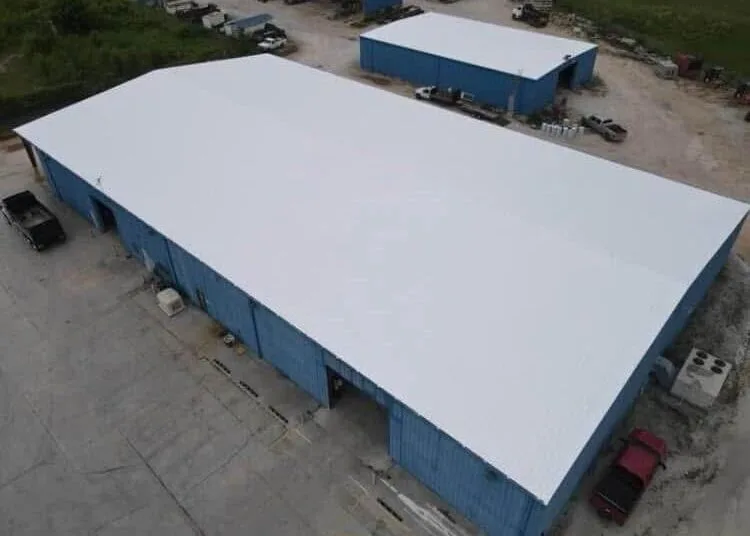


SW Missouri thunderstorms regularly push 50 to 65 mph gusts that damage asphalt shingle roofs without leaving obvious signs. Wind damage is sneaky: broken seal strips, lifted flashing, and nail pops cause leaks that show up weeks later. This guide covers what wind damage looks like, how it differs from hail, and what to do next.
TLDR: Wind speeds above 45 mph can damage older shingles without visible ground-level signs. Wind and hail damage are both covered under standard Missouri homeowners insurance. The biggest mistake is assuming no visible damage means no damage. A free professional inspection is the only reliable way to know.
The storm passed through. The power flickered. The wind was loud. You walk outside and nothing looks obviously wrong. No shingles in the yard. No ceiling stain.
Three weeks later, when the next rain hits, a wet spot appears on the ceiling. The roof did take damage from that wind event. You just could not see it.
Wind damage is almost never visible from a perimeter walk. The seal strip under the shingle breaks. A nail pops. The flashing around the chimney lifts a quarter inch. None of it shows from the street, and all of it causes problems weeks later. April 29, 2025 was a perfect example: a 90 mph gust at the Springfield airport, 87 mph at Nixa, and over 50,000 homes losing power. Many of the wind claims from that storm were filed weeks later, after the leaks finally appeared.
What Wind Actually Does to an Asphalt Shingle Roof
As wind moves across a roof, it creates negative pressure (suction) on the shingle surface. The force tries to pull each shingle off the deck. When uplift exceeds the shingle’s adhesion and fastener resistance, the shingle lifts, bends, or separates. Edges and corners take the worst of it because wind pressure is highest there. Standard asphalt shingles are rated 60 to 90 mph. High-performance shingles handle 110 to 130 mph. Owens Corning’s wind ratings under ASTM D7158 are Class D at 90 mph, Class G at 120 mph, and Class H at 150 mph.
Most damage you cannot see from the ground. Broken seal strips, the bond between shingles, are the most common hidden result. The shingle looks normal but lifts with every subsequent wind event and lets water in during rain. Nail pops happen when uplift partially pulls fasteners from the decking. Ridge caps often dislodge in 50+ mph events. Flashing at walls, valleys, and chimneys can lift and reseal until the sealant fails.
| Wind Speed | NWS Classification | What Happens to Asphalt Shingle Roofs |
|---|---|---|
| 25 to 40 mph | Breezy to Windy | Loose or aging shingles may lift, minimal risk on healthy roofs |
| 40 to 57 mph | Wind Advisory | Aging shingles curl and blow off, branches hit roofs, gutters pull away |
| 58 to 74 mph | Severe Thunderstorm | Shingles rip off, flashing bends, ridge caps dislodge, vents crush |
| 75 to 110 mph | Near-Hurricane to EF0 | Large sections peel back, decking exposed, structural risk begins |
| 111+ mph | EF2 Tornado | Roof sections can be removed entirely, structural failure possible |
Most spring and summer thunderstorms here produce gusts in the 40 to 65 mph range. At 58+ mph (the NWS severe threshold), even healthy roofs take functional damage. April 29, 2025 brought 87 to 90 mph gusts, the kind of single-event damage SW Missouri sees regularly.
Pro Tip: Before each storm season, check two things: your wind/hail deductible and your roof’s age relative to its rated lifespan. A standard shingle in year 18 is closer to its threshold than the same shingle in year 3.
Signs of Wind Damage on an Asphalt Shingle Roof
Wind damage looks different than hail damage. The distinction matters for documentation, but both are covered under the same wind and hail peril.
What Wind Damage Looks Like
- Missing shingles, especially along edges and ridge lines
- Lifted or curled shingle edges (still in place but separated from the course below)
- Creased shingles, with a visible horizontal crease across the face from wind uplift
- Exposed underlayment or decking
- Displaced or missing ridge cap
- Lifted or separated flashing at walls, chimneys, valleys
- Gutters pulling away from the fascia
Wind vs. Hail at a Glance
Hail creates point-impact bruising, granule loss, and dented soft metals. Wind creates linear, edge-out damage at corners and ridges. Most severe SW Missouri thunderstorms produce both, and both are covered under the same peril.
| Wind Damage | Hail Damage | |
|---|---|---|
| Pattern on roof | Edge-out, ridge-concentrated | Distributed impact marks across surfaces |
| What to look for | Missing shingles, creases, lifted edges, displaced flashing | Circular bruising, granule loss, dented soft metals |
| Soft metal evidence | Pulled gutters, bent flashing | Dented gutters, AC fins, vent caps |
| Visible from ground? | Sometimes | Rarely, requires on-roof inspection |
| Common in same storm? | Yes, most hail events also produce 50+ mph winds | Yes |
| Insurance coverage | Wind and hail peril | Wind and hail peril |
If you are not sure which type of damage you have, get a professional inspection. The inspector identifies and documents both separately.
Pro Tip: Run your hand carefully across a shingle (only if you can do it safely from a ladder, never from on the roof itself). If you feel a ridge or bend across the middle, that shingle was bent by wind uplift. Adjusters look for this. Do not push the shingle back down. Leave the crease visible.
What to Do After a Wind Event in SW Missouri
- Stay off the roof. Walk the perimeter from the ground. If you see missing shingles, displaced ridge cap, or gutters pulling away, call us at 417-883-7663 for emergency roof repair before the next rain.
- Document before touching anything. Photograph every side of the house. Pull the storm record from NWS Springfield to confirm the wind event.
- Call us for a free inspection before calling your insurer. Independent documentation builds the foundation. Our free roof inspection includes a written damage report.
- Review your wind/hail deductible before filing. Pull your dec page and check whether it is flat or percentage-based.
- File with documentation in hand. Submit the inspector’s report, your photos, and the NWS storm event confirmation together.
- Confirm our team is on site for the adjuster inspection. Wind damage is easy for adjusters to miss in high post-storm volume.
Illustrative scenario: A homeowner in Branson walked her property after a severe thunderstorm with 65 mph gusts and saw nothing wrong. Three weeks later, a brown stain appeared on her bedroom ceiling. She called us. Our team found broken seal strips along the windward slope, a displaced ridge cap, and lifted flashing at the chimney, all documented in a written report tied to the original storm date. She filed her claim, our team met the adjuster on site, and the wind damage was documented across all affected slopes. The carrier approved the claim and we completed the roof replacement in two days using Owens Corning high-wind shingles.
Pro Tip: When you pull the NWS storm report, save the date, time window, and recorded wind speed for your area. That single document resolves most “is it really storm damage?” questions. Save a screenshot to your phone.
The Wind and Hail Deductible: What Missouri Homeowners Need to Know in 2026
Missouri insurers have shifted from flat deductibles to percentage-based wind and hail deductibles tied to home insured value. Some carriers now require a minimum 1% wind/hail deductible, which means on a typical SW Missouri home, the out-of-pocket amount before insurance pays is meaningful.
This deductible applies only to wind and hail claims, separate from your standard homeowners deductible. Check the dec page under “Wind/Hail” or “Windstorm/Hail.” If it shows a percentage (1%, 2%, 3%), that applies to your Coverage A dwelling value. The Missouri DCI consumer page provides additional guidance and a helpline at 800-726-7390.
| Deductible Type | How It Works | What to Look For on Your Dec Page |
|---|---|---|
| Flat deductible | Fixed amount you pay before insurance covers anything | A specific amount listed under Wind/Hail |
| Percentage deductible | Percent of Coverage A dwelling value (e.g. 1% of insured home value) | “1%,” “2%,” or “3%” listed under Windstorm/Hail |
| Standard deductible | Applies to all other perils, NOT wind/hail | Listed separately under “All Other Perils (AOP)” |
If your policy has a percentage-based wind/hail deductible, the number may be larger than expected. Pull the dec page and know it before the storm hits.
Pro Tip: Your wind/hail deductible applies every time you file a wind or hail claim, regardless of whether the claim is for the full roof or a partial repair. If the damage scope is less than your deductible, filing may not make sense.
Missing the Claim Window: Why You Cannot Wait on Wind Damage
Missouri generally allows up to two years to file a property damage claim, but many policies impose internal windows of 60 days to one year. The risk with wind damage is that it stays invisible until it is not. The leak that starts months later is harder to connect to a specific storm, which gives insurers grounds to question whether it is storm-related.
Document every storm event with the NWS storm report. If your area had 50+ mph winds on a specific date, get an inspection within a week or two.
Why Owens Corning High-Wind Shingles Are the SW Missouri Answer
Standard asphalt shingles are rated 60 to 90 mph. In a region where severe thunderstorms regularly push 60+ mph and major events reach 87 to 90 mph, standard shingles operate at or near their threshold. Owens Corning’s Class G and Class H shingles are rated to 120 and 150 mph respectively under ASTM D7158, a significant margin above what this region’s most common severe events produce. We are an Owens Corning Platinum Preferred Contractor, held by less than 1% of roofers nationally. Some Missouri carriers offer premium discounts for high-wind-rated or Class 4 impact-resistant shingles.
Pro Tip: When you get your free inspection after a wind event, ask about the shingle’s current wind rating versus what was originally installed. A 15-year-old standard shingle near the end of its rated lifespan is not the same wind barrier it was when new.
Frequently Asked Questions
Does homeowners insurance cover wind damage to my roof in Missouri?
Yes. Standard Missouri policies cover wind damage under the wind and hail peril. Pull your dec page to confirm coverage and your wind/hail deductible.
How can I tell if the wind damaged my roof if I cannot see anything from the ground?
You often cannot. Broken seal strips, nail pops, and lifted flashing are not visible from a perimeter walk. A professional roof inspection is the only reliable way to confirm.
What wind speed damages an asphalt shingle roof?
Speeds above 45 mph can lift loose or aging shingles. At 58 mph (NWS severe threshold), even healthy shingles can take functional damage.
What is the difference between wind damage and hail damage on a roof?
Wind damage shows as missing shingles, creases, and lifted edges at corners and ridges. Hail damage shows as circular bruising and granule loss across the surface. Both are covered under the same peril.
How do I document wind damage before calling my insurance company?
Photograph every side from the ground including gutters, vents, and debris. Pull the NWS storm report and save the wind speed record. Get a free professional inspection for a written damage report before contacting your insurer.
What is a wind and hail deductible and how is it different from my regular deductible?
It applies only to wind and hail claims, often as a percentage (1% to 5%) of Coverage A value. Your standard deductible covers all other perils. Confirm both on your dec page.
How long do I have to file a wind damage claim in Missouri?
Missouri generally allows up to two years from the storm date, but many policies set internal windows of 60 days to one year. File as soon as you have inspection documentation.
What are creased shingles and do they count as insurance damage?
A creased shingle has a visible horizontal bend from wind uplift. Yes, it counts as functional wind damage and adjusters look for it specifically.
Can wind damage a roof without any shingles going missing?
Yes. Broken seal strips, nail pops, lifted flashing, and creased shingles all occur without material being removed. This is why ground-level checks are unreliable.
How does Teague Roofing Plus help with wind damage insurance claims?
Free inspection with written damage report, on-site adjuster meetings at no extra charge, and supplements when items are missed. Class G and Class H Owens Corning high-wind shingles available for replacement.
Key Takeaways
- Wind Speed and Your Roof: 45 mph damages aging shingles. 58+ mph is NWS severe and damages healthy roofs. SW Missouri storms commonly hit 40 to 65 mph.
- What to Look For: Missing shingles, creases, lifted edges, displaced ridge cap, lifted flashing, gutters pulling away. Most damage hides from ground view.
- Wind vs. Hail: Wind = edge-out, ridge-concentrated. Hail = distributed impact marks. Both covered under the same peril.
- The Deductible Reality: Many Missouri policies use percentage-based wind/hail deductibles (1% to 5%). Confirm yours on the dec page.
- Filing the Right Way: Document with photos, pull NWS records, get a professional inspection, file with documentation, have your contractor present.
- SW Missouri Specific: April 29, 2025 brought 87 to 90 mph gusts to the region.
- Material Upgrade: Class G (120 mph) and Class H (150 mph) Owens Corning shingles outperform standard 60 to 90 mph products.
Need a Wind Damage Inspection?
You now know what wind damage looks like, why it hides from view, and what to do about it. The simplest first move is a free inspection from a team that has been doing this in SW Missouri since 1971.
Teague Roofing Plus has inspected roofs after every major storm event in this region for over 50 years.
What comes with calling us:
- Free roof inspection after every storm event, written damage report included
- Wind and hail claim assistance at no extra charge
- Owens Corning Platinum Preferred Contractor (less than 1% of roofers nationally), with Class G and Class H high-wind shingles available
- Local crew you can reach by name
- Thousands of roofs completed in SW Missouri
- All permits handled
We serve Hollister, Mount Vernon, and communities across Southwest Missouri.
Owner Josh Tessmer runs Teague Roofing Plus on the principles the company was founded on in 1971: do honest work and stand behind it.
Call 417-883-7663 or contact us online.
Teague Roofing Plus | Roofing, Siding, Windows, Gutters, and More. Serving Southwest Missouri Since 1971.