
Managing a commercial property in Southwest Missouri means managing what is above it. A flat or low-slope roof that goes unattended through a few hail seasons quietly becomes a liability: slow leaks, tenant complaints, insurance complications, and capital spending that arrives as a surprise rather than a plan. This guide explains the main commercial roofing systems in the Springfield area, what separates a well-maintained roof from a chronic problem, and how Teague Roofing Plus helps property owners and managers protect their buildings before issues compound into crises.
TLDR: Commercial roofs in Springfield and SW Missouri face repeated hail, high winds, and heavy rain that stress membranes, edges, and drainage throughout a building’s life. The right system depends on your building’s slope, age, and use. TPO and EPDM single-ply membranes are the standard for low-slope buildings. Regular inspections, prompt repairs, and proper edge and drain maintenance protect the investment. Teague Roofing Plus handles commercial inspections, repairs, and replacement across Springfield and the surrounding area.
When a commercial roof fails, the consequences move fast. Operations slow down or stop. Inventory takes water damage. Tenants call with complaints that escalate when repairs drag out. And the repair bills are always larger when the problem has been sitting for two seasons instead of being caught during a routine inspection.
Property managers in Springfield, Ozark, and Republic hear this story regularly. The spring hail event hits, the roof had a few known weak spots going in, and now the claims process is complicated by pre-existing conditions that should have been addressed last fall.
The answer is straightforward, even if not always simple: know what system is on your building, understand where its failure points are, and maintain it on a schedule rather than a crisis. This guide gives you the foundation for that conversation.
Why Commercial Roofs in Springfield Need Extra Attention
The Insurance Institute for Business and Home Safety identifies the commercial roof as the building’s first line of defense against weather and the component most likely to fail during a severe event. In SW Missouri, that vulnerability is tested on a consistent schedule. Springfield and surrounding communities see repeated hail events, straight-line winds from severe thunderstorms, heavy spring rains, ice, and the kind of freeze-thaw cycling that stresses every joint and seal in a roofing system.
A failing commercial roof does not just mean a maintenance expense. It means operational disruption, damaged equipment or inventory, safety concerns for occupants, and tenant relationships that can sour quickly when leaks are allowed to persist through multiple repair cycles. For property owners in Nixa, Willard, Battlefield, and across the service area, the financial consequences of deferred roof maintenance arrive on the same schedule as the storms.
Our commercial roofing team and our established Springfield roofing company history give owners and managers a single local resource for inspections, repairs, maintenance plans, and emergency response.
| Risk | How It Shows Up | Why It Matters |
|---|---|---|
| Interior leaks | Water on floors, ceilings, and equipment during or after storms | Operational disruption, equipment damage, safety liability |
| Safety hazards | Wet walking surfaces, structural concerns from persistent moisture | Worker and tenant safety; insurance and liability exposure |
| Lost productivity | Closures, relocations, or reduced capacity during repairs | Revenue impact extends well beyond the repair invoice |
| Tenant complaints | Lease disputes, renewal hesitation, reputational damage | Long-term occupancy stability and property value |
Main Commercial Roof Systems You See Around Springfield
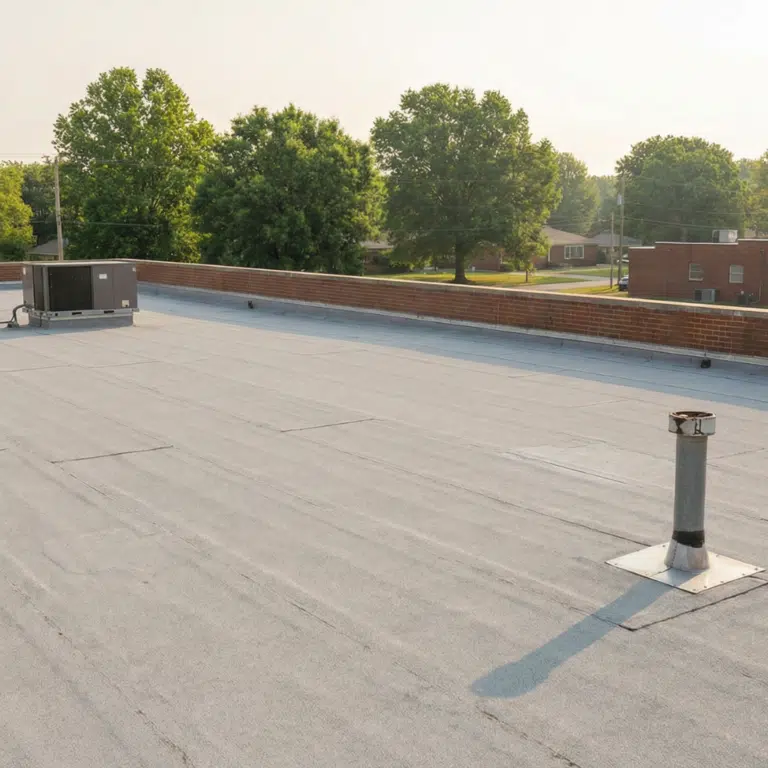
The type of roof on a commercial building depends largely on the structure’s slope and when it was built. Low-slope and nearly flat roofs, which cover most retail, warehouse, and office buildings in the area, typically use single-ply membrane systems. Pitched commercial roofs on churches, older commercial buildings, and some institutional structures use asphalt shingles or metal.
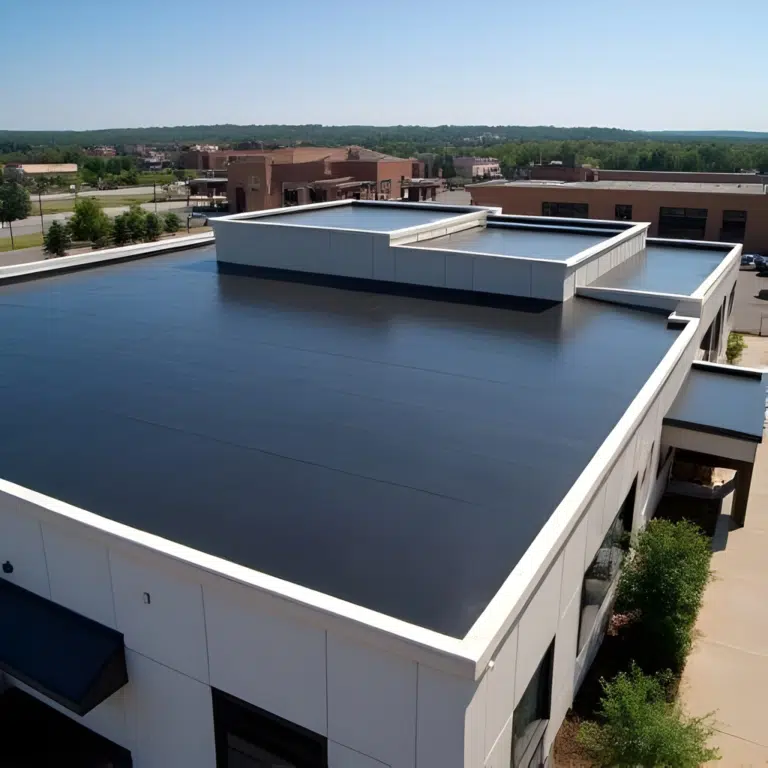
TPO and EPDM single-ply membranes have become the standard installation for low-slope commercial roofs because of their balance of performance, relative ease of installation, and longevity compared to older built-up systems. Many commercial buildings in Springfield, Strafford, and Rogersville still have built-up or modified bitumen roofs from earlier decades that are approaching or past their expected service lives.
Teague works with TPO, EPDM, asphalt shingles, and metal on commercial applications. For older built-up or modified bitumen systems, we evaluate the current condition and can recommend transition or overlay options based on what the inspection finds. Our roof replacement team handles both low-slope commercial tear-offs and pitched commercial reroofing.
| System Type | Where You See It | Basic Description |
|---|---|---|
| TPO single-ply | Retail centers, warehouses, newer office buildings | Light-colored thermoplastic membrane with heat-welded seams |
| EPDM single-ply | Older commercial buildings, mixed-climate applications | Dark rubber membrane, adhered or mechanically fastened |
| Asphalt shingles | Pitched commercial roofs, churches, smaller retail buildings | Architectural or impact-rated products; familiar installation and repair process |
| Metal | Agricultural, industrial, and some commercial applications | Standing seam or panel systems; strong storm performance when properly installed |
TPO vs EPDM: A Simple Comparison for Property Owners
When replacing a low-slope commercial roof in Springfield, the conversation often comes down to TPO versus EPDM. Both are proven, widely installed systems with established track records. The right choice depends on the building’s specific conditions, climate priorities, and what the existing roof currently looks like.
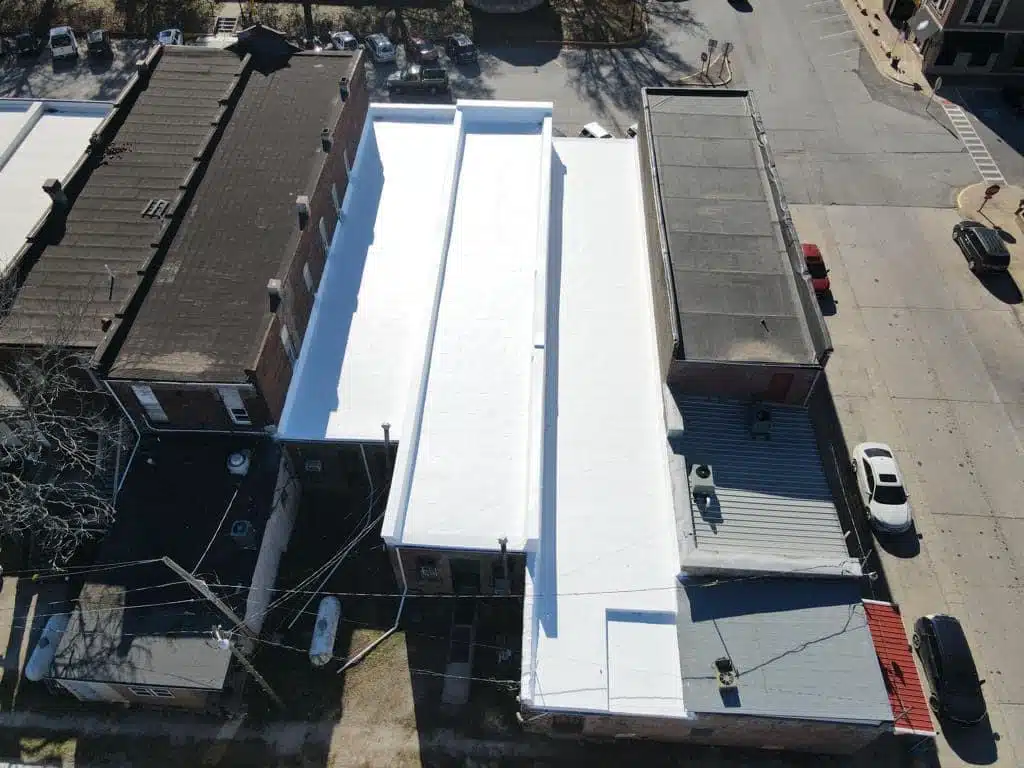
TPO is a white or light-colored thermoplastic membrane that reflects solar energy rather than absorbing it. This reflectivity can reduce heat gain in buildings with direct sun exposure and limited insulation buffer, which matters in SW Missouri’s hot summers. TPO seams are heat-welded in the field, creating a strong continuous bond when done correctly. It has become one of the most common commercial membrane installations nationally over the past two decades.
EPDM is a darker, rubber-based membrane with a longer commercial track record. It is well-regarded for flexibility in cold temperatures, which makes it resistant to cracking during SW Missouri’s winter freeze-thaw cycles. EPDM is available in adhered, mechanically attached, and ballasted configurations and has demonstrated multi-decade service life on many commercial installations. Its darker surface absorbs more heat than TPO, which may be a factor in summer cooling considerations.
Neither material is universally better. Teague evaluates both options against your specific building’s slope, sun exposure, existing condition, and operational priorities during any free roof inspection and replacement consultation.
| Factor | TPO | EPDM |
|---|---|---|
| Color and reflectivity | White or light gray; reflects solar energy | Black or dark gray; absorbs solar energy |
| Cold-weather flexibility | Good; handles SW Missouri temperature swings well | Excellent; strong cold-weather performance history |
| Typical use cases | Buildings prioritizing heat reduction; newer low-slope construction | Mixed-climate applications; buildings with significant cold-weather exposure |
| Maintenance notes | Seam integrity requires periodic inspection; reflective surface can show dirt | UV exposure affects surface over time; regular inspection recommended |
Key Details That Make or Break a Commercial Roof
IBHS commercial roofing best practices consistently point to three areas as the primary drivers of commercial roof failure: edge securement, flashing and penetration detail, and drainage function. These may not be the most visible parts of a roofing system, but they account for the majority of leaks and storm-related losses on commercial properties.
Roof edges and perimeters concentrate wind uplift forces during severe weather. When edge metal is undersized, improperly attached, or corroded, wind begins peeling the membrane from the edges inward. IBHS best practices specifically call out edge securement as a top priority for commercial storm resilience. Properly specified continuous cleat systems and correct gauge edge metal resist the uplift forces that SW Missouri storms regularly produce.
Flashing at walls, curbs, HVAC equipment bases, and penetrations accounts for a disproportionate share of non-storm leaks. Sealant ages and thermal movement stresses the bond at every joint. Rooftop equipment maintenance by other contractors sometimes disturbs flashings without triggering a repair request. Regular inspection of every penetration and curb is the most cost-effective leak prevention available.
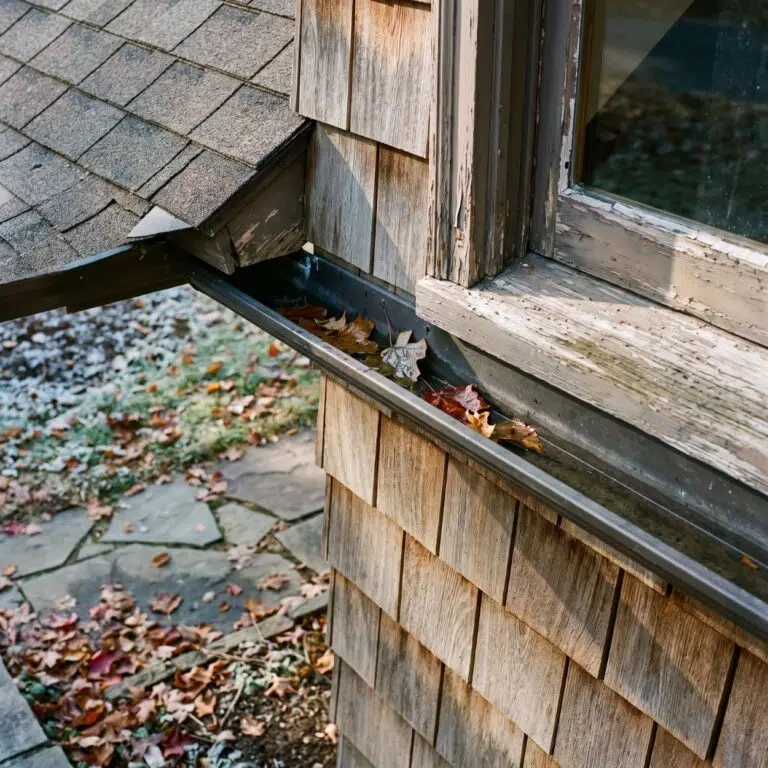
Drainage systems, including internal roof drains, scuppers, and gutters, must handle heavy spring rains without backing up. Ponding water that stays on the roof surface for more than 48 hours stresses seams, adds structural load, and finds its way through any small gap over time.
Our roof repair services and storm-damage repair teams address all three areas during both routine maintenance visits and post-storm assessments.
| Area | Common Problem | Impact |
|---|---|---|
| Roof edges | Wind lifting edge metal; membrane peeling from perimeter | Progressive storm damage; water entry along the entire building perimeter |
| Equipment curbs | Sealant failure; membrane separation at curb base | Leaks at predictable, preventable points |
| Drains and scuppers | Debris blockage causing ponding | Structural stress, seam failure, and accelerated membrane aging |
| Penetrations | Sealant shrinkage; flashing displacement by equipment contractors | Slow leaks that cause interior damage before they are noticed |
Commercial Roof Maintenance Plans: What Teague Checks and How Often
IBHS commercial roofing guidance and FORTIFIED Commercial standards both identify documented maintenance as a core element of commercial roof risk management. A roof that receives consistent professional attention performs better and lasts longer than one inspected only when something visibly fails.
Teague recommends a minimum of two professional maintenance visits per year for most commercial properties, timed in spring and fall. The spring visit follows winter ice and wind stress and precedes the active hail and severe thunderstorm season. The fall visit closes out summer heat and storm activity and confirms the roof is ready for winter conditions. Properties with extensive rooftop equipment, heavy nearby tree cover, or a history of drainage problems benefit from a third visit mid-summer.
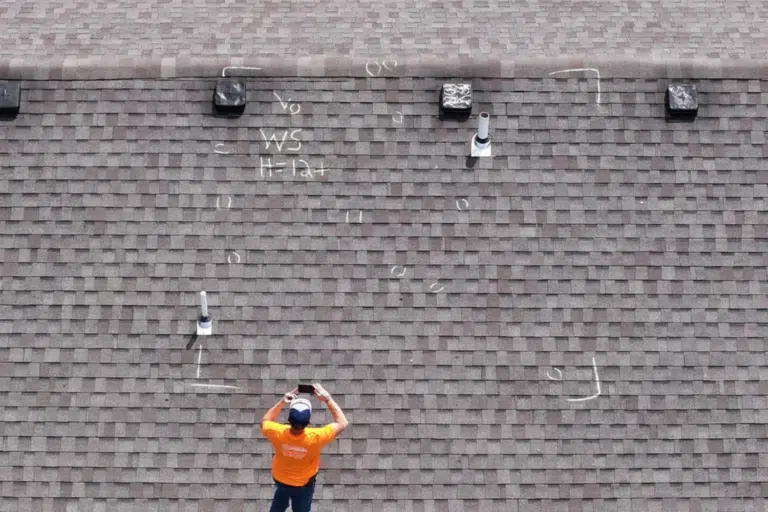
Each maintenance visit covers a visual inspection of the full membrane or shingle surface, flashing and edge metal review, drain and scupper clearing and flow confirmation, and documentation with photos. Minor repairs are addressed during the visit where possible. Larger work generates a written report that supports capital planning and insurance documentation.
Our full range of exterior services includes commercial maintenance programs that provide consistent documentation for capital planning, lease negotiations, and property transactions.
| Time | Task | Goal |
|---|---|---|
| Spring visit | Full surface, flashing, edge, and drain inspection; minor repairs as found | Catch winter damage; confirm drainage is ready for spring rains and hail season |
| Fall visit | Post-storm-season assessment; drain clearing before winter | Address summer and storm damage; winterize drainage system |
| After major storm | Emergency assessment and documentation | Document storm damage promptly for insurance; prevent further water entry |
Storm, Hail, and Wind: Protecting Your Commercial Roof Investment
IBHS research and FORTIFIED Commercial program guidance document consistently that wind, hail, and water entry at roof edges, seams, and penetrations drive the majority of business losses from severe weather events. For property owners in Springfield, Fair Grove, Marshfield, and across SW Missouri, this is an active rather than theoretical risk. The region sees repeated severe thunderstorm and hail activity throughout spring and summer, and commercial buildings in this corridor face those events on a regular schedule.
The IBHS RICOWI Roof Guide notes that prompt identification and repair of membrane damage, compromised flashings, and blocked drains is the most cost-effective risk reduction available to commercial property owners. Small punctures and minor flashing gaps addressed at routine maintenance visits do not become large interior damage events during the next storm.
Teague’s approach to commercial storm preparedness combines pre-season maintenance, post-storm inspections to document damage while it is fresh and clearly tied to the event, and emergency response for active leaks that require immediate attention. Our emergency roof repair line is available 24/7 for active leak situations. Our insurance claim assistance service covers the full documentation and adjuster process at no extra charge.
| Focus Area | What To Confirm | Who Handles It |
|---|---|---|
| Roof cover system | Membrane integrity; no punctures or open seams | Professional inspection before and after storm season |
| Edges and flashings | Edge metal secure; flashings intact at all penetrations and curbs | Professional inspection and repair as found |
| Drains and scuppers | Clear and flowing before spring rains and after storms | Maintenance visit cleaning; confirm after each major weather event |
| Documentation and history | Current written condition report and photo record | Teague maintenance visits and post-storm inspection reports |
Frequently Asked Questions: Commercial Roofing in Springfield, MO
What types of commercial roofs does Teague Roofing Plus work on?
Teague works with TPO and EPDM single-ply systems on low-slope and flat commercial roofs, asphalt shingles on pitched commercial roofs including churches and retail buildings, and standing seam and other metal systems on appropriate commercial applications. We also evaluate older built-up and modified bitumen systems and can recommend transition or overlay options based on current condition. If you are not certain what type of roof your building has, a free inspection identifies the system and gives you a current condition assessment.
How often should I have my commercial roof inspected in Springfield?
At minimum, twice per year, with spring and fall as the standard timing. The spring visit catches winter damage and confirms drainage is clear before heavy spring rains arrive. The fall visit closes out storm season and prepares the roof for winter. Properties with extensive rooftop equipment, known drainage issues, or a history of leaks benefit from more frequent checks. After any significant hail or high-wind event, a post-storm inspection should be scheduled promptly to document damage while it is clearly connected to that specific event.
How do I know if I need repair or full replacement?
The key factors are the extent and distribution of damage, the system’s age and remaining expected life, and whether moisture has reached the insulation or deck beneath the membrane. Localized punctures, failed sealant at a few penetrations, or loose edge metal on an otherwise sound membrane typically warrant repair. Widespread membrane degradation, multiple failed seam areas, trapped moisture in the insulation, or a system at or past its expected service life typically point toward replacement. Teague evaluates all of these factors during a commercial inspection and gives a clear, documented recommendation.
What is the difference between TPO and EPDM for my building?
TPO is a light-colored thermoplastic membrane that reflects solar heat, which can help with cooling loads in buildings with direct sun exposure. EPDM is a dark rubber membrane with strong cold-weather flexibility and a long track record in mixed climates. Both are proven systems. The choice depends on your building’s slope, sun exposure, existing deck condition, and operational priorities. Teague walks building owners through both options and recommends based on the specific property.
How can I prepare my commercial roof for hail and wind season?
Schedule a professional inspection in early spring before the active severe weather season begins. Confirm that edge metal is secure, flashings are intact, drains are clear, and the membrane surface has no existing vulnerabilities that a storm would amplify. Clear any debris from roof surfaces and drain areas. After any significant event, schedule a post-storm inspection promptly so damage is documented while it is clearly tied to the specific storm rather than a general history of deferred maintenance.
Can Teague work around my business hours to minimize disruption?
Yes, where scheduling allows. Teague works with building owners and managers to plan commercial projects around operating hours, tenant schedules, and inventory considerations. Inspections, drain clearing, and minor repairs can often be completed during off-hours or weekends. Full replacement projects require more continuous roof access but can typically be sequenced by section to limit the affected area at any one time. This scheduling conversation happens before any work begins, not after the crew arrives.
Do you help document roof condition for insurance and capital planning?
Yes. Every Teague commercial inspection includes a written report with photographs documenting current condition, any issues identified, and recommended next steps. This documentation supports insurance claims by establishing the roof’s condition before and after covered events. It also gives facility managers and owners the records needed for capital planning cycles, lease negotiations, and property transactions. Post-storm inspection reports are particularly useful for tying documented damage to specific events, which supports a clean and prompt claims process.
Key Takeaways for Commercial Property Owners in Springfield
- The commercial roof is your building’s primary weather barrier. When it fails, the consequences reach far beyond the repair cost.
- Most commercial roof failures start at edges, flashings, and drains. These deserve the most attention in both routine maintenance and post-storm assessments.
- TPO and EPDM are both proven systems. The right choice depends on your building’s specific conditions, not a default preference for one material over the other.
- Regular maintenance extends roof life and reduces emergency costs. A twice-yearly inspection schedule consistently outperforms reactive-only maintenance in both total cost and property protection.
- Storm documentation matters. Post-storm inspections that are dated and photographed create clean insurance claims. Waiting weeks to inspect makes the connection to a specific covered event harder to establish.
- Emergency response is available 24/7. Active leaks that cannot wait for a scheduled visit get same-night attention from Teague’s emergency team.
Need a Commercial Roof Inspection or Plan in Springfield?
If your building has recurring leaks, an aging roof that has not been formally assessed, or a post-storm situation that needs documentation and repair authorization, a free commercial inspection from Teague Roofing Plus gives you a clear, documented starting point with no obligation attached. We cover the full roof, flashings, drainage, and accessible attic or ceiling areas in a single visit and give you a straight assessment of where the roof stands.
Teague has protected commercial properties across Springfield, Nixa, Ozark, Republic, Rogersville, and every community in SW Missouri since 1971. Our commercial team understands the specific maintenance needs of retail centers, warehouses, churches, office buildings, and light industrial properties in this region. Josh and the team will inspect, document with photos, and outline a clear plan for maintenance, repairs, or replacement that fits the building and works around operations.
Call 417-883-7663 or contact us online to schedule your commercial roof inspection. Learn more about us and our history in Southwest Missouri before you call.
Teague Roofing Plus | Roofing, Siding, Windows, Gutters, and More. Serving Southwest Missouri Since 1971.