
Filing the claim is just the beginning. What comes after is where most homeowners feel lost: when the adjuster calls, what they actually do during the inspection, how the money works, and what to do when the outcome falls short of what the damage actually costs. This is the post-filing walkthrough. If you haven’t filed yet, start with our companion post on how to file a roof insurance claim in Springfield. This post picks up from the moment after the claim is submitted.
TLDR: After filing, you’ll get a claim number, then wait for an adjuster to be assigned and scheduled (longer after major storms like the historic Springfield hailstorm). Have a roofer present at the inspection. On an RCV policy, the payout comes in two checks: ACV first, then recoverable depreciation after repairs are complete. The second check is not automatic. You request it. If the outcome falls short, you have a clear path: supplemental claim, written appeal, or DCI complaint.
Right After You File: What To Expect Immediately
The hours and days right after filing are mostly about positioning for the inspection that’s coming. Here’s what to do and what to expect.
You’ll receive a claim number, usually within 24 hours of filing. This is the single most important piece of information you’ll have going forward. Put it in your phone contacts immediately under “Claim Number [carrier name].” Every future call to your insurer starts with this number. Leading with it gets you to the right person faster and creates a clear record of every interaction.
An adjuster will be assigned, but timing varies. After regional storm events like the historic event tracked by the National Weather Service Springfield office, adjuster assignment can take several days to over a week as insurers work through a surge of claims from across the region. The NOAA Missouri storm history confirms why this region produces volume spikes on a regular basis. Patience is part of the process during major events.
Continue mitigating damage while you wait. Tarps on active openings, interior protection with plastic sheeting and buckets, fans and a dehumidifier to dry out wet areas. Keep all receipts. Most Missouri policies reimburse reasonable mitigation expenses when the underlying damage is from a covered peril.
Do not make permanent repairs before the adjuster visit unless an emergency requires it. Permanent repairs before the adjuster sees the damage can complicate the claim, because the original damage is no longer visible to assess. Emergency stabilization (tarping, temporary patching) is fine and expected. Document every step.
Keep documenting any damage progression during the waiting period. Spreading ceiling stains, new water entry from the next rain, growing mold spots. Date-stamp each photo. The progression is evidence that damage is active and that mitigation is ongoing.
| What Happens | Typical Timeframe | What Homeowner Should Do |
|---|---|---|
| Claim confirmation and claim number issued | Within 24 hours of filing | Save the number, put it in phone contacts |
| Adjuster assigned to the claim | 1 to 7 days, longer after major regional events | Wait for contact, do not call repeatedly to push it |
| Adjuster schedules the inspection | 3 to 14 days after assignment, depends on volume | Confirm date, arrange for roofer to be present |
| Waiting period before inspection | Days to weeks during major events | Continue mitigation, document any damage progression |
| Emergency mitigation | Ongoing throughout wait | Save receipts, keep tarps and protection secure |
| Damage documentation continuation | Throughout the wait | Date-stamped photos of any new or progressing damage |
Pro Tip: Put your claim number in your phone contacts the moment you receive it. Leading every call to your insurer with your claim number gets you to the right person faster and creates a clear record of every interaction.
The Adjuster Visit: What To Expect and How To Prepare
This is the single most important appointment in the claim process. The outcome of the inspection drives the scope and the payout. Knowing what to expect changes how the appointment goes.
The adjuster works for the insurance company. Their job is to assess the damage accurately, but their employer is the insurer, not you. Most adjusters are professional and fair. The structural reality is still that they’re representing the carrier, and a roof inspection by an adjuster alone is a roof inspection on the carrier’s terms.
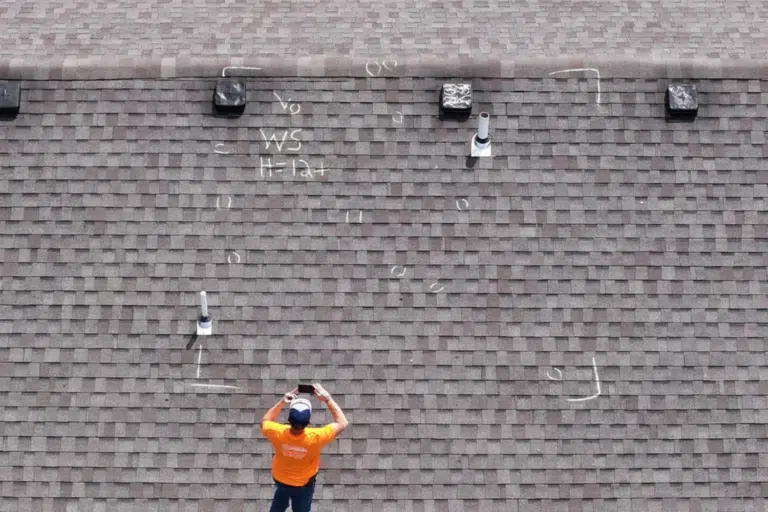
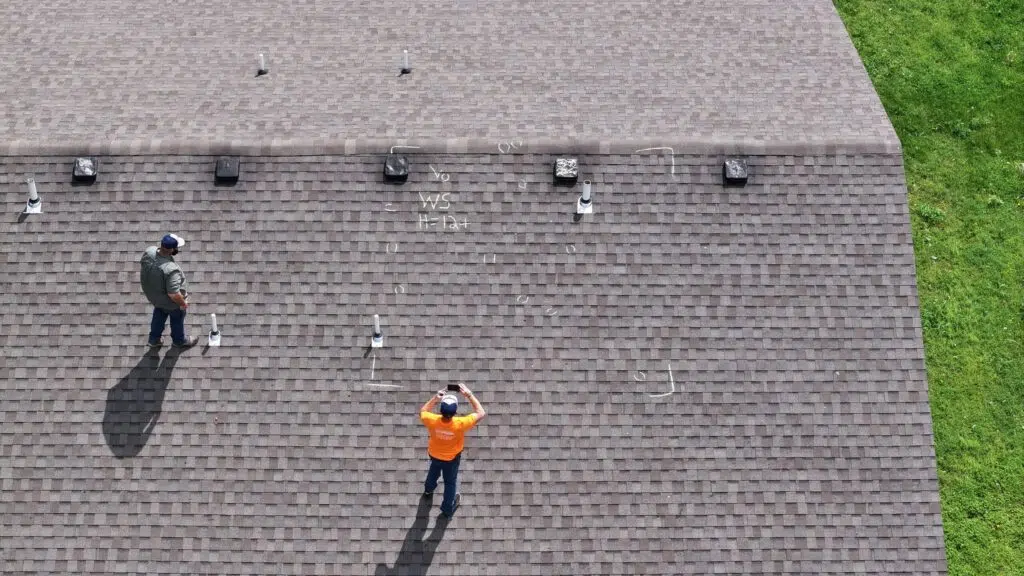
You have the right to have your own roofer present during the adjuster inspection. This is one of the highest-impact actions you can take as a homeowner. A roofer who has already inspected and documented the damage can walk the adjuster through each area, point out items that are easy to miss, and ensure the scope captures everything. Teague meets adjusters on site at no additional charge as part of our insurance claim assistance. The National Roofing Contractors Association maintains professional inspection standards that support documented, contractor-accompanied adjuster visits.
What to bring to the adjuster appointment: the organized photo documentation, the roofer’s written inspection report, the list of all damaged areas (roof, siding, gutters, windows, AC condenser fins, anything storm-related), and the storm date with weather evidence. Our what insurance adjusters look for on your roof post covers the specific items adjusters check, so your documentation can be matched to their checklist.
Walk the adjuster through every area of documented damage. Do not wait inside while the adjuster inspects alone. After the inspection, ask: what is the estimated scope, when will the written report be ready, and is there anything you weren’t able to assess?
After major regional events like the Springfield hailstorm, adjusters handling high claim volumes may spend less time on each property than normal. Having a roofer present and a written report ready directly addresses this. The roofer’s report becomes a documented baseline the adjuster has to engage with, rather than the adjuster defining the scope alone in a 30-minute visit.
| Item to Prepare | Why It Matters | Who Provides It |
|---|---|---|
| Organized photo documentation | Establishes the damage scope visually | You |
| Roofer’s written inspection report | Independent documented scope the adjuster must address | Your roofer (free with our inspection) |
| List of all damaged areas including non-roof items | Ensures siding, gutters, windows, AC fins are included in the claim | You, with roofer’s help |
| Storm date and weather evidence | Ties damage to a specific verifiable event | You (NWS screenshots, news alerts, radar) |
| Claim number and adjuster contact info | Anchors every conversation in the right file | You (from insurer) |
| Roofer present at the inspection | Walks adjuster through each area, catches missed items | Your roofer (we attend at no extra charge) |
Pro Tip: Never let an adjuster inspect the roof alone while you wait inside. Walk every area with them. The difference in claim outcome between an accompanied and unaccompanied adjuster visit can be significant.
Understanding the Payout: How the Money Actually Works
This is where most homeowners are surprised. The check that arrives is often smaller than expected, and the surprise is built into how RCV policies work.
RCV (Replacement Cost Value) policies pay in two stages.
Stage 1: The insurer releases the ACV amount (replacement cost minus depreciation, minus deductible) when the claim is approved. This is the first check. It is not the full settlement. It is the first payment.
Stage 2: After repairs are completed and documented, you submit proof of completion (contractor’s final invoice, photos of finished work) and the insurer releases the held-back depreciation, called recoverable depreciation. This is the second check. It is not automatic. Many homeowners cash the first check, assume the claim is settled, and never request the second payment. That is money you are owed that simply gets left with the insurer. The full breakdown is in our ACV vs RCV: what your insurance actually covers post.
ACV (Actual Cash Value) policies pay only the depreciated value in one check. There is no second payment. The first check is the entire settlement. On older roofs, this can be significantly less than replacement cost. If your policy is ACV-only and the payout falls short, options exist (supplemental claim, depreciation appeal, financing the gap).
If a mortgage lender is listed on the insurance check: you cannot simply cash it. The lender must endorse the check. Some lenders require the funds be placed in an escrow account and released as repair milestones are completed. Contact your mortgage servicer the same day the check arrives to understand their specific process. This is standard, not a problem, but it adds time.
Supplemental claims: if the roofer finds additional damage during repairs that wasn’t in the original adjuster’s scope, a supplemental claim can be filed with the roofer’s documentation. This is a legitimate, well-established path, not a workaround. After major hail events, supplemental claims are common because adjusters working through high volume miss items on the first inspection.
| Check Type | When It Arrives | What It Covers | What To Do With It |
|---|---|---|---|
| ACV first check (RCV policy) | After claim approval, typically 2 to 4 weeks after inspection | Replacement cost minus depreciation, minus deductible | Cash and use to fund repairs; do not assume this is the full settlement |
| RCV second check (recoverable depreciation) | After repairs are completed and documented | Held-back depreciation amount, bringing total to full RCV minus deductible | Submit proof of completion to request release; not automatic |
| ACV-only policy payment | After claim approval, single payment | Depreciated value of the roof only, no second check | Cash and use for repairs; consider supplemental or appeal if shortfall |
| Supplemental claim payment | After supplemental documentation is reviewed | Damage missed in original scope, paid as additional claim | Submit roofer’s supplemental documentation through carrier |
Pro Tip: When you receive the first check on an RCV policy, confirm with your insurer exactly what the depreciation recovery process requires: what documentation, what timeline, what format. The second check does not come automatically. You have to request it after repairs are complete.
What To Do If You Disagree With the Outcome
When the outcome falls short, you have a clear path forward. The key is to act on it rather than accept a low outcome as final.
If the adjuster’s scope missed damage the roofer documented: request a supplemental review in writing, with the roofer’s report as supporting documentation. Many initial scopes are expanded through this process. The supplemental request should be sent by email or certified mail so there’s a delivery record.
If the claim is denied: request the written denial with specific reasons. Missouri law requires insurers to provide specific written reasons for denying a claim. Vague or generic denials are themselves a red flag. The denial letter is the foundation of the appeal, and the specific reason given drives the appeal strategy.
File a formal written appeal with complete documentation. Roofer’s report, photos, weather evidence, mitigation receipts, and the denial letter. Send by certified mail with return receipt. Keep delivery confirmation.
File a complaint with the Missouri Department of Commerce and Insurance if the insurer is unreasonably delaying, shifting rationales, or denying without cause. The Missouri Department of Commerce and Insurance (consumer helpline 800-726-7390) investigates patterns of unreasonable conduct and can refer issues to its Market Conduct division.
Missouri has a Vexatious Refusal to Pay statute that provides additional protection. If an insurer denies a valid claim without reasonable cause, Missouri law allows the policyholder to recover the claim value plus statutory penalties and reasonable attorneys’ fees. This applies to unreasonable refusals, not legitimate coverage disputes. Consult a Missouri-licensed insurance attorney about whether your specific situation qualifies. This post is not legal advice.
Document every communication. Date, name of the person you spoke with, what was said, any new rationales that differ from the original. A shifting denial reason across multiple conversations is meaningful evidence if you need to escalate.
For the broader storm damage repair timeline and what to expect from inspection through completed work, see our storm damage roof repair in Missouri: what to expect guide.
| Situation | Action | Who Handles It | Notes |
|---|---|---|---|
| Adjuster missed damage | Submit supplemental request with roofer’s documentation | You, with roofer support | Most common scenario after major storms |
| Payout lower than expected | Submit written appeal with full documentation | You, with roofer support | Compare to written estimate, identify line items |
| Claim denied | Request specific written denial reason, then file appeal | You | Missouri law requires specific written reasons |
| Insurer unreasonably delaying | File complaint with Missouri DCI | You | DCI investigates patterns of unreasonable conduct |
| Second check not released after repair completion | Submit completion documentation, follow up in writing | You | Common cause of “missing” RCV money |
| Suspected Vexatious Refusal | Consult Missouri-licensed insurance attorney | Licensed attorney | Statute requires unreasonable refusal, not just denial |
Pro Tip: Document every communication with the insurance company: the date, the name of who you spoke with, and what was said. If the denial reason changes across conversations, write down each version with the date. That record matters if you need to escalate.
Frequently Asked Questions
Q1: How long does it take to get paid after filing a hail claim in Springfield?
Timing varies. After a regional storm event, expect the adjuster assignment within 1 to 7 days, inspection scheduling within 3 to 14 days after that, and the first check typically 2 to 4 weeks after the inspection if approved. Major events like the Springfield hailstorm can extend each stage. The second check (recoverable depreciation on RCV policies) arrives after repairs are completed and you submit proof, which is on your timeline.
Q2: What does an insurance adjuster do when they inspect my roof?
The adjuster walks the roof, photographs damage, measures affected areas, and assesses whether the damage matches the reported storm event. They look for specific markers (granule loss, impact patterns, exposed asphalt mat, denting on metal components) and write a scope of repair based on what they find. The scope drives the payout. An adjuster inspection typically takes 30 to 60 minutes.
Q3: Can I have my roofer present at the adjuster inspection?
Yes, and you should. Your roofer can walk the adjuster through documented damage, point out items easy to miss, and ensure the scope captures everything. This is one of the highest-impact actions you can take. We meet adjusters on site at no extra charge for clients in Springfield, Ozark, Nixa, Forsyth, Branson, and across SW Missouri.
Q4: What is the difference between the first and second insurance check?
On an RCV (Replacement Cost Value) policy, the first check pays the ACV amount (replacement cost minus depreciation, minus deductible) and arrives after claim approval. The second check releases the recoverable depreciation after repairs are completed and documented. On an ACV-only policy, there is no second check. The first check is the entire settlement.
Q5: What if the adjuster’s estimate is lower than my roofer’s?
This is common, especially after major storms when adjusters are under volume pressure. Submit a supplemental review request in writing with your roofer’s detailed scope as supporting documentation. Many initial estimates are expanded through this process. If the supplemental is denied, you have additional options including a formal appeal and DCI complaint.
Q6: Can I choose my own roofer after insurance approves the claim?
Yes. Insurance does not assign or require specific contractors. You select the roofer who will do the work. Some carriers have “preferred contractor” lists, but you are not required to use them. Choose a local contractor you can verify, who handles the warranty support, and who will be reachable for years after the install.
Q7: What is a supplemental insurance claim?
A supplemental claim adds damage to an already-approved claim when additional damage is found during the repair work. If the roofing crew uncovers damage that wasn’t visible to the original adjuster (often on rear slopes, under flashing, in attic decking), the contractor documents it and submits a supplement to the carrier. This is standard practice, especially after major regional storm events.
Q8: What do I do if my mortgage company is on my insurance check?
Contact your mortgage servicer the same day the check arrives. The lender must endorse the check before it can be cashed. Some lenders require the funds be placed in an escrow account and released as repair milestones are completed. This is standard practice and not a problem, but it adds time. Plan around it.
Q9: What does Missouri law say about insurers that delay or underpay claims?
Missouri’s Vexatious Refusal to Pay statute allows policyholders to recover the claim value plus statutory penalties and reasonable attorneys’ fees when an insurer refuses to pay a valid claim without reasonable cause. It applies to unreasonable refusals, not legitimate coverage disputes. The Missouri DCI also accepts consumer complaints about unfair claim practices. Consult a Missouri-licensed insurance attorney for guidance specific to your situation.
Q10: Can I appeal if the adjuster’s scope seems too low?
Yes. Submit a written supplemental review request to the insurance company, with your roofer’s detailed inspection report as supporting documentation. If that doesn’t resolve it, file a formal written appeal with full documentation, sent by certified mail. If the insurer remains unresponsive or unreasonable, file a complaint with the Missouri DCI. Most low-scope situations are resolved at the supplemental stage when the roofer’s documentation is thorough.
If you’ve filed a claim and want a roofer at the adjuster inspection, or if you need a written inspection report before the adjuster arrives, Teague Roofing Plus is ready to help. We serve Springfield and all of SW Missouri, including Ozark, Nixa, Forsyth, and Branson. We meet adjusters on site at no additional charge and handle the documentation from start to finish. Call 417-883-7663, contact us, or schedule your free roof inspection to get started.
This post is for general information only and is not legal advice. For questions specific to your claim, policy, or Missouri’s Vexatious Refusal statute, consult your insurance carrier or a Missouri-licensed attorney.
Teague Roofing Plus | Roofing, Siding, Windows, Gutters, and More. Serving Southwest Missouri Since 1971.