
After a hailstorm, most homeowners walk the yard, look up at the roof, and see nothing obviously wrong. That is the problem. Hail damage on asphalt shingles is often invisible from the ground, and the insurance window can close before a hidden leak ever shows up. This guide shows you exactly what hail damage looks like on shingles, how to tell it apart from normal wear, and what to do next.
TLDR: Hail damage on shingles shows up as scattered dark spots where granules are knocked off and as soft bruises in the shingle mat that you cannot see from the ground. Normal wear looks even and edge focused, while hail looks random and spread across every slope. The only reliable way to know is an on roof inspection, ideally before you call your insurer.
You heard it come down last night. Maybe a neighbor mentioned the storm, or you found a few granules in the driveway and a dent on the downspout. Now you are standing in the yard trying to figure out if something is actually wrong, or if you are imagining it.
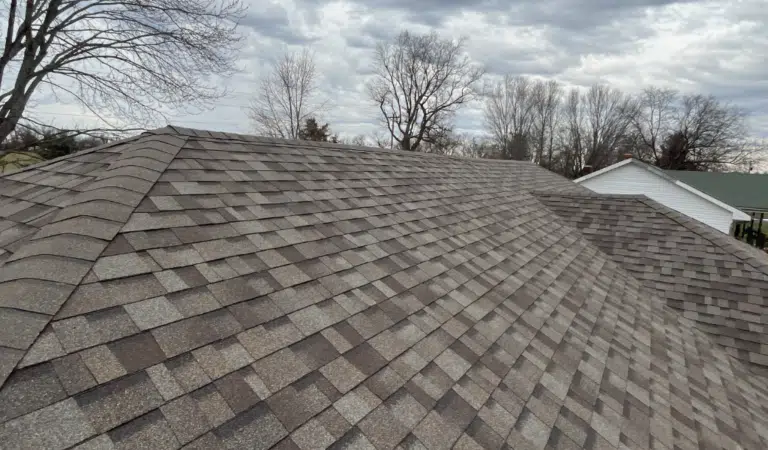
Here is the honest answer. From the ground, you usually cannot tell. A roof can look completely normal and still have damage that turns into a leak months later, long after most Missouri claim deadlines have passed. That gap between “looks fine” and “is fine” is where Springfield homeowners get hurt.
I am Josh Tessmer, and I own Teague Roofing Plus. We have been roofing Springfield and Southwest Missouri since 1971, our crews are local, and we are an Owens Corning Platinum Preferred Contractor with a BBB A+ rating that goes back to 2019. Over those decades our inspectors have walked thousands of storm damaged roofs across this region, so the rest of this guide is built on what they actually find up there, not on generic roofing talk. If a storm hit your home, a fast inspection is the only way to know for sure, and we handle storm damage repair across Southwest Missouri when the damage turns out to be real.
What Does Hail Actually Do to an Asphalt Shingle?
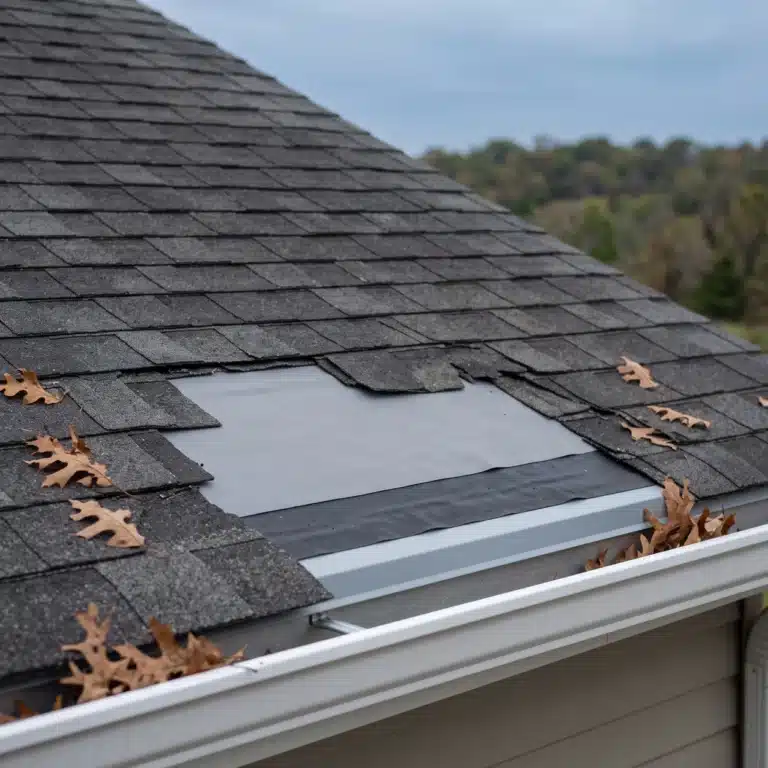
Hail damages a shingle in two ways at once: it knocks the protective granules off the surface, and it bruises the soft mat underneath. The granule loss you might eventually spot. The bruising you almost never see from the ground, and it is the part that shortens the life of your roof.
Think of an asphalt shingle as three layers. On top sit the granules, the gritty mineral coating that blocks the sun and protects the asphalt. Below that is the asphalt mat, the waterproofing layer. At the base is a fiberglass backing that holds everything together. The Asphalt Roofing Manufacturers Association publishes the industry guidance on how these shingle layers are built and maintained.
When a piece of hail hits, it drives the granules into the mat or scatters them off entirely. That exposes the black asphalt to UV rays, which then dries out and cracks over time. A hard enough hit also bruises the mat, leaving a soft spot you can feel by pressing on it but cannot see by looking at it.
This is why a roof can look fine and still be damaged. The bruise does not leak today. It leaks next spring, after a few freeze and thaw cycles open the weak spot up. By then, the storm that caused it is a distant memory to your insurance company.
Pro tip: The only reliable way to assess hail damage is an on roof inspection. Ground level viewing misses most real damage, because the bruising that matters is something you have to feel, not just see.
The 5 Signs of Hail Damage on Asphalt Shingles
The five clearest signs of hail damage on asphalt shingles are random impact marks, dark spots where granules are missing, soft bruises in the mat, cracked shingles from large hail, and a consistent pattern across every slope. Foot traffic and aging do not produce all five at once. Hail does.
Here is what each one looks like.
Sign 1 is random impact marks. Hail strikes scatter across the face of the shingle with no pattern, unlike the straight wear lines you see along edges.
Sign 2 is dark spots. Where granules are knocked away, the black asphalt mat shows through as small, irregular bruises or dimples.
Sign 3 is bruising. Press a gloved hand across a struck shingle and a hail bruise feels soft, almost spongy, the way a bruise on an apple feels. This sign is invisible from the ground.
Sign 4 is cracking. Large hail, roughly two inches and up, can fracture or split a shingle outright, especially on older roofs that have already lost flexibility.
Sign 5 is a consistent pattern. Real hail damage shows up on multiple slopes, including the ones facing the storm. Damage on only one walking path usually means foot traffic, not weather.
The table below sorts hail damage from the normal wear every roof shows as it ages. Use it as a first gut check before anyone climbs up.
| Characteristic | Hail Damage | Normal Wear | Notes |
|---|---|---|---|
| Pattern | Random, scattered across the field | Even, along edges and ridges | Hail ignores tidy lines |
| Granule loss | Sudden, in distinct spots | Gradual, spread thin over years | Check gutters for fresh granules |
| Texture | Soft bruises you can feel | Brittle, uniform surface | Bruising is the hidden tell |
| Location | Many slopes, storm facing sides | High traffic and sun baked areas | One slope only points away from hail |
| Timing | Tied to a specific storm date | Slow, age related | Date your storm right away |
If the signs in the hail column match what you are seeing, treat it as damage until a professional confirms otherwise. Guessing in the homeowner’s favor is how missed claims happen.
Tip: Take wide and close photos the day you suspect damage. Time stamped images help tie the damage to the storm date, which is exactly what an adjuster needs.
How Does Hail Size Affect Roof Damage in Southwest Missouri?
Larger hail does more damage, but the threshold is lower than most people think, and older shingles fail sooner. Small hail mostly dents soft metal, mid sized hail strips granules, and hail around two inches and up starts cracking shingles outright. Southwest Missouri sees enough large hail, especially in spring, to take any sizable storm seriously.
Hail under one inch rarely harms modern shingles, though it can ding gutters and vents. Hail in the one to one and a half inch range knocks granules loose, especially on roofs that are already worn. Above an inch and a half, bruising and heavier granule loss become common. Once hail reaches two inches and beyond, cracking and visible fractures show up.
Southwest Missouri sits in an active part of the country for severe weather. Hail is common across Greene County, spring is the peak season, with April and May the busiest months, and storms here have produced stones up to about three inches. The National Weather Service office in Springfield and the NOAA Storm Events Database both track local hail history, so you can look up what actually fell on your address. Hail is not the only threat during storm season, and our guide to wind damage to your roof in Southwest Missouri covers the rest.
| Hail Size | What You May See on Shingles | Hidden Damage Risk | Insurance Claim Likely? | Recommended Action |
|---|---|---|---|---|
| Under 1 inch | Little to none | Low | Usually no | Check soft metals, document anyway |
| 1 to 1.5 inch | Granule loss on older roofs | Moderate | Sometimes | Schedule an inspection |
| 1.5 to 2 inch | Bruising and granule loss | High | Often | Inspect before calling insurer |
| 2 inch and up | Cracks and visible impact marks | Very high | Usually yes | Inspect and document right away |
Use the size estimate as a starting point, not a verdict. An eight year old roof can sustain claimable damage from hail that would barely mark a brand new one.
Pro tip: Look up your storm in the NOAA Storm Events Database within a day or two and note the date and reported hail size. Having that on hand before you call your insurer keeps the conversation grounded in facts.
Important: Class 4 is the highest impact rating an asphalt shingle can earn, tested under the UL 2218 standard, and the Insurance Institute for Business and Home Safety studies how impact rated roofing holds up to hail. If you end up replacing your roof, ask our team whether impact rated shingles make sense for your home and your exposure.
Hail Damage vs. Granule Loss: How to Tell Them Apart
This is the most searched question on the topic, so here is the direct answer: normal granule loss is even and gathers at edges, ridges, and walking paths, while hail granule loss is random, scattered across the open field of the shingle, and shows up on every slope. The pattern, not the granules alone, tells the story.
Every asphalt roof sheds granules slowly as it ages. You see it as a thin, even thinning of the surface and a little grit in the gutters each year. That is expected and not a claim.
Hail granule loss looks different. It appears as distinct spots scattered across the shingle face, often with the soft bruise underneath, and it turns up on slopes that face the storm rather than just the sunny side. The mat shows through in irregular dimples, not in a smooth, faded band.
Age and color help too. Old granule loss fades evenly and matches the slow wear of the whole roof. Fresh hail loss exposes darker, cleaner asphalt and lines up in time with a specific storm.
| Cause | Location on Shingle | Pattern | Mat Exposure | Age Related? | Action Needed |
|---|---|---|---|---|---|
| Normal aging | Edges, ridges, sun side | Even, gradual | Smooth, faded | Yes | Routine maintenance |
| Foot traffic | Walking paths only | Linear, localized | Scuffed | No | Monitor |
| Hail impact | Across the open field | Random, scattered | Sharp, irregular dimples | No | Inspection and possible claim |
If the loss is random and spread across slopes, lean toward hail and get it checked. If it is even and edge focused, it is probably just age.
Where Else Should You Look for Hail Damage?
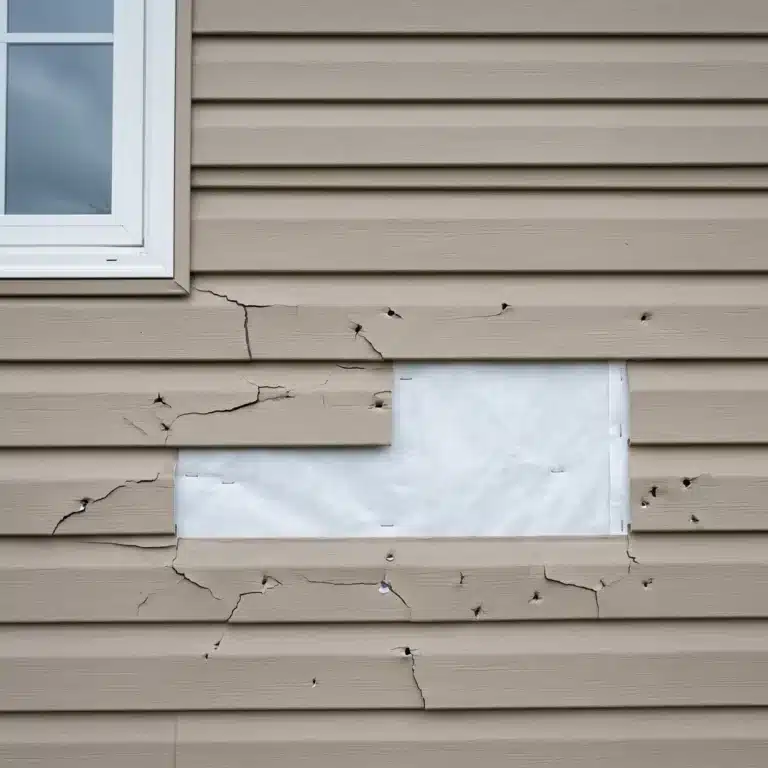
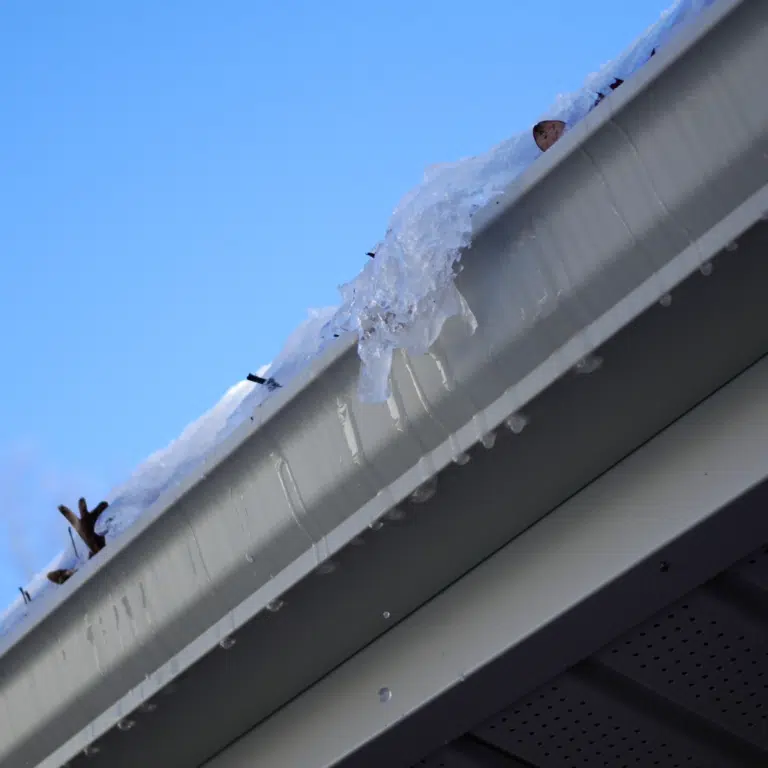
Look at the soft metal around your home, because it is the most honest hail evidence you have: gutters, downspouts, window screens, air conditioner fins, garage doors, and even wood fence rails. If those surfaces are dented, your roof almost certainly took granule loss too. Adjusters lean on this evidence to confirm a storm actually hit your property.
Soft metals dent more easily than shingles, so they record hits that the roof hides. From the ground you can check a downspout for fresh dents, look for a pile of granules where the downspout drains, and scan the fascia, the board along your roofline where the gutters attach, for chips and dings.
The air conditioner condenser is one of the best tells in the yard. Its thin aluminum fins crush under hail that a shingle might shrug off, and the dents are easy to spot and photograph.
This matters because the soft metal evidence builds the case. When our inspectors document dented gutters, a battered AC unit, and impact marks on the roof together, the story of a single storm event becomes hard to dispute.
| Surface | What Hail Leaves Behind | Why It Matters | How to Check |
|---|---|---|---|
| Gutters and downspouts | Dents and dings | Confirms granule loss on roof | Run a hand along, look for fresh metal |
| AC condenser fins | Crushed, bent fins | Strong storm date evidence | Photograph all sides |
| Window screens | Tears and dimples | Shows impact direction | Inspect storm facing windows |
| Garage door panels | Round dents | Easy to date and photograph | Check at an angle in good light |
Pro tip: Photograph every dented downspout, AC unit, and gutter section before anyone cleans, straightens, or replaces them. Those images are your documentation, and once a surface is repaired the evidence is gone.
What Does a Professional Hail Damage Inspection Cover?
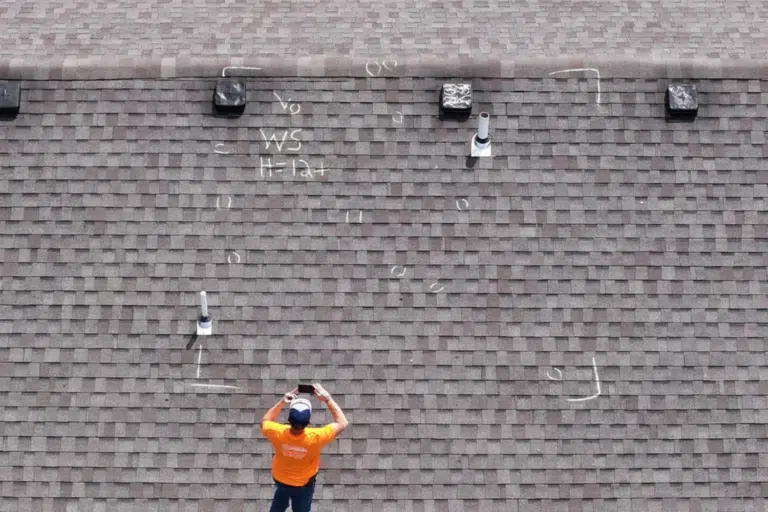
A professional hail inspection covers every slope of the roof, the soft metals, and the attic, with photo documentation of each finding. It is a full, slope by slope assessment, not a quick spot check from a ladder. At Teague Roofing Plus, our inspectors do this work, and the visit is free with no obligation.
Our team walks the whole roof and checks each slope for impact marks, bruising, and granule loss, since damage rarely lands evenly. They examine the gutters, downspouts, vents, and flashing, the metal pieces that seal roof edges and openings so water cannot get in. They also look inside the attic for daylight or moisture, which can reveal a problem the surface hides.
You receive a written inspection report, photo documentation of what we found, and support for the adjuster meeting if you decide to file. We will meet your adjuster on site, at no charge, as part of that free inspection. Our hail damage roof inspection in Springfield page walks through the on roof process in more detail.
The table compares a real inspection with the ground level check a homeowner can safely do alone.
| Step | Professional Inspection | DIY Ground Check |
|---|---|---|
| Coverage | Every slope, walked and felt | What you can see from the ground |
| Hidden bruising | Found by touch | Missed entirely |
| Attic and interior | Checked for moisture and daylight | Not assessed |
| Documentation | Written report and photos | Phone photos only |
| Adjuster support | On site meeting included | None |
A ground check is useful for deciding whether to call. It is not a substitute for the on roof inspection an insurance claim needs.
Important: Have the inspection done before you call your insurer. You want documentation in hand before the adjuster arrives, not after, so nothing on your roof gets overlooked.
How to Use Hail Documentation to File an Insurance Claim
Use your documentation in a clear order: inspect first, gather the photos and the written report, then contact your insurer, and have your contractor meet the adjuster on site. Leading with documentation, instead of a phone call, keeps the focus on the actual damage. We will not rewalk the full claims process here, because our other guides cover it in depth.
Start with the free inspection so you know what you are dealing with. The Insurance Information Institute and the Missouri Department of Commerce and Insurance both offer consumer guidance on storm damage claims. Next, contact your insurance company with your storm date, hail size, and photos ready. When the adjuster schedules a visit, our team meets them on the roof, shows the documented damage, and makes sure the soft metal evidence is part of the record.
For the steps before and after that, lean on our existing guides. Our walkthrough on what to do in the first 24 hours after a storm covers your first moves, and our guide to documenting roof damage for an insurance claim shows exactly what to photograph. If you are unsure how a payout is calculated, our explainer on ACV vs. RCV in Missouri roof claims breaks it down, and our piece on what insurance adjusters look for on your roof tells you how they judge a claim.
Teague Roofing Plus handles adjuster meetings at no charge as part of the free inspection, and we handle the permit on every job once work is approved.
| Step | What Happens | Who Leads |
|---|---|---|
| 1. Inspection | On roof assessment and photos | Our team |
| 2. Documentation | Written report and image set | Our team |
| 3. Contact insurer | File with storm date and photos | You |
| 4. Adjuster meeting | Damage reviewed on site | Our team and the adjuster |
| 5. Repair or replace | Approved scope completed | Our crew |
The homeowners who do best are the ones who document first and file second. The order is simple, and it protects you.
Illustrative Scenarios: Hail Damage Across Southwest Missouri
The three scenarios below show how hail damage plays out on different roofs and properties around the region. Each one is an illustrative example, not a specific customer, and none includes pricing. Whether a damaged roof needs a targeted repair or a full replacement comes down to the details, and our guide to roof repair vs. replacement after storm damage walks through that decision.
Illustrative scenario 1: A Republic homeowner rides out a two inch hail event. From the driveway the roof looks fine, but an on roof inspection finds scattered bruising and granule loss across three slopes on a set of older architectural shingles. Because the damage spans multiple slopes and the soft metals are dented, the documentation supports a full replacement.
Illustrative scenario 2: A Nixa homeowner has one inch hail fall on an eight year old roof. The inspection turns up moderate granule loss on the storm facing slopes but no cracking. The damage points to a targeted repair rather than a full replacement, and the photos make the case clear to the adjuster.
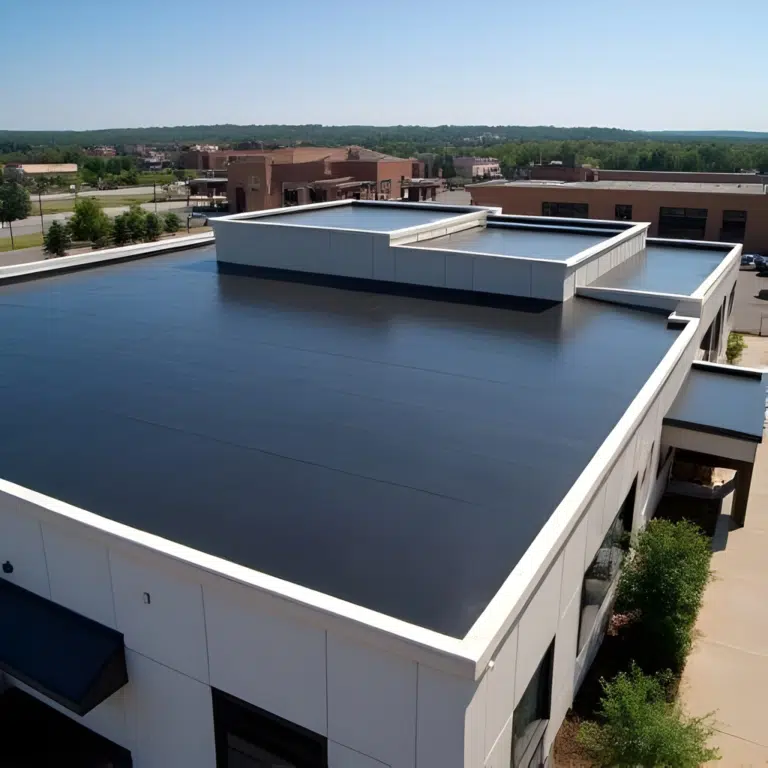
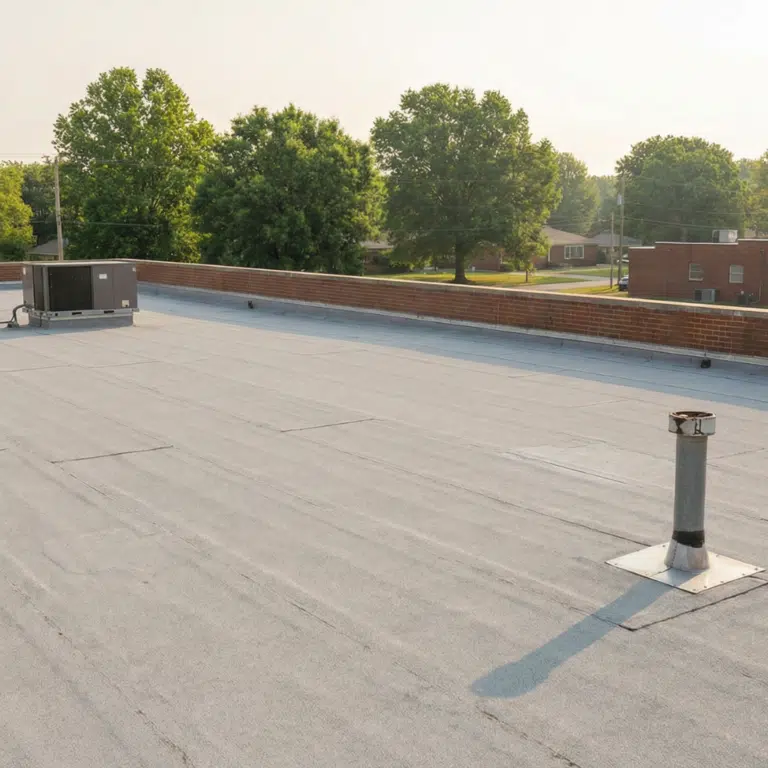
Illustrative scenario 3: A Springfield commercial property takes golf ball sized hail on a flat TPO membrane, the rubber like sheet used on many commercial roofs. The hits bruise the membrane and dent the metal coping along the edge. A documented inspection shows the functional damage, and the repair plan addresses both the membrane and the coping.
Across Strafford, Rogersville, Battlefield, Willard, and the rest of our service area, the lesson repeats. The roofs that looked worst were not always the ones with the worst damage, and the calm looking ones sometimes hid the real problems.
Frequently Asked Questions
What does hail damage look like on a roof from the ground? From the ground, hail damage is hard to confirm. You may spot dented gutters, dings on metal vents, and granules washed into the downspout, but the bruising that matters is invisible at that distance. A roof can look untouched and still be damaged. The safe move is an on roof inspection, which our team provides free.
How do I know if hail damaged my roof after a storm? Look for the five signs together: random impact marks, dark spots where granules are gone, soft bruises in the mat, cracked shingles, and a pattern across multiple slopes. Check soft metals like gutters and the AC unit for dents, since those confirm a hit. If several signs line up, treat it as damage. Get an inspection before you call your insurer.
What is the difference between hail damage and granule loss? Normal granule loss is even and collects at edges, ridges, and walking paths as the roof ages. Hail granule loss is random, scattered across the open field of the shingle, and shows up on every slope, often with a soft bruise underneath. Pattern and timing tell them apart. When the loss is scattered and tied to a storm, have it checked.
Does hail damage always mean I need a new roof? No. Light damage on a newer roof often calls for a repair, while widespread bruising and cracking across slopes points toward replacement. Roof age, damage extent, and how many slopes are hit all factor in. The only way to know which path fits is an inspection, and ours is free.
How long after a hailstorm can I file a roof insurance claim in Missouri? Most Missouri policies set a deadline for reporting storm damage, and it varies by carrier and policy. Filing late, or without documentation, is a common reason claims get denied. Do not wait for a leak to appear. Get documentation soon after the storm so you are inside the window.
Will my insurance cover hail damage in Springfield MO? Most Missouri homeowners policies cover sudden hail and wind damage, but coverage depends on your policy, your roof’s age, and how well the damage is documented. Carriers want proof the damage came from a specific storm. That is why soft metal evidence and dated photos matter so much. Our team documents everything and meets your adjuster on site.
What size hail causes roof damage? Hail around one inch can strip granules from older shingles, and hail of two inches and up can crack and fracture them. Below one inch, damage is usually limited to soft metals. Roof age changes the math, since worn shingles fail under smaller hail. If sizable hail fell, schedule an inspection rather than guessing.
How do I document hail damage for an insurance claim? Photograph the roof, the dented gutters and downspouts, the AC unit, and any cracked shingles, and note the storm date and reported hail size. Wide shots establish the property, close shots show the damage. Do this before any cleanup or repair, because repaired surfaces erase the evidence. Our team can show you exactly what to capture during a free inspection.
Can I inspect my own roof for hail damage? You can safely check from the ground for dented metals and granules, but climbing onto a wet or steep roof is dangerous and often misses the bruising that drives a claim. Leave the on roof work to trained inspectors with the right footing and experience. A ground check tells you whether to call. An inspection tells you what you actually have.
How much hail damage is needed to file a claim? There is no fixed number of hits. Insurers generally look for damage across multiple slopes that affects the roof’s function, not a single mark. A test square, a measured section of roof, is one way adjusters gauge whether damage is widespread. Our inspection report documents the extent clearly. From there, you can decide whether filing makes sense.
Schedule Your Free Hail Damage Inspection
You now know what hail damage looks like, how it hides, and how to tell it from ordinary wear. The next step is getting trained eyes on the roof while the storm is still fresh and your claim window is open.
Teague Roofing Plus has protected Springfield and Southwest Missouri roofs since 1971, with local crews, an Owens Corning Platinum Preferred Contractor designation, and a BBB A+ rating. Here is what you get when you call us after a storm.
- A free, no obligation on roof inspection across every slope
- Written documentation and photos you can hand to your insurer
- Adjuster meeting support on site, at no extra charge
- Permits handled on every approved job
- An honest assessment, with no pressure and no scare tactics
Call 417-883-7663 for a free roof inspection. You can also request your free roof inspection in Southwest Missouri online. If you already know you need help with a claim, start with our insurance claim assistance in Southwest Missouri. And when the damage is severe, our roof replacement team in Southwest Missouri can walk you through what comes next.
Teague Roofing Plus, Roofing, Siding, Windows, Gutters, and More. Serving Southwest Missouri Since 1971.