

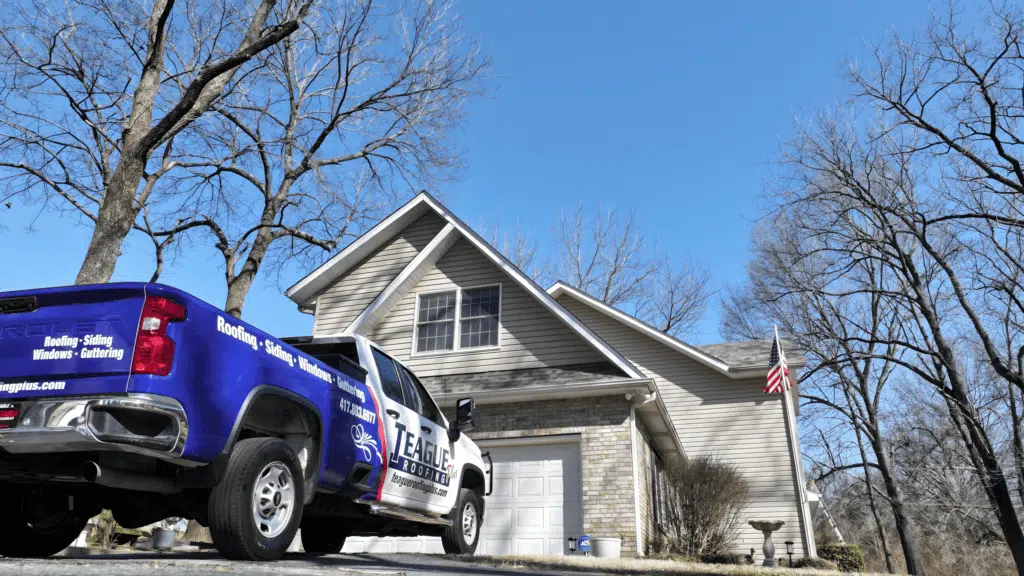
If you have a roofing question and are not sure where to get a straight answer, this is the page for you. Teague Roofing Plus has been working on roofs in Springfield and Southwest Missouri since 1971, and we hear the same questions come up time and again from homeowners in Springfield, Nixa, Ozark, Republic, and communities across the region. This guide collects the most common ones and answers them plainly, without jargon and without pressure.
TLDR: This page answers the roofing questions Springfield homeowners ask most, covering roof age and lifespan, repairs versus replacement, storm damage and insurance, materials and warranties, financing, and how to choose a trustworthy local roofer. Every answer is written for SW Missouri’s specific climate and storm environment. If you do not see your exact question here, a free inspection from Teague gives you a direct answer specific to your roof.
Roofing questions fall into a few consistent categories. Some homeowners want to know how old is too old. Others want to understand what a full replacement actually involves. Many want to know what to do after a storm and how insurance fits in. And nearly everyone wants to know they are working with someone honest who will not push them into more work than they need.
If you have been putting off a roof question because you were not sure who to ask, this page is a good starting point. Work through the section that matches your situation, and if you want a more specific answer about your own roof, a free inspection is the fastest path to clarity.
Quick Answers to the Biggest Roofing Questions in Springfield
This page collects the roofing questions Teague hears most from homeowners in Springfield and the surrounding area. The answers here are written for SW Missouri’s climate, where hail, high winds, summer heat, and winter freeze-thaw cycles all affect how roofs age and perform. If your question is not covered here, call us or schedule a free inspection and we will answer it directly.
The questions below fall into five main categories. Jump to the section that fits your situation best.
| Category | What It Covers |
|---|---|
| Roof age and condition | How long roofs last, signs of trouble, and when to act |
| Repairs and replacement | What each involves, when each makes sense, and what to expect |
| Storm damage and insurance | What damage looks like, how claims work, and how Teague helps |
| Money and timing | Inspections, financing, and urgent situations |
| Materials, ventilation, and warranties | What goes on your roof and what protects your investment |
Questions About Roof Age, Lifespan, and Condition
How long should a roof last in Springfield, MO?
Most asphalt shingle roofs are rated for 25 to 30 years under normal conditions, but SW Missouri is not a normal climate for roofs. IBHS Roof 101 explains that roof cover materials face significant stress from hail, high winds, heat, and freeze-thaw cycling over their service lives. In a region where April and May are the most active hail months and Greene County has recorded hail up to 3 inches in diameter per NWS Springfield data, repeated impacts accelerate granule loss and mat degradation in ways that can shorten a roof’s effective life compared to the manufacturer’s stated range. A 20-year-old roof in Springfield that has been through multiple major storms may be in the same functional condition as a 25-year-old roof in a calmer climate. Age on paper matters, but storm history matters just as much.
How do I know if my roof needs to be replaced instead of just repaired?
The clearest signals that point toward replacement rather than repair are widespread damage across multiple slopes, a roof that has already been patched in several locations and is developing new problems, significant soft spots in the decking that indicate trapped moisture, and a surface age at or past its expected lifespan with visible wear throughout. When the problems are isolated to one area with a clear cause, repair is usually the right path. When problems have spread across the system or when prior repairs keep failing, replacement removes the underlying issue rather than treating symptoms. Our roof repair services team makes this call based on what the inspection actually finds, not on what generates more revenue.
What are the signs my roof has a problem, even if it is not leaking yet?
Granule accumulation at your downspouts after rain is one of the earliest and most consistent signals. Curling or cupping at the shingle edges, bald patches where the granule surface is gone, and shingles that look darker than surrounding areas long after a rain event all indicate surface degradation. From the attic, look for staining on the rafters or decking, damp insulation, or any visible daylight through the decking. These interior signs often appear before any ceiling stain becomes visible in the living space below. Catching them at this stage keeps a manageable repair from becoming a larger job.
Can I wait to replace my roof if it is old but not leaking?
You can, but the risk of waiting increases the longer you go. A roof that is showing its age is more vulnerable to hail and wind damage in each subsequent storm, and the damage from those events compounds on an already-weakened surface. The gap between “no visible leak yet” and “visible ceiling stain” can close quickly after one significant storm. Waiting also reduces your options. A planned replacement done on your schedule lets you choose materials, timing, and a contractor without pressure. A forced replacement after a failure is more stressful and often more expensive because of the interior damage that accompanied the leak.
The table below helps you think through the common scenarios and what each typically signals.
| Situation | What It Usually Means | Next Step |
|---|---|---|
| Old roof, no leaks, no active damage | Functional but vulnerable; storm risk increases | Annual inspection; plan for near-term replacement |
| Old roof with frequent repairs | Systemic degradation; patching is not solving the root issue | Professional assessment for full replacement |
| Visible damage but no interior signs | Damage is present but water has not reached the interior yet | Schedule inspection promptly; repair or replace based on findings |
| Interior stains or attic moisture | Water has already reached the inside of the roof assembly | Call for inspection immediately; delay worsens interior scope |
Our roof replacement team can discuss timing and options during any inspection, including how to plan a replacement before a crisis forces the issue.
Questions About Roof Repairs, Replacement, and What Is Included
What is included in a full roof replacement from Teague Roofing Plus?
A full replacement starts with a complete tear-off of the existing roofing system down to the decking. Once the decking is exposed, we inspect it for soft spots, damage, or rot and address any sections that need repair before anything goes over them. New underlayment goes down across the full surface, followed by drip edge along the eaves and rakes, ice and water shield in the vulnerable areas, and then the new shingles installed per manufacturer specifications. Flashing is replaced or re-set at all penetrations, chimneys, and roof edges. Ridge cap finishes the peak. Any required permits are handled on every job. Nothing is left for the homeowner to manage.
Do you remove the old roof, or can you roof over it?
Teague performs full tear-offs rather than roofing over existing material. Laying new shingles over old ones is sometimes done in the industry, but it hides the condition of the decking and the original surface, adds weight to the structure, and typically voids manufacturer warranties on the new shingles. A proper tear-off lets us inspect the decking directly and address any damage before covering it again. The result is a roof installed on a known, sound substrate with full warranty coverage.
How long does a typical roof replacement take?
Most residential roof replacements in the Springfield area take one to three days depending on roof size, pitch, number of layers being removed, and material type. We work efficiently to minimize the time your home is exposed during tear-off, and we handle any required permit coordination so you do not have to manage that process separately. Weather can affect scheduling, and the team communicates any changes directly with you. You will know the plan before the crew arrives and what to expect each day.
Can you just repair the bad spots on my roof?
Yes, when a repair is the appropriate answer. A few cracked shingles in a concentrated area, a flashing failure around a single penetration, or wind-lifted sections on a young roof in otherwise good condition are all solid repair candidates. A good repair addresses the root cause rather than just the visible damage. If the inspection shows that the problem is isolated and the surrounding roof is sound, we recommend the repair. We do not push replacement when a repair is the right answer, because our long-term reputation in this community is worth more than any single larger job.
The table below gives a quick orientation on when each path typically makes sense.
| Scenario | Often Repair | Often Replacement |
|---|---|---|
| One small, localized leak | Yes | No |
| Repeated leaks in multiple locations | No | Yes |
| Visible widespread curling and age | No | Yes |
| Significant hail or wind damage across the whole roof | Depends on extent | Often yes, especially if older |
Our full range of exterior services covers everything from spot repairs to complete exterior overhauls.
Questions About Storm Damage, Hail, and Insurance
How do I know if hail or wind actually damaged my roof?
From the ground, look for dents on your gutters and A/C unit, which confirm a hail event hit the property at significant force. Look for shingles in the yard or debris against the siding. On the roof surface, IBHS Roof 101 identifies hail bruising as one of the key damage indicators: circular dark spots where granules have been knocked off, sometimes with soft areas underneath that compress slightly under pressure. These are not visible from the ground in most cases. Wind damage often shows as lifted shingle edges, missing sections, or opened seams at the flashing. Both types of damage can be present without creating an immediate leak, which is why a professional inspection after any significant storm is worth the time.
Should I call Teague or my insurance company first after a storm?
Call Teague first. A professional inspection before you contact your insurer gives you an independent, documented baseline that protects your claim. The adjuster works for the insurance company. Having a contractor’s written report in hand before the adjuster arrives means the full scope of damage is documented and on the record before any settlement conversation begins. Teague documents the damage, attends the adjuster meeting alongside you, and supports the claims process at no extra charge. Starting with the roofer is the sequence that consistently produces better claim outcomes for homeowners.
Will my homeowners insurance cover a new roof after hail or wind?
Most standard homeowners policies cover storm-caused hail and wind damage, but the specifics depend on your policy type, your deductible, your roof’s age, and how the damage is documented. Policies that pay Replacement Cost Value cover a full replacement at current rates minus the deductible. Policies that pay Actual Cash Value subtract depreciation, which can significantly reduce the payout on an older roof. Insurance covers sudden, accidental storm damage. It does not cover normal age-related wear. Understanding which situation you are in before you call your insurer shapes the entire conversation that follows.
What does Teague do to help with the insurance process?
Teague documents the damage with photos and a written report, prepares a repair or replacement scope, and attends the adjuster meeting on site. We make sure the full picture of what the storm did to your roof is on the record and addressed by the adjuster’s scope. If the initial scope misses items, we submit supplement documentation. If the depreciation on an RCV policy has been withheld, we handle the paperwork for its release after project completion. Our insurance claim assistance service covers the full process at no extra charge to the homeowner.
The table below shows clearly who handles each part of the storm damage and claims process.
| Task | Homeowner | Insurance | Teague Roofing Plus |
|---|---|---|---|
| Document damage with photos after the storm | Yes | No | Yes, professional documentation |
| File the insurance claim | Yes | Receives it | Can assist with documentation |
| Inspect and report on roof damage | No | Adjuster inspects | Full professional inspection and report |
| Approve coverage and settlement | No | Yes | No; we support but do not decide |
| Perform repairs or replacement | No | No | Yes |
For active leaks that cannot wait, our emergency roof repair team responds 24/7. For the storm damage assessment that follows, our storm damage repair team handles the full scope from initial inspection through final installation.
Questions About Money, Financing, and Timing
Do you offer free roof inspections and estimates?
Yes. Every roof inspection from Teague Roofing Plus is free, and every estimate is provided in writing with no obligation attached. The inspection covers the full roof surface, gutters, flashing, attic condition, and any related exterior concerns. You get a clear explanation of findings with photos before any decisions are made. A free roof inspection is the right starting point for any question about your roof’s condition, whether you are planning a replacement, responding to a storm, or just unsure what you are looking at.
What if my insurance does not pay for everything?
This happens regularly, either because the damage extends beyond the insurance-approved scope, because the deductible is significant, or because the project involves upgrades beyond what insurance covers. The portion insurance does not pay becomes the homeowner’s out-of-pocket responsibility. Many homeowners use savings, home equity, or financing to cover that gap. Teague can walk through the options with you after the inspection and the insurance scope are both clear.
Can I finance my roof replacement or repairs?
Yes. Teague works with financing partners to help homeowners spread the cost of roof work into monthly payments when a single lump-sum payment is not practical. The specific options depend on creditworthiness and the programs available through our partners at the time of the project. We walk through the available paths as part of the project consultation. No one should delay necessary roof work because they do not have the full amount in savings today. Active leaks in particular need prompt attention regardless of where the payment ultimately comes from.
How fast should I act if my roof is leaking?
Immediately. Water that enters the roof assembly reaches insulation, framing, ceilings, and walls on its own timeline. Delay increases the scope of interior damage and the total cost of repair. If you have an active leak, call Teague at 417-883-7663 for 24/7 emergency response. A temporary tarp limits interior damage and preserves the damage evidence for the insurance inspection that follows. Do not wait until morning if water is actively entering the home.
| Question Type | What Homeowners Worry About | How Teague Responds |
|---|---|---|
| Insurance gaps | Not knowing what the out-of-pocket cost will be | Walk through the insurance scope and options after the inspection |
| Financing | Not having enough saved for a large project | Financing partners available; conversation happens at consultation |
| Urgent leaks | Not knowing who to call or how fast to act | 24/7 emergency line; same-night response for active leaks |
| Planning ahead | Not knowing when to schedule before problems arrive | Free inspection available any time; annual inspection recommended |
Questions About Materials, Ventilation, and Warranties
What roofing materials do you install in Springfield, MO?
Teague installs architectural asphalt shingles as the standard residential option, with Class 4 impact-resistant shingles available for homeowners who want better storm protection. We install standing seam and other metal roofing systems for residential and light commercial applications. For commercial and flat roofs, we work with TPO, EPDM, and modified bitumen systems. The Owens Corning Roof Smarter guide provides a good homeowner overview of the main residential roofing material types and what to consider when choosing. As an Owens Corning Platinum Preferred Contractor, Teague installs their products to manufacturer specifications, which qualifies homeowners for enhanced warranty options.
What is the difference between architectural shingles and basic shingles?
Architectural shingles, also called dimensional or laminate shingles, are thicker and heavier than older three-tab shingles. They create a more textured, layered appearance on the roof and typically carry longer manufacturer warranties. Standard three-tab shingles are a single flat layer with a simpler appearance. In SW Missouri’s hail environment, we do not install standard three-tab shingles. Architectural shingles hold up better to hail impact and thermal cycling, and the material investment is modest compared to the improved performance and lifespan.
Why does attic ventilation matter for my roof?
Ventilation keeps the attic from becoming a heat trap in summer and a moisture trap in winter. During SW Missouri summers, an attic without adequate ventilation can reach extreme temperatures that accelerate shingle degradation from below. In winter, warm air rising from the living space into a poorly ventilated attic creates condensation on the cold decking, which over time softens the wood and creates conditions for mold. Manufacturer roofing guides consistently identify proper ventilation as one of the most important factors in achieving full warranty coverage and maximum shingle lifespan.
What kinds of warranties should I expect on a new roof?
A new roof from Teague comes with two separate warranty coverages. The manufacturer warranty covers the shingle material itself against defects and premature failure, with terms that vary by product line. The workmanship warranty covers the quality of the installation. As an Owens Corning Platinum Preferred Contractor, Teague qualifies to offer enhanced manufacturer warranty options. The specific terms for each project are discussed and confirmed during the estimate and consultation process.
| Topic | Simple Explanation |
|---|---|
| Architectural shingles | Thicker, layered, and better performing than standard three-tab; the baseline for all Teague residential projects |
| Impact-resistant options | Class 4 is the highest UL 2218 impact rating; recommended for most SW Missouri roofs |
| Ventilation role | Controls heat and moisture in the attic to protect shingles from below and maintain warranty eligibility |
| Manufacturer vs workmanship warranty | Manufacturer covers the material; workmanship covers the installation; both should come with any quality roof job |
Our roof replacement team reviews material and warranty options during every consultation. As an established Springfield roofing company with Preferred Contractor status, we can offer warranty coverage levels that many contractors in the area cannot.
Questions About Safety, DIY, and Choosing a Roofer
Can I inspect or repair my roof myself?
You can safely do a ground-level check from the yard and an attic check with a flashlight. These are genuinely useful and catch a lot. What you should not do is climb onto a steep or wet roof surface without proper equipment and training. Falls from residential roofs cause serious injuries, and walking on damaged shingles can worsen the damage before a professional can document it. If you see something from the ground that concerns you, call for a professional inspection rather than climbing up for a closer look.
How do I choose a trustworthy roofing contractor in Springfield?
The Owens Corning Roof Smarter homeowner guide and FORTIFIED homeowner resources both recommend checking for verifiable local presence, current insurance certificates, written estimates, and manufacturer certifications. A contractor who has been in your community for years has long-term accountability that a crew that arrived last week does not. Ask for a physical local address, proof of general liability and workers compensation insurance, and at least a few local references from recent jobs. Do not make the decision under time pressure or in response to a door-to-door visit the day after a storm.
What should I ask a roofer before I sign a contract?
Ask who will actually be on your roof, whether it is the company’s own crew or a subcontractor. Ask how the company handles problems discovered during the project, like damaged decking. Ask for the full written scope of work before signing so you know exactly what is included. Ask what warranties come with the job and get them in writing. Ask what the permit process involves and who handles it for your specific jurisdiction. A contractor who answers these questions directly and clearly is operating with transparency. One who deflects or rushes past them deserves a slower look.
How does Teague Roofing Plus stand out locally?
Teague has been in SW Missouri since 1971. That is over 50 years of storm seasons, adjuster meetings, and homeowners who came back for their next job because the first one was done right. We are an Owens Corning Platinum Preferred Contractor with verified insurance, training, and installation quality standards. We are BBB A+ rated and have received Nextdoor Neighborhood Favorite recognition in 2022 and 2024. When you call, you reach a local team that will be on your roof, not a call center. Learn more about us and our history before you call.
| Question | Why It Matters |
|---|---|
| Are you insured, and can I see the certificate? | Uninsured contractors leave you liable for injuries on your property |
| Who will be on my roof: your crew or subcontractors? | Accountability and quality control differ significantly |
| What warranty comes with the installation? | Protects you if something goes wrong after the job closes |
| Who handles permits and code compliance? | Not required by the City of Springfield for standard re-roofs and recovers; required when structural work is performed or more than 32 sq ft of sheathing is replaced. Required in some surrounding municipalities. Teague verifies the rule and pulls any permit required for your address. |
Short FAQ List: Rapid-Fire Questions and Answers
How often should I have my roof inspected in Southwest Missouri?
At minimum, once a year by a professional and after any significant hail or wind event. Twice-yearly visual checks from the ground are a good baseline habit. In SW Missouri’s storm environment, a post-storm inspection is especially important because damage can be present without producing an immediate leak.
Do you work with both residential and commercial roofs?
Yes. Teague installs and repairs residential shingle and metal roofs alongside flat and low-slope commercial systems including TPO, EPDM, and modified bitumen. Our commercial roofing team handles warehouses, retail centers, churches, and office buildings across the SW Missouri service area.
Can you help check my gutters, siding, and windows during a roof inspection?
Yes. Our inspection covers the full exterior envelope. If gutter conditions, siding damage, or window and door concerns are present, we note them alongside the roof findings. Teague handles gutter installation, gutter repair, and siding repair as part of a full exterior approach, so connected issues get addressed together rather than separately.
What areas around Springfield do you serve?
Teague serves Springfield and a 40-mile radius including Nixa, Ozark, Republic, Willard, Battlefield, Rogersville, Strafford, Fair Grove, Marshfield, Aurora, Branson, and communities throughout Greene, Christian, Taney, Webster, and Lawrence counties.
How soon can you come out after I call?
For emergency situations involving active leaks or severe storm damage, our team responds 24/7. For scheduled inspections and non-emergency work, availability depends on current scheduling. Calling early in the day or week gives us the best ability to fit you in quickly. During peak storm season, scheduling demand increases significantly, so calling sooner rather than later is always worth doing.
What happens during a free roof inspection from Teague?
Our inspector walks the full roof, checks every slope, flashing point, and penetration, and looks at the gutters and downspouts. If the attic is accessible, we check for moisture and staining. We photograph all findings and walk you through them with photos before leaving. You get a clear written summary and a direct recommendation on repair, replacement, or monitoring. The inspection is completely free and there is no obligation to hire us afterward.
Do you work with my insurance company or only with me?
Both. You remain the homeowner and the policy holder throughout. Teague attends the adjuster meeting alongside you, presents the inspection findings, and ensures the full scope of damage is clearly documented in the conversation. We do not speak for you in ways that misrepresent the damage or the claim, and we do not make decisions that belong to you or to your insurer. Our role is to make sure the full scope of damage is documented and addressed in the process.
What is the best way to schedule an inspection?
Call 417-883-7663 or use the contact form at teagueroofingplus.com. Either path reaches the same team. If you are scheduling after a storm, noting that when you call helps us prioritize emergency situations appropriately. For planned pre-season inspections or real estate inspections, scheduling a few weeks in advance is helpful during busy spring and summer months.
Still Have Roofing Questions? Talk to Teague Roofing Plus
If this page answered most of what you were looking for, great. If your situation has details that a general FAQ cannot address, a free inspection and conversation with the Teague team will. We talk with homeowners in Springfield, Nixa, Ozark, Republic, Willard, and every community across SW Missouri every day, and we welcome the questions that have been sitting unanswered.
Teague Roofing Plus has been working on roofs and exteriors in Southwest Missouri since 1971. Owner Josh Tessmer runs the company the way it has always been run: show up, do the work right, and give people straight answers. When you call, you reach a local team that will actually be on your roof. When the job is done, we are still here if something comes up.
Call 417-883-7663 or contact us online to schedule your free inspection or to ask a question before you are ready to schedule anything. There is no pressure and no obligation attached to either path.
Teague Roofing Plus. Roofing, Siding, Windows, Gutters, and More. Serving Southwest Missouri Since 1971.


