
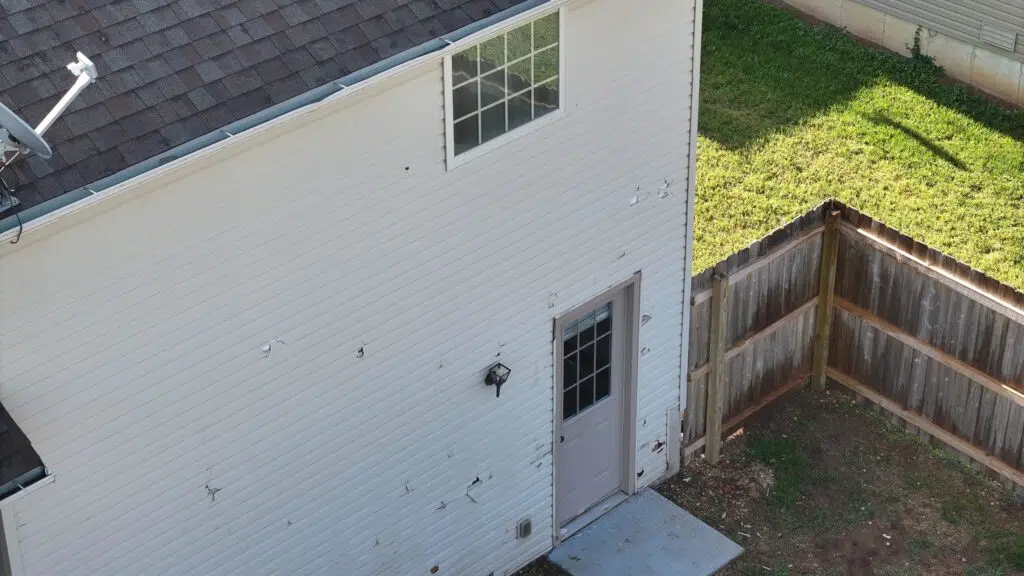
After a storm, your siding can crack, dent, or pull away from the house, and it is not always clear whether that is a roof problem, a siding problem, or both. This guide explains what causes siding damage in Southwest Missouri, how to tell a repair from a replacement, what insurance usually covers, and who handles siding repair in Springfield.
TLDR: Storm and hail damage to siding shows up as cracks, dents, holes, and panels pulled loose. Isolated damage on otherwise sound siding is usually repairable, while widespread damage or a discontinued panel often means replacement. Insurance may cover storm related siding damage, but matching the old panels is the part that complicates both the repair and the claim.
You came outside to check the roof after the storm, and then you noticed the siding. A cracked panel here, a dent there, maybe a section that worked loose from the wall. Now you are wondering whether it is serious, whether insurance will help, and who even handles siding around here.
Here is something most homeowners miss: the same hail that hits your roof usually hits your siding too, so the two often need to be checked together. I am Josh Tessmer, and I own Teague Roofing Plus. We have repaired roofs and siding across Springfield and Southwest Missouri since 1971, we are an Owens Corning Platinum Preferred Contractor, and we have held a BBB A+ rating since 2019. Our local crews check the roof and the siding on the same visit, because storm damage rarely stops at the roofline.
What Causes Siding Damage in Southwest Missouri?
Most siding damage here comes from three sources: storms, age, and impact. Hail and high wind do the sudden damage, while years of sun and moisture slowly wear panels down. In this region, the storm damage is the most common reason homeowners call, and you can look up local hail history through the National Weather Service office in Springfield.
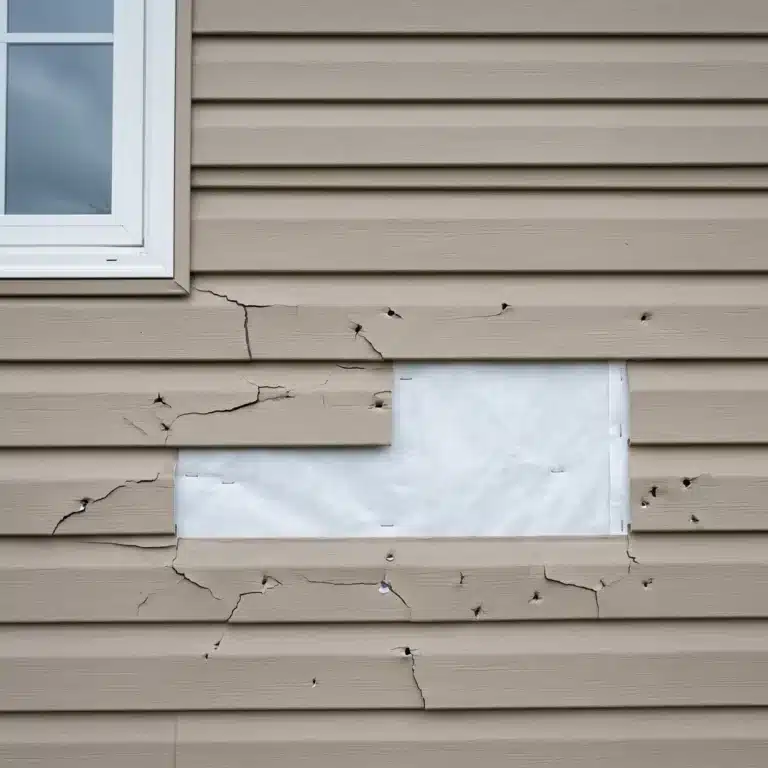
Hail cracks and dents panels, especially older or brittle ones, and large hail can punch holes. The Insurance Institute for Business and Home Safety studies how building materials, including siding, hold up to hail. High wind pulls panels loose or tears them off the wall, and flying debris adds impact damage. Over many years, sun makes vinyl brittle, and moisture can swell or rot wood based products that were not sealed and maintained. The same gusts that damage siding hit the roof too, which is why our guide to wind damage to your roof in Southwest Missouri is worth a read alongside this one.
Pro tip: After any hailstorm, walk the sunny and storm facing walls of your home, not just the roof. Dented panels and cracked corners are often the first clear sign that hail hit hard enough to matter.
Does Your Siding Need Repair or Full Replacement?
Repair makes sense when the damage is limited to a few panels and the rest of the siding is sound. Replacement makes sense when damage is widespread, the siding is old or failing, or the panels can no longer be matched. The deciding factors are how much is damaged, how old the siding is, and whether new panels will blend in.
A few cracked or dented panels on otherwise healthy siding is a clean repair. Damage across several walls, brittle and fading panels, or moisture that has gotten behind the siding points toward replacement. When repair is the right call but matching is impossible, a partial replacement of one or two full walls is sometimes the better path.
| Siding Damage | Repair-Eligible | Replacement-Level |
|---|---|---|
| Cracked or dented panels | A few, one area | Many, multiple walls |
| Holes or punctures | Isolated | Widespread |
| Loose or torn panels | Localized | Across the home |
| Moisture behind siding | None | Present |
| Panel age | Newer, matchable | Old or discontinued |
If your damage sits clearly in one column, the choice is simple. When it straddles both, an inspection that checks behind the panels settles it.
Siding Repair by Material: Vinyl, Fiber Cement, and LP SmartSide
The three materials we work with repair differently. Vinyl swaps out panel by panel, fiber cement is durable but needs careful color and profile matching, and engineered wood holds up well when it is sealed and maintained. The material you have shapes both the repair and how well it will blend.
We install and repair fiber cement, the James Hardie line, and engineered wood, the LP SmartSide line, as the stronger choices for this climate. Vinyl is the budget option: it is the easiest to replace panel by panel, but it gets brittle with age and is more prone to hail cracking than the other two. For a full rundown of options, our siding replacement in Southwest Missouri page compares the materials in depth.
| Material | Repairability | Hail Resistance | Lifespan in SW Missouri |
|---|---|---|---|
| Fiber cement (Hardie) | Good, match carefully | Strong | Long |
| Engineered wood (LP) | Good when sealed | Strong | Long when maintained |
| Vinyl | Easiest, panel by panel | Lower, brittle with age | Shorter, budget tier |
Match the repair to the material you have, and lean on the stronger materials when it is time to replace. The right choice depends on your home and how long you plan to stay.
Does Insurance Cover Siding Damage in Missouri?
Often yes, when the damage comes from a sudden covered event like hail or wind, but it depends on your policy and your documentation. Insurers want proof the damage came from a specific storm, not from gradual age. Functional damage and clear storm evidence carry the most weight.
Storm damage to siding is frequently covered the same way roof damage is, while wear, fading, and neglect are not. The Insurance Information Institute explains the storm claim process, and the Missouri Department of Commerce and Insurance publishes consumer guidance on coverage. Our team documents siding and roof damage together and meets your adjuster on site through our insurance claim assistance in Southwest Missouri.
| Siding Damage | Typically Covered? |
|---|---|
| Hail cracks and dents from a storm | Often yes |
| Wind torn or loosened panels | Often yes |
| Holes from flying debris | Often yes |
| Fading and age | Usually no |
| Neglect or poor maintenance | Usually no |
Check your policy for how it treats siding, and document the damage before any cleanup. The matching question, covered next, is where siding claims often get complicated.
Important: Siding panels fade and change over time, and manufacturers discontinue colors and profiles. A new panel may not match an older wall, so raise matching early with both your contractor and your adjuster.
What Siding Repair Looks Like With Our Team
Our siding repair starts with an inspection of both the siding and the roof, then documentation, then the repair itself. We check the whole exterior because the same storm usually marks both. The goal is a repair that protects the wall and blends in as cleanly as the material allows.
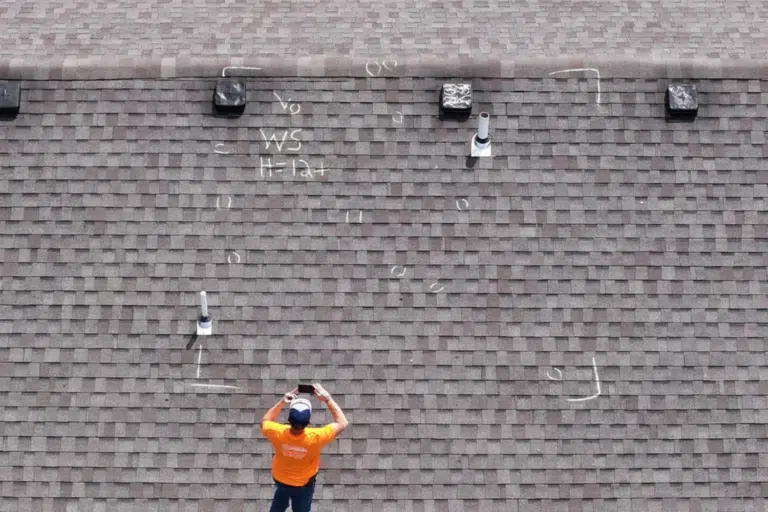
Our crew assesses the damage, looks behind panels where moisture is a concern, and documents everything for a possible claim. We match panels as closely as the material and availability allow, and we are honest with you when an exact match is not possible. Our storm damage repair across Southwest Missouri page covers the wider process, and our hail damage roof inspection in Springfield page explains the roof side of the same visit.
Illustrative scenario: A Rogersville homeowner finds cracked vinyl panels on two walls after a hailstorm. The roof took granule loss at the same time, so our crew documents both, replaces the damaged panels, and supports the insurance claim with photos of the full storm hit. This is an illustrative example, not a specific customer, and includes no pricing.
Frequently Asked Questions
Does homeowners insurance cover siding damage from hail? Often yes, since hail is a sudden covered event under most Missouri policies, but coverage depends on your policy and your documentation. Insurers want proof the damage came from a storm, not from age. Photograph the damage before any cleanup. Have it inspected and documented before you file.
How do I know if my siding needs to be repaired or replaced? Repair fits when only a few panels are damaged and the rest is sound, while replacement fits when damage is widespread, the siding is old, or panels cannot be matched. Age and matching are the deciding factors alongside the extent. An inspection that checks behind the panels gives you the real answer. Get one before you commit either way.
Can you repair vinyl siding after hail damage? Yes, vinyl is the easiest siding to repair panel by panel, which is one of its advantages. The catch is matching, since older vinyl fades and colors get discontinued. A repair on brittle, aged vinyl may also crack again in the next storm. Our team will tell you honestly whether a repair will blend or whether replacement is smarter.
What is the best siding for SW Missouri weather? Fiber cement and engineered wood hold up best against this region’s hail, wind, and temperature swings, which is why we lead with them. Vinyl works as a budget option but is more prone to cracking with age. The best choice depends on your home, your timeline, and your budget. Ask our team to compare them for your specific walls.
How long does siding repair take? Many siding repairs are completed in a day or less, depending on the number of panels, the material, and panel availability. Matching an older or discontinued panel can add time. A clear estimate up front tells you what to expect. Ask for the timeline in writing along with the scope.
Will hail damage to siding match after a repair? It depends on the age of your siding and whether the original color and profile are still made. Newer siding usually matches well, while older walls can show a visible difference. On a prominent wall, that mismatch matters. A good contractor tells you before the work starts, not after.
Is fiber cement siding better than vinyl in Missouri? For durability and hail resistance, yes, fiber cement generally outperforms vinyl in this climate. Vinyl is cheaper and easier to repair, which is why it remains a budget choice. Fiber cement costs more up front but holds up longer against local weather. Weigh the tradeoff against how long you plan to stay in the home.
Who repairs siding in Springfield MO? Teague Roofing Plus repairs siding across Springfield and Southwest Missouri, and we check the roof on the same visit since storms usually hit both. We work with vinyl, fiber cement, and engineered wood, and we document damage for insurance claims. Local crews mean we are here for any follow up. Call us to schedule a free inspection.
Get Your Siding and Roof Checked Together
You now know what causes siding damage here, how to tell repair from replacement, what insurance tends to cover, and why matching matters. The next step is a single inspection that checks both the siding and the roof, since the same storm usually marks both.
Teague Roofing Plus has repaired roofs and siding across Springfield and Southwest Missouri since 1971, with local crews, Owens Corning Platinum Preferred Contractor certification, and a BBB A+ rating. Here is what we bring to a siding repair.
- A free inspection of both the siding and the roof
- Honest guidance on repair versus replacement, including matching
- Documentation of storm damage for your insurance claim
- Vinyl, fiber cement, and engineered wood expertise
- Permits handled on any approved work
Call 417-883-7663 for a free inspection. You can also book your free roof inspection in Southwest Missouri online or learn more about siding repair in Southwest Missouri.
Teague Roofing Plus, Roofing, Siding, Windows, Gutters, and More. Serving Southwest Missouri Since 1971.