
Dark streaks running down a roof slope are the most common cosmetic complaint we hear, and the most commonly misdiagnosed. They are usually not dirt, not mold, and not a sign the roof is failing. Moss is a different matter. This guide explains what you are looking at and what to do about it.
TLDR: Black streaking on asphalt shingles is almost always algae, which is cosmetic rather than structural. Moss is the one that causes real damage, because it holds moisture against the shingle and lifts edges. Never pressure wash either. That strips granules and commonly voids warranty coverage.
Nearly every homeowner who calls about streaking assumes the roof is dying.
Most of the time it is not. The streaks are a living organism doing what it does on a north-facing slope in a humid climate, and the roof underneath is fine.
The distinction matters, because the wrong response costs you far more than the problem.
What the black streaks actually are
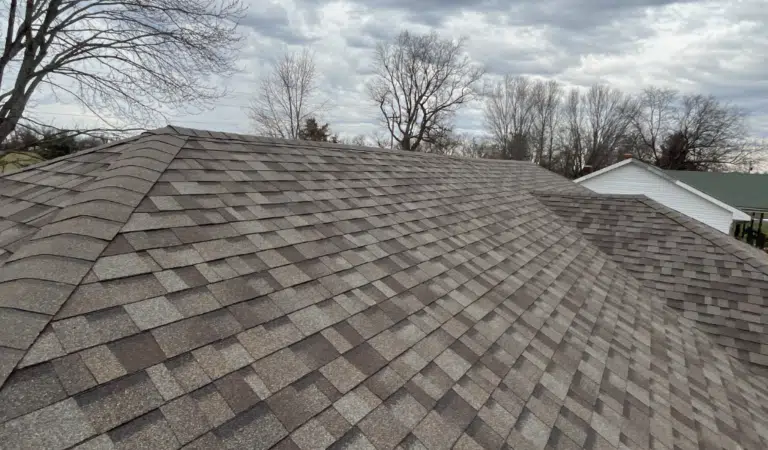
Those dark vertical streaks are algae. It feeds on limestone filler used in asphalt shingles and spreads by airborne spores, which is why it appears on entire neighborhoods within a few years.
It shows up first and worst on north-facing slopes and shaded areas, because those stay damp longest.
| Observation | What it indicates |
|---|---|
| Dark streaks running downward | Algae growth, cosmetic |
| Worst on the north slope | Normal, that side stays damp |
| Appearing across the neighborhood | Airborne spread, not your roof failing |
| Green fuzzy growth, raised | Moss, which is a different problem |
Algae does not eat through shingles or cause leaks. It makes a sound roof look neglected, which matters if you are selling.
Important: Black streaking is not mold, and it is not a sign of a rotting roof. It is a cosmetic organism.
Moss is the one that causes damage
Moss is structurally different. It grows as a mat, holds water against the shingle surface, and works its way under shingle edges as it thickens.
That combination keeps the shingle wet, lifts edges so wind can catch them, and in freezing weather expands under the shingle.
- Holds moisture against the surface continuously
- Lifts shingle edges as the mat thickens
- Expands when it freezes, worsening the lift
- Traps debris, which holds more moisture
Moss earns attention. Algae mostly earns patience.
Important: Moss on a north slope that has thickened past a thin film should be addressed before winter, not after.
Pro tip: Run a hand along a shaded slope from the ground with binoculars first. If the growth is raised and green rather than flat and dark, treat it as moss.
Why never to pressure wash
This is the single most expensive mistake homeowners make on this problem.
Asphalt shingles are protected by a layer of mineral granules. Those granules block sunlight from degrading the asphalt underneath and give the shingle its impact resistance. Pressure washing blasts them off.
The roof looks dramatically better for a season and ages far faster afterward. Worse, pressure washing is a common exclusion in warranty coverage, so a cleaning can cost you the protection you paid for.
| Method | Effect |
|---|---|
| Pressure washing | Strips granules, commonly voids warranty |
| Low-pressure treatment | Appropriate when done correctly |
| Scraping moss | Damages shingle surface and edges |
| Prevention at the source | Addresses why it grows, not just the symptom |
The Asphalt Roofing Manufacturers Association publishes guidance on algae and moss prevention and cleaning for asphalt roofing systems, and it is worth reading before hiring anyone with a pressure washer.
Important: Never allow a pressure washer on asphalt shingles, whatever the cleaning service tells you.
Addressing the conditions instead
Growth happens where moisture lingers. Reducing moisture does more long-term good than any cleaning.
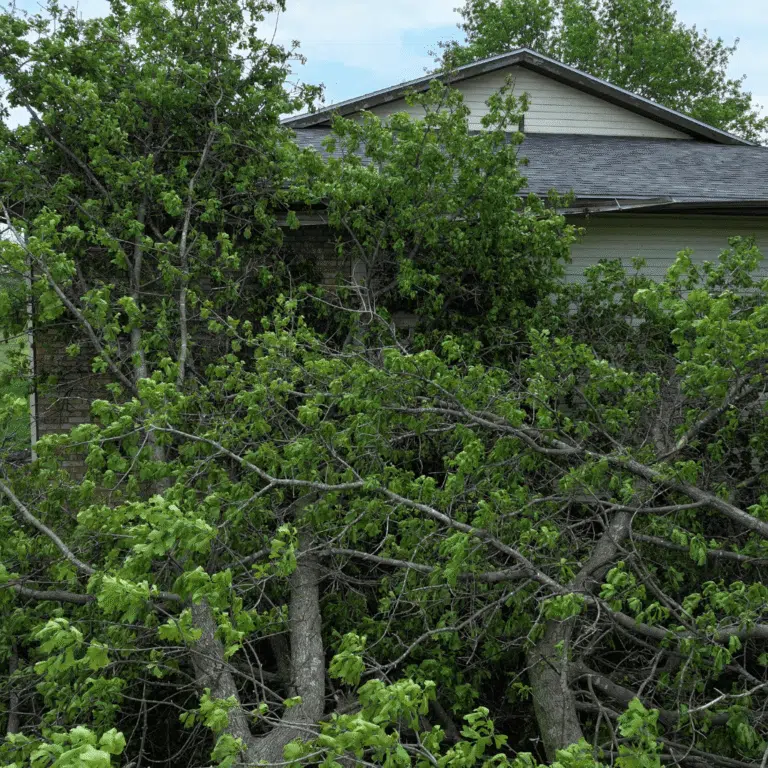
- Trim overhanging branches to increase sunlight and airflow.
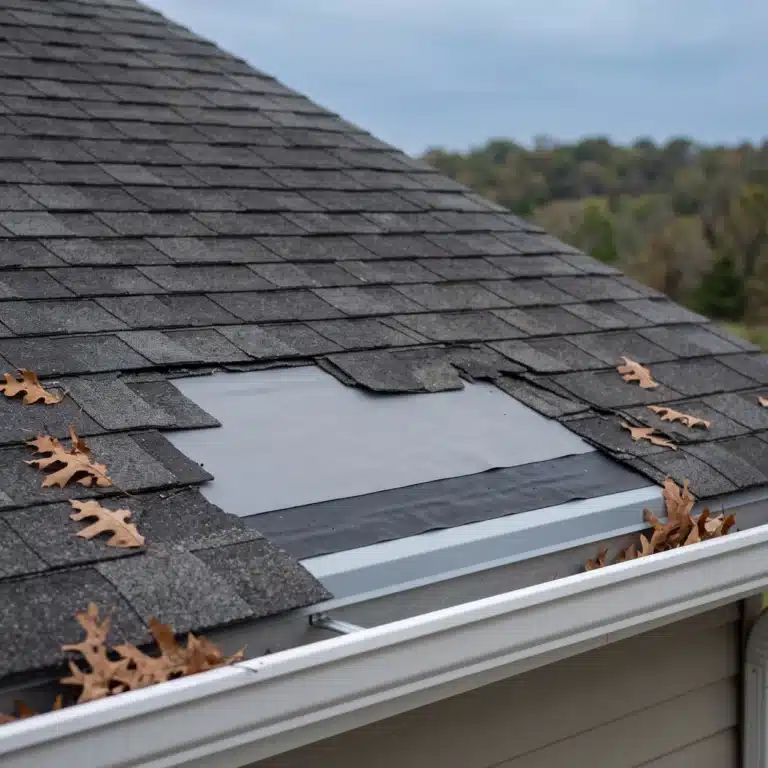
- Clear leaf debris from valleys and the roof surface.
- Keep gutters flowing so water does not back onto the roof edge.
- Address any chronic damp spots caused by poor drainage.
- Consider zinc or copper strips near the ridge on problem slopes.
- Have moss addressed before it thickens, not after.
- Accept that algae on a north slope will recur in a humid climate.
That last point is honest rather than defeatist. In Southwest Missouri humidity, algae comes back. Managing expectations saves money.
Use this to tell which organism you have before deciding anything.
| Characteristic | Algae | Moss |
|---|---|---|
| Appearance | Flat dark streaks | Raised green mat |
| Location | Any shaded slope | Shaded, often north facing |
| Damage | Cosmetic | Lifts shingles, holds water |
| Urgency | Manage over time | Address before winter |
Tip: Photograph a shaded slope once a year from the same spot. It is the easiest way to tell growth from stable staining.
Southwest Missouri conditions
Our climate is close to ideal for both organisms. Summer humidity is high. Mature oak and hickory shade a large share of Ozarks properties. Leaf fall packs valleys and roof edges with organic material every autumn, which holds moisture through the wet season.
North-facing slopes under tree cover show it first and worst, which describes a lot of homes around Springfield, Ozark and Battlefield.
Homeowners scheduling roof inspection in Springfield often raise streaking, and it is usually the least concerning thing found that day.
Illustrative scenario: A homeowner in Battlefield gets a quote to replace a roof over heavy streaking. An inspection finds the shingles sound with normal granule coverage and algae on the north slope only. Trimming two limbs and clearing the valley addresses the conditions, and the roof continues its expected service life.
Our roof maintenance checklist covers the seasonal side, and a free inspection will tell you whether you are looking at a cosmetic issue or a real one.
Frequently asked questions
Are black streaks on my roof mold? No. They are almost always algae, which feeds on filler material in asphalt shingles. It is cosmetic. Mold is an indoor moisture issue and looks and behaves differently.
Do black streaks mean I need a new roof? Usually not. Algae does not degrade shingles structurally or cause leaks. Get the roof inspected to confirm condition before accepting any replacement quote based on appearance.
Is moss worse than algae? Yes, meaningfully. Moss holds moisture against the shingle, lifts edges, and expands when frozen. Algae stains. Treat raised green growth as the one that needs attention.
Can I pressure wash my roof? No. Pressure washing strips the mineral granules that protect the shingle and commonly voids warranty coverage. It is the most damaging thing homeowners routinely do to their own roofs.
What about roof cleaning services? Approaches vary widely. Ask specifically what pressure and what solution they use, and check your warranty terms first. A low-pressure approach applied correctly is different from a pressure washer.
Do zinc or copper strips work? Metal ions washing down the slope inhibit growth below them, so they can help on problem slopes. Coverage is limited to what the runoff reaches. Treat it as one tool rather than a cure.
Will the streaks come back after cleaning? In this climate, generally yes, especially on shaded north-facing slopes. Addressing tree cover and drainage slows it. Recurrence is normal rather than a sign something went wrong.
Does algae affect my home’s value? It affects appearance, which affects buyer perception. An inspection report confirming the roof is sound is worth having if you are selling a home with visible streaking.
Should I clean it myself? Roof work is genuinely hazardous and the wrong method causes permanent damage. Ground-level work like trimming branches and clearing gutters is reasonable. Leave the roof surface to someone equipped for it.
Key takeaways
- Streaks are usually algae
- Cosmetic, spreads by airborne spores, worst on shaded slopes.
- Not mold, not a structural problem, not a reason to replace a roof.
- Moss is the real one
- Holds moisture, lifts shingle edges, expands when frozen.
- Never pressure wash
- Strips protective granules and commonly voids warranty coverage.
- Fix conditions, not just symptoms
- Trim branches, clear debris, keep gutters flowing.
- Expect recurrence here
- Humidity and tree cover make it a management issue, not a cure.
Find out what you are actually looking at
Before you accept a replacement quote based on how a roof looks from the driveway, find out what condition it is actually in.
We have looked at a lot of streaked Southwest Missouri roofs since 1971, and most of them had years of service left. Owner Josh Tessmer built the business on telling homeowners when nothing is wrong.
What you get when you call:
- A free roof inspection with written findings, no obligation
- An honest read on whether growth is cosmetic or causing damage
- Guidance on conditions to address rather than a cleaning upsell
- Local crews who live here, not out-of-state storm chasers
Call 417-883-7663 for a no-pressure assessment, or get in touch here.
Teague Roofing Plus, Roofing, Siding, Windows, Gutters, and More. Serving Southwest Missouri Since 1971.