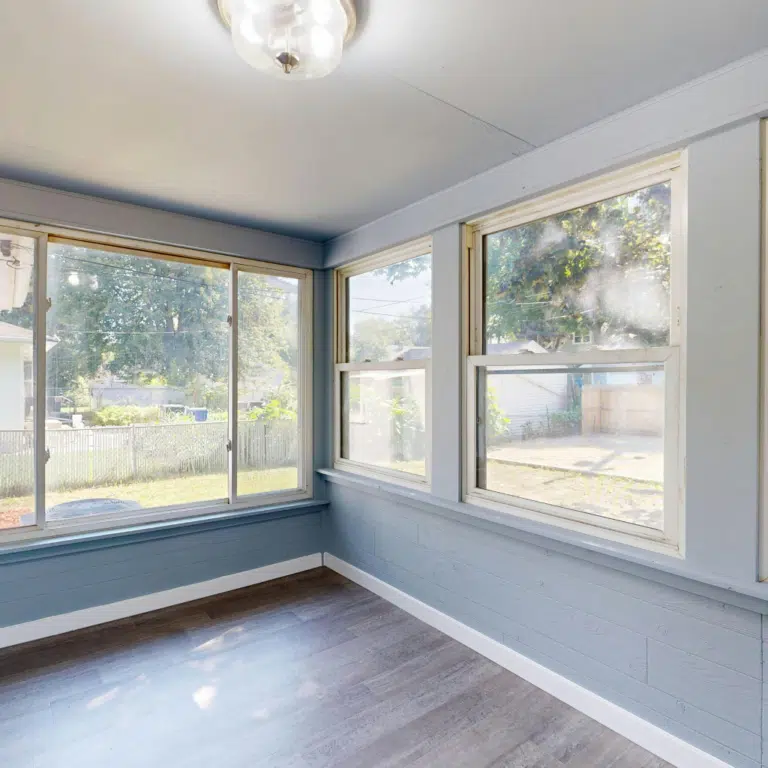

Drafty windows, condensation between the panes, a sill that never quite feels dry. Some of that is a maintenance problem with a straightforward fix. Some of it means the window unit itself has failed. Telling them apart saves homeowners from replacing windows that did not need it, and from resealing ones that are past saving.
TLDR: Air leaking around the frame is usually a sealing and weatherstripping issue. Fog or moisture trapped between the panes means the sealed unit has failed, and that cannot be resealed. Rot in the surrounding wall changes the conversation entirely, because the window is no longer the only problem.
Window companies will tell you to replace. Handymen will tell you to caulk. Both answers are sometimes right.
The useful question is not which product to buy. It is where the air and water are actually moving.
Here is how to work that out before anyone quotes you.
Air around the frame versus air through the window
Stand beside a suspect window on a cold windy day and feel where the draft is coming from.
Air moving around the perimeter, at the trim or where the frame meets the wall, is a sealing problem. Air coming through the sash, at the meeting rail or around the weatherstripping, is a hardware and seal problem within the unit.
| Where you feel it | Likely cause | Likely fix |
|---|---|---|
| At the trim or wall joint | Failed exterior sealant or missing insulation | Seal and insulate |
| At the sash edges | Worn weatherstripping | Replace weatherstripping |
| At the meeting rail | Hardware not closing tightly | Adjust or replace hardware |
| Everywhere, with fogging | Sealed unit failure | Replace the unit |
Most drafts homeowners attribute to old windows are perimeter issues, and perimeter issues are fixable.
Tip: Check every window on the windward elevation first. That is where sealant fails soonest in this climate.
Tip: Use a lit incense stick on a windy day and watch the smoke near the frame. It shows you exactly where air moves.
Fog between the panes is the one that cannot be fixed
Modern windows are sealed insulating units, two or more panes with a controlled space between them. When that seal fails, humid air gets in and condenses where you cannot reach it.
You will see haze, fogging that comes and goes with temperature, or mineral deposits between the panes.
No amount of caulk addresses this. The unit itself has failed, and the insulating value it was providing is largely gone.
Important: Condensation on the inside surface of a window is different. That is indoor humidity, not a failed seal.
When the wall matters more than the window
This is the case homeowners miss, and it is the expensive one.
If the sill is soft, the trim is punky, or interior drywall below the window stains, water has been getting into the wall. Replacing the window without addressing that leaves the actual problem in place behind new trim.
- Soft or spongy sill when pressed
- Paint bubbling or peeling below the window outside
- Interior staining on the wall beneath the sill
- Trim that crumbles at the corners
- Musty smell near the opening
Any of those means the opening needs to be opened up and inspected, not just fitted with a new unit. The same pattern shows up on siding repair work across Southwest Missouri.
Sort each window into one of these before getting a quote.
| What you found | What it means |
|---|---|
| Draft at trim, glass clear | Seal the perimeter |
| Draft at sash, glass clear | Weatherstripping or hardware |
| Fog between the panes | Replace the sealed unit |
| Soft sill or staining below | Inspect the wall first |
Sorting the house this way usually shrinks the job.
Pro tip: Press firmly along the sill and the trim corners with a thumb. Softness is a wall problem, not a window problem.
Southwest Missouri conditions
Our climate stresses windows from both directions. Summer humidity and heat push moisture through assemblies and age sealants. Winter cold makes every perimeter gap obvious and drives condensation on cold surfaces. Wind-driven rain during spring storms finds any failed sealant around the frame.
The freeze and thaw cycle is what turns a small sealant failure into a wall problem. Water gets in during fall, freezes, expands the gap, and takes in more water the following spring.
That is why we tell homeowners to address perimeter sealant before winter rather than after. Our exterior window replacement page covers what we install.
Important: A window that leaks water is a different urgency from a window that leaks air. Water reaches the wall.
Working through it in order
- Identify whether the draft is at the perimeter or through the sash.
- Check every pane for fogging or deposits between the glass.
- Press the sill and trim corners for softness.
- Look below the window inside and outside for staining or bubbling.
- Address perimeter sealing and weatherstripping first, since it is cheap.
- Have the opening inspected if any softness or staining turned up.
- Replace units with failed seals, and plan the rest by condition.
Illustrative scenario: A homeowner in Republic gets a whole-house replacement quote after complaining of drafts. An inspection finds two units with failed seals, solid framing throughout, and failed exterior sealant on the windward elevation. Two units get replaced and the rest get sealed, at a fraction of the original quote.
A free inspection covers figuring out which windows actually need it. If softness turns up, our post on hidden siding damage after storms explains what to look for in the wall.
Frequently asked questions
Can a foggy window be repaired? No. Fog between the panes means the sealed insulating unit has failed, and it cannot be resealed in place. The unit gets replaced. Some frames allow replacing just the glass unit, so ask.
Why do my windows sweat on the inside? That is usually indoor humidity condensing on a cold surface rather than a window failure. Improving ventilation and reducing indoor moisture often solves it. Fog between the panes is the failure case.
Is it worth replacing windows one at a time? Often yes, if only some have failed. Replacing by condition rather than all at once is reasonable and spreads the cost. Match units carefully so the house reads consistently.
How do I know if the draft is the window or the wall? Feel where the air moves. Perimeter drafts at trim and wall joints are sealing issues. Air through the sash points at the unit. A smoke test on a windy day makes it obvious.
What does a soft windowsill mean? It usually means water has been getting into the assembly for a while. That is a wall problem, and installing a new window over it leaves the cause in place. Have the opening inspected.
Should I caulk around my windows myself? Exterior sealant maintenance is reasonable homeowner work if the surface is sound and you can reach it safely. Do not seal over rot or soft wood, which traps moisture and makes it worse.
Do new windows pay for themselves in energy savings? Efficiency improves, but payback depends on what you are replacing, your climate exposure and how the house is sealed overall. Treat comfort and water management as the primary reasons.
When is the best time to replace windows in Missouri? Work happens year round, though mild weather makes openings easier to manage. Perimeter sealing is best addressed before winter. Water problems should not wait for a season.
Does window work require a permit in Springfield? Routine replacement in an existing opening generally does not. Altering the opening size or structure is different. Verify with the city permit office if the opening is changing.
Key takeaways
- Find where the air moves
- Perimeter drafts are a sealing problem and usually fixable.
- Air through the sash points at the unit itself.
- Fog between panes cannot be resealed
- The sealed unit has failed and needs replacement.
- Interior condensation is different
- That is indoor humidity, not a window failure.
- Softness changes everything
- A soft sill means water reached the wall, and the wall comes first.
- Replace by condition
- One at a time is reasonable when only some units have failed.
Find out which windows actually need replacing
A whole-house quote is easy to give. Figuring out which windows have genuinely failed takes an inspection.
We have worked on Southwest Missouri homes since 1971, and we will tell you when sealing is the right answer. Owner Josh Tessmer built the business on that kind of call.
What you get when you call:
- A free inspection covering windows, perimeter sealing and visible moisture signs
- An honest split between what needs replacing and what needs sealing
- A look at the surrounding wall wherever softness or staining shows up
- Local crews who live here, not out-of-state storm chasers
Call 417-883-7663 for a no-pressure estimate, or reach out online.
Teague Roofing Plus, Roofing, Siding, Windows, Gutters, and More. Serving Southwest Missouri Since 1971.