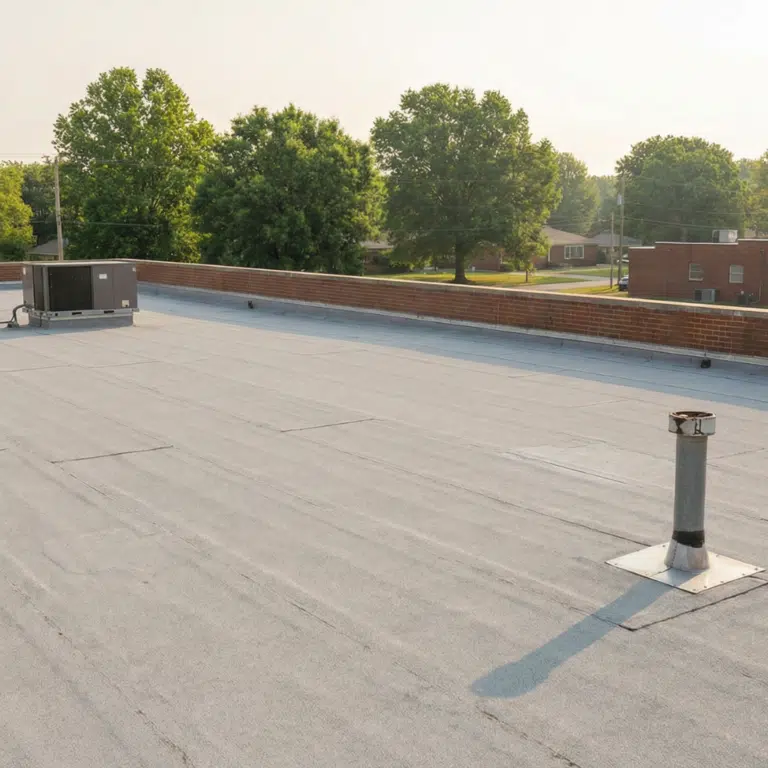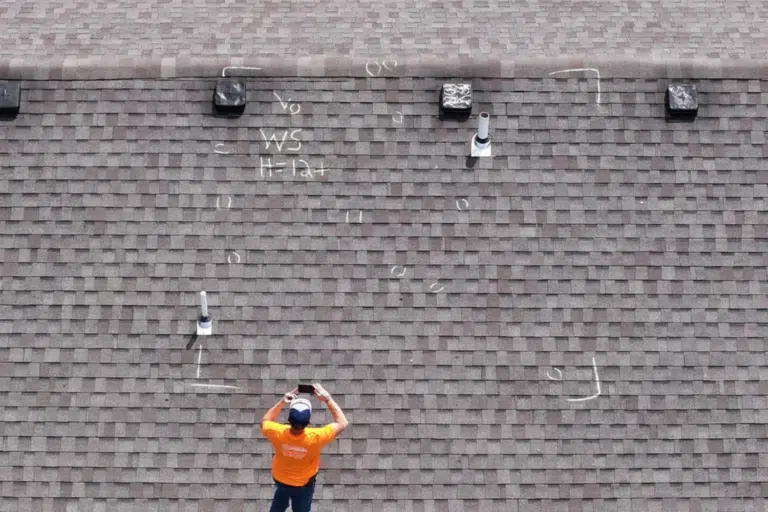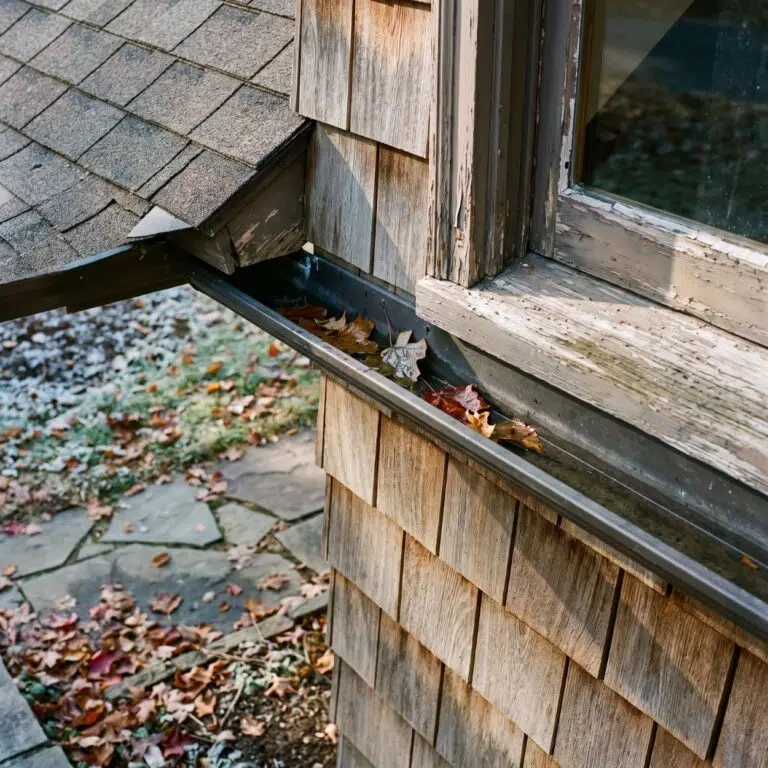

After a storm, attention goes to the roof, and reasonably so. Siding gets a glance from the driveway and a pass. The problem is that hail and wind damage siding in ways that are genuinely hard to see, and hidden siding damage lets water into wall assemblies where it does far more harm than a roof leak.
TLDR: Storm damage to siding often appears as small dents, hairline cracks, or panels loosened at the fastener rather than obvious holes. Each of those lets wind driven rain behind the siding, where moisture reaches sheathing and framing. Checking now, before fall rain and winter freeze cycles, is what keeps a siding repair from becoming a wall repair.
The roof got inspected after the spring storms. Maybe there was a claim, maybe repairs happened, and the whole thing feels handled. Nobody walked the perimeter and looked closely at the walls.
That is the normal sequence, and it is how siding damage sits unnoticed for months. Unlike a roof leak, which announces itself with a ceiling stain, water getting behind siding often causes no visible interior sign until the damage is substantial. It works on the sheathing and framing first.
Our team sees this across Springfield, Rogersville, and Strafford every year. The roof claim was handled correctly, and the siding damage from the same storm went entirely undocumented. Here is how to check yours before fall weather arrives.
Why Siding Damage Gets Missed After a Storm
Three things conspire to make siding damage invisible.
The first is angle. Most storm damage to siding sits on the elevation that faced the storm, often a side of the house you rarely walk past. Damage is also easiest to see in low, raking light, and most people look at midday when flat light hides dents entirely.
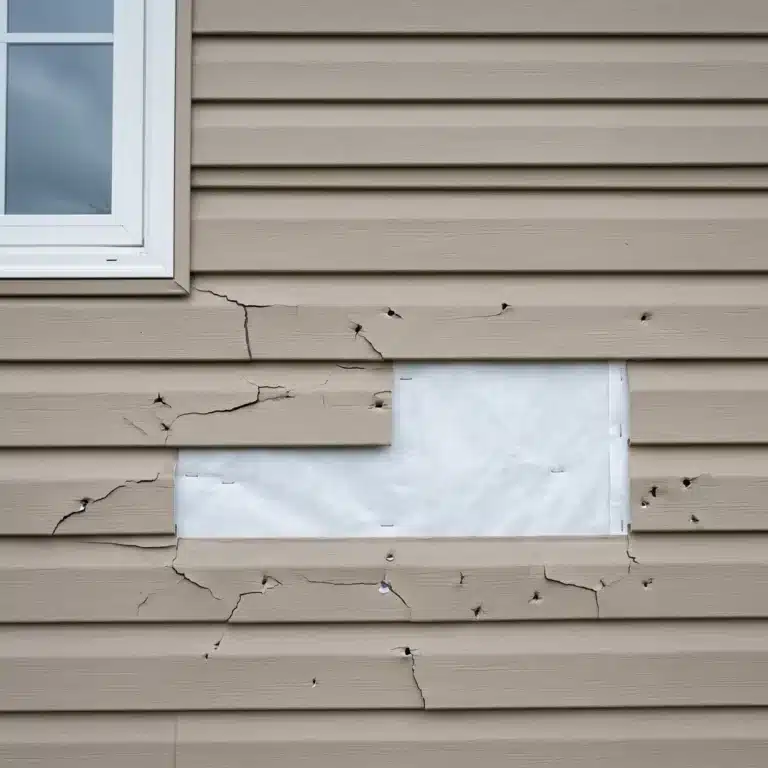
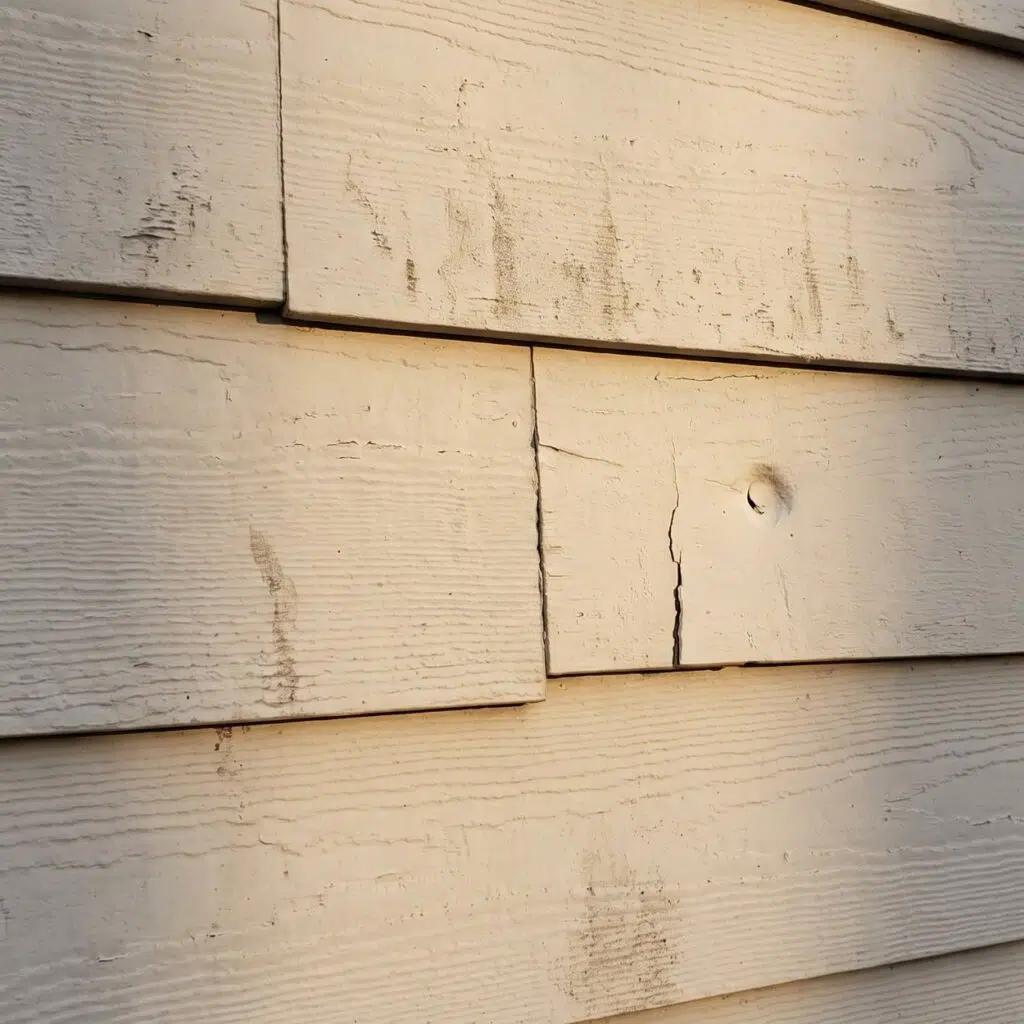
The second is scale. Hail damage to siding frequently looks like small dimples or short cracks rather than holes. On textured siding, at a distance, those disappear completely.
You can review storm history and current conditions for our region through the National Weather Service office in Springfield. The third is priority. After a storm the roof is the focus, and once the roof is resolved, the sense of urgency ends. The siding never gets its own look.
Pro Tip: Inspect siding in early morning or late afternoon when the sun is low and hitting the wall at an angle. Raking light reveals dents and waviness that midday sun completely conceals.
What Does Storm Damaged Siding Look Like?
Storm damaged siding shows as dents or dimples from hail, cracks radiating from impact points, panels loosened or lifted at the fastener line, and gaps opening at seams or corners. The signs differ by material, which the table below breaks down.
| Siding material | Hail damage signs | Wind damage signs |
|---|---|---|
| Fiber cement | Chips, hairline cracks, missing paint at impacts | Cracked panels, loosened fasteners |
| Engineered wood | Dents, surface breaks, exposed substrate | Lifted edges, separation at seams |
| Vinyl | Cracks and punctures, especially in cold | Panels unlocked, pulled loose, or missing |
| Any material | Damage to trim, corners, and J channel | Gaps at seams, corners, and terminations |
The takeaway is that trim, corners, and terminations often take damage before the field panels do, and they are the most common entry point for water. Our guide on siding damage from hail and wind in Springfield covers what each material shows in more detail.
How Hidden Siding Damage Leads to Bigger Problems
Siding is a shedding layer, not a waterproof barrier. Behind it there is a water resistive barrier and sheathing, and the whole assembly is designed on the assumption that some water gets past the siding and needs to drain and dry.
That system works when it is intact. It stops working when damage lets water in at volume or in a spot where it cannot drain.
FEMA field assessments of wind and water damage found that water intrusion occurred where there was damage to exterior wall coverings, roof covering damage, loss of roof ventilation components, and openings around windows, and that infiltrating water can saturate insulation, seep into wall systems, damage interior finishes, and lead to mold growth. Exterior wall coverings are listed right alongside the roof for a reason.
| Damage severity | What is happening | Typical urgency |
|---|---|---|
| Cosmetic only | Surface marks, no breach of the panel | Monitor, address at next project |
| Panel breach | Cracks or punctures through the material | Repair before wet season |
| Fastener or seam failure | Panels loose, gaps open at seams | Repair promptly, active water path |
| Moisture behind siding | Soft sheathing, interior staining, odor | Address immediately |
The takeaway is that the middle two rows are where most storm damage lands, and both are far cheaper to fix than what they become if left through a wet fall and a freeze and thaw winter.
Illustrative scenario: A homeowner in Rogersville had roof damage repaired in May after spring storms. In August a free exterior inspection found hail dimpling and two cracked panels on the west elevation, plus loosened trim at a corner. The damage was documented and repaired before fall rains, and it had never been visible from the driveway.
DIY Check vs Professional Inspection
You can do a meaningful first pass yourself. Walk the full perimeter in low angle light and look at each elevation individually, paying attention to the side that faced the storm. Check trim, corners, and the area around windows and doors. Press gently on panels to feel for looseness.
| Check | What you can do | What needs a professional |
|---|---|---|
| Visual damage | Spot dents, cracks, loose panels | Determine whether damage breached the barrier |
| Upper elevations | View from the ground | Close inspection above the first floor |
| Moisture assessment | Notice stains, soft spots, odor | Evaluate sheathing condition behind siding |
| Insurance scope | Photograph and date everything | Produce a documented scope for a claim |
The takeaway is that a homeowner walk around identifies whether there is a problem, and a professional inspection determines its extent. The second question is the one that matters for both repair planning and any insurance claim.
Important: Photograph everything you find with the date, before any repair work happens. If the damage traces to a specific storm, that documentation is what supports a siding claim alongside the roof claim.
Repair or Replace: How to Tell
Not all siding damage requires replacement, and not all of it can be spot repaired convincingly. The distinction usually comes down to how widespread the damage is and whether matching material is available.
| Situation | Usually repair | Usually replace |
|---|---|---|
| Extent | A few panels on one elevation | Widespread across multiple elevations |
| Material match | Same product still available | Discontinued or badly weathered color |
| Siding age | Relatively recent, sound overall | Aging with existing wear and fading |
| Moisture damage | None behind the affected panels | Sheathing affected, barrier compromised |
The takeaway is that matching is the practical constraint homeowners underestimate. Weathering changes color over time, so even identical product can read as a patch. Our guides on siding repair for Springfield homeowners and siding replacement material options cover both paths.
Southwest Missouri gets an active severe weather pattern, with significant hail and wind and more tornado activity than any other region in the state. NOAA documented 120 separate billion dollar weather and climate disasters affecting Missouri from 1980 through 2024, most of them severe storms. That exposure is why exterior inspections here need to include the walls, not just the roof. We work with fiber cement, engineered wood, and vinyl, and Teague Roofing Plus handles the permits on every job.
Pro Tip: If your siding is more than about fifteen years old and took damage across multiple elevations, get pricing on both paths before deciding. Patching an aging exterior sometimes costs more over a few years than addressing it once.
Frequently Asked Questions
How do I check my siding for storm damage?
Walk the full perimeter in early morning or late afternoon light, when low angle sun reveals dents that midday sun hides. Look at each elevation separately, especially the side that faced the storm. Check trim, corners, and the areas around windows and doors, and gently press panels to feel for looseness. Photograph anything you find with the date.
What does hail damage on siding actually look like?
Usually small dents or dimples rather than holes, sometimes with cracks radiating from the impact point. On fiber cement you may see chipping or paint loss at impacts; on vinyl, cracks or punctures, particularly if the hail fell in cold weather. Textured siding hides this damage well, which is why raking light matters so much.
Can siding damage cause problems inside my walls?
Yes, and that is the real concern. Siding sheds water rather than waterproofing, and the barrier and sheathing behind it handle what gets past. Damage that breaches the panel or opens a seam gives wind driven rain a path in, where it can saturate insulation and reach sheathing and framing without any interior sign at first.
Will insurance cover siding damage from the same storm as my roof?
Often yes, since siding is part of the same covered structure and the same storm event. The frequent problem is that siding damage never gets documented because the inspection focused on the roof. If your claim covered only the roof, a documented siding inspection may support a supplemental claim.
Is it too late to file if my roof claim already settled?
Not necessarily. Many policies allow supplemental claims when additional damage from the same event is documented, though deadlines vary by policy. Check your specific policy or ask your agent about your window. Getting the siding professionally documented is the step that makes a supplement possible.
Should I repair or replace damaged siding?
Repair usually makes sense when damage is limited to a few panels on one elevation and matching material is available. Replacement makes more sense when damage spans multiple elevations, the product is discontinued, or the siding was already aging. Color matching on weathered siding is the constraint most homeowners underestimate.
How urgent is siding damage compared to roof damage?
Roof damage is generally more urgent because water entry is more direct. Siding damage is not far behind, though, because it does its harm invisibly inside the wall assembly. The practical deadline is before sustained fall rain and winter freeze and thaw cycles.
Do you inspect siding as part of a roof inspection?
Yes. Our inspections cover the full exterior including siding, trim, gutters, and windows, not the roof alone. There is no cost and no obligation, and you receive photo documentation of anything found whether or not you decide to move forward.
Key Takeaways
- Siding damage hides well: Hail leaves dimples and hairline cracks rather than obvious holes.
- Low angle morning or evening light reveals what midday sun hides.
- The storm facing elevation is often the one you rarely walk past.
- The harm happens inside the wall: Siding sheds water, and what gets past reaches sheathing and framing.
- Federal field assessments list exterior wall coverings alongside roofs as intrusion points.
- Interior signs often appear only after damage is substantial.
- Trim and corners fail first: Terminations take damage before field panels and are prime water entry points.
- Check around windows, doors, and corner details specifically.
- Loose panels and open seams are active water paths.
- Document before fall: Photographs with dates support a supplemental claim alongside your roof claim.
- Many policies allow supplements for the same storm event.
- Repairs made now cost far less than wall repairs later.
Get Your Full Exterior Checked, Not Just the Roof
If your roof was inspected after the spring storms but nobody looked closely at the siding, there is a real chance damage is sitting undocumented on an elevation you do not walk past. Finding it now is straightforward. Finding it after water has been in the wall for a season is not.
Teague Roofing Plus has handled roofing and siding across Southwest Missouri since 1971, and our inspections cover the whole exterior. We are an Owens Corning Platinum Preferred Contractor, BBB A+ rated since December 2019, and a Nextdoor Neighborhood Favorite in 2022 and 2024. An exterior inspection includes:
- Every elevation checked for hail and wind damage
- Close attention to trim, corners, and window surrounds
- Dated photo documentation you keep either way
- A documented scope you can use for an insurance supplement
- Permits handled by our team on any work that follows
Call Teague Roofing Plus at 417-883-7663, learn about our siding replacement services, or book siding service in Springfield.
Teague Roofing Plus, Roofing, Siding, Windows, Gutters, and More. Serving Southwest Missouri Since 1971.