

Two different warranties come with most new roofs, they cover different failures, and neither covers everything. Homeowners usually find out which is which only after something goes wrong. This guide explains the difference and the ordinary things that quietly void coverage.
TLDR: A manufacturer warranty covers the materials. A workmanship warranty covers the installation. Most roof problems trace to installation, which is why the second one matters more than homeowners expect. Both have conditions, and the common ways coverage lapses are things people do without realizing.
A warranty is only useful if it responds when you need it.
Homeowners regularly believe they have decades of coverage, then find the failure falls between the two warranties, or that a condition had gone unmet years earlier.
Here is how the pieces actually fit together.
The two warranties, and what each covers
They come from different parties and they answer different questions.
| Manufacturer warranty | Workmanship warranty | |
|---|---|---|
| Who issues it | The shingle manufacturer | Your contractor |
| What it covers | Defects in the material | Errors in installation |
| Typical duration | Long, often decades | Shorter, varies widely |
| What it excludes | Installation errors | Material defects |
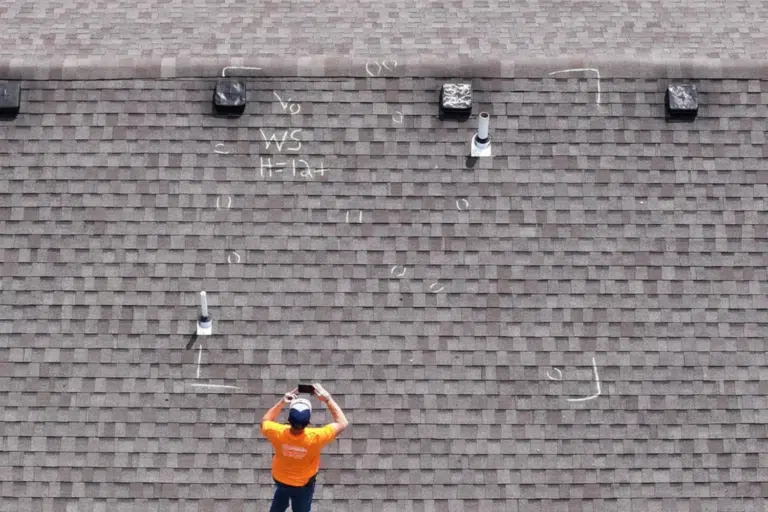
The gap between them is where disputes happen. A leak at a flashing detail is usually installation. A shingle that fails prematurely across a whole roof may be material. Determining which is the entire argument. A free roof inspection with written findings is what settles it.
Important: A long manufacturer warranty on the box tells you nothing about who fixes a leak caused by installation.
Why the workmanship warranty matters more
Materials from established manufacturers rarely fail outright. Installation details fail regularly.
Flashing at a chimney. A vent boot seated poorly. A valley detailed wrong. None of those are material defects, and none of them are covered by the manufacturer.
That makes the contractor’s own warranty the one that answers most real problems, which in turn makes the contractor’s longevity part of the warranty’s value. Coverage from a company that is no longer operating is not coverage.
Pro tip: Ask how long the company has operated under its current name and who answers a warranty call. A warranty is only as durable as the business behind it.
Manufacturer coverage often depends on the whole system
This surprises people. Some manufacturer coverage is tiered, and the better tiers frequently require that compatible components be used throughout: underlayment, starter, ridge and the shingles themselves.
Mixing components can drop a roof into a lower tier of coverage, or out of an enhanced warranty entirely, without anyone saying so at the time.
Industry roofing guidelines treat the roof as a system for the same reason. Certification matters here too. Enhanced coverage is often available only through contractors the manufacturer has credentialed. We hold Owens Corning Platinum Preferred status for that reason.
Tip: Ask which warranty tier your quote qualifies for, and what components are required to reach it.
What quietly voids coverage
Most of these are ordinary homeowner decisions.
- Installing a new roof over existing layers when coverage requires a tear-off
- Pressure washing shingles, which strips granules
- Mounting equipment or attachments without proper flashing
- Ignoring documented maintenance requirements
- Allowing another contractor to modify the roof without coordination
- Failing to report damage within required timeframes
- Ventilation that does not meet the manufacturer’s requirement
That last one causes more trouble than any other. Inadequate attic ventilation is a stated condition in a lot of coverage, and it is invisible to homeowners.
| Action | Risk |
|---|---|
| Pressure washing | Granule loss, likely voids coverage |
| Adding attachments | Penetrations outside the original system |
| Skipping documented maintenance | Condition unmet when you file |
| Inadequate ventilation | Common stated requirement, frequently unmet |
Important: Never pressure wash asphalt shingles. It removes the granules that protect the mat and is a common exclusion.
Transferability, and why it matters at sale
Many warranties transfer to a new owner, often once, and often only if the transfer is filed within a specific window after sale.
Miss the window and the coverage typically ends. That is worth knowing both when you sell and when you buy a home with a recent roof.
When something fails, this is roughly how responsibility sorts out.
| Failure | Usually covered by |
|---|---|
| Leak at chimney or wall flashing | Workmanship |
| Shingles failing across the whole roof | Manufacturer |
| Vent boot cracked after years of sun | Neither, maintenance item |
| Blow-off from improper fastening | Workmanship |
| Storm damage | Your insurance, not a warranty |
Pro tip: Keep the warranty paperwork with your closing documents rather than in a drawer. It is the first thing a buyer’s inspector asks about.
What to ask before you sign
- What manufacturer warranty tier does this quote qualify for?
- What components are required to reach that tier?
- How long is your workmanship warranty, and what does it cover?
- What maintenance am I required to perform to keep coverage?
- What are the ventilation requirements, and does my attic meet them?
- Is the coverage transferable, and what is the filing window?
- Who do I call for a warranty claim, and what does that process look like?
Illustrative scenario: A homeowner in Strafford files a claim on a five-year-old roof for a leak near a chimney. The manufacturer declines, correctly, because the shingles are not defective. The installing contractor is no longer in business. The homeowner pays for a repair that a workmanship warranty would have covered.
Homeowners comparing quotes for roof replacement across Southwest Missouri should treat warranty terms as part of the comparison. Our post on red flags before signing with any roofer covers the contractor side, and our guide to choosing a roofing company in Springfield covers how to vet one.
Frequently asked questions
What is the difference between manufacturer and workmanship warranties? The manufacturer covers defects in the materials. The contractor covers errors in installation. They exclude each other’s territory, and most roof problems fall on the installation side.
Which warranty covers a leak? Usually the workmanship warranty, because leaks typically originate at flashing, penetrations or details rather than in the shingle material. Material failure across a broad area points the other way.
Does a fifty year shingle mean fifty years of coverage? No. Duration on the package refers to the product line, and actual coverage depends on tier, prorating and stated conditions. Read what your specific coverage says rather than the marketing number.
Can pressure washing void my roof warranty? Yes, and it commonly does. Pressure washing strips the granules that protect the shingle mat. Never pressure wash asphalt shingles, regardless of what a cleaning service tells you.
Does attic ventilation affect my warranty? Frequently. Many manufacturers state ventilation requirements as a condition of coverage. It is one of the most common unmet conditions because homeowners have no reason to know about it. Our post on attic ventilation before winter covers what adequate looks like.
Is my warranty transferable if I sell the house? Often once, within a filing window after the sale. Miss the window and coverage typically ends. Check your specific terms and keep the paperwork with your closing documents.
What happens if my roofing contractor goes out of business? The workmanship warranty generally ends with them. Manufacturer coverage on materials continues, but it does not cover installation problems. This is why contractor longevity is part of what you are buying.
Do I need to register my warranty? Some manufacturers require registration within a set period after installation. Ask specifically, and confirm whether your contractor handles it or you do. An unregistered warranty can be an unpleasant discovery later.
Does a roof over an existing layer affect coverage? It can. Some coverage requires a full tear-off, and installing over existing layers may reduce the tier or void it. Ask before choosing an overlay to save time or cost.
Key takeaways
- Two warranties, two territories
- Manufacturer covers materials, contractor covers installation.
- The gap between them is where disputes happen.
- Installation causes most problems
- Which makes the workmanship warranty the one that usually responds.
- Tiers depend on the whole system
- Compatible components and contractor certification often required.
- Ordinary actions void coverage
- Pressure washing, attachments, unmet ventilation, missed maintenance.
- Transfers have deadlines
- Usually one transfer, within a window after sale.
Read the coverage before you need it
The worst moment to learn what your roof warranty covers is while you are trying to use it.
We have been standing behind Southwest Missouri roofs since 1971, which is the part of a warranty that actually matters. Owner Josh Tessmer runs a business that will still be here when you call.
What you get when you call:
- A free roof inspection with written findings
- Warranty tier and requirements explained before you sign
- Owens Corning Platinum Preferred installation and a BBB A plus rating
- Local crews who live here, not out-of-state storm chasers
Get a free inspection and find out why Springfield homeowners have trusted Teague since 1971. Call 417-883-7663 or reach us online.
Teague Roofing Plus, Roofing, Siding, Windows, Gutters, and More. Serving Southwest Missouri Since 1971.