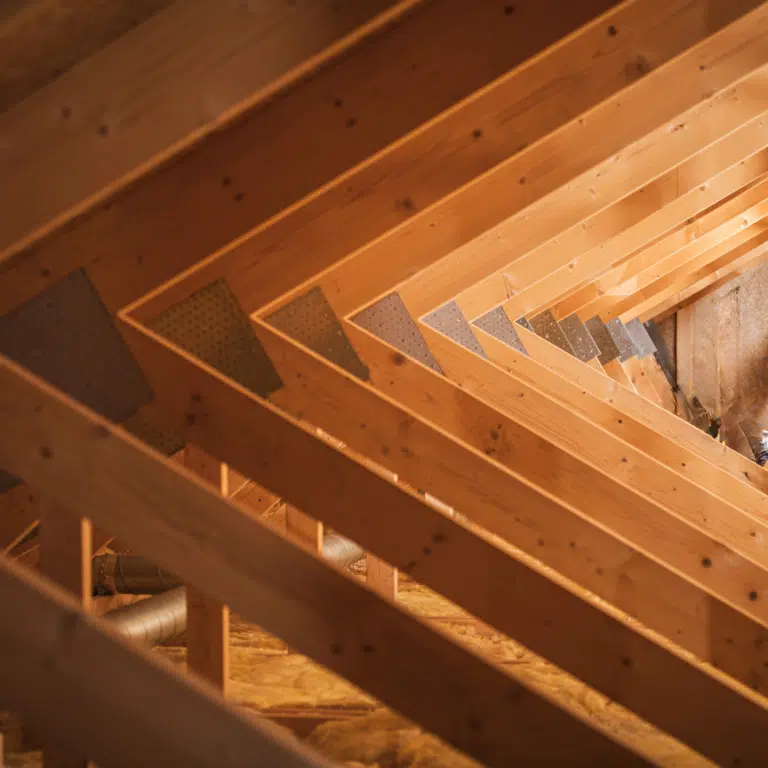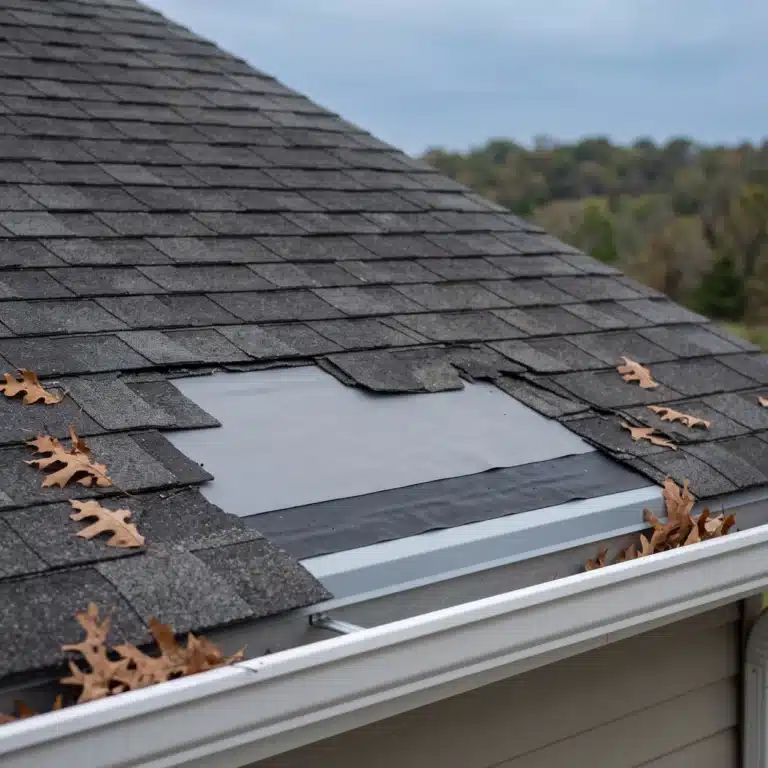

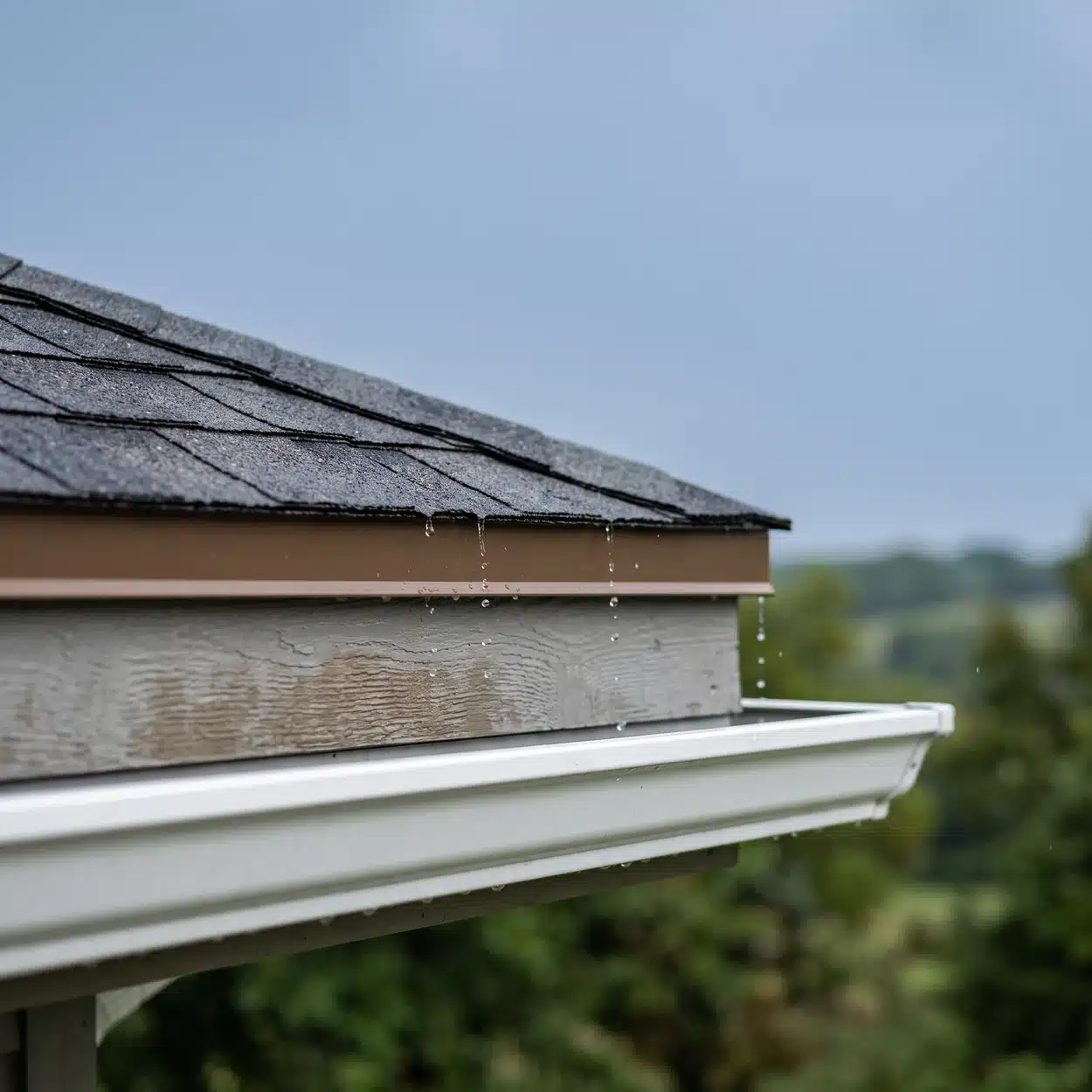
Drip edge is a narrow metal strip along the edges of your roof, and most homeowners never notice it. It still decides where water goes when it leaves the shingles. This guide explains what a roof drip edge does, how the common profiles differ, and how to check yours.
TLDR: Drip edge carries water off the roof edge and into the gutter instead of letting it creep back onto the wood. Older roofs fairly often have none, and a missing edge is a common reason fascia boards and deck edges rot. You can spot it from the ground or a ladder, and it belongs on every replacement quote in writing.
Maybe paint is peeling off the board behind your gutter, or water drips behind the gutter instead of into it. Both often trace back to a part most people cannot name.
Southwest Missouri rain arrives in heavy bursts, and storm winds push it sideways. Here is what drip edge does, whether you need it, and what to ask before you sign a quote.
What is a roof drip edge?
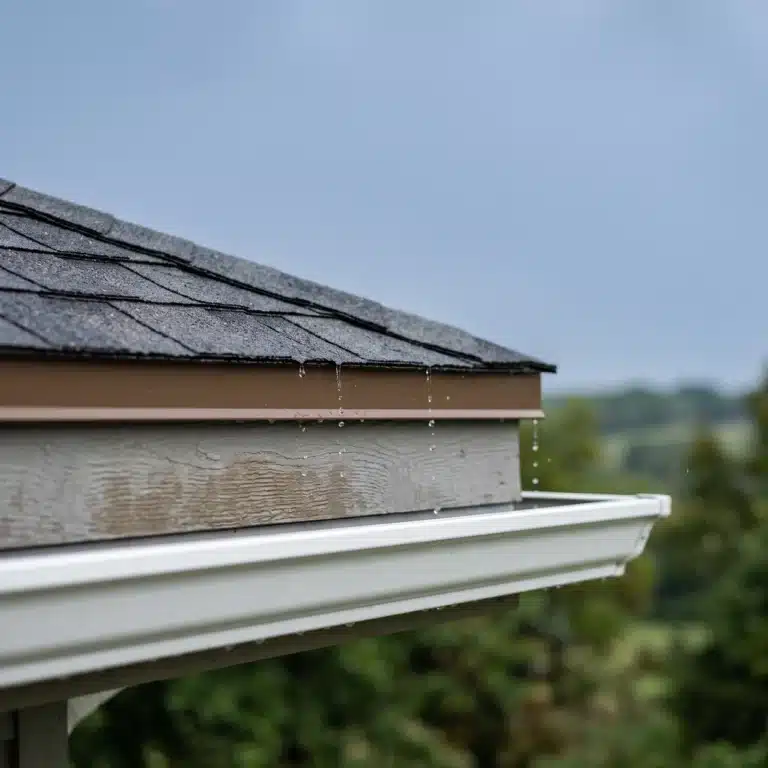
A roof drip edge is a bent strip of metal installed along the edges of the roof deck. The deck is the wood surface under your shingles. The metal covers its raw edge, supports the first row of shingles, and directs water away from the house.
- Eaves are the lower, level edges where gutters hang.
- Rakes are the sloped side edges at the gable ends.
- The fascia is the front-facing board at your roofline where gutters attach.
The U.S. Department of Energy’s Building America Solution Center calls for metal drip edge at both eaves and rakes. Metal is the standard on the roofs we install. It also works with the layers beneath it, covered in our article on what goes under your shingles.
Tip: Look up at the roofline from your yard. A thin metal lip between the shingles and the fascia is usually the drip edge.
Does my roof need drip edge?
In most cases, yes. Most current building codes require it on asphalt shingle roofs.
The International Code Council’s summary of 2012 IRC changes notes that drip edge became a requirement for asphalt shingles in that edition. Before that, it was often optional. On older roofs, we fairly often find no drip edge at all.
Drip edge typically gets replaced along with the roof every time. So if your home had a hail roof replacement in the last 15 years, it typically already has drip edge.
Cities and counties adopt and amend codes on their own. We are roofers, not code officials, so check with your local building department.
Important: Codes set a minimum. Manufacturer instructions can add requirements, and a good crew follows both.
Drip edge vs gutter apron: which profile fits
Standard drip edge works on rakes and eaves, while gutter apron is built for eaves with gutters.
The Asphalt Roofing Manufacturers Association describes two basic drip edge shapes. One is a simple L-shaped angle, and the other is a T or D shape with a lip that juts outward. Gutter apron adds a longer bottom leg.
| Profile | Shape | Where it usually goes | What it does best |
|---|---|---|---|
| L-style drip edge | Simple bent angle | Rakes, and eaves on some homes | Covers the deck edge |
| T-style or D-style drip edge | Angle with an outward lip | Eaves and rakes | Throws water clear of the fascia |
| Gutter apron | Longer lower leg angled down | Eaves with gutters | Carries water into the gutter |
On a home with gutters, the eave profile matters most. Ask which profile goes on each edge.
What goes wrong at the edge without it
Without edge metal, water at the roof edge can curl back under the shingles and onto the wood. Over time, it soaks the fascia, the deck edge and the back of the gutter.
Water behind the gutter
At a bare edge, dripping water clings to the shingle underside and runs down behind the gutter. Our guide to what a proper gutter installation involves lists this as a sign of missing or damaged drip edge.
Rot at the fascia and deck edge
Wet wood rots. The ARMA guide notes that drip edge keeps water from running under shingle edges and rotting the wood.
You can often spot edge trouble without climbing onto the roof. Here is what to look for.
| What you see | Where to look | What it may mean |
|---|---|---|
| Peeling paint on the fascia | Behind or just above the gutter | Water running behind the gutter |
| Dark streaks below the gutter | Fascia and siding under the eave | Water wicking past the roof edge |
| Soft or crumbling wood | Corners where eave meets rake | Long-term moisture at the deck edge |
| Shingle edges drooping down | Along the eave line | Shingles with no support at the edge |
One clue alone proves little, but two or three deserve a closer look.
Important: Soft fascia is a wood repair, not a gutter fix. Have the wood checked before new gutters go on it.
How drip edge fits with underlayment and ice and water shield
Layer order decides whether water drains out or gets trapped. At the eaves, the underlayment laps over the drip edge. At the rakes, the metal goes over the underlayment.
The ICC summary describes that same order, so water lands on top of the next layer instead of behind it.
Ice and water shield is a self-sealing membrane that stops water from getting under shingles where ice backs it up. The ARMA guide describes a sandwich at the eaves: a membrane strip, then the edge metal, then more underlayment.
| Edge | Layer order, bottom to top | Why it works |
|---|---|---|
| Eave, standard underlayment | Deck, drip edge, underlayment, shingles | Water drains onto the metal |
| Eave with ice and water shield | Deck, membrane strip, drip edge, more underlayment, shingles | The edge is sealed above and below |
| Rake | Deck, underlayment, drip edge, shingles | Metal shields the underlayment edge |
Some wind-resistance guides change the order at the eave, so ask your contractor which order they follow.
Pro tip: Ask for a photo of the eave detail before shingles cover it. It is the only record you will have.
Checking your roof drip edge in Southwest Missouri
You can usually check from the ground with binoculars or from a ladder at a gable end. Look for a metal lip between the shingle edge and the fascia.
Our weather tests roof edges hard. Spring storms drive rain sideways, and winter melt refreezes at the cold eaves.
- Study every eave and rake on a dry day.
- Check the fascia for peeling paint, streaks or soft spots.
- Watch where water falls from the eaves during a steady rain.
- From a stable ladder at a rake, look under the shingle edge for metal or bare wood.
Important: Set a ladder on firm, level ground and never step onto the roof. If the edge is two stories up, stay on the ground.
What to ask on a replacement quote
Edge metal does not always get its own line on a quote, so ask.
- Is new drip edge included at every eave and rake?
- Which profile goes on the eaves, and which on the rakes?
- How does it lap with the underlayment and membrane?
- Is all of it written on the quote?
Planning roof replacement in Republic or nearby? Bring this list to every estimate.
Illustrative scenario: A homeowner in Ash Grove sees peeling paint behind one gutter. An inspection finds no drip edge on that eave and soft wood at the deck edge. The replacement quote adds edge metal everywhere, and the fascia gets fixed before the new gutter goes up.
Frequently asked questions
What does a roof drip edge do?
It covers the deck edge, supports the first row of shingles, and directs water away from the fascia. Without it, water can curl back under the shingles. Check your roofline from the ground to see if you have it.
Does my roof need drip edge?
In most cases, yes. Most current building codes require it on asphalt shingle roofs, though local rules vary. Ask your building department, and ask your roofer whether it is on your quote.
What is the difference between drip edge and gutter apron?
Gutter apron has a longer lower leg that reaches down into the gutter. Standard drip edge works on rakes and on eaves. Ask which profile your contractor plans for each edge.
Can drip edge be added without replacing the roof?
Sometimes it can be slipped under the existing shingle edge. Older shingles can crack when lifted, and the layer order is harder to get right. Ask for an inspection to see which option fits.
Should drip edge go over or under the underlayment?
At the eaves, the underlayment usually goes over the metal. At the rakes, the metal goes over the underlayment. Ask your contractor to explain the order on your roof.
Why is water dripping behind my gutter?
Missing or damaged edge metal is one common cause. A gutter that sits too low can do the same. Watch the eave in a steady rain, then have the edge and gutter checked together.
Will drip edge stop ice dams?
No. Ice dams form when attic heat melts snow that refreezes at the colder eave. Edge metal and ice and water shield help protect the edge when water backs up, so ask about attic ventilation too.
How long does drip edge last?
It generally lasts as long as the roof if it stays fastened. It typically gets replaced along with the roof. Ask for new edge metal on any replacement quote.
Who should check my drip edge?
You can take a first look from the ground. A roofer can check the layer order, deck edge and fascia during a free roof inspection from our team. Schedule one before the next heavy rain.
Key takeaways
- What it is: Bent metal at the eaves and rakes that guards the deck edge.
- Whether you need it: Most current building codes require roof drip edge, and older roofs fairly often lack it.
- Profiles: Gutter apron reaches into the gutter, and standard drip edge fits any edge.
- Warning signs: Peeling fascia and water behind the gutter point to edge trouble.
- Layer order: Underlayment goes over the metal at the eaves and under it at the rakes.
- Quotes: Get edge metal and its profile written into every quote.
Protect the edges of your roof
If your fascia is peeling or water drips behind the gutter, have the roof edge checked before winter melt makes it worse.
Teague Roofing Plus has protected Southwest Missouri homes since 1971, and we are still family owned.
- Free roof inspections and estimates
- Roof replacement with architectural shingles
- Owens Corning Platinum Preferred Contractor
- Gutter installation and repair
- Local crews, not out-of-state storm chasers
Call 417-883-7663 for a free estimate, or use our online contact form at teagueroofingplus.com and our team will follow up.
Teague Roofing Plus, Roofing, Siding, Windows, Gutters, and More. Serving Southwest Missouri Since 1971.