
The layer you pay for and never see does more work than most homeowners realize. Underlayment sits between your shingles and the wood deck, and it is the last line of defense when wind drives water where shingles cannot stop it. This guide explains what goes under a Southwest Missouri roof and why the choice matters.
TLDR: Shingles are the first defense, not the only one. Underlayment catches wind-driven water that gets past them, and a self-sealing membrane protects the areas most likely to leak. What goes underneath is worth asking about, because you will not be able to see it afterward.
Every roof quote lists shingles. Most homeowners compare quotes on that line alone.
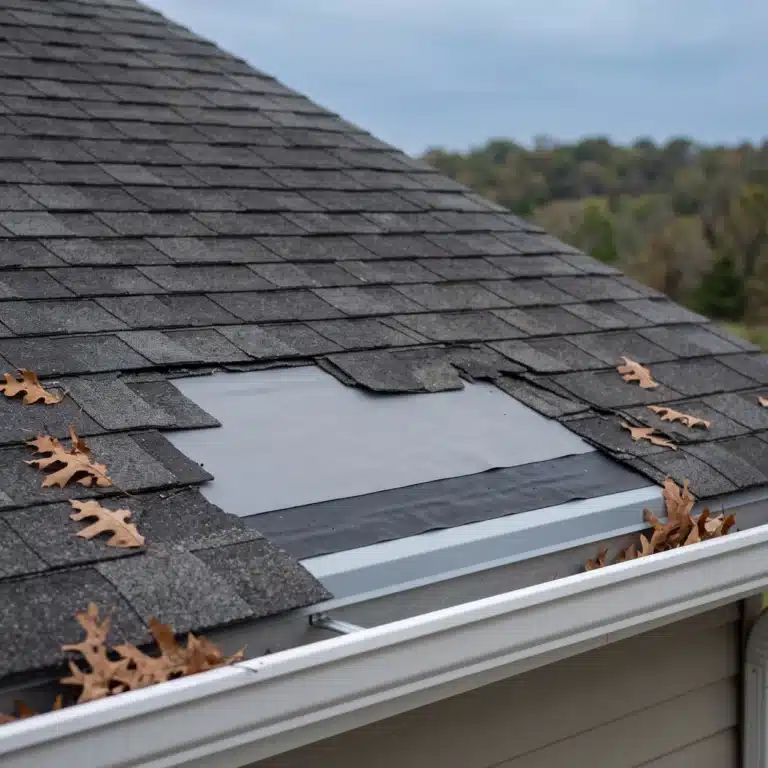
The layer nobody asks about is the one still working when a storm drives rain sideways under the shingle course. On plenty of tear-offs the shingles are fine and the deck underneath is ruined.
Here is what is down there and what to ask about it.
What underlayment actually does
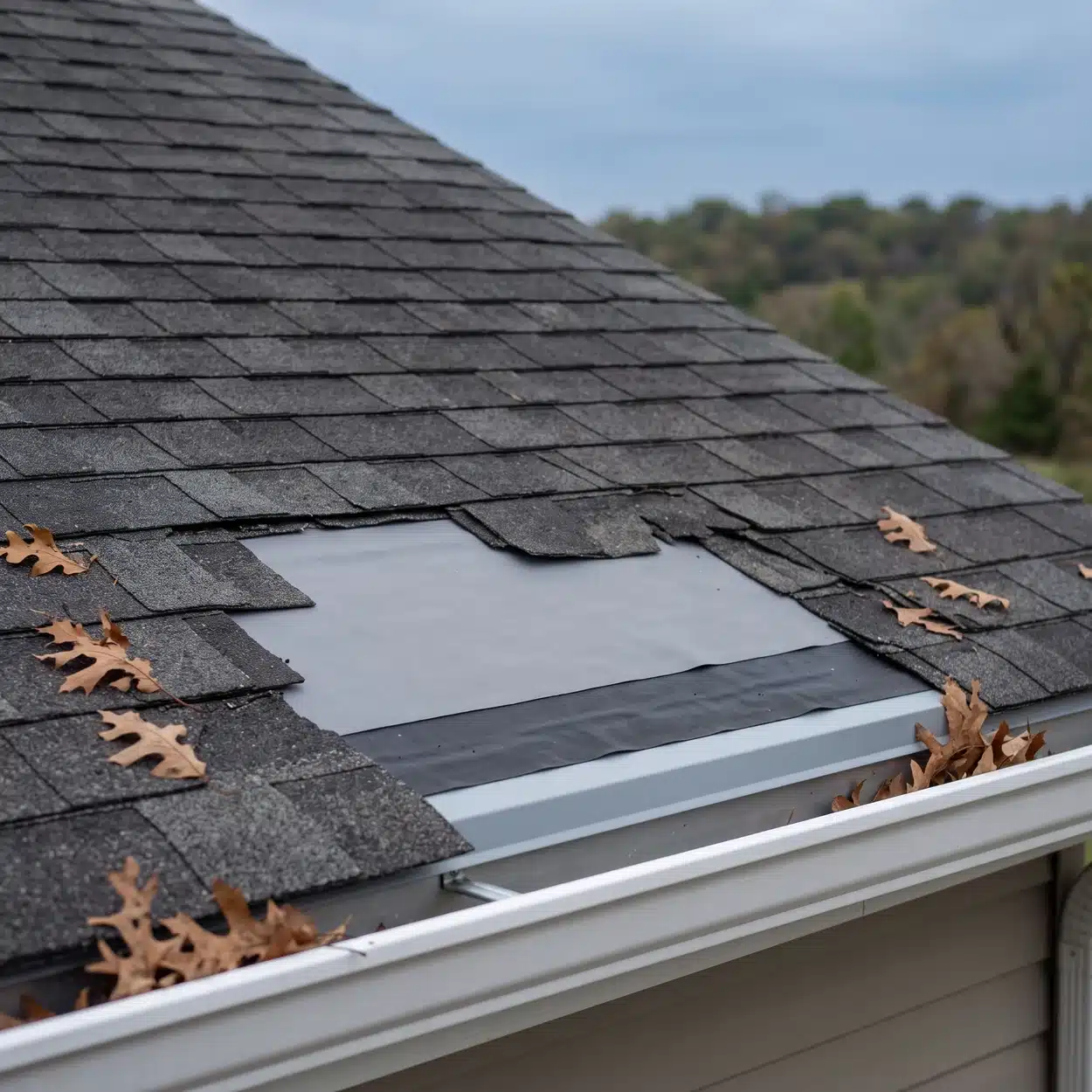
Underlayment is a protective layer rolled over the wood deck before shingles go on. It does three jobs.
Industry roofing guidelines treat underlayment as part of the roof system rather than an accessory. It keeps the deck dry during the install, before shingles are on. It catches wind-driven water that gets under shingles during a storm. And it gives the assembly a second chance when a shingle is damaged or missing.
| Job | When it matters |
|---|---|
| Protecting the deck during install | Between tear-off and new shingles |
| Catching wind-driven water | Every high wind storm for the roof’s life |
| Backup for damaged shingles | After hail or wind lifts a shingle |
That middle one is the reason it matters in this region. Our storms do not drop rain straight down.
Important: Underlayment is not a rain jacket for your house. It is a backup layer, and it is not designed to be exposed long-term.
Felt versus synthetic
Older roofs typically used asphalt-saturated felt. Most modern installs use a synthetic sheet.
| Felt | Synthetic | |
|---|---|---|
| Weight | Heavier per roll | Lighter, larger coverage |
| Tear resistance | Lower, tears at fasteners | Higher |
| Wet behavior | Can wrinkle and absorb | Sheds, stays flat |
| Exposure tolerance | Short | Longer, though still limited |
Synthetic has largely become standard because it handles installation abuse and weather delays better. Ask which one your quote includes, because it is rarely stated.
Pro tip: Ask your contractor to write the underlayment product on the quote, not just the word “underlayment.”
Ice and water shield, and where it belongs
This is a different material entirely. It is a self-adhering membrane that sticks directly to the deck and seals around fastener shanks driven through it.
That sealing behavior is the point. A nail through ordinary underlayment leaves a hole. A nail through this membrane gets gripped.
It goes in the places most likely to see standing or backed-up water:
- Along the eaves where ice dams form
- In valleys, where water volume is highest
- Around chimneys and wall transitions
- Around vents and other penetrations
- At low-slope sections of an otherwise steep roof
Tip: Ask specifically where the membrane is going, not just whether it is included. Coverage area is where quotes differ most.
Why this matters in Southwest Missouri
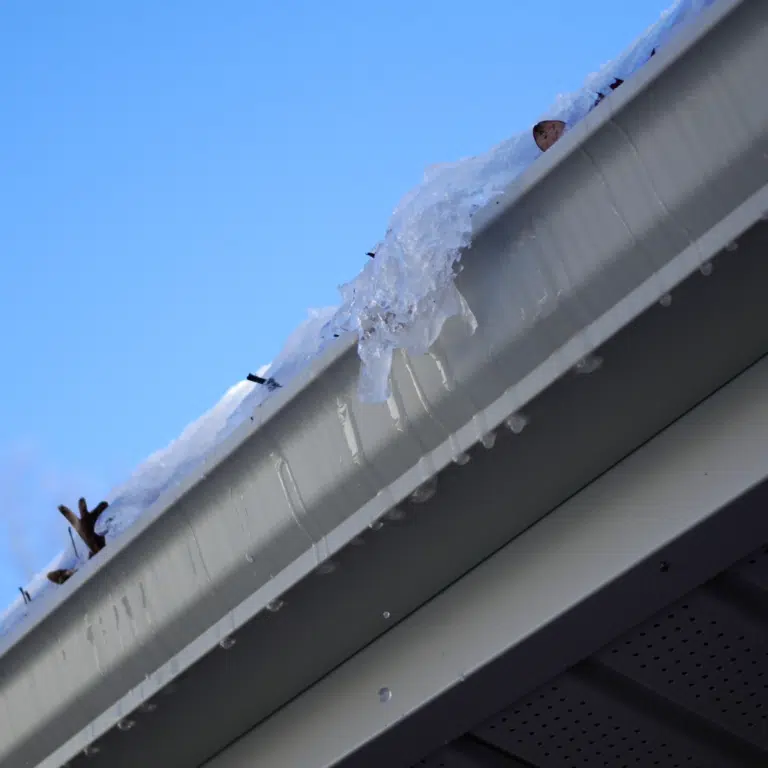
Our winters produce the exact conditions ice and water shield exists for. Snow melts against a warmer roof surface, runs to the cold eave, and refreezes. Our post on ice dam prevention in Southwest Missouri covers how that forms. That ridge of ice backs water up under the shingle course, where gravity no longer helps you.
Shingles cannot stop water moving uphill. A sealed membrane can.
Our high-wind storms create the second case. Wind-driven rain gets under shingle courses in a way ordinary rainfall does not, and underlayment is what is standing between that water and your deck.
Homeowners planning roof replacement in Springfield should treat the underlayment specification as part of the comparison rather than a detail. Our post on preparing gutters for freezing temperatures covers the winter side in more depth.
Important: If two quotes differ noticeably and you cannot see why, the difference is often underlayment type and membrane coverage.
Comparing quotes on what you cannot see
Work through this before signing.
- Ask which underlayment product is included, by name.
- Ask whether it is felt or synthetic.
- Ask where ice and water shield is being installed, specifically.
- Ask how far up from the eave the membrane runs.
- Ask whether valleys get membrane or only underlayment.
- Ask what happens if deck damage is found during tear-off.
- Get all of it written on the quote.
Illustrative scenario: Two quotes on a home in Nixa look close. One includes synthetic underlayment with membrane at eaves, valleys and all penetrations. The other includes felt with membrane only at the eaves. The roofs will look identical on day one and behave differently in year eight.
If you are choosing materials more broadly, our guide to choosing roof color and shingle style covers the surface layer, and a free inspection establishes what you are starting from.
When two quotes differ and you cannot see why, these are usually the lines doing it.
| Line item | What to confirm |
|---|---|
| Underlayment type | Felt or synthetic, named product |
| Membrane at eaves | Present, and how far up from the edge |
| Membrane in valleys | Included or underlayment only |
| Membrane at penetrations | Each one, or only some |
Pro tip: Photograph the deck and underlayment during your own roof replacement. It is the only chance you will get.
Frequently asked questions
Do I really need ice and water shield in Missouri? Our winters produce freeze and thaw cycles and ice at the eaves, which is the condition this membrane addresses. Coverage varies by quote. Ask where it is going rather than whether it is included.
What is the difference between underlayment and ice and water shield? Underlayment is a rolled protective layer across the deck. Ice and water shield is a self-adhering membrane that seals around nail shanks. They do different jobs and most roofs use both.
Is synthetic underlayment worth it over felt? Synthetic generally handles tearing, wind and weather delays better during and after installation. Most current installs use it. Ask which your quote includes, because the word “underlayment” alone does not tell you.
Can underlayment alone keep water out? Not as a permanent surface. It is a backup layer, not a roof. Extended exposure degrades it, which is why a tear-off should not sit open longer than necessary.
Where should ice and water shield be installed? Commonly at eaves, in valleys, around chimneys and wall transitions, around penetrations, and on low-slope sections. Coverage is where quotes differ most, so ask for specifics in writing.
Will I be able to tell what was installed after the roof is done? No, and that is the point of asking beforehand. Once shingles are on, the underlayment is invisible until the next tear-off. Get the products named on the quote.
Does better underlayment help with hail? Hail resistance comes mainly from the shingle. Underlayment matters afterward, when a damaged shingle no longer sheds water properly. The two work together rather than substituting for each other.
Does underlayment affect my warranty? It can. Some manufacturer coverage depends on using compatible components throughout the system. Ask whether your quoted materials qualify for the coverage you are being offered.
How long does underlayment last? Under shingles and protected from sun, it generally lasts the life of the roof covering. Exposure is what shortens it, which is why installation practice matters.
Key takeaways
- The layer you never see does real work
- Protects during install, catches wind-driven water, backs up damaged shingles.
- Felt and synthetic are not the same
- Synthetic resists tearing and weather delay better.
- Ice and water shield is a different material
- Self-adhering, seals around fasteners, goes where water backs up.
- Missouri winters are the use case
- Ice at the eave pushes water uphill where shingles cannot help.
- Get it in writing
- Product names and membrane coverage, on the quote.
Ask what is going under your shingles
Two roof quotes can look nearly identical and specify very different assemblies underneath.
We have torn off enough Southwest Missouri roofs since 1971 to know what the layer underneath decides. Owner Josh Tessmer runs the business on explaining the parts you cannot see.
What you get when you call:
- A free roof inspection with written findings
- Underlayment and membrane coverage specified clearly on your quote
- A plain explanation of what changes between options
- Local crews who live here, not out-of-state storm chasers
Call 417-883-7663 for a no-pressure estimate, or reach out online.
Teague Roofing Plus, Roofing, Siding, Windows, Gutters, and More. Serving Southwest Missouri Since 1971.