
Frame material is easy to overlook and hard to change later. Vinyl, fiberglass, wood and aluminum each handle heat, cold and storms in their own way. This guide compares all four for Southwest Missouri, so you can pick the best window material for your house instead of a sales pitch.
TLDR: No single frame is the best window material for every house. Vinyl and fiberglass insulate well and need little upkeep. Wood offers a classic look but needs regular care, and aluminum is strong and slim but loses heat fastest. Think about humid summers, freeze and thaw winters, and hail. Then match the frame to your home’s style and your appetite for upkeep.
Most window shopping starts with the glass and the price. The frame often gets decided by whatever the first quote happened to list.
That frame has to live through a full Ozarks year. It bakes in humid July heat, shrinks on January nights, and takes whatever hail spring throws at it.
Teague Roofing Plus offers exterior window replacement in all four common frame materials. Vinyl is by far the material we install most. Depending on the customer, though, we install whatever window material the job needs. Here is how the four compare.
What is the best window material for Missouri?
There is no single best window material for every Missouri home. Vinyl and fiberglass suit owners who want low upkeep. Wood suits homes where the look matters most, and aluminum suits slim, modern designs.
A few quick facts frame the choice:
- The frame is part of how well a window insulates, not just the glass.
- Every frame material expands and contracts with temperature, some much more than others.
- ENERGY STAR rates windows by climate zone. Its fact sheet on certified windows says central zones balance insulating against blocking heat.
Not sure you need new windows yet? Start with our post on deciding whether windows need replacing or resealing.
Here are the four materials at a glance. Treat the table as a starting point, not a final ranking.
| Material | Insulation | Upkeep | Look |
|---|---|---|---|
| Vinyl | Good, with hollow insulating chambers | Very low, no painting | Clean lines, color set at the factory |
| Fiberglass | Very good, cavities can hold insulation | Low, paint can be refreshed | Can mimic painted wood |
| Wood | Good natural insulator | Highest, needs paint or stain | Warm, classic look |
| Aluminum | Poor unless it has a thermal break | Low, but watch for condensation | Slim frames, more glass |
Three of the four insulate well. The real differences are upkeep, looks and movement.
Vinyl vs fiberglass windows
Vinyl vs fiberglass windows is the closest matchup here. Both insulate well and need little care, but they move differently as temperatures change.
Vinyl windows
The Department of Energy’s Types of Windows guide describes vinyl frames as PVC with UV stabilizers to resist sun damage. Vinyl never needs paint, and it is usually the most affordable option.
The tradeoff is movement. The University of Alaska Fairbanks extension guide Window Shopping notes that vinyl can warp and flex with temperature changes, which can stress the window’s seals.
Fiberglass windows
Fiberglass frames hold their shape as temperatures change, and their hollow cavities can be filled with insulation. The same extension guide notes that fiberglass expands and contracts much less than vinyl. Many fiberglass frames can also be painted.
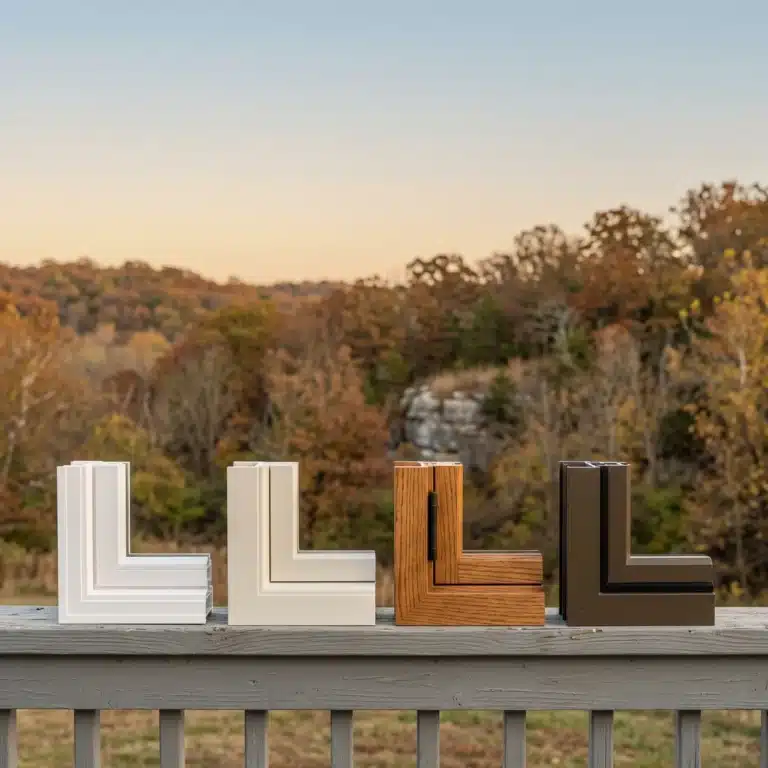
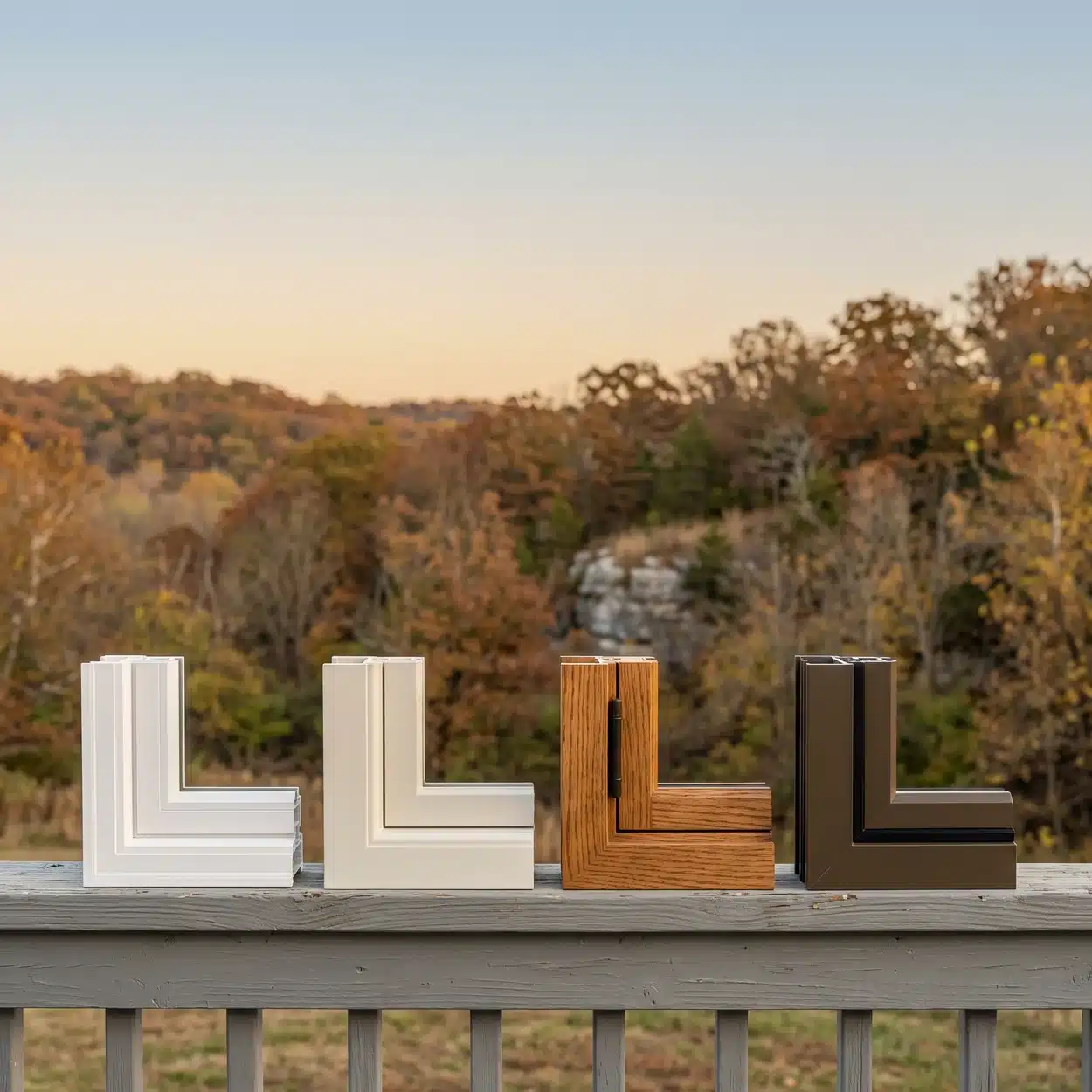
Tip: Ask to see a corner sample of each frame you are considering. The corner joint shows how well the frame will handle movement.
Want us to come look at it? Call 417-883-7663. It's free and takes 30 to 45 minutes.
Wood vs vinyl windows, and where aluminum fits
Wood vs vinyl windows comes down to looks against upkeep. Aluminum fills a narrower role.
Wood windows
Wood insulates relatively well, but it also expands and contracts with the weather. In humid conditions it can swell, and trapped moisture can lead to rot.
That makes paint and stain a regular chore. Wood still makes sense on older homes where matching original trim matters, and clad wood adds a vinyl or aluminum shell outside to cut upkeep.
Aluminum windows
Aluminum windows are strong, light and close to maintenance free. Their weakness is that metal conducts heat very well, so it insulates poorly on its own.
Many aluminum frames include a thermal break, an insulating strip between the inside and outside metal. Without one, the inside of the frame can get cold enough in winter to collect condensation.
Pro tip: If you are leaning toward aluminum, ask whether the frame has a thermal break. It makes a real difference where winters get cold.
How does Missouri weather affect window frames?
Southwest Missouri tests frames from both directions. Humid summer heat and freezing winter nights make frames grow and shrink every year, and spring storms add hail and wind-driven rain.
Here is what each condition does and what to ask before you buy.
| Condition | What it does to frames | What to ask |
|---|---|---|
| Humid summer heat | Swells wood and works vinyl joints | How does this frame handle heat? |
| Freeze and thaw winters | Repeated movement stresses joints and seals | How are the corners joined and sealed? |
| Hail | Can dent aluminum and crack cold vinyl | What does the warranty say about storm damage? |
| Wind-driven rain | Tests the seal between frame and wall | How will the opening be flashed? |
Those four questions apply to any frame you pick.
After a hailstorm, check window frames and screens along with the roof. If you need storm damage repair in Nixa or nearby, start on the storm side of the house. Freeze and thaw works on the wall around windows too, as our post on how freeze and thaw cycles damage siding explains.
Important: A frame that leaks water is more urgent than one that leaks air. Water past the frame reaches the wall, and wall repairs are a much bigger job.
Finding the best window material for your house
The best window material for your house fits its style, its exposure and your tolerance for upkeep.
Match your situation to a frame below. Most homes fit more than one row, so look for the material that shows up most.
| If this sounds like you | Consider | Why |
|---|---|---|
| You want the least upkeep on a modest budget | Vinyl | No painting, usually the most affordable |
| You want stability through big temperature swings | Fiberglass | Moves far less than vinyl |
| You own an older or traditional-style home | Wood or clad wood | Matches original trim and profiles |
| You want slim frames and lots of glass | Aluminum with a thermal break | Strong, narrow frames |
| You want a painted look without wood upkeep | Fiberglass | Takes paint and stays stable |
If two materials tie, let the house break the tie. Vinyl may be the most common choice, but common is not the same as right for your home.
Pro tip: Compare quotes on the same frame material. A vinyl quote and a fiberglass quote are not an even comparison.
- Pick your top two priorities: upkeep, looks, budget or stability.
- Note which walls get hard afternoon sun or take the brunt of storms.
- Narrow the field to two materials using the table above.
- Ask for corner samples and finish options for both.
- Ask how each window will be flashed and sealed into the opening.
Illustrative scenario: A couple is planning siding replacement in Willard and new windows in the same season. They want low upkeep but like painted trim. Fiberglass gives them a paintable, stable frame in a color that works with the new siding.
Tip: Drafts are not always a frame problem. Our guide to sealing drafty windows before winter covers quick fixes.
Frequently asked questions
What is the best window material for a Missouri home?
It depends on the house and what you value most. Vinyl and fiberglass suit low upkeep, wood suits traditional homes, and aluminum suits slim, modern designs. List your top two priorities, then compare the two materials that fit them.
Vinyl vs fiberglass windows: which handles Missouri weather better?
Both insulate well and need little care. Fiberglass moves much less than vinyl through hot summers and freezing winters, while vinyl usually costs less. Ask for samples of both and compare the warranties side by side.
Are wood windows a bad idea in a humid climate?
Not if you keep up with them. Wood can swell and rot if moisture gets in, so paint and stain need regular attention. If upkeep is not your thing, ask about clad wood.
How do wood vs vinyl windows compare on upkeep?
Vinyl needs little more than an occasional wash. Wood needs paint or stain on a schedule and a close eye on the sills. Decide which matters more to you, time saved or a traditional look.
Do aluminum windows make sense in Missouri?
They can, especially on modern homes with slim frames and lots of glass. Metal conducts heat, so a thermal break matters here. Ask any installer to confirm it in writing.
Does frame material affect energy efficiency?
Yes. The frame is part of the whole window, and some materials insulate far better than others. Compare the rating for the complete window before you decide.
Can hail damage window frames?
It can. Hard hail can dent aluminum and crack vinyl, especially in cold weather, and screens often take hits too. After a hailstorm, walk around the house and photograph any frame damage you find.
Can I use different frame materials on the same house?
Yes. Some homeowners use wood on the front for looks and a lower-upkeep material elsewhere. Keep colors and profiles consistent, and look at samples side by side before you commit.
Do you install all four window materials?
Yes. Teague Roofing Plus installs vinyl, fiberglass, wood and aluminum windows. Vinyl is by far the material we install most, but depending on the customer, we install whatever material the job needs. Call for a free estimate to talk through the options.
Key takeaways
- No single winner: The best frame depends on your house, your exposure and your upkeep tolerance.
- Vinyl: Low upkeep and usually the most affordable, but it moves more with temperature swings.
- Fiberglass: Stable, well insulated and paintable.
- Wood: The classic look for traditional homes, with the most maintenance of the four.
- Aluminum: Strong and slim, but choose a thermal break to limit heat loss and condensation.
- Installation matters: A good frame in a poorly sealed opening still leaks.
Match the frame to the house, not the sales pitch
Choosing a frame is easier when someone lays out all four options without a favorite.
Teague Roofing Plus has been a family-owned Southwest Missouri exterior company since 1971.
When you reach out, you get:
- A free, no-pressure window estimate
- All four frame materials on the table
- Local crews, not out-of-state storm chasers
- BBB A+ rated since December 2019, and a Nextdoor Neighborhood Favorite in 2022 and 2024
Call 417-883-7663 to set up a free window estimate. You can also request a window estimate online through teagueroofingplus.com.
Teague Roofing Plus, Roofing, Siding, Windows, Gutters, and More. Serving Southwest Missouri Since 1971.