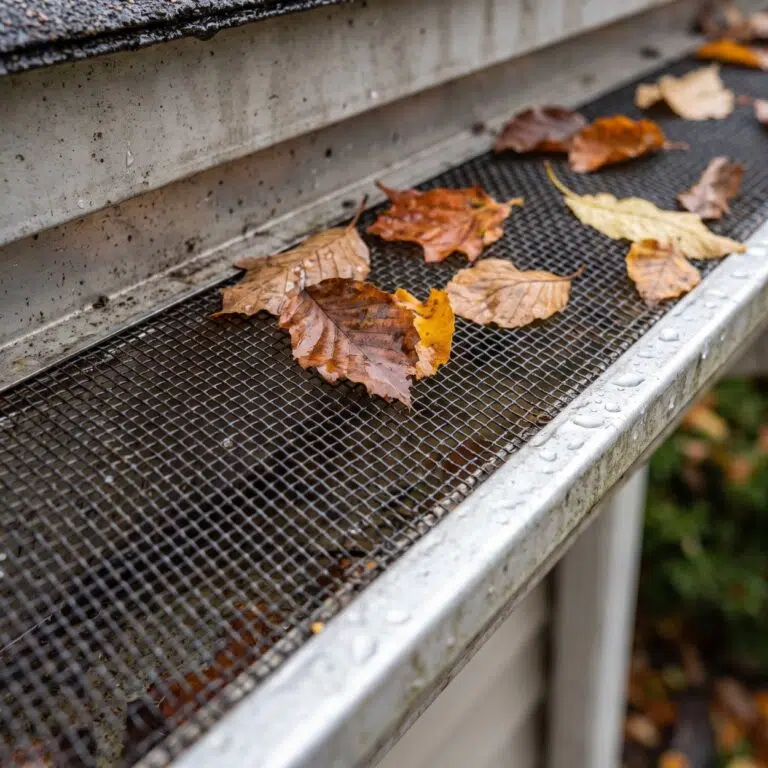

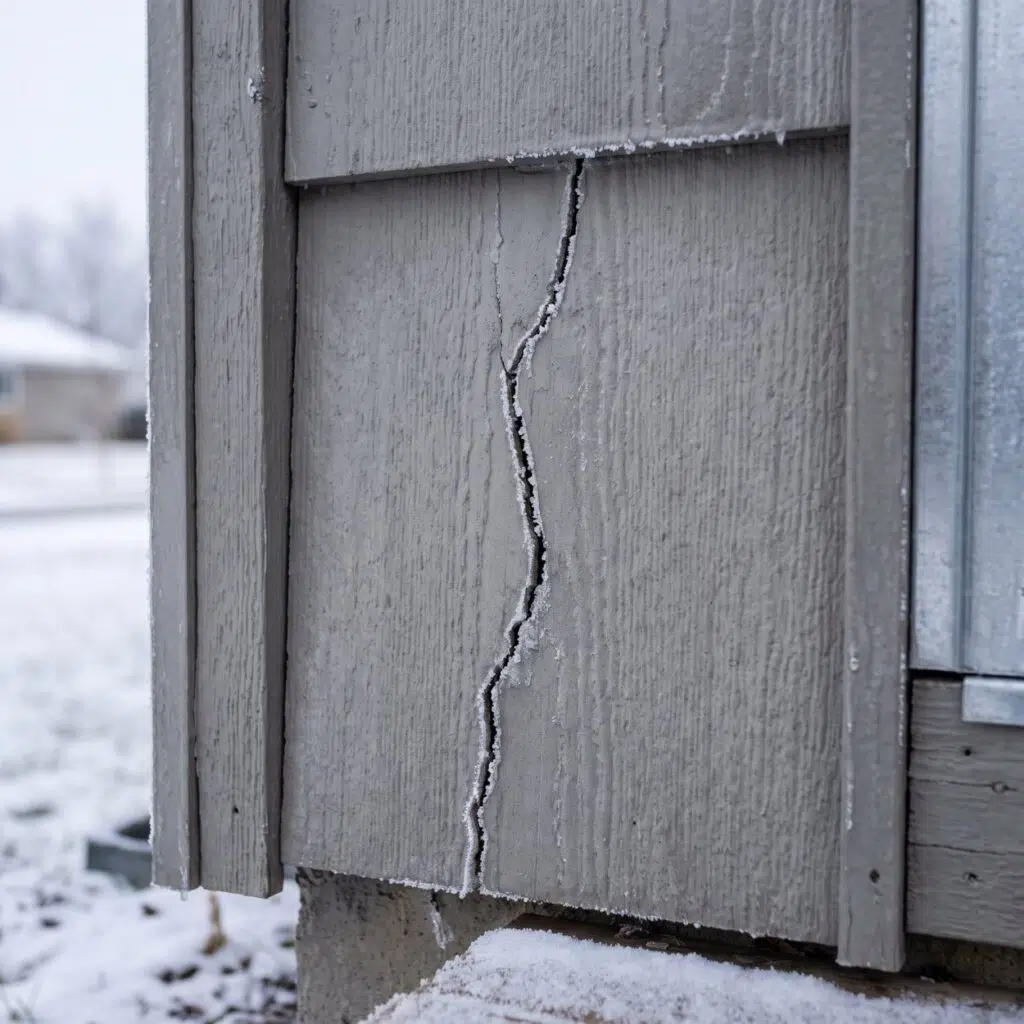
Siding gets checked after hail and ignored the rest of the year. Winter does its own kind of damage, slowly, through repeated freezing and thawing rather than a single impact. This guide covers what freeze and thaw does to siding, how each material behaves in cold, and what to look for before the first hard freeze.
TLDR: Freeze and thaw damages siding by working water into small gaps, freezing it, and widening them slightly each cycle. Vinyl becomes brittle in cold and cracks on impact, fiber cement absorbs water at unsealed edges, and wood based products swell and split. Trim, corners, and areas around openings fail first, and those are where water gets into the wall.
Hail damage to siding is dramatic and obvious once you know to look. Freeze and thaw damage is neither.
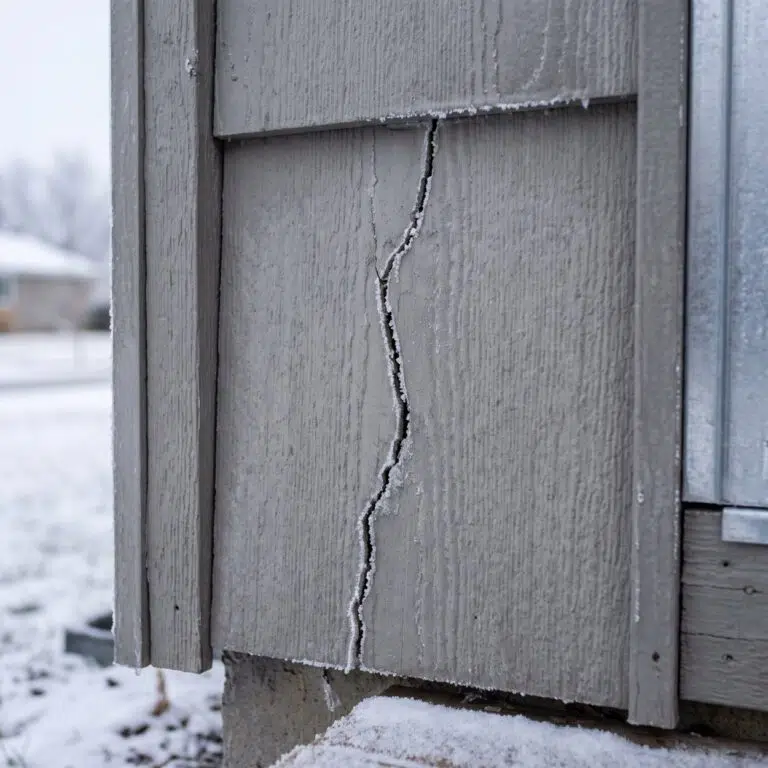
It happens over months, one small movement at a time, in places that are hard to see from the driveway. A hairline crack at a corner, a seam that opened a little, caulk at a window that pulled away. Individually none of it looks urgent.
Then wind driven rain finds those gaps, water gets behind the siding, and the damage moves into the wall where nobody sees it until it is substantial. We handle siding across Springfield, Battlefield, and Rogersville, and this is the failure mode that surprises homeowners most. Here is how it works.
What Freeze and Thaw Actually Does to Siding
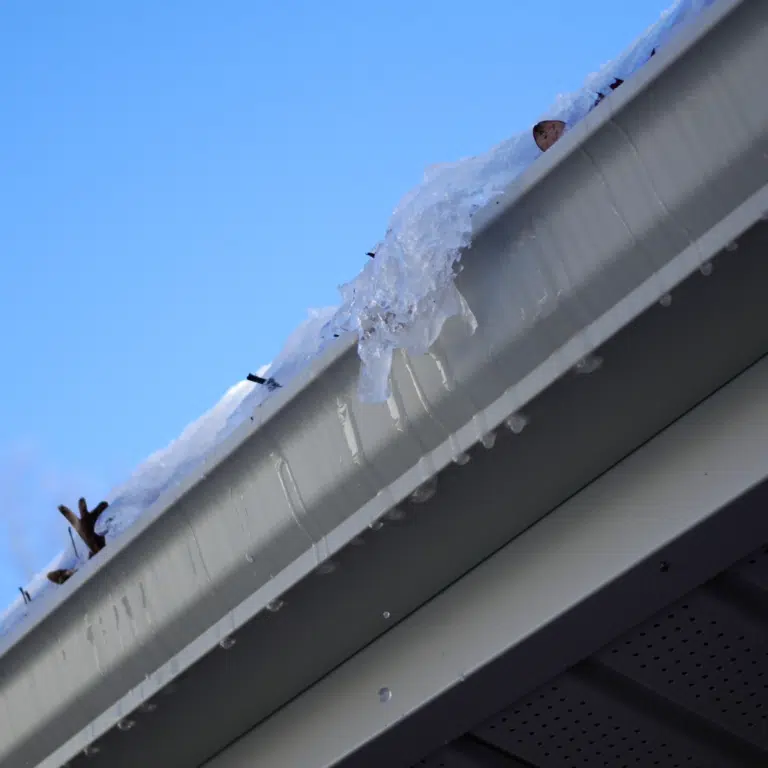
The mechanism is simple and relentless. Water gets into a small gap or a porous surface. Temperature drops below freezing and the water expands as it turns to ice, pushing the gap slightly wider. Temperature rises, the ice melts, and more water enters the now larger opening.
One cycle changes almost nothing. Southwest Missouri delivers many cycles per winter, because our temperatures swing across the freezing point rather than staying steadily cold.
The places this concentrates are the joints. Field panels are relatively stable; seams, corners, trim, and the areas around windows and doors move more and have more edges for water to find.
Pro Tip: Inspect siding in early morning or late afternoon when the sun is low. Raking light reveals cracks, waviness, and lifted edges that midday sun completely flattens out.
How Each Siding Material Behaves in Cold
Materials fail differently, which changes what you should be looking for.
| Material | Cold weather behavior | What to look for |
|---|---|---|
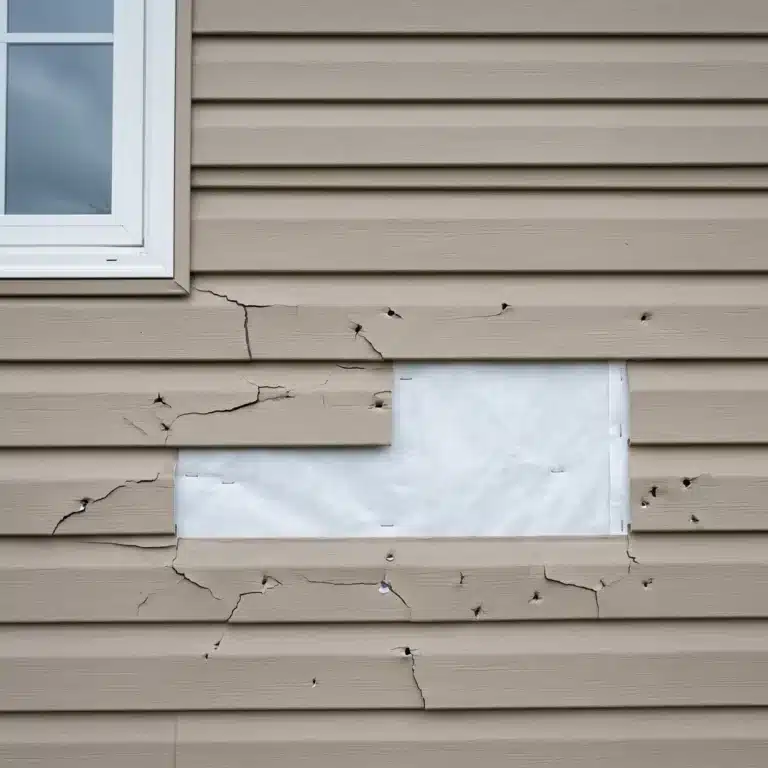
| Vinyl | Becomes brittle, cracks on impact when cold | Cracks and splits, especially low on walls |
| Fiber cement | Absorbs water at cut or unsealed edges | Chipping, soft edges, paint failure at seams |
| Engineered wood | Swells if moisture reaches the substrate | Swelling at edges, separation at seams |
| Wood | Absorbs and releases moisture, moves seasonally | Splits, cupping, failing paint |
| Any material | Sealant and caulk harden and crack | Gaps at trim, corners, and openings |
The takeaway is that the last row applies to every home regardless of siding type. Caulk is the shortest lived component on most exteriors, and it is what seals exactly the joints that freeze and thaw attacks. Our guide to siding damage from hail and wind covers the impact side.
Where Water Gets In
Siding is a shedding layer, not a waterproof one. Behind it there is a water resistive barrier and sheathing, and the assembly assumes some water gets past and needs to drain and dry.
That works while the shedding layer is intact. Freeze and thaw compromises it at specific points.
FEMA field assessments of wind and water damage found water intrusion occurring where there was damage to exterior wall coverings, roof covering damage, loss of roof ventilation components, and openings around windows, and noted that infiltrating water can saturate insulation, seep into wall systems, damage interior finishes, and lead to mold growth.
| Entry point | Why it fails in winter |
|---|---|
| Around windows and doors | Caulk hardens and separates from the frame |
| Outside and inside corners | Trim moves at a different rate than panels |
| Horizontal seams between panels | Joint opens slightly with each cycle |
| Bottom courses near grade | Splash and snow contact keeps them wet |
| Penetrations for fixtures and vents | Sealant fails around the opening |
The takeaway is that these five spots deserve the attention, not the middle of a wall. Water entering at a corner can travel a long way inside the assembly before anything shows.
Important: There is often no interior sign until the damage is significant. Unlike a roof leak with its ceiling stain, water behind siding works on the sheathing and framing first.
What to Check Before the First Hard Freeze
Walk the full perimeter and look at each elevation separately, especially the sides that face prevailing weather.
- Check caulk around every window and door for cracks or separation.
- Look at outside and inside corners where trim meets panels.
- Inspect horizontal seams for gaps that have opened.
- Check the bottom courses near grade for swelling or soft spots.
- Press gently on panels to feel for looseness or hollow areas.
- Look for staining or discoloration, which can indicate water tracking.
- Photograph anything you find, with the date.
Step one covers the highest value item. Caulk at openings is inexpensive to renew and it seals the joint most likely to let water in.
Southwest Missouri gives siding an active season generally. NOAA recorded 120 separate billion dollar weather and climate disasters affecting Missouri from 1980 through 2024, most of them severe storms, and you can follow local conditions through the National Weather Service office in Springfield.
Pro Tip: Renew exterior caulk in mild weather, not cold. Caulk needs moderate temperatures to cure and bond properly, so a September application performs far better than a December one.
Repair or Replace: Winter Timing
Not every finding requires major work. The distinction is how widespread it is and whether water has already gotten behind.
| Situation | Usually repair | Usually replace |
|---|---|---|
| Extent | A few panels or seams | Widespread across elevations |
| Caulk and sealant | Renew at joints | Not the underlying issue |
| Material match | Same product available | Discontinued or badly weathered |
| Moisture behind siding | None found | Sheathing affected |
| Siding age | Sound overall | Aging with prior repairs |
The takeaway is that most freeze and thaw findings are maintenance, caught early. They become replacement conversations when they are left for several winters. Our overview of siding replacement materials covers the options, and our siding replacement service covers the work itself.
Illustrative scenario: A homeowner in Battlefield found cracked caulk at three windows and one open seam on the north elevation during a fall walkaround. All four were sealed before the freeze. Left through winter, that north wall would have taken wind driven rain into the joints repeatedly with nothing visible inside until spring.
Frequently Asked Questions
How does freeze and thaw damage siding?
Water works into small gaps or porous edges, freezes and expands, and widens the gap slightly. When it thaws, more water enters the larger opening and the cycle repeats. Over a Missouri winter that happens many times, because our temperatures swing across freezing rather than staying steadily cold.
Which siding material handles cold best?
Each has trade offs rather than one being universally best. Vinyl becomes brittle and cracks on impact when cold, fiber cement absorbs water at unsealed cut edges, and wood based products move with moisture. What matters more than material is whether seams, corners, and caulk are intact.
Where should I look for winter siding damage?
Around windows and doors, at outside and inside corners, along horizontal seams, and at the bottom courses near grade. Those are the joints that move and the places water finds. The middle of a wall panel is far less likely to be the problem.
Can siding damage cause problems I cannot see?
Yes, and that is the main concern. Water getting behind siding reaches the barrier, sheathing, and framing, and it can saturate insulation without producing any interior sign until the damage is substantial. Unlike a roof leak, there is often no ceiling stain to warn you.
Should I recaulk my siding every year?
Not the entire house, but check it annually and renew where it has cracked or separated. Caulk is typically the shortest lived component on an exterior and it seals the joints most vulnerable to freeze and thaw. Doing this in mild fall weather gives the best cure.
Is winter siding damage covered by insurance?
Insurance generally covers sudden damage from a specific event rather than gradual deterioration from weather exposure over time. Freeze and thaw damage usually falls into the second category. Storm damage to siding is a different situation, and documenting it promptly matters.
Can I repair siding myself?
Recaulking around windows and trim on the ground floor is reasonable homeowner work. Replacing panels, addressing anything above the first floor, or investigating suspected moisture behind the siding is not, both for safety and because matching and proper installation affect whether the repair actually seals.
Do you inspect siding as part of a roof inspection?
Yes. Our exterior inspections cover siding, trim, and the areas around openings along with the roof, gutters, and attic. There is no cost and no obligation, and you receive photo documentation of anything found.
Key Takeaways
- The damage is cumulative, not dramatic: Each freeze cycle widens a gap slightly.
- Our winters cycle across freezing many times.
- One cycle changes almost nothing; a season changes a lot.
- Joints fail before panels do: Corners, seams, and openings are the weak points.
- Caulk is the shortest lived component on most exteriors.
- The middle of a wall is rarely the problem.
- The harm happens inside the wall: Siding sheds water, and what gets past reaches sheathing.
- Federal field assessments list wall coverings alongside roofs as intrusion points.
- There is often no interior sign until damage is significant.
- Fall is the window: Caulk cures properly in mild weather and poorly in cold.
- Most findings are cheap maintenance if caught now.
- Left for several winters they become replacement conversations.
Have Your Siding Checked With Your Roof
If your exterior has not been looked at since the spring storms, the joints and caulk are where winter will find it. Checking now means sealing in mild weather rather than discovering the problem in spring.
Teague Roofing Plus has handled siding and roofing across Southwest Missouri since 1971, and our inspections cover the whole exterior. We are an Owens Corning Preferred Contractor, BBB A+ rated since December 2019, and a Nextdoor Neighborhood Favorite in 2022 and 2024. An inspection includes:
- Every elevation checked for cracks, seams, and open joints
- Close attention to corners, trim, and window surrounds
- Bottom courses checked for swelling and moisture contact
- Roof, gutters, and attic reviewed in the same visit
- Photo documentation you keep either way
- Permits handled by our team on any work that follows
Call Teague Roofing Plus at 417-883-7663, book a free roof inspection, or reach us through the contact page.
Teague Roofing Plus, Roofing, Siding, Windows, Gutters, and More. Serving Southwest Missouri Since 1971.