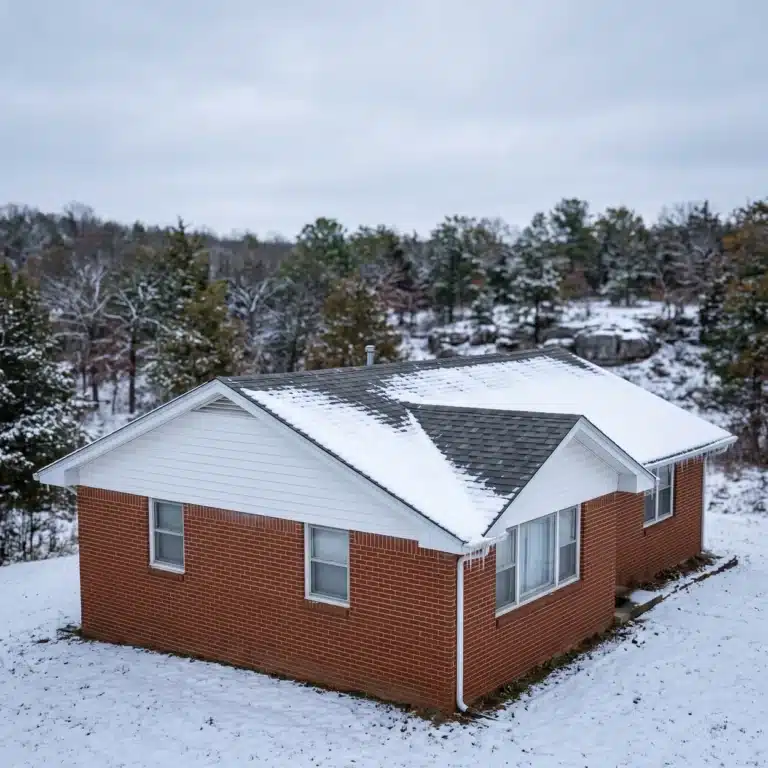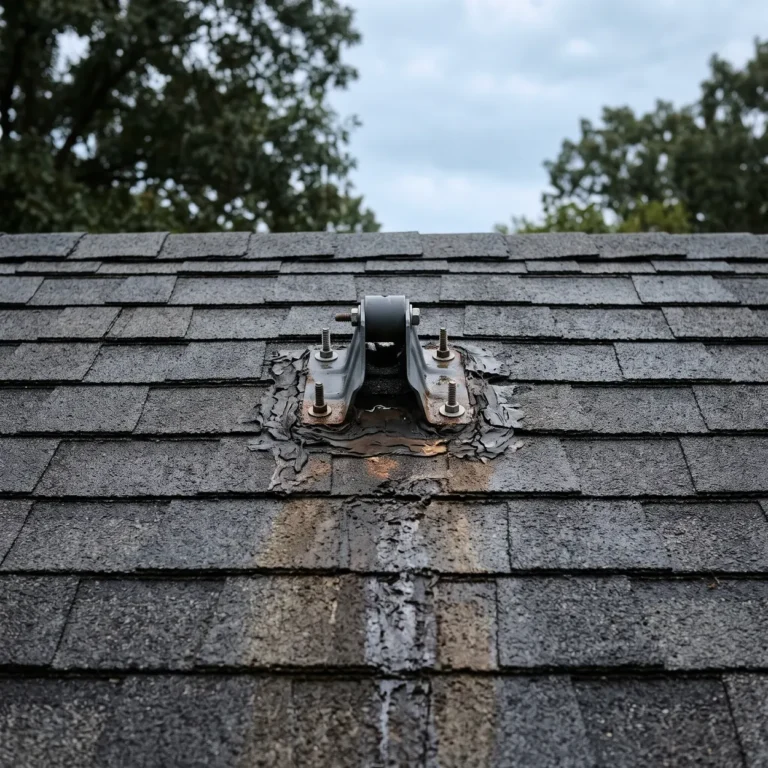

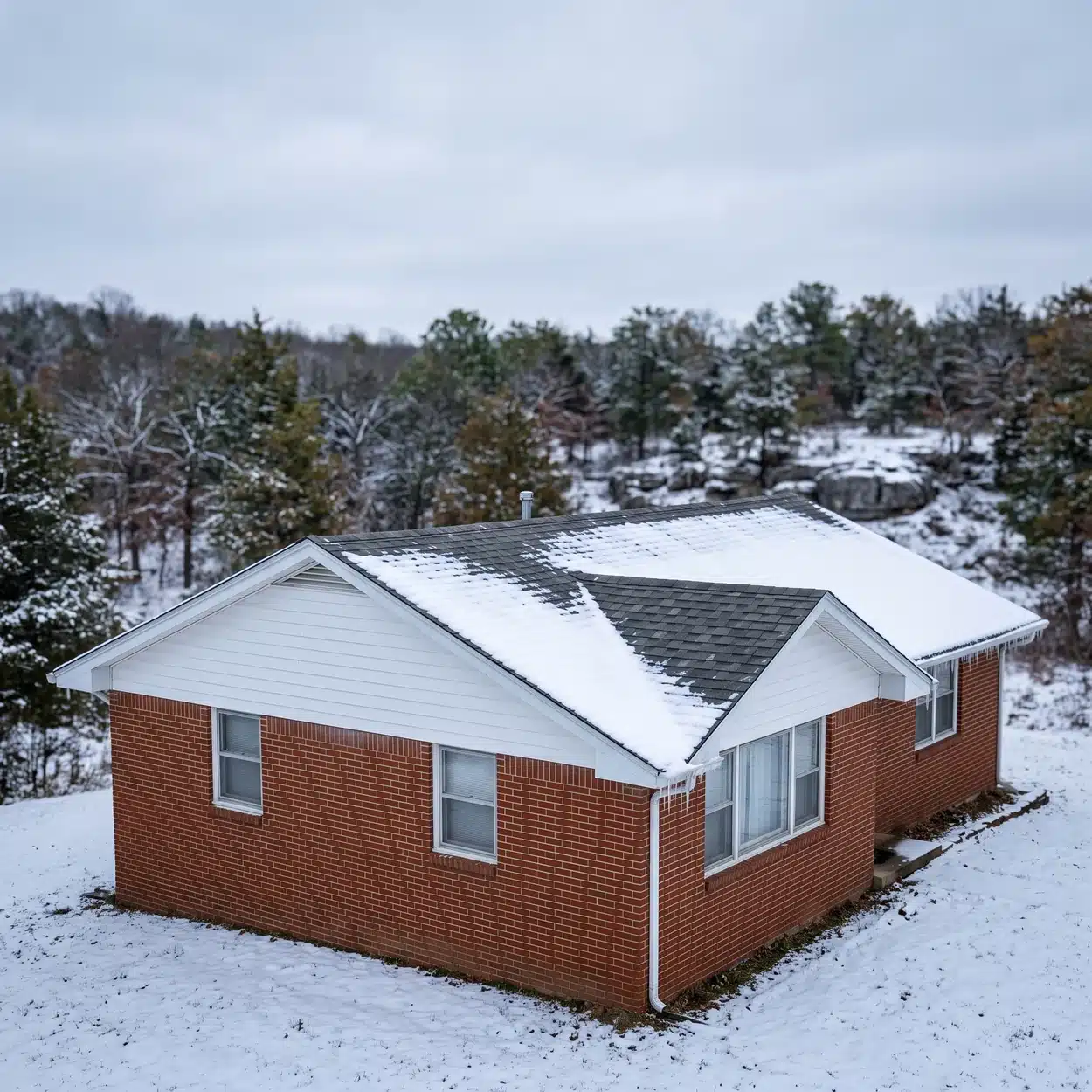
A few inches of snow on the roof is normal here, and most of the time the best move is to let it melt. Heavy, wet snow is different. This guide covers when to leave snow alone, the warning signs of too much weight, and how to clear it safely from the ground.
TLDR: Light snow on a sound shingle roof rarely needs removal. Watch for warning signs after heavy or wet snow, like sagging, cracking sounds, or doors that suddenly stick. If you remove snow, use a plastic roof rake from the ground and leave a thin layer. Never climb on a snowy roof or chip at ice.
Snow does not stick around long in the Ozarks. When a big storm does come through, it can bring wet snow that weighs far more than it looks.
Here is how to tell when snow on roof shingles is just weather, and when it deserves a closer look.
Should I Remove Snow From My Roof?
For most asphalt-shingle homes, no. A typical snowfall on a roof in good shape can stay put until it melts. Removal makes sense after heavy or wet snow, when drifts pile up, or when warning signs appear.
So when should I remove snow from my roof? This table sorts common situations into leave it or act. Use it after any storm that leaves more than a dusting.
| Situation | What it usually means | What to do |
|---|---|---|
| Light, dry snow | Normal winter weight | Leave it and let it melt |
| Heavy, wet snow | Much heavier than it looks | Watch for warning signs |
| Drift against a wall or chimney | Extra weight in one spot | Rake it from the ground if you can reach |
| Heavy rain on deep snow | Snow soaks up water and gains weight | Watch closely |
If no warning signs show up, patience is usually the safest choice.
Tip: Buy a plastic roof rake before the first big snow, so you are not shopping on icy roads.
Snow on Roof Loads in Southwest Missouri
Southwest Missouri gets occasional snow, not constant cover. Snow on roof surfaces gets heavy when a storm drops wet snow or rain soaks the snow already there.
The National Weather Service Springfield climate normals list a normal annual snowfall of 13.7 inches for 1991 to 2020. January is the snowiest month, at 4.4 inches.
Wet snow is the one to respect. The FEMA Snow Load Safety Guide shows that wet, heavy snow can weigh about seven times as much as light, dry snow. It also notes that drifts create a larger load where they pile up.
A short note on metal roofs
Snow can slide off a smooth metal roof all at once, which matters above doors and walkways. We install snow guards when a customer requests them. In our part of the country, they typically serve more to help manage runoff than to hold back snow or ice. Our post on how metal roofs handle snow and cold covers sliding snow.
Want us to come look at it? Call 417-883-7663. It's free and takes 30 to 45 minutes.
Warning Signs of Too Much Roof Snow Load
The warning signs of too much roof snow load often show up inside the house first. FEMA’s guide lists sagging, cracking sounds and sticking doors among the signs of an overstressed structure.
This table pulls the signs most likely to show up in a home. Check top floor rooms and the attic after any heavy snow.
| Warning sign | Where you notice it | What to do |
|---|---|---|
| Sagging ceiling or roofline | Top floor ceilings, ridge line | Leave that area and call a professional |
| Popping, cracking or creaking | Attic and top floor rooms | Leave that area and call a professional |
| Doors or windows that suddenly stick | Interior doors, upper windows | Note when it started and get it checked |
| New cracks in walls | Drywall, plaster, masonry | Get a structural inspection |
| Severe roof leaks | Ceilings and outside walls | Catch the water and call a roofer |
FEMA’s guide says that if these signs appear, people should leave the building and call a qualified design professional.
Important: We are roofers, not structural engineers. If you see sagging or hear cracking, get everyone out of that part of the house, then call a structural engineer.
How Do You Use a Roof Rake Safely?
Use a roof rake only from the ground, and only on the lower edge you can reach. The goal is to lighten the load, not to scrape the shingles bare.
- Stand on firm, cleared ground well back from the eave.
- Use a plastic or other non-metal roof rake.
- Pull snow down in thin layers, starting at the edge.
- Leave a layer of snow on the shingles.
- Watch for icicles and sliding snow above you.
- Stop if you cannot reach without a ladder.
FEMA’s guide backs these steps. It advises a non-metallic snow rake and says you can remove snow from the ground. It recommends leaving at least 2 inches of snow and warns against sharp tools such as picks.
Pro tip: Clear a path below the eave before you start raking. Falling snow and icicles need somewhere safe to land.
Never climb onto a snowy roof, and never chip at ice. FEMA notes that even an icicle falling from a short height can cause injury.
What Melting Snow on Roof Slopes Tells You
How snow melts shows where heat leaves your home. On a cold, well-sealed attic, snow tends to melt evenly from the sun. Bare patches and melt lines usually point to warm air leaking into the attic.
Compare your roof with similar homes the day after a snowfall. This table shows what common patterns can point to.
| What you see | What it can point to | Next step |
|---|---|---|
| Bare patches while neighbors still have snow | Heat escaping into the attic | Have insulation and air sealing checked |
| Melt lines above certain rooms | Air leaks from the room below | Ask about attic air sealing |
| Icicles and ice along the eaves | Meltwater refreezing at the cold edge | Read up on ice dam prevention |
| Snow melting evenly from the sun | A cold, well-sealed attic | No action needed |
The Energy Star attic air sealing guide notes that air sealing plus attic insulation can help reduce ice dams. Our guides to attic ventilation and insulation before winter and keeping ice dams from forming go deeper.
Tip: A morning photo after snowfall works as a free heat-loss map you can show an inspector later.
Gutters Under Snow and Ice
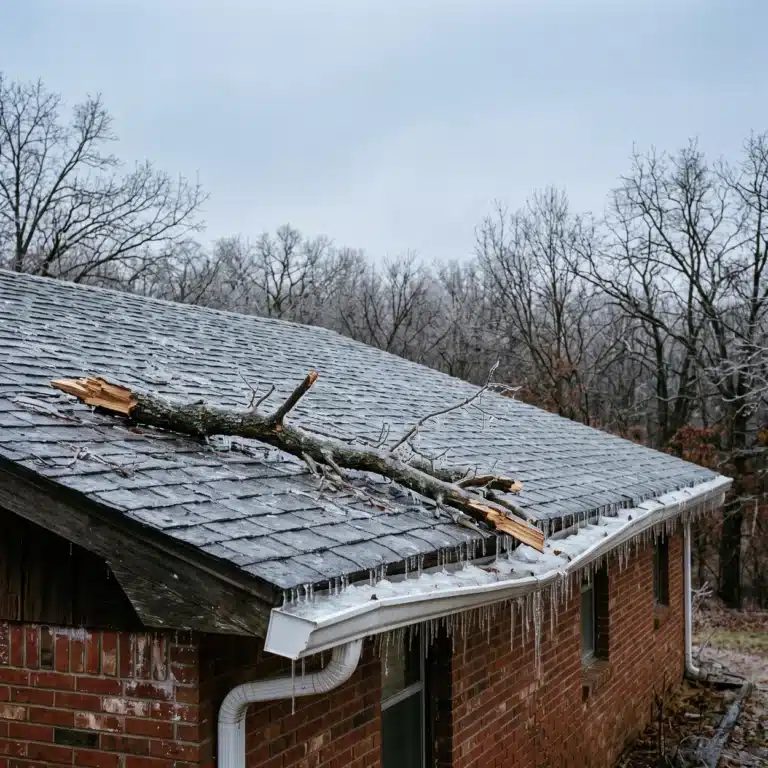
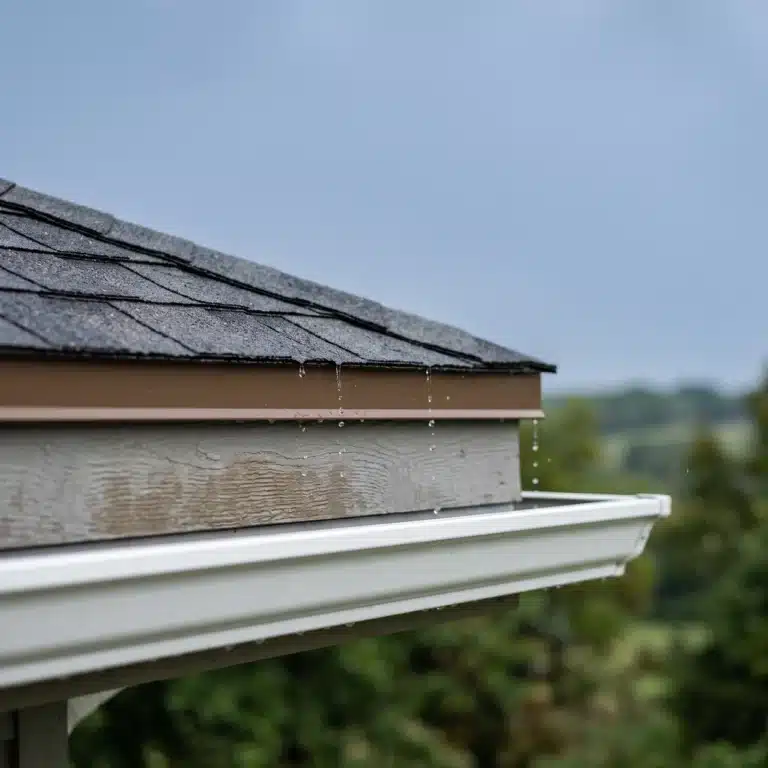
Gutters carry extra weight when snow on roof edges slides into them and freezes. FEMA notes that ice dams create a concentrated load at the eaves, right where gutters hang.
Calls about snow or ice damage to gutters are not common for us, but it does happen. When it does, we are happy to help with repair or replacement.
Do not chip ice out of gutters from a ladder. Let it melt, then look for sagging runs, pulled hangers and split seams. Our guide to what to check after an ice storm walks through that gutter check.
Important: Stand clear of the eaves during a thaw. Snow and ice can let go from the roof edge without warning.
Illustrative scenario: After a wet snow, a homeowner notices bare patches over one bedroom while the rest of the roof stays white. A week later, the gutter below that spot sags under ice. A roof inspection in Ozark traces both problems to attic heat loss and a bent hanger.
Frequently Asked Questions
Should I remove snow from my roof after every storm?
No. Light snow on a sound roof can usually melt on its own. Removal makes sense after heavy or wet snow, big drifts, or warning signs. Check the roof from the street after each storm.
How much snow is too much for my roof?
No single number fits every home. Wet snow, drifts and rain on top of snow all add weight. If you notice sagging, cracking sounds or sticking doors, leave that area and call a professional.
Is it safe to use a roof rake?
It can be, if you stay on the ground and use a non-metal rake. Pull snow down in thin layers and leave some on the shingles. If you cannot reach without a ladder, skip it.
Can raking snow damage my shingles?
It can if you scrape down to the shingles or use a metal rake. FEMA’s guide recommends a non-metallic rake and leaving a layer of snow. Rake gently, and stop if granules start coming off.
Should I climb on my roof to clear snow or ice?
No. A snowy roof is slick, and ice hides under the surface. Stay on the ground and call a professional if the snow truly needs to come off.
Why does snow melt faster on parts of my roof?
Uneven melting often means warm air is leaking into the attic below that spot. That heat melts snow from underneath, and the water can refreeze at the eaves. Ask about an attic check.
Do icicles mean there is an ice dam?
Not always, but they show meltwater refreezing at the roof edge. Large icicles and ice along the eaves deserve a closer look. Schedule an inspection if ceiling stains appear near outside walls.
What should I do about ice in my gutters?
Let it melt. Chipping can bend gutters and crack shingles at the edge. After the thaw, call for a gutter repair if you find sagging runs.
Does a metal roof need snow removal?
Usually not, since smooth metal panels tend to shed snow on their own. Plan for where it lands. We install snow guards on request, and here they typically help manage runoff more than snow. Ask about them during an inspection.
Key Takeaways
- Most snow can stay: Light snow on a sound roof usually melts on its own.
- Wet snow and drifts deserve a closer look.
- Rain on deep snow adds weight.
- Know the roof snow load warning signs: Sagging, cracking sounds and sticking doors.
- Leave that area if you notice them.
- Call a structural professional.
- Rake from the ground only: Use a plastic rake and leave a thin layer.
- Never climb a snowy roof.
- Never chip at ice.
- Read the melt: Bare patches point to attic heat loss.
- Air sealing helps reduce ice dams.
- Check gutters once the ice is gone.
Let Our Team Take a Look This Winter
Snow on roof slopes tells you a lot, but it takes a trained eye to read it. A winter inspection can catch heat loss, weak spots and gutter damage before spring storms.
Teague Roofing Plus has served Southwest Missouri homeowners since 1971, with local crews, not out-of-state storm chasers.
- A free roof inspection and estimate, no obligation
- Roof and gutter repair and replacement
- Insurance claim help at no charge to you
Call 417-883-7663 to schedule a free roof inspection in Southwest Missouri, book through teagueroofingplus.com, or contact our team online.
Teague Roofing Plus, Roofing, Siding, Windows, Gutters, and More. Serving Southwest Missouri Since 1971.