
After a storm, you have two immediate jobs: keep water out of the house and keep the insurance claim clean. Emergency roof tarping is how you do both. Missouri policies expect “reasonable emergency measures,” and failing to act can hurt the claim. This guide explains what to do in the first 24 to 72 hours, how tarping works, and how insurance sees it.
TLDR: Insurance expects you to protect your home after a storm, not wait for the next rain. Emergency roof tarping and basic temporary repairs are usually covered when the damage comes from a covered peril, and they also protect your claim. Call us first, document everything, and never climb on a wet roof yourself.
You wake up to a wet hallway after a night storm. Buckets are catching water in two rooms. You open your insurance policy on your phone and see phrases like “protect the property from further damage” and “reasonable emergency measures.” You do not know what that means at midnight, and you definitely do not know who to call.
Here is what is true: the duty to protect your home is real, but you do not have to handle it alone, and you do not have to climb on a wet roof. Acting without insurer approval will not “void” your claim. In fact, waiting until the insurer approves a plan can hurt the claim more than acting promptly through a professional roofer.
Teague Roofing Plus and other professional roofers can tarp and document damage in a way that protects both the house and the claim. The rest of this guide walks you through how that works, what insurance covers, and what to do in the first 24 to 72 hours.
What “Duty to Mitigate” Actually Means for Your Roof
Most homeowner policies include a “Duties After Loss” section that requires you to take reasonable steps to prevent additional damage once a loss has happened. Typical language reads something like: “Protect the property from further damage and make reasonable and necessary temporary repairs to protect the property.”
This is the duty to mitigate. It does not mean you must perform full repairs yourself. It does not mean you must risk your safety climbing on a wet roof at night. What it does mean is that if you ignore a gaping hole and let storms pour in for weeks, the insurer can deny coverage for the extra damage you allowed to happen, even if the original storm damage was covered.
| Action | Mitigation? | How Insurers See It |
|---|---|---|
| Calling a roofer for emergency tarping within 24 to 72 hours | Yes | Fulfills duty to mitigate |
| Putting buckets under an active leak but doing nothing else for weeks | Partially | May not protect against denial of later mold or rot |
| Climbing alone on a wet two-story roof at night | No (unsafe) | Insurer expects mitigation, not dangerous DIY |
| Tarping over storm-created opening and drying out interior quickly | Yes | Standard reasonable emergency measures |
| Ignoring visible damage until next storm season | No | Extra water damage can be denied |
“Reasonable” does not mean “heroic.” It means prompt, documented, and safe. Calling a professional roofer the morning after a storm is reasonable. Climbing onto wet shingles at night is not. The insurer expects the first one. They do not expect the second one.
What Emergency Roof Tarping Actually Involves
Professional emergency tarping is a defined process, not just throwing a tarp over a hole.
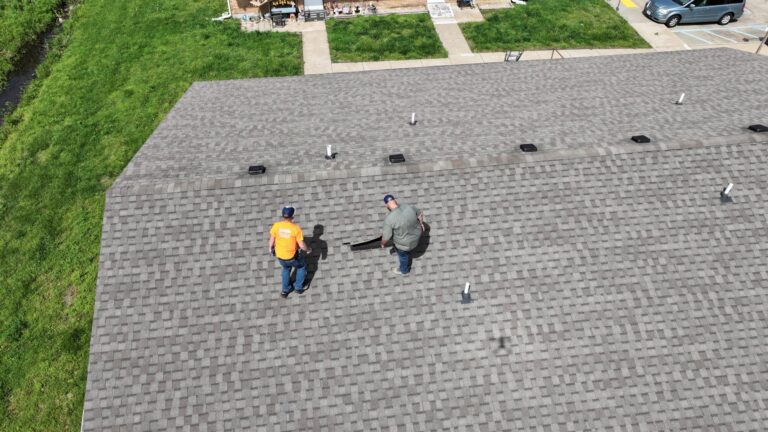
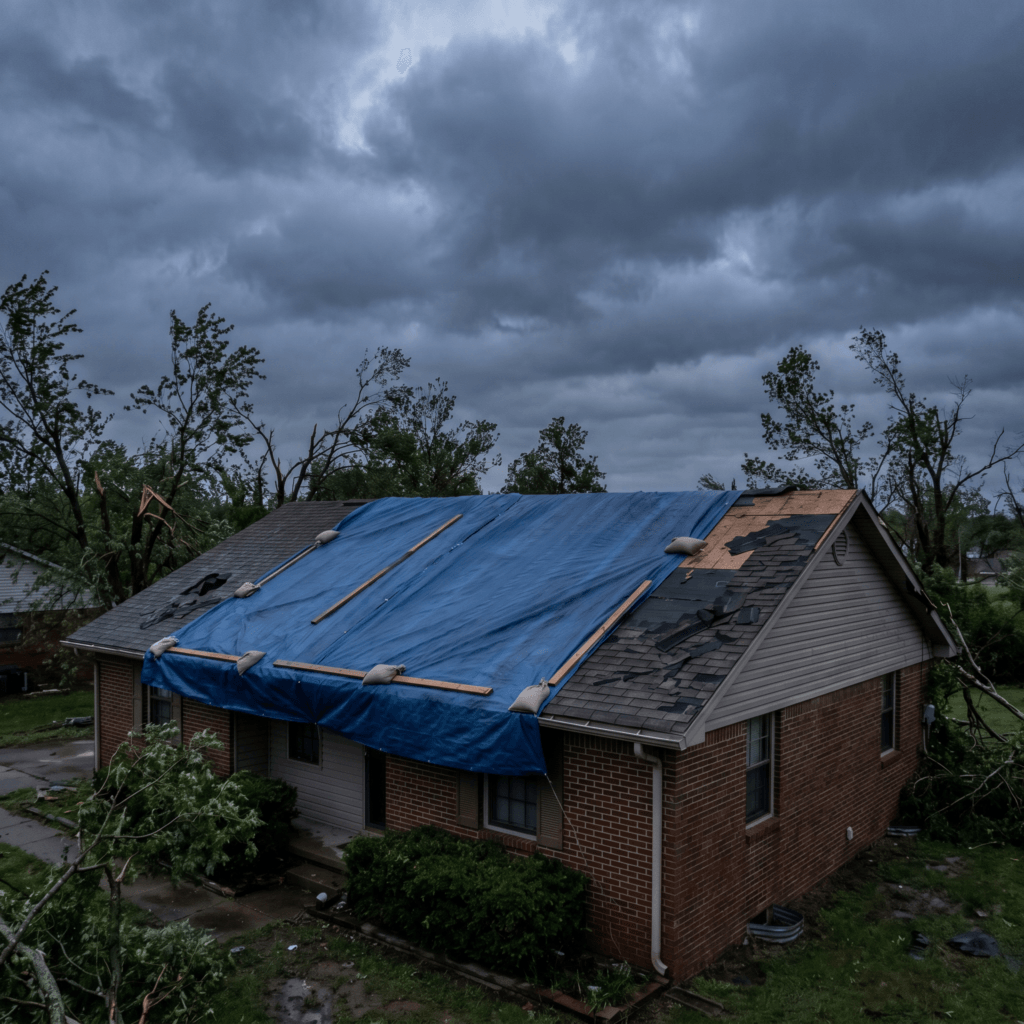
A proper tarp job uses heavy-duty tarps anchored over damaged areas, secured to withstand wind and additional rain, and installed without causing further damage to undamaged sections of the roof. The typical sequence runs: arrival inspection, photographs of damage before tarps go on, tarp installation, interior protection, basic dry-out steps, and follow-up documentation.
Safety is the entire reason this is a professional job. Crews use harnesses, ladder safety, and team installation methods. A homeowner walking on storm-damaged or wet shingles is at risk of falling through the roof or off it. Insurance does not require you to take that risk, and the duty to mitigate is fully satisfied by calling a professional within a reasonable window.
Pro Tip: Treat tarping as a short, focused emergency project, not a long-term solution. Tarps buy time for a proper repair or roof replacement, they are not the final fix. A tarp left on a roof for months can itself become a source of damage as it abrades, traps moisture, or fails in the next wind event.
Will Insurance Pay for Emergency Tarping?
Almost always, yes, when the underlying damage is from a covered peril.
Most standard homeowner policies reimburse “reasonable and necessary” emergency tarping and temporary repair costs as part of the claim under a reasonable repairs or emergency measures clause. The underlying damage must be from a covered peril (wind, hail, fallen tree, and similar), not from wear and tear or pre-existing leaks. You must keep receipts, invoices, and photos of tarps in place and damaged areas.
| Question | Typical Answer |
|---|---|
| Is emergency tarping covered by homeowners insurance? | Usually yes, as a reasonable repair after a covered peril |
| Do I need insurer approval before tarping? | No. Policies expect you to act promptly. Waiting can hurt your claim |
| Will insurance pay for tarping if damage is old or wear-and-tear? | Usually no. Underlying cause must be a covered peril |
| Do I need receipts and photos? | Yes. Documentation is required for reimbursement |
| How fast do I need to act? | Insurers expect mitigation within 24 to 72 hours when it is safe to do so |
Carrier practices vary on edge cases. Our team helps you ask the right questions and submits the tarping invoice and photos as part of the insurance claim assistance included with every storm response. The Missouri Department of Commerce and Insurance consumer page (helpline 800-726-7390) provides additional guidance on policy language for “duties after loss” if you have questions before filing.
Step-by-Step: What to Do in the First 24 to 72 Hours After Roof Storm Damage
- Stay safe and check from the ground first. Walk around the home. Look for missing shingles, damaged metal panels, tree limbs, or visible holes. Do not climb on a wet or storm-damaged roof. The duty to mitigate does not require unsafe action.
- Protect the inside right away. Move belongings out from under leaks. Put down buckets or containers. If possible, lay plastic sheeting over vulnerable areas inside. This protects your home and your claim simultaneously.
- Document everything with photos and video. Capture exterior damage, interior leaks, water spots, and any standing water. Pull the storm event record from NWS Springfield for your county and date. This documentation supports both the emergency tarping reimbursement and the main claim.
- Call us for emergency tarping and inspection. Reach our team for storm damage repair at 417-883-7663. When weather and safety conditions allow, we can get a crew on-site for same-day or next-day tarping with a written damage report and photos that plug straight into the claim.
- Notify your insurance company that a loss occurred. Tell them when the storm hit, what damage you see, and that you have arranged emergency tarping to prevent further damage per your duty to mitigate. You do not need their approval before acting, but you do need to inform them promptly.
- Keep all receipts and a simple log. Write down who came, when they arrived, what they did, and what you paid. Save every invoice and receipt related to tarps, boards, dry-out equipment, and temporary repairs. Submit these with the main claim documentation, not piece by piece.
Pro Tip: Take a short video walking through the house from front door to attic, narrating what you see (“active leak in the master bedroom, water on the ceiling here, bucket in place”). One continuous video timestamps the scene better than dozens of still photos and gives the adjuster a clear sequence of events.
Common Mistakes That Hurt Roof Claims After a Storm
- Waiting weeks to address active leaks because “it is just one spot”
- Doing no documentation before removing debris or damaged materials
- Letting an unqualified person tarp the roof in a way that causes more damage to surrounding shingles
- Assuming emergency tarping is not covered and refusing to spend anything on mitigation
- Filing a claim with zero third-party documentation, then accepting the first denial without asking for re-inspection
- Climbing on a wet roof at night because of pressure to “do something”
- Throwing away damaged materials before the adjuster has seen them
Pro Tip: Do not sign any “assignment of benefits” or broad repair contract in the middle of the emergency without understanding it. Get temporary protection first. Talk through the long-term repair scope calmly with a contractor you trust after the immediate threat is handled. Pressure to sign during the emergency is a signal to slow down, not speed up.
How We Handle Emergency Tarping and Claims Support
We provide emergency tarping and temporary protection across SW Missouri when conditions are safe for crews. Our team documents damage thoroughly during the tarping process: photos of damage before tarps go on, photos during installation, and photos after the tarps are secured.
We also explain to homeowners how to submit these invoices and photos as part of the claim, and coordinate with adjusters during inspections so the adjuster sees both the storm damage and the mitigation work. Our free roof inspection follows the emergency tarping when conditions allow, producing a written scope-of-loss-comparable report that supports the main claim.
We do not tell homeowners whether to file a claim. That is your decision. We give you the information you need to decide, and we support the process from emergency tarping through final replacement once you make the call. We serve Forsyth, Monett, and communities across Southwest Missouri.
Frequently Asked Questions
What is the “duty to mitigate” in my home insurance policy?
It is a clause requiring you to take reasonable steps to prevent additional damage after a covered loss. For roof damage, that typically means tarping and basic interior protection within 24 to 72 hours. The duty does not require you to perform full repairs or take unsafe action. It does mean that ignoring damage and letting it worsen can result in denied coverage for the additional damage.
Will insurance pay for emergency roof tarping in Missouri?
Usually yes, when the underlying damage is from a covered peril like wind, hail, or a fallen tree. Tarping is reimbursed under the reasonable repairs or emergency measures clause in most standard policies. Keep receipts and photos. Submit them with the main claim, not separately.
Do I have to wait for my insurance adjuster before I tarp my roof?
No. Policies expect you to act promptly to prevent additional damage. Waiting for an adjuster, who may not arrive for days during a regional storm event, can result in denied coverage for the secondary damage that occurs in the meantime. Document everything before, during, and after the tarp installation.
How fast do I need to act after a storm to protect my claim?
Most insurers expect mitigation within 24 to 72 hours when it is safe. The faster you act, the cleaner the claim. If weather conditions delay the tarp installation, document those conditions and the call timeline. The expectation is reasonable promptness, not impossible immediacy.
Can I tarp my own roof, or do I need a professional?
A professional is strongly recommended. Tarping involves climbing on a damaged or wet roof, anchoring heavy-duty material against wind, and avoiding additional damage to undamaged sections. Falls from roofs are a leading cause of homeowner injury after storms. Professional crews have the equipment, training, and experience to do the work safely.
What if my roof was already old and leaking before the storm?
Pre-existing damage from age or wear is generally not covered. If a covered peril (like hail or wind) made an existing situation worse, the new damage may still be covered, but the line is blurry and depends on your specific policy and adjuster. A professional inspection helps separate pre-existing wear from new storm damage.
What documentation do I need for insurance to reimburse tarping?
Photos of the damage before tarping, photos during installation, photos after the tarp is in place, the contractor’s invoice with itemized line items, and your storm timeline log connecting the damage to a specific storm date. Submit everything with the main claim package.
Will emergency tarping raise my insurance rates?
Filing a claim can affect future rates, but emergency tarping itself does not trigger a rate change. The rate impact comes from the claim, not the mitigation work. Mitigation actually reduces total claim amounts in many cases, which can be neutral or favorable for renewal pricing.
How long can I leave a tarp on my roof?
Generally no longer than 30 to 90 days, depending on the tarp quality and weather. Tarps degrade in UV exposure and wind. Leaving a tarp on indefinitely can become a new source of damage. Use the tarp window to schedule the permanent repair or replacement.
How does Teague Roofing Plus handle emergency tarping and follow-up repairs?
We respond when weather and safety allow with crew-installed heavy-duty tarping, comprehensive damage documentation, and a written report that supports your insurance claim. We coordinate with your adjuster on the inspection, submit supplements when items are missed, and handle the permanent repair or replacement once the claim is approved. The first call is free and the documentation is included.
Key Takeaways
- Mitigation Is Required: Most Missouri policies require you to take reasonable steps to prevent additional damage after a covered loss. Calling a professional roofer within 24 to 72 hours satisfies the duty.
- Tarping Is Usually Covered: Reasonable emergency tarping and temporary repairs are reimbursed under standard policies when the underlying damage is a covered peril. Keep receipts and photos.
- Act Fast But Stay Safe: Reasonable means prompt and professional, not heroic. Do not climb on a wet or storm-damaged roof.
- Documentation Is Everything: Photos before, during, and after tarping. Receipts for every expense. NWS storm event confirmation tying the loss to a specific date.
- Do Not Sign Under Pressure: Get temporary protection first. Read any contract carefully before signing during an emergency.
- Pre-Existing Damage Is Not Covered: Insurance pays for storm damage, not wear-and-tear leaks. A professional inspection separates the two.
- We Can Handle the Emergency: Same-day or next-day tarping when conditions allow, full documentation, and claim support from first call to final repair.
Storm Just Hit? Let’s Get a Tarp on Your Roof Today.
The first 24 to 72 hours after roof damage are about protection, not paperwork. Get the tarp on. Get the documentation done. The claim conversation comes after the house is dry.
Teague Roofing Plus has been responding to SW Missouri storms since 1971. We tarp the roof, document the damage, and support the claim from start to finish.
What comes with calling us:
- Same-day or next-day emergency tarping when weather and safety conditions allow
- Heavy-duty tarp installation by experienced crews, anchored to withstand additional weather
- Comprehensive photo documentation before, during, and after the tarp goes on
- Written damage report ready to plug into your insurance claim
- Insurance claim assistance at no extra charge, including on-site adjuster meetings
- Owens Corning Platinum Preferred Contractor (less than 1% of roofers nationally) for shingle repair and replacement after the emergency is handled
- 5,000+ roofs in SW Missouri since 1971
- All permits handled
Owner Josh Tessmer runs Teague Roofing Plus on the principles Kenneth Teague founded the company on in 1971: do honest work and stand behind it.
Call 417-883-7663 or contact us online.
Teague Roofing Plus | Roofing, Siding, Windows, Gutters, and More. Serving Southwest Missouri Since 1971.