
Water is coming in. Your roofer is booked out. You need to slow this down before more damage happens. Here is what you can actually do right now, what tools work, and what to leave alone until a professional gets on the roof.
TLDR: Safety first. Never access a wet, storm-damaged, or steep roof yourself. Most temporary repairs are done from the inside: locate the entry point in the attic, place a bucket and plastic sheeting under the drip, relieve any bulging ceiling with a small drain hole. If safe roof access is possible, asphalt roofing cement handles small exterior breaches and self-adhering membrane patches handle larger areas. Aerosol sprays like Flex Seal do not bond properly to shingles and are not recommended.
Know When NOT To Get On the Roof (Safety First)
Before any DIY repair guidance, this is the gate every homeowner has to clear.
Never access a wet, storm-damaged, or structurally uncertain roof. Wet shingles are slippery. Storm-damaged decking can have soft spots or hidden punctures that give way under weight. Do not access the roof during active weather or when wind is still present, even if the rain has stopped. Steep roofs (above approximately 4/12 pitch, which means a rise of 4 inches for every 12 inches of horizontal run) require fall protection equipment and experience that most homeowners do not have.
If you see large structural openings, visible decking damage, or any sagging, stop. That is a professional job. Working from the inside and calling for emergency stabilization is the right call every time when roof access is not clearly safe. The National Roofing Contractors Association maintains industry safety standards that should give a sense of how seriously professionals take roof access, and it is worth respecting that bar.
| Situation | Safe to Access? | What To Do Instead |
|---|---|---|
| Wet roof after rain | No | Wait for the roof to dry completely or work from the inside |
| Active storm or wind still present | No | Stay inside, protect the interior, wait for the weather to clear |
| Steep pitch (above 4/12) | Not for homeowners | Work from the inside, call for professional access |
| Visible structural damage, sagging, or holes | No | Call for emergency stabilization, document with photos from the ground |
| Small accessible flat section, dry calm day | Possibly, with caution | Use proper ladder, second person on the ground, take the smallest viable repair |
| Dry calm day with minor damage you can reach safely | Possibly | Limit work to roofing cement on small areas or membrane patches in accessible spots |
Pro Tip: Your life is worth more than a dry ceiling. If the roof access is not clearly safe, work from the inside and get on our schedule. That is the right call every time.
Start From the Inside: The Most Actionable Step for Most Homeowners
Most homeowners cannot safely access the roof after a storm, but that does not mean nothing can be done. The inside response is often where the most useful work happens.
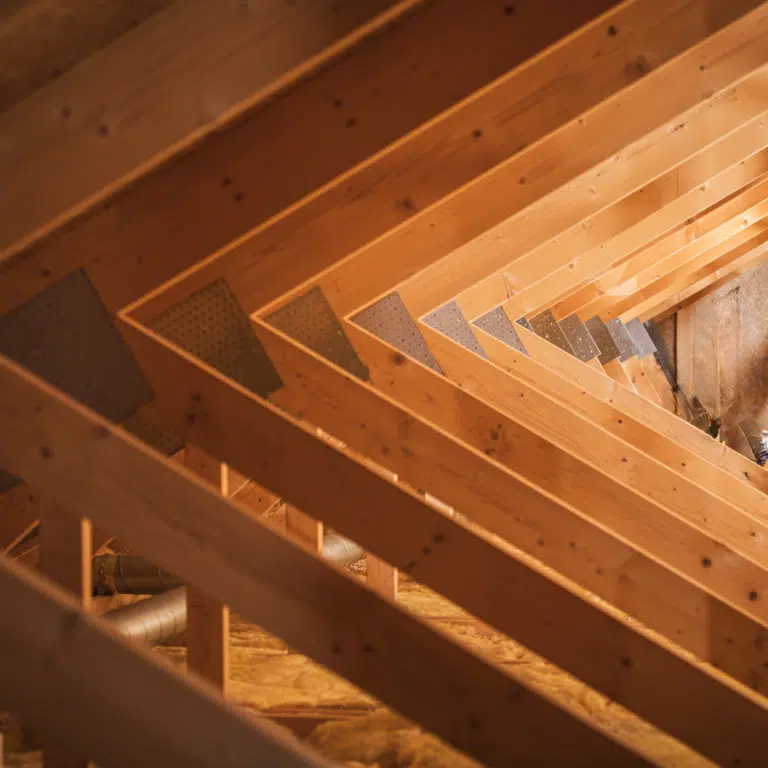
Go to the attic with a flashlight. Find where water is actually entering, not where you see the wet spot on the ceiling. Water travels along rafters and decking before it drips down, so the wet patch in the bedroom is almost never directly below the actual breach. Follow the wet trail up the rafter toward the roof ridge. The entry point is upstream of the visible drip.
Once you find the entry point in the attic, place a bucket directly under the drip there, not just under the ceiling spot. Cover surrounding rafters and insulation with plastic sheeting, taping or stapling the edges so the water flows along the plastic and into the bucket rather than soaking the insulation. Wet insulation loses its R-value and is a mold incubator in SW Missouri humidity, so directing water away from it matters as much as catching the drip.
If a ceiling downstairs is bulging with trapped water, poke a small relief hole at the lowest point of the bulge with a screwdriver or pencil and place a bucket directly under it. This is counterintuitive but correct. A controlled small drain is far better than an uncontrolled ceiling collapse onto your floor.
Run fans and a dehumidifier in any affected room. The National Weather Service Springfield office tracks the humidity patterns that make SW Missouri storms particularly damaging. June and summer humidity here means 24 to 48 hours of standing moisture in insulation or wall cavities is enough to start mold growth. Drying out is not optional.
| Step | Action | Materials Needed |
|---|---|---|
| 1. Locate entry point | Go to attic with flashlight, follow wet trail up rafter toward ridge | Flashlight, willingness to crawl carefully |
| 2. Catch the drip at the source | Place bucket directly under the attic entry point, not the ceiling drip | 1 to 3 buckets, depending on number of leaks |
| 3. Protect surrounding insulation | Drape plastic sheeting over rafters and insulation, direct water to bucket | Plastic sheeting or contractor garbage bags, tape or staples |
| 4. Relieve a bulging ceiling | Poke a small drain hole at the lowest point of the bulge | Screwdriver or pencil, bucket directly underneath |
| 5. Dry out the affected space | Run fans and a dehumidifier in any wet rooms or attic spaces | Box fans, dehumidifier (rent if needed) |
| 6. Document everything | Photograph and video the damage and your temporary work | Smartphone with timestamp enabled |
Pro Tip: Water on the ceiling is almost never directly below the actual breach. It travels along the rafter from the entry point. Trace the wet trail up the rafter toward the ridge to find where it is actually coming in.
Roofing Cement for Small Exterior Repairs
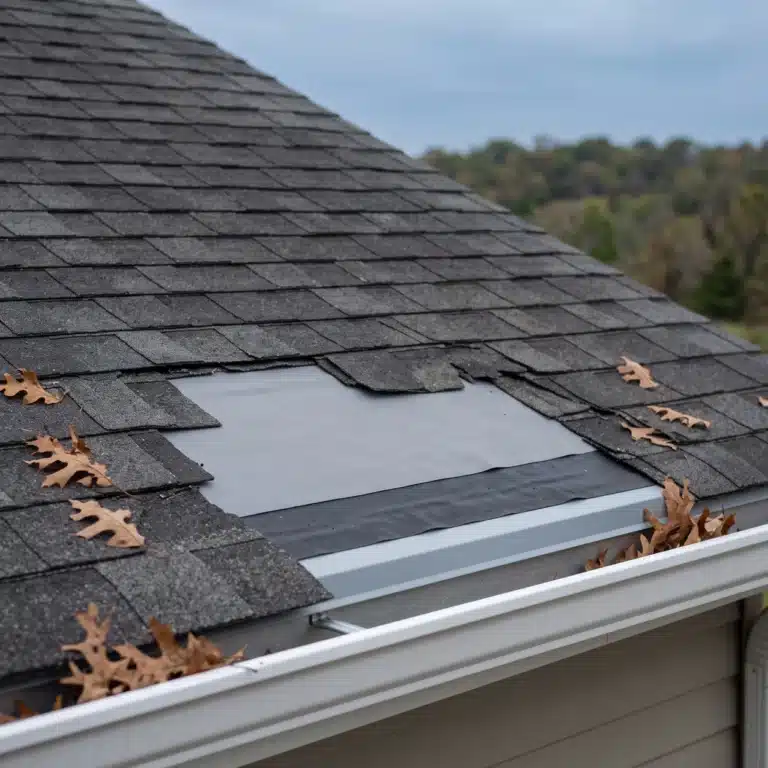
If safe roof access is possible and the damage is small, asphalt roofing cement (also called plastic roof cement or flashing cement) is the right tool. It is appropriate for sealing small holes, securing lifted or loose shingles back down, sealing gaps around chimney or pipe flashings, and sealing around vent boots.
Fiber-reinforced versions of roofing cement work in wet conditions when the surface cannot be dried first. That matters in SW Missouri’s rainy spring and summer, because most storm windows do not give you a clean dry stretch to work in.
Application is straightforward. Clean the area as best you can. Apply the cement with a putty knife or gloved hand. Press any lifted shingles firmly into the cement bed. Feather the edges so water sheds off rather than pooling. Use sparingly. Over-application traps water underneath and causes more problems than it solves, especially on a roof that already has compromised drainage.
A note on what does not work: Flex Seal spray and similar consumer aerosol products are not recommended for shingle roofs. They provide surface coverage only, do not bond properly to asphalt shingles, and can damage the shingle surface while giving a false sense of security that the leak is sealed. The same goes for most “spray-on” roof products marketed to consumers. They are not a substitute for proper roofing cement applied to the right spot.
Materials are available at most home improvement stores in the Springfield area. IBHS guidance on water intrusion explains why sealing an opening quickly limits the damage inside. June warmth makes roofing cement easier to work with, by the way. It softens and adheres better in warm conditions than in cold.
| Product | Works For | Doesn’t Work For | Notes |
|---|---|---|---|
| Asphalt roofing cement | Small holes, lifted shingles, flashing gaps | Large open areas, structural damage | Standard tool for spot repairs |
| Fiber-reinforced roofing cement | Wet-surface application, same uses as standard cement | Cold-weather application can be tough | Better choice for Missouri rain windows |
| Flex Seal and aerosol sprays | Not recommended for shingle roofs | Almost everything roof-related | Surface-only coverage, does not bond properly to asphalt |
| Butyl tape | Small linear gaps, flashing edges | Larger areas, primary leak repairs | Useful supplement, not a main repair tool |
| Self-adhering membrane | Larger damaged areas (see next section) | Spot repairs that just need cement | Best DIY option for larger temporary patches |
Pro Tip: Find the leak source in the attic first, then apply roofing cement to the corresponding exterior spot. Patching the wrong area wastes time and materials, and gives you false confidence the problem is solved.
Self-Adhering Membrane Patches for Larger Areas
When the damaged area is larger than a few inches and safe roof access is possible, self-adhering modified bitumen membrane is the closest thing to a real temporary repair available to a homeowner. It is the same material professionals use as ice-and-water-shield underlayment, and it can be cut into patches and applied directly over damaged sections.
Application: slide the patch under any lifted surrounding shingles if you can, cut the patch to extend at least 4 inches beyond the damaged area in every direction, peel the backing, and press firmly across the entire surface for full adhesive bond. Press every edge thoroughly. A loose corner defeats the whole patch.
Applied correctly on a reasonably clean, dry surface, self-adhering membrane patches can last through multiple rain events. Available at most home improvement stores. Look for “ice and water shield” or “self-adhering roof membrane.” This requires safe roof access, so do not attempt it on a wet or structurally compromised roof.
Important context: this is a temporary repair only. It buys time until permanent work happens. It is not a substitute for professional repair or replacement, and the underlying damage still needs to be properly addressed. Our emergency roof repair service handles tarping and stabilization for larger damage that exceeds DIY scope, and the emergency roof repair in Springfield: what to do post covers the broader immediate-response sequence. For the full claim and inspection cycle that comes after the leak is contained, see our storm damage repair page. After the permanent repair is done, our roof maintenance checklist for Springfield helps you stay ahead of the next event.
Pro Tip: Self-adhering membrane is the closest thing to a real temporary repair available to a homeowner. Overlap at least 4 inches in every direction and press every edge firmly. A loose corner defeats the whole patch.
Frequently Asked Questions
Q1: How do I find where my roof is actually leaking?
Go to the attic with a flashlight and find the wet trail on the rafters or decking. Water travels along the wood before it drips down, so the wet spot on the ceiling is rarely directly below the breach. Follow the wet trail up the rafter toward the roof ridge. The entry point is upstream of the visible drip, often several feet away.
Q2: Can I use Flex Seal on my roof?
Not recommended. Flex Seal and similar aerosol products provide surface-only coverage, do not bond properly to asphalt shingles, and can damage the shingle surface. They also create the false impression that the leak is sealed when it is not. For small repairs, use asphalt roofing cement instead. For larger areas, use a self-adhering membrane patch.
Q3: What is roofing cement and how long does it last?
Roofing cement is an asphalt-based sealant designed for shingle roofs. It seals small holes, secures lifted shingles, and patches flashing gaps. Applied properly to a clean surface, it can last through multiple rain events and even hold up for months as a temporary fix. It is not a permanent repair, and the underlying damage still needs to be addressed.
Q4: Is it safe to get on my roof after a storm?
Usually no. A wet, storm-damaged roof has soft spots, lifted material, and hidden punctures that can give way under weight. Falls from roofs are a leading cause of homeowner injury after storms. Work from the inside whenever possible, and only consider exterior access on a dry, calm day for very minor damage on an accessible low-pitch section.
Q5: What should I do if my ceiling is bulging with water?
Poke a small relief hole at the lowest point of the bulge with a screwdriver or pencil and place a bucket directly underneath. A controlled small drain is far better than an uncontrolled collapse, which can damage flooring and create a much bigger cleanup. Leave the room afterward and keep family members out until the area dries.
Q6: How long can a temporary roof patch last?
It depends on the product, the application, and the weather. Roofing cement on a small spot can hold for weeks to a few months. Self-adhering membrane patches applied correctly can last through multiple rain events. Tarps anchored properly can protect a roof for up to 90 days. None of these are permanent solutions, and the actual repair still needs to happen.
Q7: What materials do I need to temporarily patch a leaking roof?
For inside response: buckets, plastic sheeting, fans, a dehumidifier, and a flashlight for the attic check. For exterior spot repairs (when safe roof access is possible): asphalt roofing cement, a putty knife, gloves, and a clean cloth. For larger exterior patches: self-adhering modified bitumen membrane (sold as “ice and water shield”) and a utility knife.
Q8: Will making temporary repairs affect my insurance claim?
Generally no, when properly documented. Insurance policies expect homeowners to take reasonable steps to prevent further damage (the duty to mitigate). Photograph the damage before any temporary repair and after, save all receipts for materials, and keep a written log of when and what you did. Document everything to support the claim.
If your roof is leaking and you need someone out fast, Teague Roofing Plus provides emergency stabilization services across Springfield and SW Missouri, including Republic, Battlefield, Rogersville, and Willard. We stop the immediate problem and get you on the schedule for permanent repairs. Call 417-883-7663, contact us, or schedule your free roof inspection to get started.
Teague Roofing Plus | Roofing, Siding, Windows, Gutters, and More. Serving Southwest Missouri Since 1971.