
Repairs from the spring storms are finished, the crew is gone, and you have no practical way to judge whether the work will hold. Winter is what tests a roof repair, and by then a shortcut is expensive to discover. This guide gives you a checklist to verify repair quality now, while there is still time to address problems.
TLDR: Good roof repairs blend into the existing roof, include proper flashing and fasteners, and come with photo documentation of the work. Warning signs include exposed nail heads, sealant used in place of flashing, and mismatched or poorly aligned shingles. A follow up inspection before winter catches shortcuts while they are still cheap to fix.
There is a specific worry that shows up around this time of year. The repair looked fine when the crew packed up, the invoice is paid, and yet something nags. Especially if the company was one that appeared in the neighborhood right after the storms and has since moved on.
That worry is reasonable. Roof repair quality is genuinely hard for a homeowner to assess, because most of what separates good work from bad is either underneath the shingles or a detail you would not know to look for. Meanwhile winter is the real inspection, and it does not grade gently.
Our team gets called out to a lot of repairs done by other companies, usually in November or December when the first problem appears. Almost always, the shortcut was visible in August if someone had known where to look. Here is what to check.
Why Repair Quality Matters More Once Winter Hits
Summer forgives sloppy roof work. A repair with marginal flashing or an exposed fastener sheds a July thunderstorm without any visible problem, because water runs straight off and nothing sits still long enough to find the gap.
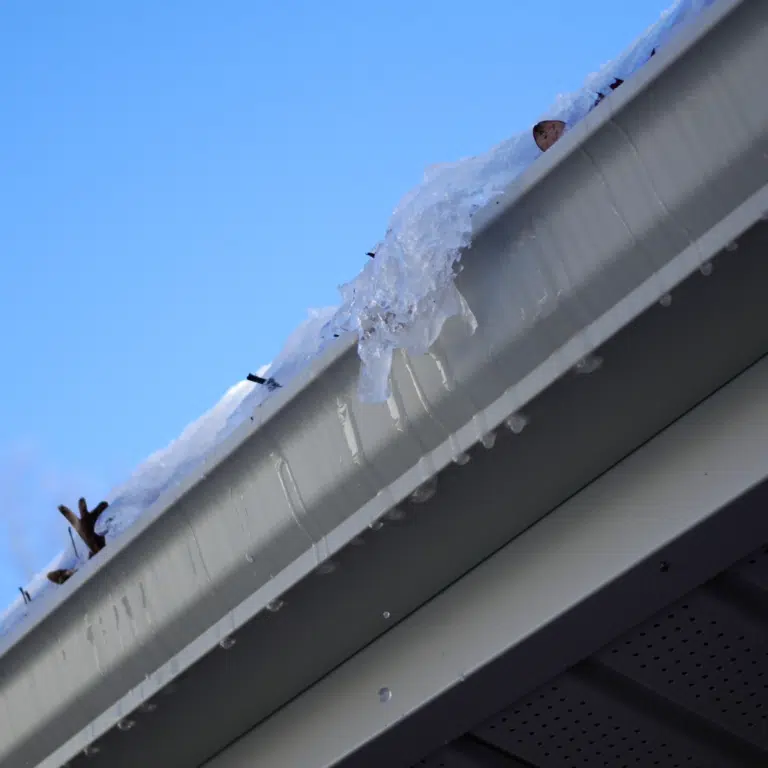
Winter is different. Water sits on a roof as snow and ice rather than running off. It works into gaps, freezes, expands, and then thaws. Ice dams at the eaves back water uphill under shingles. Every marginal detail on a repair gets tested repeatedly, and the ones that were not done right tend to fail.
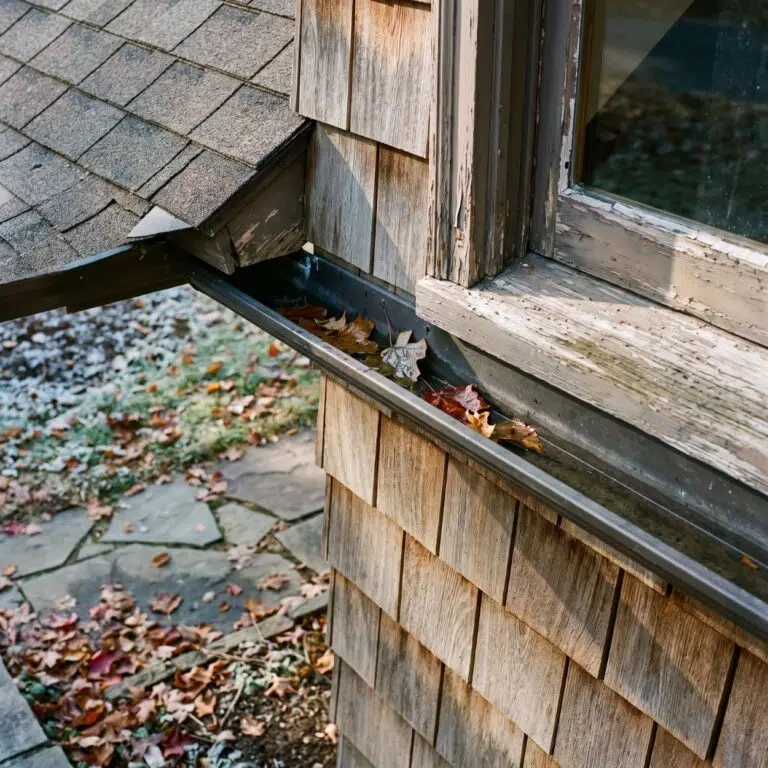
The Insurance Institute for Business and Home Safety recommends clearing debris from gutters and downspouts so water flows away from the home, which reduces the risk of ice dams and leaks. That advice matters more when a recent repair sits in the water’s path.
Pro Tip: The gap between a good repair and a poor one often does not show for months. That is exactly why you check in August rather than waiting for the roof to tell you.
What Does a Quality Roof Repair Look Like?
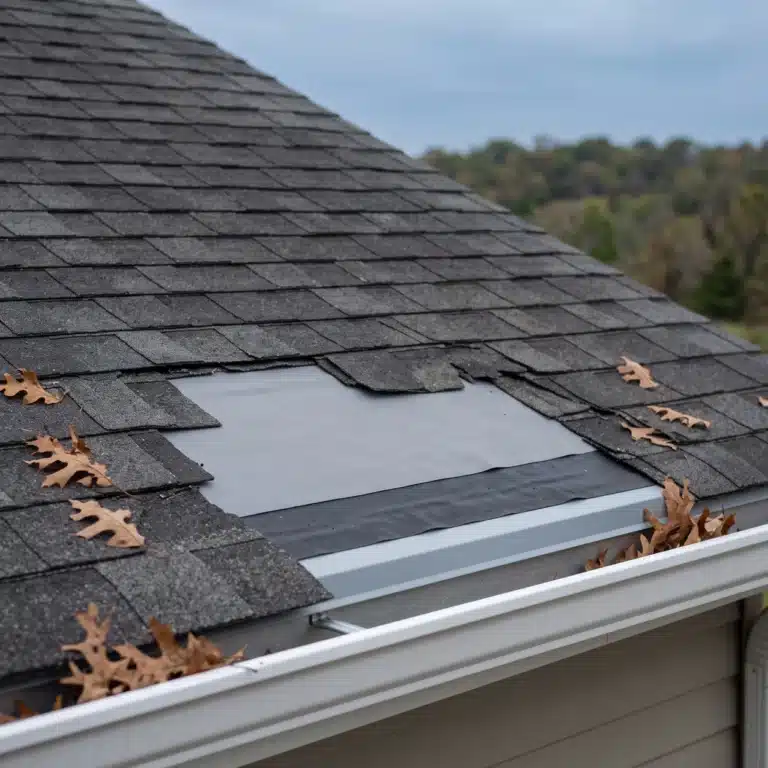
A good repair is visually consistent with the surrounding roof, has no exposed fasteners, uses metal flashing where flashing belongs, and lies flat with properly aligned shingle courses. The table below contrasts quality signs against the red flags we see most often.
| What to check | Quality repair | Red flag |
|---|---|---|
| Nail heads | Hidden under the course above | Visible, often sealed with caulk |
| Flashing | Metal, properly integrated and layered | Sealant smeared where metal belongs |
| Shingle alignment | Courses line up with existing rows | Offset, crooked, or uneven lines |
| Overall appearance | Blends into the roof | Obvious patch that stands out |
If your repair shows items from the right column, that does not automatically mean failure is coming, but it does mean a professional look is warranted before winter. You can walk your own roof visually from the ground using our roof inspection checklist for Springfield homeowners.
Common Shortcuts to Watch For
Most poor repairs are not incompetence. They are speed. The Asphalt Roofing Manufacturers Association notes that field applied coatings over installed shingles can cause shrinking that leads to curling, cupping, or loosening of the granule surface, which is one example of a quick fix that creates a longer term problem. A crew moving fast through a storm affected neighborhood has an incentive to finish jobs quickly, and certain steps are the first to go.
| Shortcut | What should have happened |
|---|---|
| Sealant used instead of flashing | Metal flashing installed and properly layered |
| Shingles laid over damaged decking | Decking replaced before shingles go down |
| Reusing old, brittle flashing | New flashing at any disturbed penetration |
| Skipping underlayment in the repair area | Underlayment replaced across the repair |
The takeaway is that every shortcut here is invisible once the last shingle is down. That is precisely why documentation during the work matters so much, and why its absence is itself a warning sign.
Illustrative scenario: A homeowner in Willard had wind damage repaired in May by a company working the neighborhood. In August, a free follow up inspection found sealant smeared around a vent where step flashing belonged, plus three exposed nail heads. Both were corrected in a single visit before winter, at a fraction of what a winter leak would have cost.
What a Trustworthy Contractor Documents
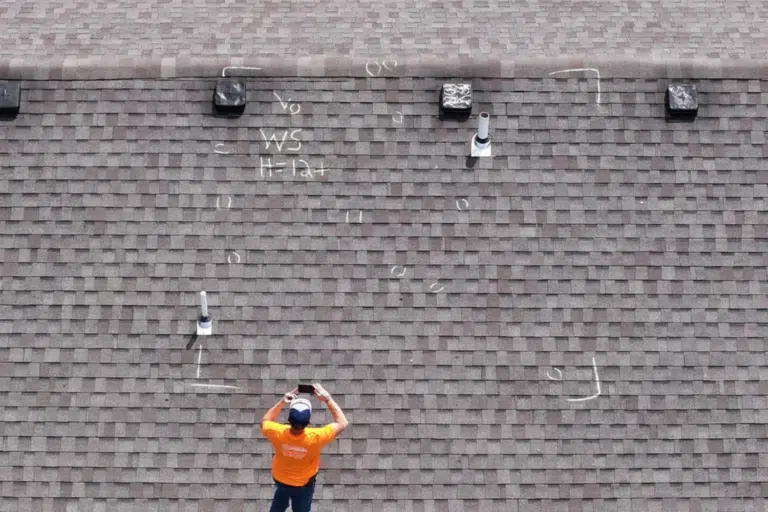
Documentation is the clearest signal of repair quality, because a contractor who does the work correctly has no reason to avoid photographing it. If you received nothing beyond an invoice, that is worth noting.
| Document | What it proves |
|---|---|
| Before photos | The damage that justified the repair |
| During photos | Decking condition and underlayment work |
| After photos | Finished work, flashing, and fastening |
| Written scope and warranty | Exactly what was done and what is covered |
The takeaway is that photos of the work in progress are the most valuable of the set, because they show the layers no one can see once the repair is finished. Our guide to red flags to watch for before you sign covers what to establish upfront on any future work.
Important: If you cannot reach the company that did your repair, or the phone number no longer works, treat a follow up inspection as a priority rather than an option. That pattern is common with crews that follow storms and leave.
When a Follow Up Inspection Makes Sense
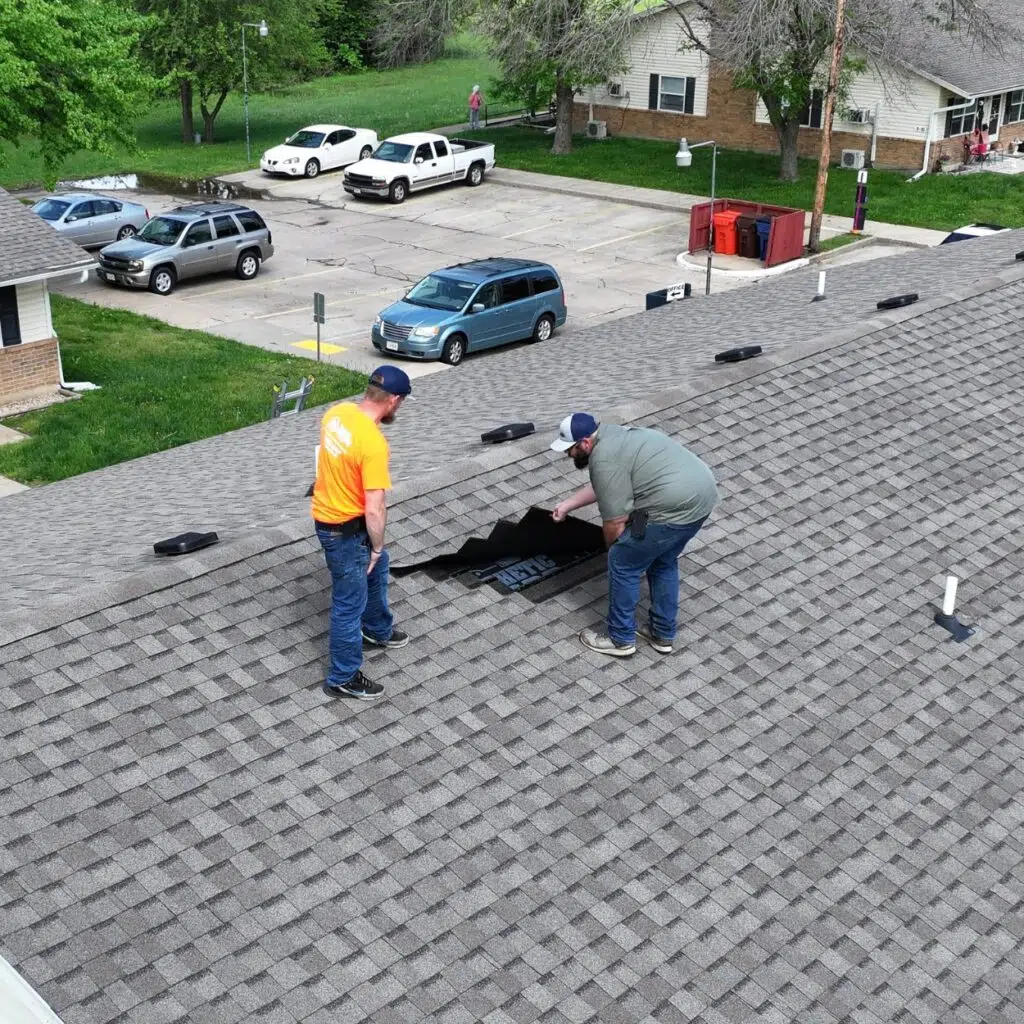
Not every repair needs a second look. A follow up makes sense in specific situations: when the company came from out of the area, when you have no documentation of the work, when you can see any of the red flags above, or when a repair was completed under time pressure right after a major storm.
Storm exposure here justifies the caution. NOAA documented 120 separate billion dollar weather and climate disasters affecting Missouri between 1980 and 2024, most of them severe storms, so repairs in this region get tested often. It also makes sense simply because of timing. A repair completed in April or May has had a full summer of heat expansion and contraction, which is a reasonable stress test. Anything that loosened or lifted since then is visible now.
The difference between a local company and a storm chasing crew usually shows up at exactly this moment, when something needs attention months later. Our comparison of storm chasers versus local roofers in Springfield covers what to expect from each. Regular seasonal upkeep helps too, and our roof maintenance checklist for local homeowners lays out what to do and when.
Teague Roofing Plus has worked in Southwest Missouri since 1971, which means our team is still here when a question comes up months after a job. We serve Springfield, Ash Grove, and the surrounding communities, and we handle the permits on every job. You can read more about our team and history.
Pro Tip: Ask any contractor for the photo documentation from your original repair, even months later. A legitimate company keeps those files. The response itself tells you something.
Frequently Asked Questions
How can I tell if my roof repair was done right?
Look for consistent shingle alignment with the surrounding roof, no visible nail heads, and metal flashing rather than sealant at penetrations and roof to wall connections. The repair should blend in rather than stand out as a patch. If any of those are off, a professional follow up inspection is worthwhile before winter.
What are the most common roof repair shortcuts?
The frequent ones are using sealant where metal flashing belongs, laying new shingles over damaged decking, reusing brittle old flashing, and skipping underlayment in the repair area. All four are invisible once the work is finished. This is why photo documentation during the work matters so much.
Is it normal to see the repair patch from the ground?
Some visibility is normal, since new shingles have not weathered to match aged ones and will look slightly different in color. What is not normal is misaligned courses, uneven lines, or a patch that is obviously crooked. Color difference is cosmetic; alignment problems are workmanship problems.
What if the company that did my repair is gone?
That is common with crews that follow storms into an area and leave afterward. Get a follow up inspection from an established local company so you know where you stand. Also check whether any manufacturer material warranty still applies, since those are separate from a contractor’s workmanship warranty.
Should sealant ever be used on a roof repair?
Sealant has legitimate uses as a supplement, such as sealing a fastener head or finishing an edge detail. It is not a substitute for properly installed metal flashing. When you see sealant doing a flashing’s job, that is a shortcut rather than a technique.
How soon after a repair should problems appear?
A well done repair should show no problems at all through normal weather. Issues from a poor repair often surface during the first freeze and thaw cycle or the first heavy ice event, which in our region means winter. That delay is exactly why a late summer check is useful.
Does a repair affect my roof warranty?
It can. Manufacturer material warranties often have conditions about installation methods, and a repair done improperly may affect coverage on the surrounding area. Workmanship warranties come from the contractor and disappear if that contractor does. Keep all documentation for both.
Do you charge to inspect another company’s repair work?
No. Follow up inspections are free with no obligation, including on work someone else performed. Our inspector documents what they find and explains it plainly, so you know whether anything actually needs attention before winter.
Key Takeaways
- Winter is the real test: Summer forgives marginal roof work, but freeze and thaw cycles find every gap.
- Water sits on a winter roof instead of running off.
- Ice dams push water uphill under shingles.
- Know the visual signs: Alignment, hidden fasteners, and metal flashing separate good work from fast work.
- Exposed nail heads sealed with caulk are a clear red flag.
- Sealant standing in for flashing is the most common shortcut.
- Documentation reveals quality: Photos taken during the work show the layers nobody can see afterward.
- A contractor doing it right has no reason to skip photos.
- No documentation at all is itself a signal.
- Check now, not in January: A repair from spring has had a full summer of heat stress, so problems are visible today.
- Follow up inspections are free and carry no obligation.
- Fixes made in August are far smaller than fixes made mid winter.
Have Your Spring Repairs Checked Before Winter
If you are not certain your storm repairs will hold, a documented second look settles it. There is no cost, no obligation, and no pressure attached, and it is far better to find a shortcut in August than to find it through a stained ceiling in January.
Teague Roofing Plus has been doing this work in Southwest Missouri since 1971, and our crews are still here when questions come up months after a job. We are an Owens Corning Platinum Preferred Contractor, BBB A+ rated since December 2019, and a Nextdoor Neighborhood Favorite in 2022 and 2024. A follow up inspection includes:
- A close look at repair workmanship, flashing, and fastening
- Verification that surrounding slopes were not overlooked
- Photo documentation of anything found, yours to keep
- An honest answer, including when the repair looks solid
- Permits handled by our team if corrective work is needed
Call Teague Roofing Plus at 417-883-7663 or book a free roof inspection to have your spring repairs checked before winter arrives.
Teague Roofing Plus, Roofing, Siding, Windows, Gutters, and More. Serving Southwest Missouri Since 1971.