
Siding gets all the attention because it is the part you can see. The layers behind it are what actually keep water out of the wall. When siding fails in Southwest Missouri, the damage is usually determined by what was installed underneath years earlier. This guide covers the parts of a siding job nobody photographs.
TLDR: Siding sheds most water, but some always gets behind it. A weather-resistive barrier and correct flashing give that water a path back out. Skipping or lapping those layers wrong is why some walls rot while identical-looking walls next door stay dry.
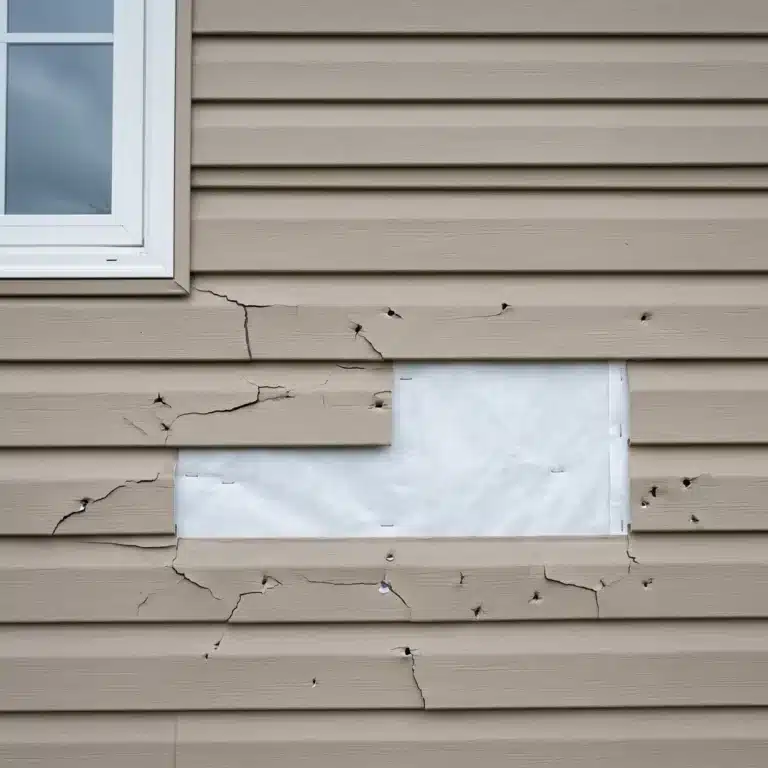
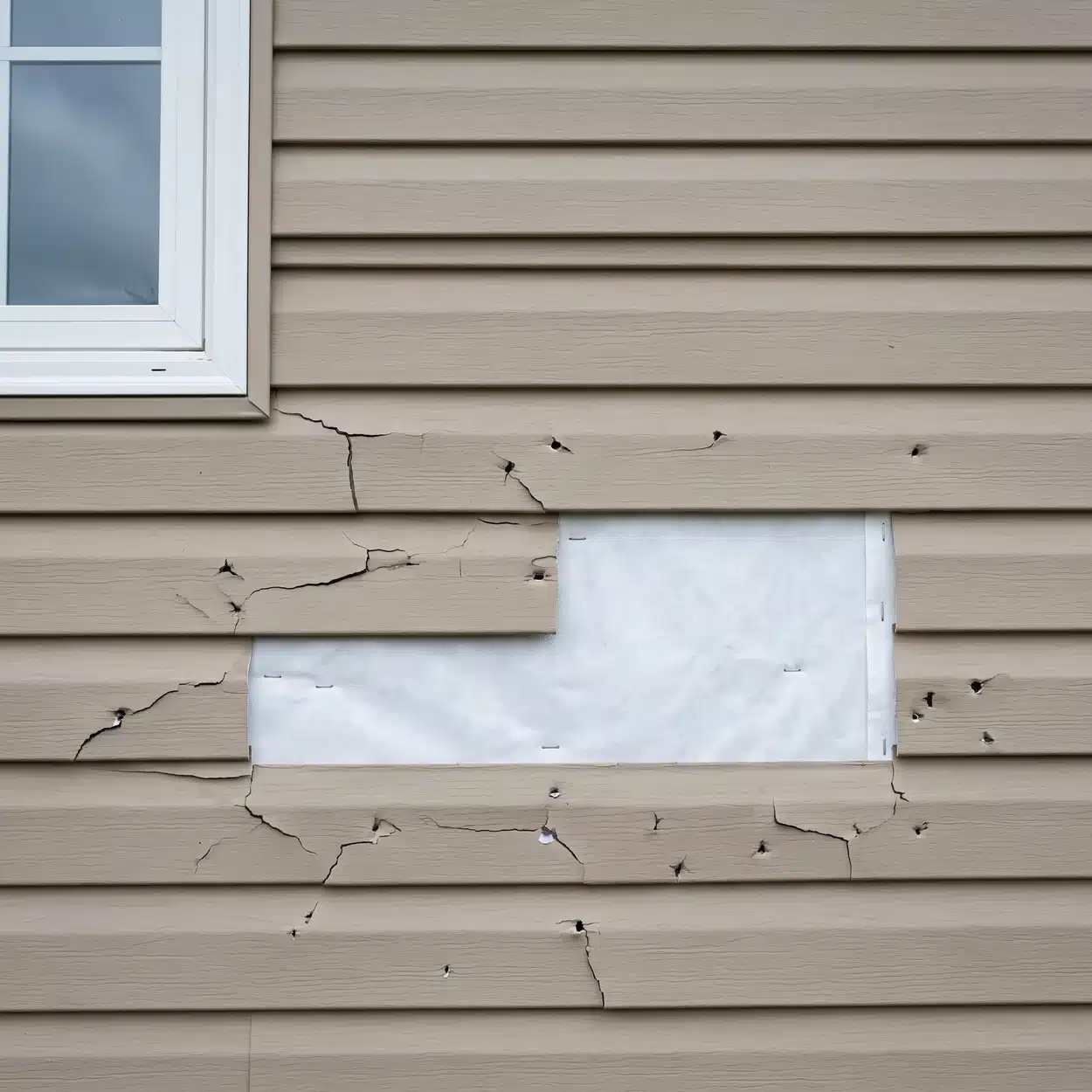
Pull a piece of storm-damaged siding off a wall and you learn everything about how the house was built.
The siding itself is rarely the reason a wall failed. The reason is almost always a detail behind it that took an extra ten minutes to do correctly and did not get done.
Here is what is back there, and what to ask before anyone covers it up again.
Siding is not waterproof, and it was never meant to be
This surprises homeowners. Lap siding, vinyl, fiber cement, engineered wood: none of them form a sealed surface. Wind-driven rain gets behind all of them.
That is by design. The system assumes water gets in and gives it a way out.
| Layer | Job |
|---|---|
| Siding | Sheds the bulk of the water and takes the weather |
| Weather-resistive barrier | Catches what gets past and drains it downward |
| Flashing | Directs water out at openings and transitions |
| Sheathing | Structural surface, the thing you are protecting |
If any one of those is missing or lapped backward, water that should drain away instead sits against the sheathing.
Important: A wall that looks fine from outside can be wet behind the siding for years before anything shows.
The weather-resistive barrier
That papery or woven layer you see on a house under construction is the barrier. It goes on before the siding and it has a direction.
Each course has to lap over the one below it, like shingles. Lap it backward and you have built a funnel that guides water into the wall instead of down the face of the barrier.
Seams, staple patterns, and how it is cut around windows all matter. It is genuinely quick work to do right and equally quick to do wrong.
Pro tip: If you ever see your house stripped to the barrier, photograph it. Those pictures are worth having later.
Flashing is where most failures start
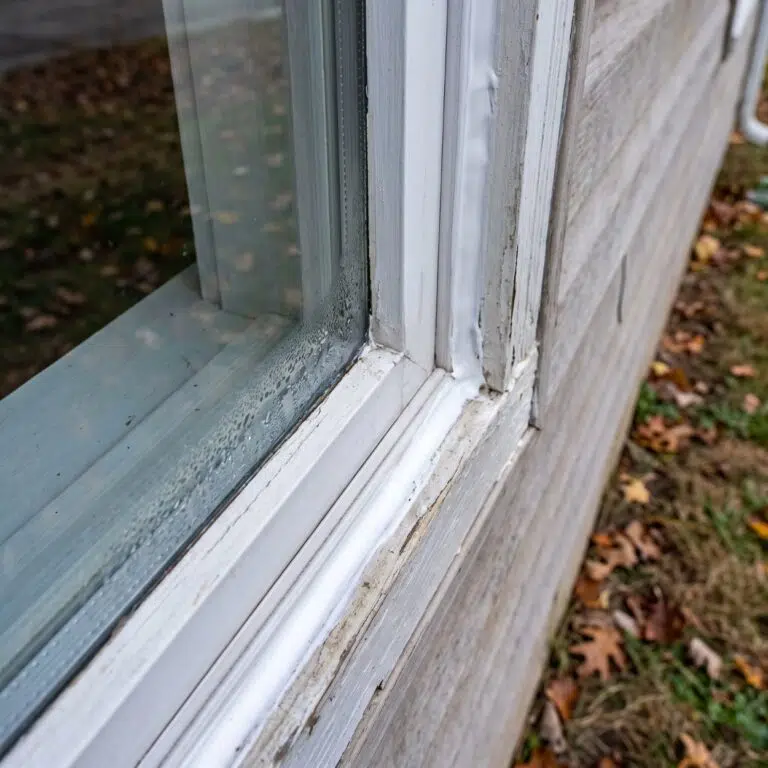
Water does not usually get in through the middle of a wall. It gets in at the edges, where materials change or something penetrates the surface.
- Above and beside windows and doors
- Where siding meets a roofline
- At deck ledgers and porch connections
- Around hose bibs, vents and utility penetrations
- Where siding transitions to brick or stone
Each of those needs flashing that pushes water outward, onto the face of the siding, not behind it.
| Location | Common failure |
|---|---|
| Window head | No flashing, or barrier lapped over it wrong |
| Siding to roof | No kickout at the bottom, water runs into the wall |
| Deck ledger | Flashing omitted, rot spreads behind the board |
| Penetrations | Sealant used alone instead of a flashed detail |
That third one causes some of the worst damage we see, because a deck ledger rots quietly while carrying load.
Important: Sealant is not flashing. Caulk is a maintenance item with a service life. Flashing is a permanent path for water.
What Southwest Missouri does to a wall
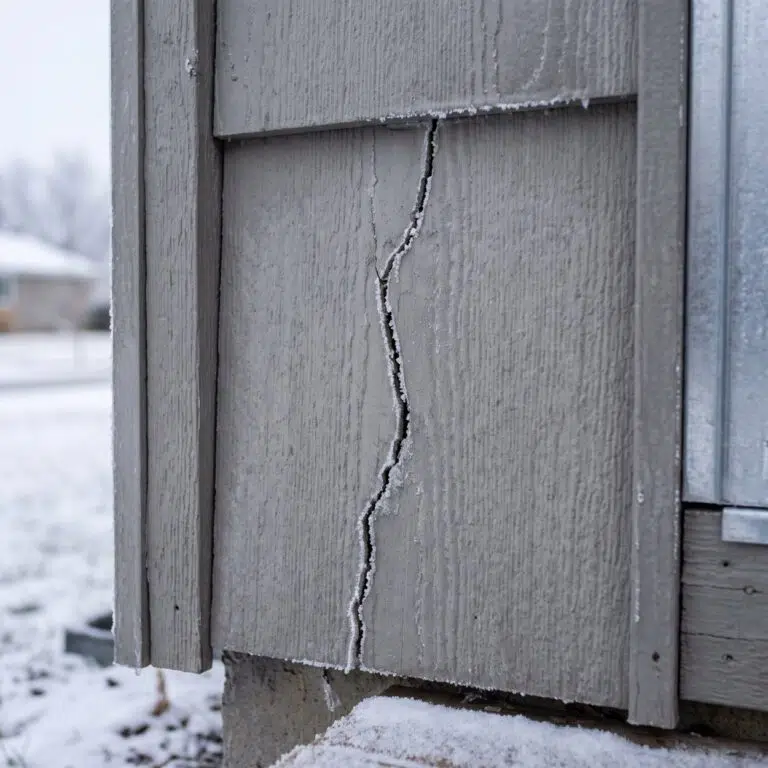
Our climate attacks walls from several directions in the same year. Wind-driven rain during spring storms pushes water sideways under laps. Summer heat drives moisture through assemblies. Winter freeze and thaw cycles expand anything that has absorbed water, which opens gaps for the next round.
That cycle is why a detail that would be merely sloppy in a dry climate becomes a rot problem here within a few years. Wind and hail add a second failure path, covered in our post on siding damage from hail and wind.
Homeowners dealing with siding replacement after a storm often discover the underlying problem predates the storm. The same pattern shows up on siding repair jobs across Southwest Missouri. Our post on hidden siding damage after storms covers what that looks like from outside.
Tip: After a heavy wind-driven rain, check inside for damp drywall at outside corners and below windows. That is often the first visible sign.
Questions to ask before siding goes up
Ask these while the wall is open, because after the siding is on, nobody can verify any of it.
- What weather-resistive barrier are you using, and how are seams lapped?
- How will the barrier be integrated around each window opening?
- Where will kickout flashing go at roof to wall transitions?
- How are penetrations flashed, not just sealed?
- Will any sheathing be replaced, and how will I know what you found?
- Can I get photographs of the wall before the siding goes on?
That last one is the most useful and the least requested. A set of open-wall photos is documentation you can use for decades.
Illustrative scenario: A homeowner in Willard replaces storm-damaged siding on one elevation. With the wall open, the crew finds soft sheathing below a window where no head flashing was ever installed. Replacing the sheathing and flashing the opening costs more than a straight siding swap, and it ends a leak that repainting had hidden twice.
Different warning signs point at different layers of the wall.
| What you notice | Which layer it points at |
|---|---|
| Bubbling paint below a window | Water entering at the head, no flashing |
| Damp drywall at an outside corner | Barrier lapped wrong or torn |
| Soft trim at corners | Long-term water sitting in the joint |
| Musty smell near an opening | Moisture held in the wall cavity |
None of these are siding problems. All of them get covered up by new siding.
Pro tip: Ask for open-wall photos in writing before work starts. Crews move fast once material arrives.
Frequently asked questions
Is house wrap required behind siding? A weather-resistive barrier is standard practice in modern residential construction and is treated as part of the wall assembly. Older homes were often built without one. Ask specifically what is going on your wall and how it will be lapped.
Can water get behind vinyl siding? Yes, and it is expected to. Vinyl is a rain screen, not a seal. That is exactly why the layers behind it matter more than the siding you picked.
What is kickout flashing? It is a small piece of flashing at the bottom of a roof to wall junction that pushes runoff out onto the siding instead of behind it. It is small, cheap, frequently omitted, and responsible for a lot of hidden wall rot.
How do I know if my wall is rotted without opening it? You often cannot with certainty. Soft spots, bubbling paint, damp interior drywall, and staining near windows are indicators. A free inspection can narrow it down, but confirmation usually means opening a section.
Does siding need a permit in Springfield? The City of Springfield does not require a permit for routine exterior replacement work. Structural repairs are treated differently, so verify through the city permit office if sheathing or framing work is involved.
Should I replace all my siding or just the damaged wall? It depends on age, whether a match exists, and what is found behind the damaged section. Partial replacement is common after storms. Ask your contractor to check the other elevations before you decide.
Will insurance cover rotted sheathing found during a siding job? Usually not, because rot is typically treated as long-term deterioration rather than sudden storm damage. Storm damage to the siding itself may be covered. Have the damage documented before work starts.
How long should a siding job take? It depends on house size, how much sheathing needs replacing, and weather. Discovery of hidden damage extends the timeline. Ask your contractor what would change the schedule before they start.
Can I add insulation while the siding is off? That is the right moment to consider it, since the wall is open. Whether it makes sense depends on your wall assembly. Ask about it during the quote rather than after demolition.
Key takeaways
- Siding is a rain screen
- Water gets behind all siding types by design.
- The layers underneath decide whether that water drains or sits.
- The barrier has a direction
- Courses lap over one another like shingles.
- Lapped backward, it funnels water into the wall.
- Failures start at edges
- Windows, rooflines, deck ledgers and penetrations.
- Sealant alone is not a substitute for flashing.
- Our climate accelerates it
- Wind-driven rain, summer heat and freeze cycles in the same year.
- Document the open wall
- Photos before siding goes on are worth having for decades.
Ask what is going behind your siding
The part of a siding job that determines whether your wall lasts is invisible the day after it is finished.
We have opened enough Southwest Missouri walls since 1971 to know which shortcuts cause which failures. Owner Josh Tessmer built the business on doing the parts nobody sees correctly.
What you get when you call:
- A free inspection covering siding, flashing and visible moisture signs
- A clear explanation of what goes behind your siding and why
- Photographs of the open wall before new siding goes on
- Local crews, not out-of-state storm chasers
Get a free inspection and find out why Springfield homeowners have trusted Teague since 1971. Call 417-883-7663 or reach us here.
Teague Roofing Plus, Roofing, Siding, Windows, Gutters, and More. Serving Southwest Missouri Since 1971.