
Every building owner faces this call after a storm. The roof took some damage, nothing is leaking, and the budget is already committed elsewhere. Sometimes waiting is reasonable. Sometimes it turns a contained repair into a deck replacement. This guide explains which is which.
TLDR: Damage that breaches the membrane rarely stays contained, because water spreads under it and soaks insulation you cannot see. Cosmetic wear and isolated surface marks can often wait. Anything at a seam, flashing or penetration is on a clock, and the cost of waiting compounds quietly.
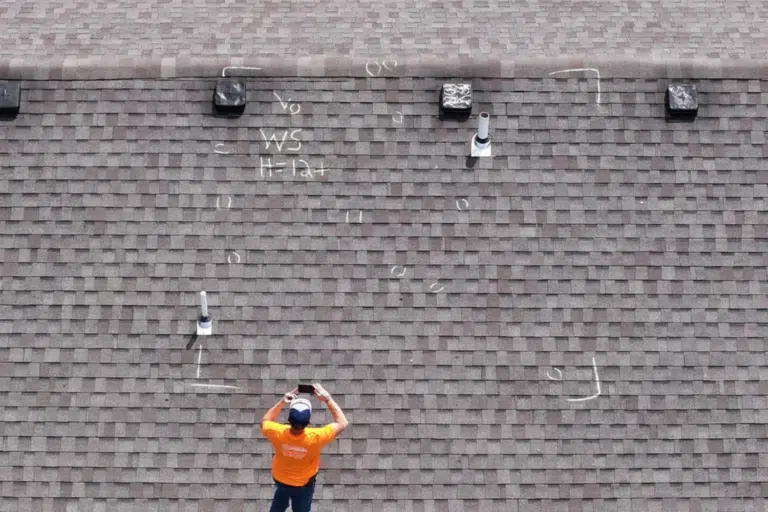
No leak, no urgency. That is the instinct, and on a low-slope commercial roof it is frequently wrong.
A small unaddressed breach can quietly wet a large area of insulation over two seasons. A repair that would have been straightforward becomes a tear-off.
Here is how to tell the difference without guessing.
Why waiting is different on a flat roof
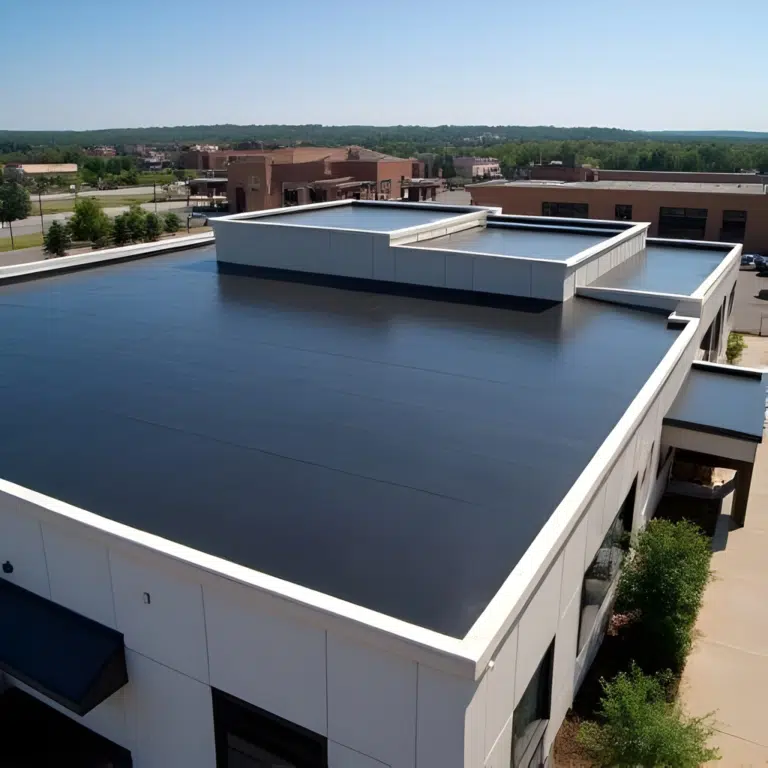
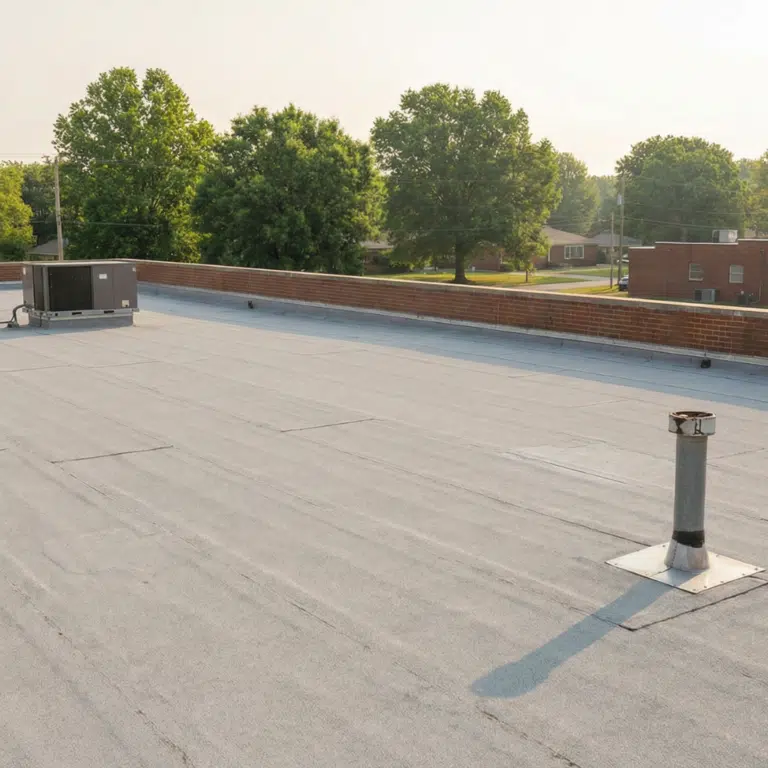
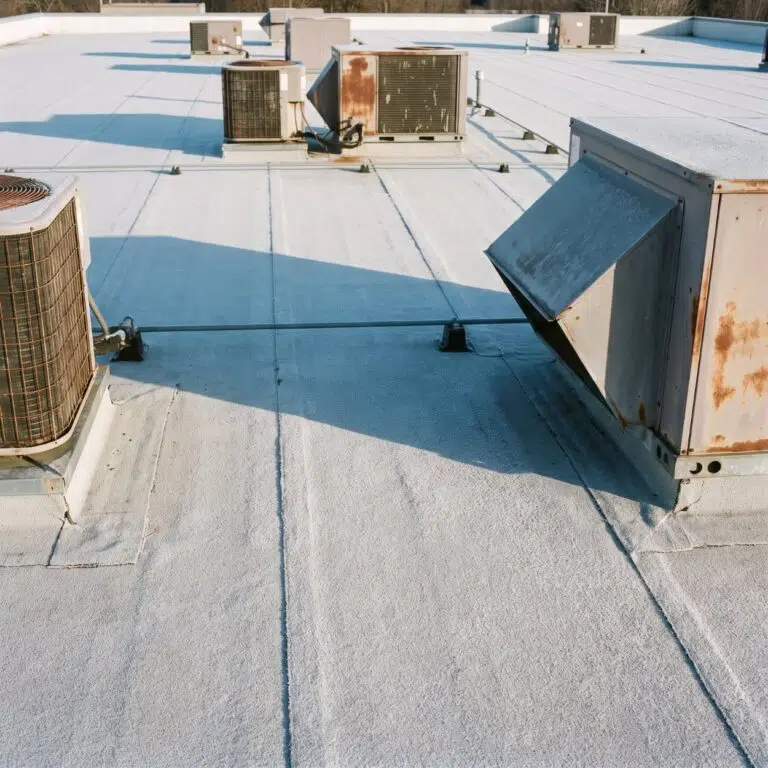
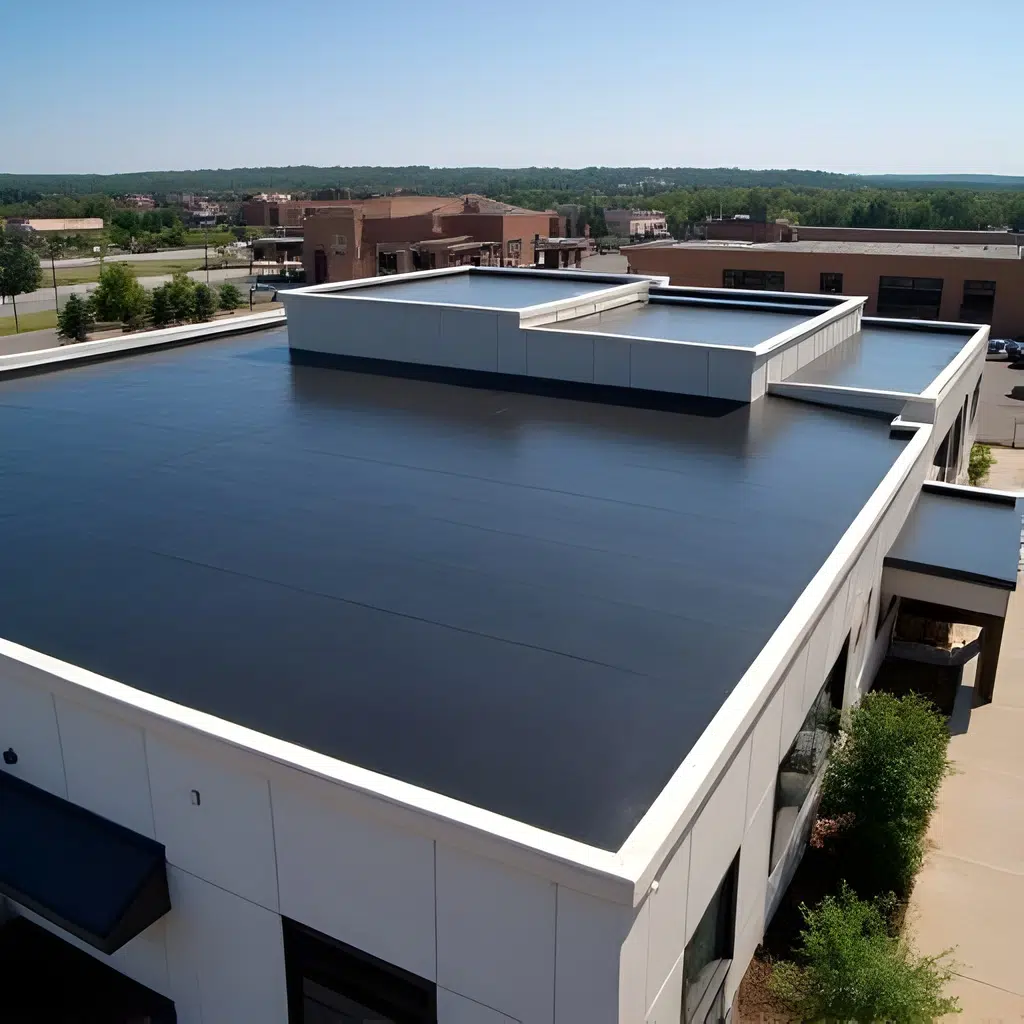
Owners comparing options across commercial roofing in Southwest Missouri run into this constantly. A sloped shingle roof sheds water fast. A low-slope commercial roof holds it, moves it slowly toward drains, and gives any breach time to work.
Water that gets under the membrane does not stay put. It spreads horizontally through the insulation layer, and insulation does not dry out once saturated.
| What happens above | What happens below |
|---|---|
| Small breach at a seam | Water spreads through insulation |
| No visible interior leak | Saturated area grows each rain |
| Roof looks unchanged | R-value drops, deck starts corroding or rotting |
The absence of a drip is not evidence that nothing is happening. It usually means the water has not yet found an opening in the deck.
Important: On a low-slope roof, no interior leak does not mean no active damage.
What can usually wait
Not everything needs immediate attention, and treating every mark as urgent wastes money too.
- Surface scuffing in the open field with the membrane intact
- Minor granule loss on a capsheet with no exposed substrate
- Isolated debris that has not punctured anything
- Cosmetic staining or discoloration
- Small areas of ponding that drain within a day or two
These belong on a maintenance list with a date, not an emergency call.
Tip: Photograph anything you decide to defer, with the date. If it changes, you will know how fast.
What should not wait
These involve a breach or a detail that is already failing.
| Condition | Why it is urgent |
|---|---|
| Open or split seam | Direct path under the membrane |
| Lifted or torn base flashing | Wall and perimeter water entry |
| Puncture through the membrane | Continuous entry every rain |
| Damaged drain or clamping ring | Concentrates water at the weakest point |
| Loose coping or counterflashing | Wind gets under, damage accelerates |
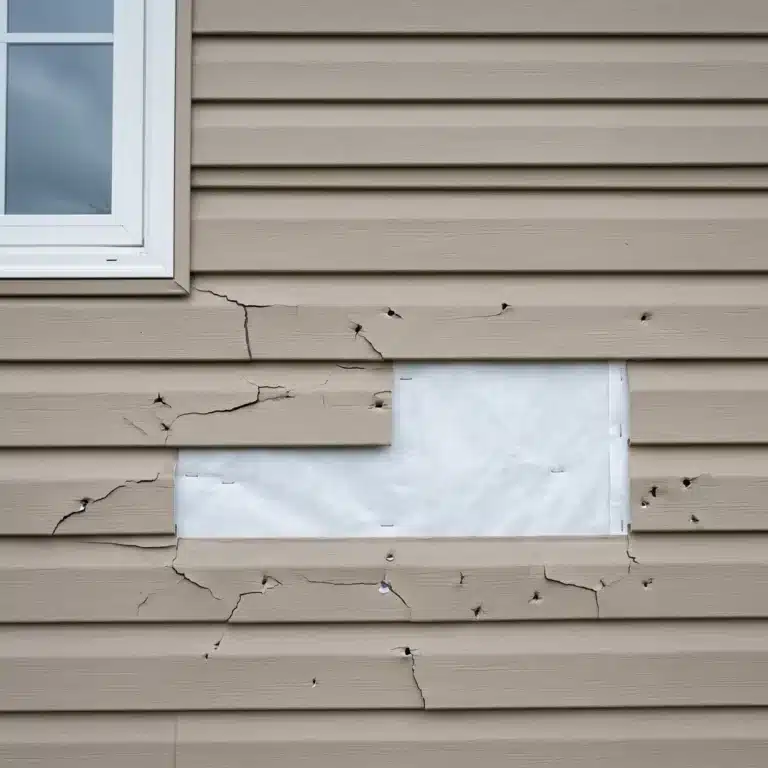
| Hail bruising over broad areas | Membrane compromised even without a hole |
That last one is the one owners defer most often, because a bruised membrane looks fine from ten feet away.
Pro tip: After hail, get the roof inspected even with no leak. Bruising frequently fails a season or two later, after the claim window has closed.
The cost of waiting, without dollar figures
The economics are easy to describe even without pricing.
A contained breach is a localized repair. Once insulation is wet across an area, that insulation has to come out, which means the membrane above it comes off too. If the deck itself has begun to deteriorate, the scope grows again.
Each stage is materially larger than the one before it, and none of it is visible from the ground.
| Stage | Scope |
|---|---|
| Breach only | Local membrane repair |
| Wet insulation | Section removed and replaced |
| Deteriorated deck | Structural work added |
Important: Insurance timing matters too. Storm-related damage generally needs to be reported within your policy’s window, and a deferred inspection can put you outside it.
Southwest Missouri makes waiting more expensive
Our weather does not give a damaged roof a quiet season. Spring and early summer bring hail and high wind. Summer heat drives thermal movement through every seam. Winter freeze and thaw cycles expand water that got in during the fall.
A breach that opens in April will have been worked on by all three before the following spring. That is why deferral math here differs from a milder climate.
Owners managing commercial roofing in Springfield and nearby towns generally do better scheduling inspection twice a year than reacting to leaks. Our post on commercial flat roof maintenance covers the routine side.
On permits, the City of Springfield does not require one for routine roof repair or replacement. Structural work is treated differently, so verify through the city permit office when the deck is involved.
How to decide, in order
- Document the damage with photographs and locations.
- Determine whether the membrane is breached anywhere.
- Check every seam, flashing and penetration in the affected area.
- Ask whether insulation below is likely already wet.
- Confirm the reporting window on your insurance policy.
- Repair anything involving a breach, and schedule the rest with a date.
- Re-inspect deferred items on that date rather than when something leaks.
Illustrative scenario: A building owner in Republic defers hail damage with no interior leak. Eighteen months later a leak appears in two places. The inspection finds wet insulation across a broad area and a claim window that closed a year earlier.
If you are unsure what you are looking at, our overview of commercial and flat roofing systems explains how each assembly is built, and a no-cost inspection gets it documented.
Use this to sort what you are looking at into the right queue.
| Finding | Queue |
|---|---|
| Membrane intact, surface marks only | Scheduled maintenance |
| Brief ponding that drains | Monitor with photos |
| Any opening in the membrane | Repair now |
| Flashing lifted at a wall or parapet | Repair now |
| Hail across broad areas | Inspect now, claim window applies |
Pro tip: Put deferred items on a calendar with a specific date. Anything without a date gets forgotten until it leaks.
Frequently asked questions
My roof is not leaking, so is it really damaged? Possibly. On a low-slope roof, water entering a breach spreads through insulation before it finds a path through the deck. The lag between damage and visible leak is often a season or more.
How do I know if the insulation under my roof is wet? You generally cannot tell from the surface. Inspectors use moisture survey methods to map it. If damage has been open for a while, assume it needs checking rather than assuming it is dry.
Can hail damage a commercial membrane without making a hole? Yes. Hail can bruise a membrane, compromising it without an immediate opening. It often fails later. That is why post-hail inspection matters even with no leak.
How long do I have to file a storm claim? It depends on your policy, and windows vary. Check yours rather than assuming, and get damage documented early. A deferred inspection can put you outside the window.
Is ponding water urgent? Not by itself, if it drains within a day or two. Persistent ponding indicates deflection or drainage problems and accelerates aging. Treat it as something to schedule, not ignore.
Should I repair or just plan for replacement? Localized damage on an otherwise sound roof usually repairs well. Multiple unrelated leaks, field-wide seam failure, or widespread wet insulation point toward replacement. Get an assessment before committing either way.
How often should I have the roof inspected? Twice a year plus after major storms is a common baseline. Regular inspection converts surprise failures into scheduled work. Ask for written findings each time.
Can my maintenance staff handle small repairs? They can handle temporary protection and debris removal. Membrane repairs need someone who knows the system, because an incorrect patch can void coverage and trap water.
Does deferring damage affect my roof warranty? It can. Many warranties require reasonable maintenance and timely repair. Review yours before deferring anything involving a breach.
Key takeaways
- No leak is not no damage
- Water spreads under a low-slope membrane before it drops through.
- Some things can wait
- Surface scuffing, minor granule loss, cosmetic marks, brief ponding.
- Some things cannot
- Open seams, lifted flashing, punctures, drain damage, hail bruising.
- The scope grows in stages
- Breach, then wet insulation, then deck. Each is larger than the last.
- Give deferrals a date
- Documented, calendared, re-inspected on schedule.
Get it looked at before it decides for you
If your building took damage and nothing is leaking, that is the least expensive moment to find out what you are dealing with.
We have assessed commercial roofs across Southwest Missouri since 1971, and we will tell you when something can wait. Owner Josh Tessmer built the business on that kind of answer.
What you get when you call:
- A no-cost commercial roof assessment with written findings
- A clear split between what needs repair now and what can be scheduled
- Photographic documentation for your building file and any claim
- Honest guidance on repair versus replacement
Call 417-883-7663 for a no-pressure assessment on your building.
Teague Roofing Plus, Roofing, Siding, Windows, Gutters, and More. Serving Southwest Missouri Since 1971.