
Most Springfield homeowners never hear about impact ratings until hail puts them on the phone with a roofer. Then a number gets thrown at them with no explanation of what it buys. This guide explains the difference in plain terms. It also tells you honestly which one most of your neighbors actually put on their homes.
TLDR: Class 4 shingles carry the highest impact rating an asphalt shingle can earn. They are usually the better product for hail country, and they cost more. Most homeowners here decide the upgrade is not worth it for them. The rating comes from a lab test, not a field guarantee, so treat it as one factor rather than the whole answer.
You are standing in the driveway after a storm, looking at granules in the gutter. Someone has just told you that you need “Class 4,” without explaining what the number means.
Teague Roofing Plus has been putting roofs on homes across the Ozarks since 1971, and the rating question comes up constantly in hail country. Here is what the rating measures, what it does not, and how to decide.
What the impact rating actually means
Impact ratings for asphalt shingles come from a standard called UL 2218. A lab drops steel balls of increasing size onto a shingle. Testers then check the back side for cracks. Class 1 is the lowest result and Class 4 is the highest.
To earn Class 4, a shingle takes a two-inch steel ball without cracking through. Shingles that pass are built differently, with a reinforced mat, tougher backing, and stronger granule adhesion.
Southwest Missouri earns the attention. Hail season peaks in April and May, and Greene County has a recorded maximum hailstone size of three inches. That is well past what any steel-ball test simulates.
This table separates what the rating tells you from what it does not. Read the right column before you treat a rating as a promise.
| The rating tells you | The rating does not tell you |
|---|---|
| How the product resisted cracking in a lab | How your roof performs in a specific storm |
| That it met a defined threshold | Whether granules will come off |
| A result for that product line | A result for your roof, slope, or age |
Use the rating to compare products against each other. Do not use it to predict one storm.
Important: An impact rating describes lab performance. It is not a promise about your roof.
Does a Class 4 rating guarantee your roof survives hail?
No, and the organization behind much of the hail research says so plainly.
The Insurance Institute for Business and Home Safety studies how roofing performs against hail. IBHS notes that steel-ball tests “do not exactly replicate natural hailstone impacts.” It describes them as a way to compare products in controlled conditions.
Real hail is not a steel ball. It varies in size, density, and hardness. It also arrives at angles and speeds a drop test cannot reproduce. IBHS built its own hail impact test protocol using manufactured hailstones for that reason. The institute also published a summary of relative impact resistance across shingle products. UL Solutions has since collaborated with IBHS on shingle performance rating testing.
We tell homeowners the same thing every time. Class 4 typically performs better. It does not make a roof hail-proof.
Pro tip: If a contractor promises a hail-proof roof or a specific claim outcome, get a second opinion.
What most Southwest Missouri homeowners actually choose
Here is the part the brochures leave out.
About nine out of ten roofs we install across our service area use Class 3 shingles. That is not because Class 4 is a bad product. It is the better product.
It costs more, and most homeowners put that money elsewhere. That is a reasonable call, and it is worth making on purpose.
This table compares the two on the factors that actually drive the choice. Find the column that describes your situation.
| Factor | Class 3 architectural | Class 4 impact resistant |
|---|---|---|
| Impact rating | Mid-tier under UL 2218 | Highest available |
| Construction | Standard mat and backing | Reinforced mat, stronger granule bond |
| Upfront cost | Lower | An upgrade over standard |
| Insurance discount | Rarely offered | Some carriers offer one, varies by policy |
| Who picks it here | About nine in ten of our customers | The rest, often after a hail loss |
Neither column is wrong. The right one depends on how long you stay, what your carrier offers, and how much a repeat claim would disrupt you.
When is the Class 4 upgrade worth paying for?
Some situations tip the math. This table sorts the common ones.
| Your situation | Leans Class 4 | Leans Class 3 |
|---|---|---|
| Claim history | Two or more hail claims on this home | No prior hail claims |
| Ownership horizon | Staying through another hail cycle | Selling within a few years |
| Carrier discount | Your policy offers one | Your policy offers none |
| Roof access | Steep, tall, or hard to work on | Simple and low |
Most homeowners land in the right-hand column, which matches what we actually install.
Tip: Ask your agent two questions before deciding. Does my policy offer an impact-resistant discount, and does it change my wind or hail deductible?
Pro tip: If a discount exists, ask your agent how many years it takes to offset the upgrade. That single number usually settles the decision.
Southwest Missouri specifics that change the math
Our weather is why this conversation happens at all. Hail peaks in April and May. Tornado activity runs higher here than anywhere else in the state. Ice storms arrive in winter, and summer heat ages shingles faster than most homeowners expect.
A roof in Ozark or Nixa works harder than the same roof in a milder climate. Homeowners looking at roof replacement in Ozark often ask whether the upgrade is a regional necessity. It is not a necessity. It is a hedge, and a hedge is worth what your own situation makes it worth.
One permit detail surprises people. The City of Springfield does not require a permit for a standard roof replacement, repair, or recover. A permit applies if any structural element gets altered, or if more than 32 contiguous square feet of deck sheathing gets replaced. Our team handles the permit on any job that crosses that line.
Important: Permit rules differ between the City of Springfield and unincorporated Greene County. Verify with the permit office at 840 Boonville Avenue if your property sits outside city limits.
How do you decide without guessing?
Work through this in order. It takes one afternoon and one phone call.
- Find your current shingle product name on your last roofing invoice or permit record.
- Call your insurance agent and ask about an impact-resistant discount on your policy.
- Decide how long you realistically plan to own the home.
- Get a written inspection documenting current damage before any claim discussion.
- Ask your roofer to quote both options side by side on the same scope.
- Compare the upgrade against the discount, across your ownership horizon.
- Write down your reasoning, so nobody can rush you later.
Illustrative scenario: A homeowner in Republic files a second hail claim in six years. Their carrier offers a reduction for impact-resistant roofing, and they plan to stay another decade. The upgrade pays back inside that window, so they take it. A neighbor listing in eighteen months chooses Class 3 on the same storm.
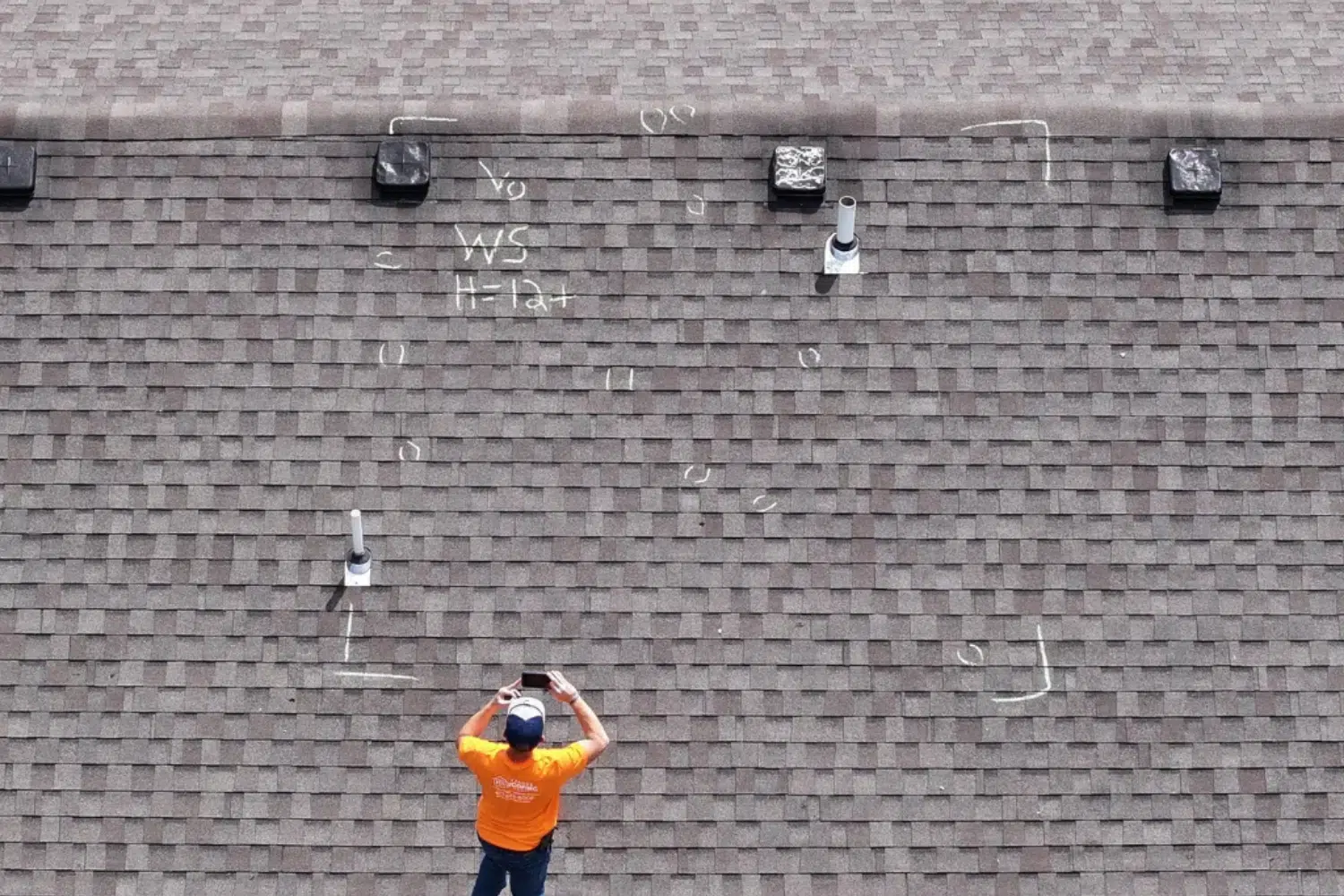
If your shingles took a beating this year, start with the damage itself. Our guide to spotting hail damage on shingles walks through it. A no-cost roof inspection gets it documented properly, and homeowners across Springfield roof replacement projects start there.
Before you call anyone, gather these. Each one shortens the conversation and sharpens the quote.
| What to gather | Where it usually is |
|---|---|
| Current shingle product name | Last roofing invoice or closing documents |
| Policy deductible and coverage type | Declarations page |
| Date of the storm event | Local weather records or your own photos |
| Prior claim history on the roof | Your carrier or agent |
Walking in with those four turns a sales visit into a working conversation.
Tip: Photograph your roof and gutters after any significant storm, even when you see no obvious damage. Dated photos help later.
Frequently asked questions
Is Class 4 always better than Class 3? In impact resistance, yes. Class 4 sits at the top of the UL 2218 scale. Better does not automatically mean right for your house, because the upgrade carries added cost. Ask your roofer to quote both on the same scope so you compare fairly.
What does the Class 4 test actually involve? A lab drops steel balls of increasing size onto the shingle and inspects the back for cracking. A two-inch ball without through-cracking earns Class 4. Ask your contractor which specific product line they are quoting, since ratings attach to product lines.
Will Class 4 shingles lower my insurance premium? Some Missouri carriers offer a reduction for impact-resistant roofing and some do not. It depends on your policy and carrier. Call your agent and ask before you decide, because the answer changes the math.
Do Class 4 shingles mean I will never file another hail claim? No. They typically resist cracking better, but severe hail can still damage a Class 4 roof. IBHS notes that lab testing does not exactly replicate natural hailstones. Treat the rating as a meaningful advantage rather than a promise.
If most people choose Class 3, is the upgrade a gimmick? Not at all. Class 4 is a genuinely tougher product. Most homeowners decide the added cost is not where they want their money. That is a budget call, not a verdict on the product.
Can I upgrade to Class 4 during an insurance claim? Often yes, by paying the difference between what the claim covers and the upgraded product. Your carrier typically pays to restore what was there. Ask your roofer to write the upgrade as a separate line so you see exactly what it adds.
How do I find out what is on my roof right now? Check your last roofing invoice, closing documents, or any permit record. If none turn up, an inspector can usually identify the product from the shingle itself. Book an inspection and ask for the product line in writing.
Does hail damage look different on Class 4 shingles? It can. Class 4 shingles may lose granules or show bruising without cracking through, which makes documentation more important. Have an experienced inspector check the roof before an adjuster visit. Reading how insurance payouts get calculated helps too.
Is the upgrade worth it if I am selling soon? Usually not. Payback runs longer than a short ownership window, and buyers rarely pay a premium for it.
Key takeaways
- What the rating means
- Class 4 is the highest impact rating an asphalt shingle can earn under UL 2218.
- The test measures cracking resistance using steel balls, not real hailstones.
- What it does not mean
- It is not a promise against hail damage in a specific storm.
- IBHS notes lab tests do not exactly replicate natural hail impacts.
- What your neighbors choose
- About nine of ten installs across our service area use Class 3.
- Class 4 is the better product, and cost is why most homeowners pass.
- When the upgrade earns its cost
- Repeat hail claims, a long ownership horizon, or a carrier discount.
- How to decide
- Ask your agent about an impact-resistant discount on your policy.
- Get both options quoted on the same scope, in writing.
- Before any claim conversation
- Get damage documented first, and keep dated storm photos.
Talk it through before the next storm
The worst time to learn what is on your roof is while a salesperson stands on your porch after a hailstorm. The best time is now, with no claim open and no pressure.
Our crews have worked Southwest Missouri roofs since 1971, and we would rather explain the tradeoff than upsell you past it. Owner Josh Tessmer built the business around straight answers, including telling you when the cheaper option is right.
What you get when you call:
- A free roof inspection with written documentation, no obligation
- Both shingle options quoted on the same scope
- Insurance claim support at no extra charge, including meeting your adjuster on site
- Local crews who live here, not out-of-state storm chasers
- Owens Corning Platinum Preferred installation and a BBB A plus rating
Not sure where to start? We will walk you through it. Call 417-883-7663 or reach out online.
Teague Roofing Plus, Roofing, Siding, Windows, Gutters, and More. Serving Southwest Missouri Since 1971.